
Many people believe that a self-watering planter waters your plants automatically like a smart irrigation system. That isn’t true. It doesn’t have a motor, timer, or pump that waters your plants on a schedule. Instead, it works by storing water in a built-in reservoir and allowing the plant to absorb only the moisture it needs.
That’s why understanding how does a self watering planter work is important before you decide to buy one.
If you’ve ever forgotten to water your plants or accidentally drowned them with too much water, you’re not alone. Keeping the right moisture level can be challenging, especially when life gets busy.
This is where a self watering planter system can make plant care much easier.
Whether you grow indoor plants, herbs, flowers, or vegetables, a self watering plant pot helps create a more consistent watering routine. Instead of watering every day, the planter stores water beneath the soil and supplies it gradually.
This simple design helps reduce watering mistakes and gives plant roots a steady supply of moisture.
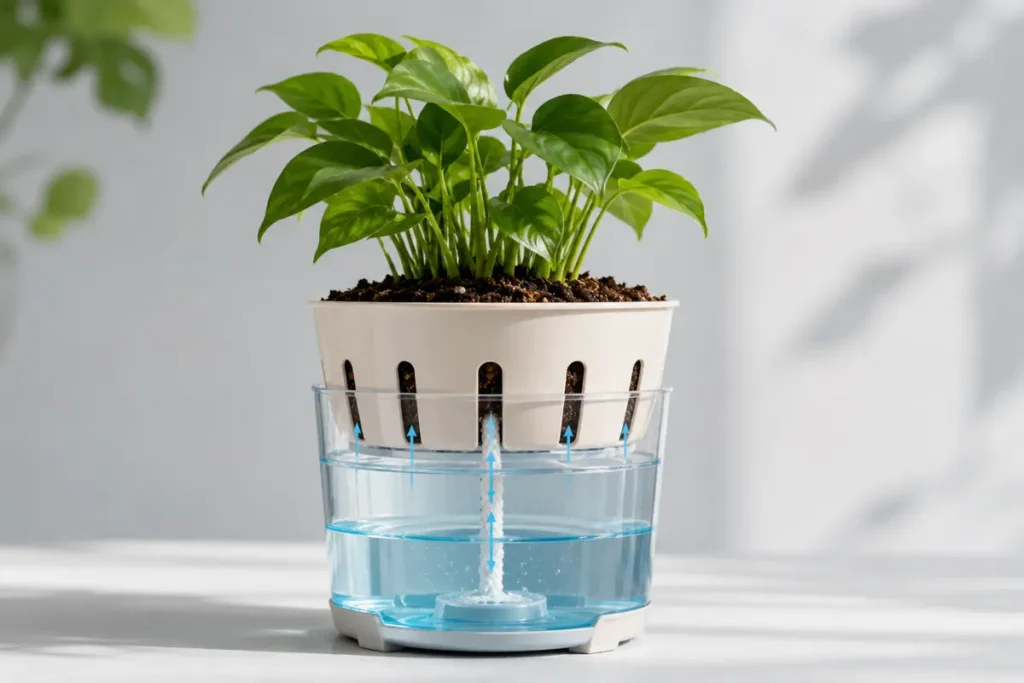
Many beginners ask, how does a self watering planter work for indoor plants? The answer is surprisingly simple. The planter uses a water reservoir and a natural process called capillary action to deliver water from the bottom of the pot to the plant’s roots.
The roots take in moisture only when they need it, helping the soil stay evenly moist instead of becoming too dry or overly wet.
You’ll also come across terms like self watering pots, self watering containers, automatic watering pots, and self irrigating planters. While these names are often used interchangeably, they all describe the same basic idea a planter that helps maintain healthy moisture levels without constant watering.
In this guide, you’ll learn exactly how does a self watering planter work step by step, what makes it different from a regular flower pot, and why so many gardeners now prefer this watering method. We’ll also cover its benefits, how to use it correctly, the best plants to grow in it, and the common mistakes you should avoid.
What Is a Self Watering Planter?
A self-watering planter is a specially designed container that supplies water to plants from the bottom instead of relying on frequent watering from the top. Unlike a regular flower pot, it includes a built-in watering reservoir that stores water separately from the soil.
As the soil begins to dry, it naturally pulls water upward, allowing the plant to stay hydrated without constant attention.
Think of it as giving your plant access to its own small water supply. Rather than flooding the soil every time you water, the planter provides moisture gradually. This helps create a healthier environment for the roots and reduces sudden changes in soil moisture.
How Is It Different from a Regular Plant Pot?
A traditional plant pot only holds soil and has drainage holes at the bottom. Once you water the plant, the extra water drains away, and the soil slowly dries until you water it again. This cycle can sometimes lead to underwatering or overwatering.
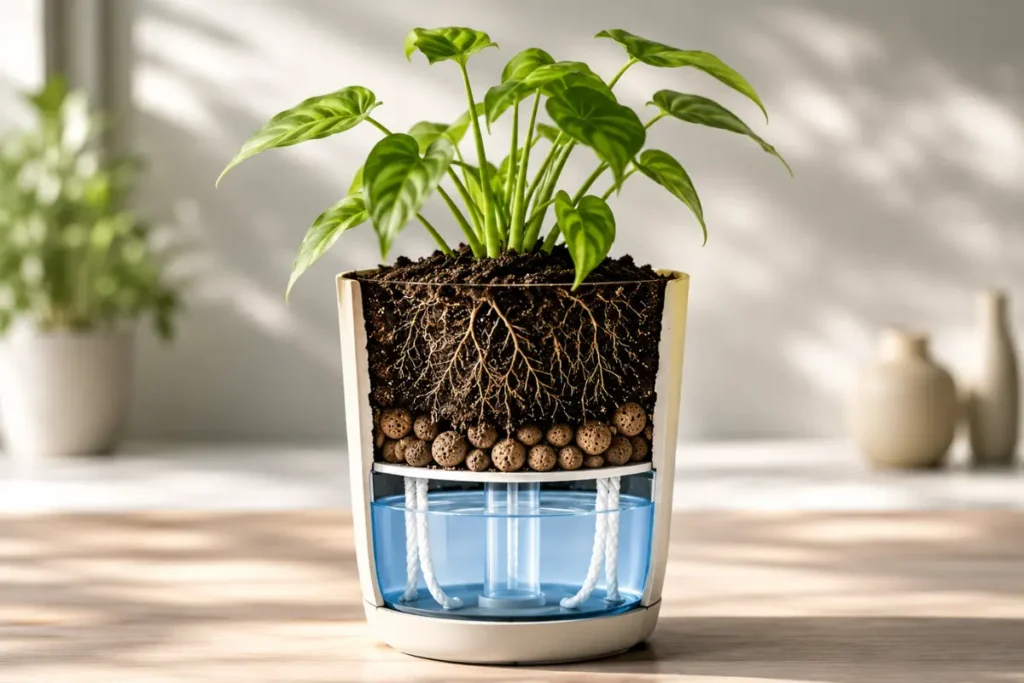
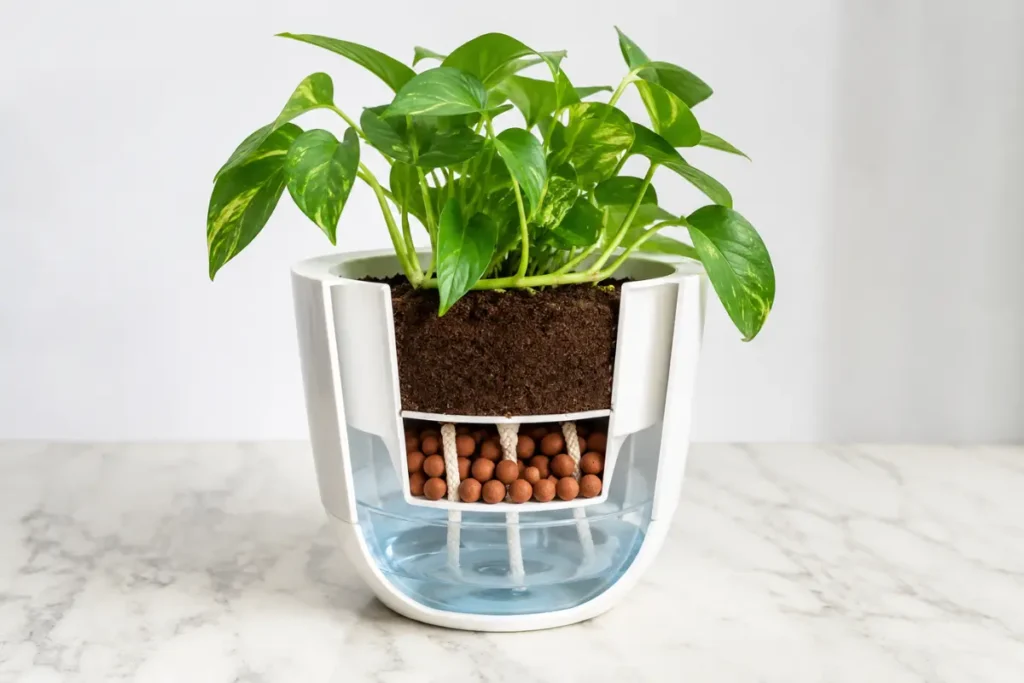
A self watering container is designed differently. It has one section for the plant and potting mix and another section underneath that serves as a water storage planter.
This lower compartment holds water until the plant needs it. As the soil loses moisture, it naturally pulls water upward from the reservoir, helping maintain steady plant moisture levels. This consistent supply of water encourages healthy plant roots and reduces the stress caused by uneven watering.
Is It Really an Automatic Watering System?
This is one of the biggest misconceptions.
Although many people call them automatic watering pots, they don’t automatically refill themselves. You still need to add water to the reservoir whenever it becomes empty. What makes them “self-watering” is their ability to deliver stored water to the roots whenever the soil starts drying out.
If you’ve ever wondered how does a self watering container work, the answer is simple. The planter stores water beneath the soil, and the growing medium draws that water upward as the plant needs it. There are no batteries, pumps, electricity, or smart sensors involved. Everything works naturally.
How Does a Self Irrigating Planter Differ from Other Watering Systems?
A self irrigating planter is often mistaken for drip irrigation or sprinkler systems, but they’re completely different.
Traditional irrigation systems rely on pipes, hoses, timers, or pumps to move water from an outside source. A self-watering planter already has its own water supply built into the pot. This makes it an excellent choice for indoor plants, balcony gardens, patios, office plants, kitchen herbs, and container gardening.
Because the water stays inside the planter until the plant needs it, this design also supports water efficient gardening. Less water is lost through evaporation, and there is less chance of wasting water through excessive runoff.
Why Are Self-Watering Planters Becoming So Popular?
More people are choosing self-watering planters because they make plant care easier without making it complicated. A planter with a water tank helps maintain consistent moisture, which is one of the biggest factors in growing healthy plants.
They are especially useful for people with busy schedules, frequent travelers, beginners, and anyone who struggles to remember a watering routine. Since the planter supplies moisture gradually, plants experience less stress from drying out or receiving too much water at once.
Whether you’re growing herbs on a kitchen windowsill, flowers on your balcony, or vegetables in self watering garden pots, this type of planter can save time while helping plants grow stronger and healthier.
In the next section, we’ll explain how does a self watering planter work step by step, so you can understand exactly how the water reservoir, capillary action, soil, and roots work together to keep your plants thriving.
How Does a Self Watering Planter Work? (Step-by-Step Guide)
It is widely believed that think a self-watering planter keeps the soil soaking wet all the time. That isn’t how it works. In reality, a well-designed self watering planter system provides water only when the growing medium starts to dry. This controlled process helps maintain balanced moisture instead of leaving the roots sitting in water.
If you’ve been asking, how does a self watering planter work step by step, the process is much simpler than it sounds. The planter uses a combination of a water reservoir, capillary action, moisture-retaining soil, and healthy root growth to keep plants hydrated naturally.
Let’s look at each step in detail.
Water Reservoir
Everything starts with the watering reservoir, which is located beneath the planting area. This hidden compartment stores water separately from the soil, making it the heart of the entire system.
Instead of pouring water directly onto the soil every day, you fill the reservoir through a designated opening. The stored water stays available until the plant needs it.
This design offers two major benefits. First, it reduces how often you need to water your plants. Second, it prevents large amounts of water from flowing through the soil all at once, which can wash away nutrients and create uneven moisture levels.
Whether you’re using an indoor self watering plant pot or a larger outdoor planter, the reservoir works the same way. It acts as a steady water source that supports healthy plant growth over several days or even weeks, depending on the plant, weather, and container size.
Wick or Capillary Action
One of the most important parts of understanding how do self watering planters work is learning about capillary action.
Capillary action is a natural process where water moves through small spaces without needing pumps or electricity. In many self watering containers, this happens through a fabric wick, while others allow the potting mix itself to draw water upward.
As the upper soil begins to dry, moisture slowly travels from the reservoir toward the root zone. This movement happens gradually, allowing the soil to stay evenly moist instead of becoming overly wet.
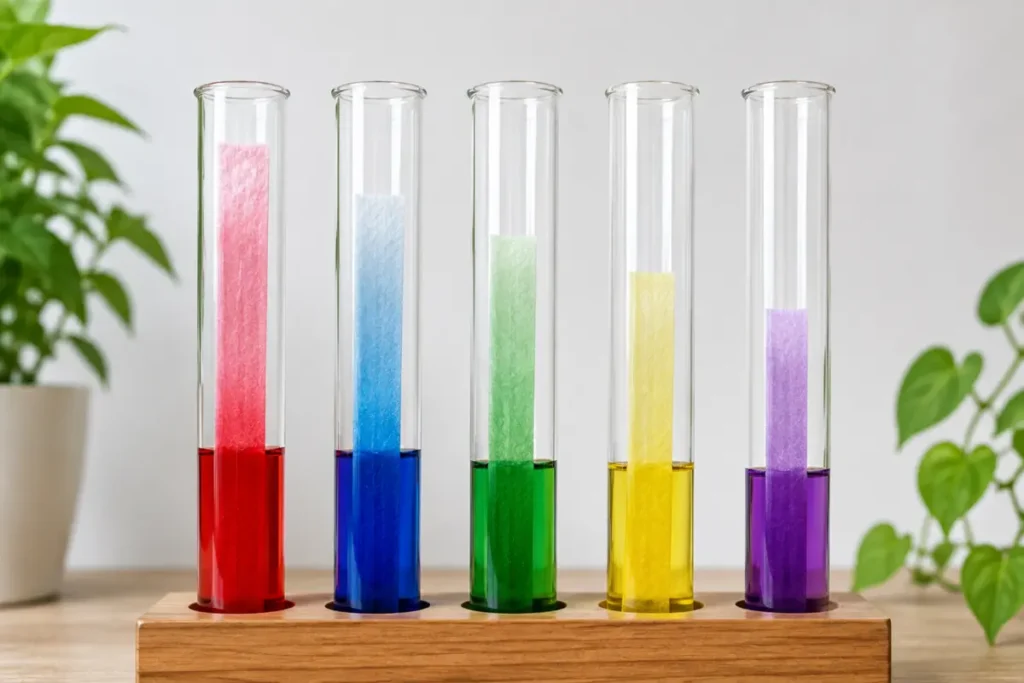
If your planter includes a wick watering system, the wick serves as a bridge between the water reservoir and the soil. It continuously transfers moisture upward whenever the soil requires it.
This natural movement is the main reason people often ask, how does a self watering container work? The answer lies in physics rather than technology. There are no timers or automated pumps involved only a simple and reliable process that nature already provides.
Soil Absorbs Only What It Needs
A common concern is that plants might absorb too much water and develop root rot. Fortunately, that’s not how a quality self watering planter is designed.
As moisture moves upward, the potting mix absorbs only the amount of water it can hold. Once the soil reaches the right moisture level, water movement naturally slows down until more moisture is needed.
This balance helps maintain healthy plant moisture levels, which is one of the biggest advantages of this watering method.
Using a lightweight, well-draining potting mix is essential because it allows water to move freely while still providing enough air around the roots. Heavy garden soil is not recommended since it can block water movement and reduce airflow.
This is why many gardeners find that how does a self watering planter keep plants alive comes down to maintaining consistent moisture rather than constantly adding water.
Plant Roots Take Up Moisture
Once the soil contains enough moisture, the plant’s roots begin absorbing water naturally.
Roots don’t continuously drink water. Instead, they take in moisture according to the plant’s needs. On hot days, plants may absorb more water. During cooler weather or slower growth periods, they usually require less.
This natural cycle creates better root hydration and encourages stronger root development because the roots grow downward toward the moisture source instead of staying near the surface.
Another advantage is that consistent watering helps reduce stress caused by sudden dry periods followed by heavy watering.
If you’ve wondered how does a self watering pot work or how does a self watering plant pot work, this is the final step. The planter simply creates the right environment for the roots to access water whenever necessary.
Why This System Works So Well
The success of a self irrigating planter comes from its ability to imitate how plants naturally prefer to absorb water.
Instead of receiving large amounts of water all at once, plants enjoy a slow and steady supply. This helps maintain balanced moisture, improves root health, and reduces common watering mistakes.
Because the process is gradual, many gardeners also notice cleaner leaves, healthier growth, and fewer signs of underwatering or overwatering.
Whether you’re growing herbs, flowers, vegetables, or houseplants, understanding how does a self irrigating planter work helps you appreciate why this simple design has become so popular among both beginners and experienced gardeners.
Parts of a Self Watering Planter
Many people assume a self-watering planter is a complicated piece of gardening equipment filled with mechanical parts. In reality, its design is surprisingly simple. Most models contain only a few key components that work together to create an efficient watering system.
Knowing these parts will also help you better understand how does a self watering planter work and why it provides more consistent moisture than a traditional flower pot.
Water Reservoir
The water reservoir is the foundation of every self watering planter design.
Located beneath the planting area, this compartment stores water until the plant needs it. Depending on the size of the planter, the reservoir may hold enough water to last several days or even a couple of weeks.
Since the water remains separated from the soil, it reduces water waste and helps create a more stable moisture supply for the plant.
Inner Pot
The inner pot sits directly above the reservoir and holds the growing medium along with the plant.
Unlike a regular flower pot, the bottom of the inner pot allows moisture to travel upward from the water reservoir. Some designs include small openings, while others include a wick that connects the soil to the water below.
The inner pot keeps the plant supported while allowing continuous access to moisture.
Soil Chamber
The soil chamber is where the potting mix and plant roots are located.
This section should always be filled with a light, airy potting mix instead of dense garden soil. A quality mix improves water movement, increases airflow, and supports healthy root growth.
The soil chamber also plays an important role in maintaining balanced moisture because it stores enough water for the roots while still allowing excess air to circulate.
Wick (If Included)
Not every self watering planter system uses a wick, but many models do.
The wick is usually made from absorbent material that extends from the water reservoir into the soil. Its purpose is to carry water upward using capillary action.
Whenever the soil begins to dry, the wick transfers moisture back into the growing medium. This creates a steady supply of water without flooding the roots.
If you’ve been asking how does a self watering container work, the wick is often the key component that makes the entire system function efficiently.
Overflow Hole
An overflow hole is a small but very important safety feature.
It prevents the reservoir from being overfilled by allowing extra water to drain away once the maximum water level has been reached.
Without this feature, excess water could build up inside the planter and reduce the amount of oxygen available to the roots.
The overflow hole helps maintain the proper balance between moisture and airflow, creating a healthier growing environment.
Water Level Indicator
Some modern planters with a water tank include a water level indicator.
This small feature lets you see how much water remains inside the reservoir without needing to guess. When the indicator shows that the reservoir is empty, it’s time to refill it.
Although not every planter includes this feature, it can make maintenance easier, especially for beginners or people caring for multiple plants.
How All the Parts Work Together
Each component has a specific job, but they all work as one complete system.
The planter water reservoir stores water, the wick or soil transfers moisture upward through capillary action, the soil chamber distributes that moisture evenly around the roots, and the overflow hole protects against excess water. If the planter includes a water indicator, it simply helps you know when the reservoir needs refilling.
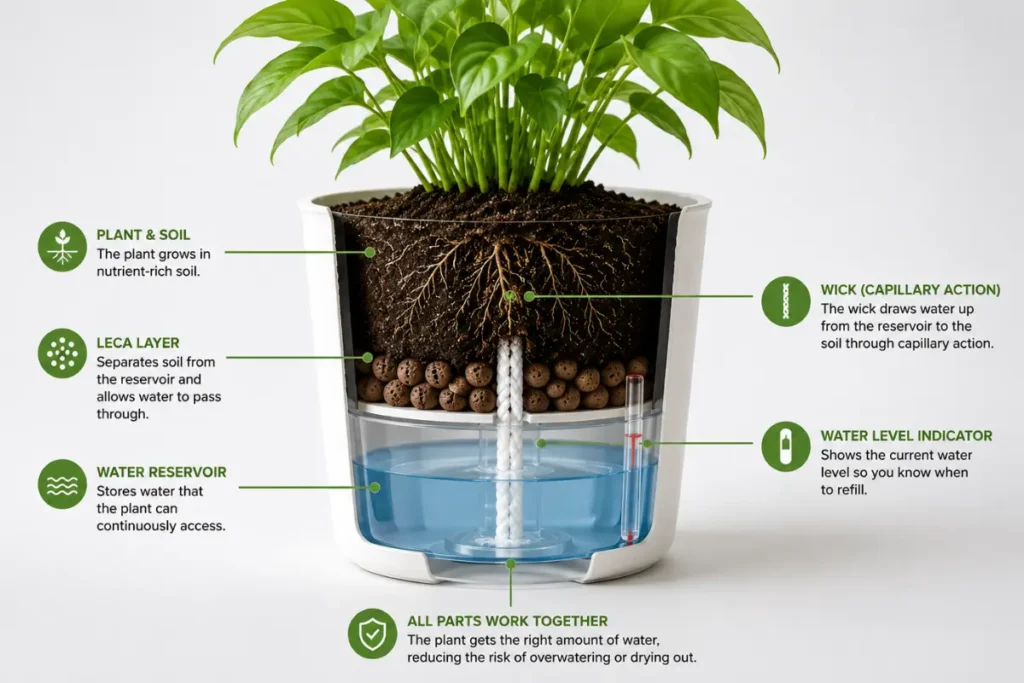
This thoughtful self watering planter setup creates a reliable watering system that supports healthier plants with less daily effort. Once you understand how these parts interact, it’s much easier to see why self-watering planters have become a favorite solution for gardeners looking for simple, low-maintenance plant care.
Benefits of Using a Self Watering Planter
A common belief is that a self-watering planter is only useful for people who forget to water their plants. That’s only part of the story. While it certainly helps busy plant owners, its biggest advantage is that it provides a more consistent watering routine.
This consistency helps plants stay healthier, reduces common watering mistakes, and makes plant care much easier for beginners and experienced gardeners alike.
Once you understand how does a self watering planter work, it becomes clear why these planters have become so popular for growing indoor plants, herbs, flowers, and even vegetables.
Saves You Time and Effort
One of the biggest reasons people switch to a self watering planter system is convenience.
Instead of checking your plants every day, you simply refill the reservoir when the water level gets low. Depending on the size of the planter, weather conditions, and the type of plant, this may only be necessary every few days or even once every couple of weeks.
This makes self-watering planters a great option for people who have busy schedules, travel frequently, or simply want a low-maintenance way to care for their plants.
Reduces Water Waste
Traditional watering methods often lead to excess water draining out of the bottom of the pot. Along with that water, valuable nutrients can also wash away.
A self watering container stores water inside its reservoir, allowing the plant to absorb moisture gradually. Since the water is used more efficiently, there is less runoff and less evaporation.
If you’re trying to practice water efficient gardening, a self-watering planter is a smart investment. It helps conserve water while still giving your plants the moisture they need to thrive.
Helps Prevent Overwatering
Overwatering is one of the most common reasons houseplants struggle.
Many gardeners assume that watering more often will help plants grow faster. In reality, constantly soaking the soil can reduce oxygen around the roots and eventually lead to root rot.
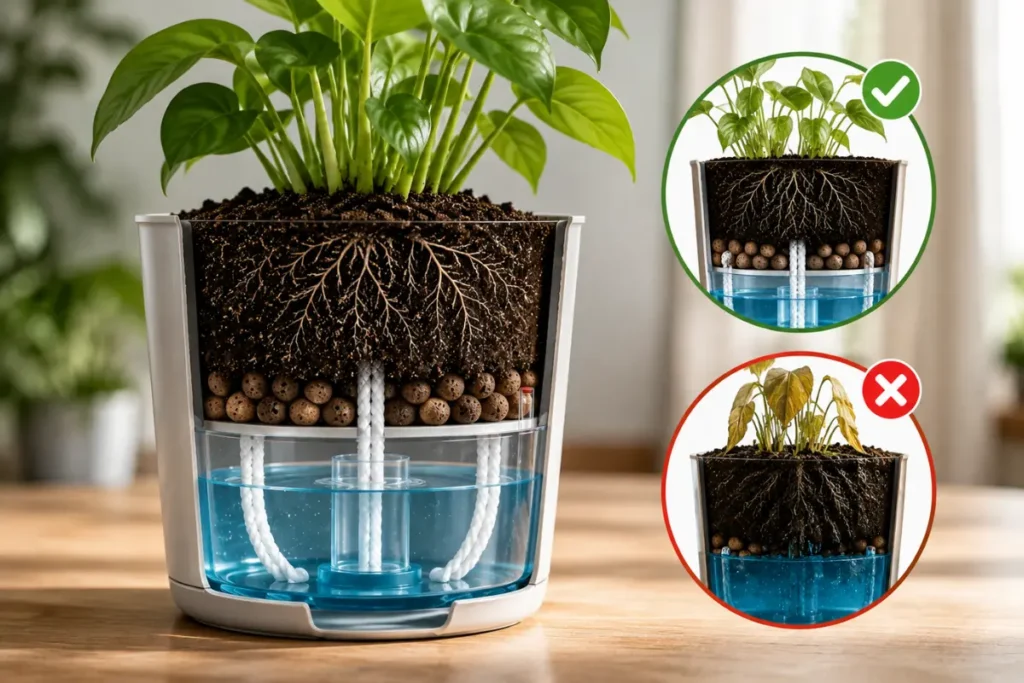
A self-watering planter helps reduce this risk by supplying moisture gradually instead of flooding the soil. The plant absorbs water as needed, creating a healthier balance.
This is why many beginners ask, do self watering planters prevent overwatering? While no planter can completely eliminate watering mistakes, a properly used self-watering planter significantly lowers the chances of overwatering because it promotes consistent soil moisture rather than sudden soaking.
Prevents Underwatering
Just as too much water can harm plants, too little water can slow growth and cause leaves to wilt.
A self watering plant pot helps solve this problem by keeping water readily available in the reservoir. Even if you miss a watering day, your plant can continue drawing moisture from below.
This steady supply of water is especially helpful during hot weather or when you’re away from home for a few days.
Instead of experiencing repeated dry spells, your plants enjoy a more reliable watering schedule. Encourages Healthy Root Growth
Healthy roots are the foundation of healthy plants.
In traditional pots, roots often grow close to the surface because that’s where watering usually occurs. In a self irrigating planter, moisture comes from below, encouraging roots to grow deeper into the soil.
Deeper roots are generally stronger and better able to absorb water and nutrients.
Better root hydration also means the plant experiences less stress, making it more resilient during changing weather conditions.
Keeps Soil Moisture More Consistent
Plants grow best when their soil moisture stays relatively stable.
With traditional watering, soil often alternates between being too wet and too dry. These constant changes can stress the plant and slow its growth.
A self-watering planter maintains more consistent plant moisture levels, allowing the roots to absorb water gradually throughout the day.
This balanced moisture is one of the biggest reasons many gardeners notice healthier foliage, stronger stems, and more vigorous growth after switching to a self-watering system.
Perfect for Beginners
Learning when and how much to water plants can feel overwhelming if you’re new to gardening.
A self-watering planter removes much of the guesswork. Instead of constantly checking whether the soil is too dry or too wet, the planter naturally helps maintain a healthier moisture balance.
For anyone starting their gardening journey, these low maintenance planters make plant care far less stressful while increasing the chances of success.
Great for Indoor and Outdoor Plants
Another major benefit is versatility.
Whether you’re growing herbs in your kitchen, flowers on your balcony, or vegetables in self watering garden pots, the same watering principles apply.
Many homeowners use indoor self watering planters for houseplants because they reduce mess and make watering easier. Others prefer outdoor self watering planters because they help plants cope better with warm weather and longer periods between watering.
This flexibility makes self-watering planters suitable for almost any type of container gardening.
How Does a Self Watering Planter Keep Plants Alive?
Many people wonder, how does a self watering planter keep plants alive if no one is watering them every day.
The answer lies in consistency.
Instead of waiting until the soil becomes completely dry, the planter always keeps a supply of water available in the reservoir. As the soil gradually loses moisture, it naturally draws more water upward through capillary action.
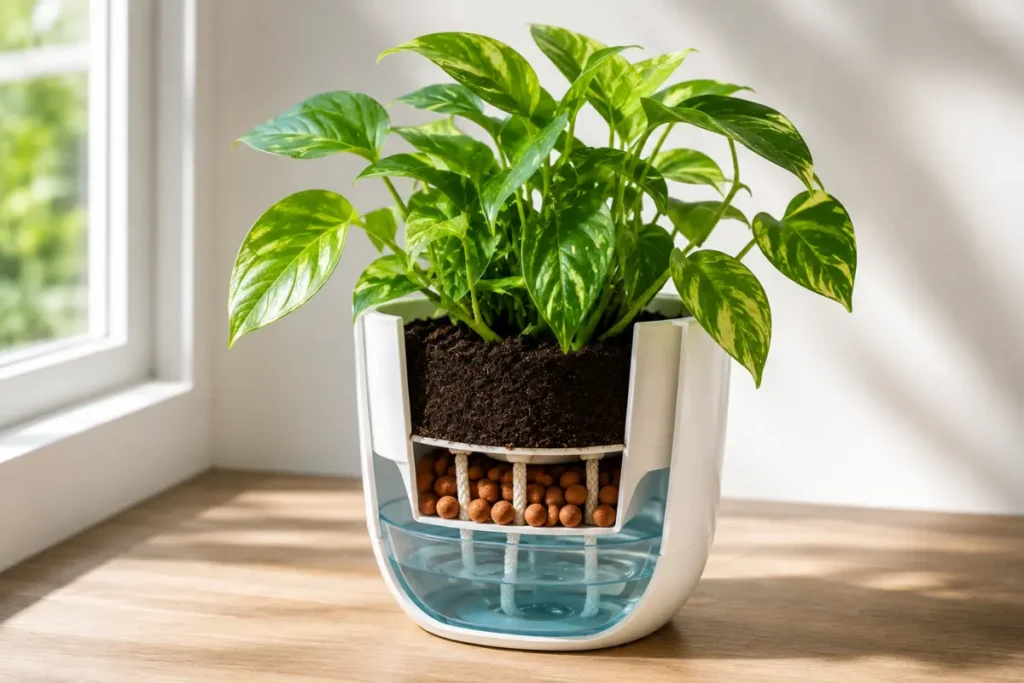
This process ensures that the roots receive moisture when they need it, reducing plant stress and supporting steady growth.
Of course, you’ll still need to refill the reservoir regularly, but the planter does most of the hard work of maintaining proper moisture levels.
Why So Many Gardeners Prefer Self-Watering Planters
It’s easy to see why these planters have become a favorite among both beginners and experienced gardeners.
They simplify plant care, encourage healthier root development, reduce watering mistakes, and support more efficient water use. Instead of worrying about daily watering, you can spend more time enjoying healthy, thriving plants.
Whether you’re growing herbs, flowers, vegetables, or decorative houseplants, a self watering planter system offers an easy and reliable way to maintain consistent moisture while making everyday plant care much more convenient.
Frequently Asked Questions (FAQs)
Many people have similar questions before buying their first self-watering planter. Below are clear and practical answers to the most common queries. These FAQs will help you better understand how does a self watering planter work and whether it’s the right choice for your plants.
How does a self watering planter work?
A self-watering planter works by storing water in a built-in reservoir located beneath the soil. As the potting mix starts to dry, it draws water upward through capillary action or a wick system. The plant’s roots then absorb the moisture they need, helping maintain consistent soil moisture without frequent watering.
How do self watering planters work for indoor plants?
Indoor self watering planters work the same way as outdoor ones. The water reservoir supplies moisture to the soil whenever it begins to dry, reducing the need for daily watering. This makes them ideal for houseplants because they help maintain steady moisture levels and reduce common watering mistakes.
How does a self watering planter keep plants alive?
A self-watering planter keeps plants alive by providing a continuous supply of moisture instead of allowing the soil to dry out completely. Since the roots receive water gradually, plants experience less stress and are more likely to grow healthy leaves, stronger stems, and well-developed root systems.
How does a self watering pot work?
A self watering pot includes two separate sections. The upper section holds the plant and potting mix, while the lower section stores water. As the soil becomes dry, moisture moves upward naturally, allowing the plant to absorb water whenever it’s needed.
How does a self watering container work?
A self watering container uses a built-in watering reservoir and either a wick or capillary action to transfer water from the bottom of the planter into the soil. This creates a balanced watering system that helps prevent sudden changes in soil moisture.
Do self watering planters prevent overwatering?
Yes, they can help reduce the risk of overwatering when used correctly. Because the plant absorbs moisture gradually, the soil is less likely to become waterlogged. However, it’s still important not to overfill the reservoir and to use a well-draining potting mix for the best results.
Are self watering planters good for vegetables?
Yes. Many vegetables grow very well in self watering containers, especially tomatoes, peppers, lettuce, spinach, cucumbers, and leafy greens. Since vegetables often require consistent moisture, a self-watering planter can help improve growth and reduce watering stress.
What plants grow best in self watering planters?
Many moisture-loving plants thrive in self-watering planters. Popular choices include pothos, peace lilies, spider plants, basil, mint, parsley, tomatoes, peppers, lettuce, begonias, and petunias. Plants that prefer consistently dry soil, such as many succulents and some cacti, are generally better suited to traditional pots.
How often should you refill a self watering planter?
There isn’t a single schedule that works for every planter. The refill frequency depends on factors such as the size of the reservoir, plant type, weather conditions, and container size. In general, many homeowners refill the reservoir every few days to every two weeks. Checking the water level regularly is the best way to know when it’s time to refill.
How to use a self watering planter correctly?
To get the best results, fill the reservoir with water, use a lightweight potting mix, and water the plant from the top during the first few days to help establish the roots. After that, refill the reservoir whenever needed and clean the planter occasionally to keep the watering system working efficiently.
Can you use regular garden soil in a self-watering planter?
It’s not recommended. Regular garden soil is usually too heavy and doesn’t allow water to move properly through the planter. A high-quality potting mix designed for container gardening provides better drainage, improves airflow, and supports efficient moisture movement.
Do self-watering planters need drainage holes?
Yes. Most quality self-watering planters include an overflow hole that prevents the reservoir from being overfilled. This feature helps maintain the right balance between water and oxygen around the roots, reducing the risk of root damage.
Are self-watering planters worth buying?
For most plant owners, the answer is yes. A self watering planter system saves time, promotes healthier root growth, uses water more efficiently, and makes plant care easier. Whether you’re a beginner or an experienced gardener, it can be a valuable addition to your indoor or outdoor gardening setup.
Conclusion
Many people think growing healthy plants means watering them more often. In reality, healthy plants need consistent moisture, not constant watering. That’s exactly what makes a self-watering planter such a practical solution for both beginners and experienced gardeners.
By now, you should have a clear understanding of how does a self watering planter work. Instead of relying on pumps or automatic timers, it uses a simple yet effective design. A built-in water reservoir, combined with capillary action, delivers moisture to the roots only when the soil needs it. This natural process helps maintain balanced moisture levels and encourages healthier root growth.
A self watering planter system offers several advantages. It reduces the chances of overwatering and underwatering, saves time, conserves water, and makes everyday plant care much easier. Whether you’re growing indoor plants, herbs, flowers, or vegetables, this type of planter can help your plants stay healthier with less effort.
However, it’s important to remember that self-watering planters are not completely maintenance-free. You’ll still need to refill the reservoir, use a high-quality potting mix, clean the planter occasionally, and choose plants that are well-suited to this watering method. Following these simple steps will ensure your planter performs at its best.
If you’ve been wondering how does a self watering pot work, how does a self watering container work, or how does a self irrigating planter work, the answer is straightforward. These planters create a steady supply of moisture that allows plants to absorb water naturally whenever they need it, resulting in healthier growth and less watering stress.
As more gardeners look for water efficient gardening solutions, self-watering planters continue to grow in popularity. They combine convenience, smart design, and reliable performance, making them an excellent investment for anyone who wants thriving plants without the hassle of daily watering.
Whether you’re setting up your first indoor garden or upgrading your outdoor containers, a self-watering planter is a simple way to make plant care easier. Now that you know how does a self watering planter work, you can confidently choose the right planter for your gardening needs and enjoy healthier, happier plants all year long.

Plant Nest Blog’s author is passionate about plants, gardening, and sustainable living. Through research and practical experience, they share helpful plant care tips, gardening guides, and easy solutions to help readers grow healthier plants and create greener spaces.