
A common belief is that why is my rose plant dying means the plant is already beyond saving. That is not necessarily true. A rose can look weak, wilted, or unhealthy and still recover when you identify the real problem early.
Brown or yellow leaves, drooping stems, falling leaves, poor flowering, and slow growth are often warning signs rather than a final diagnosis. Before replacing your rose, take a closer look at what is happening around it.
If you are wondering why is my rose plant dying, the first thing to understand is that roses can struggle for many different reasons. A problem with watering can weaken the roots, while poor drainage can keep them too wet.
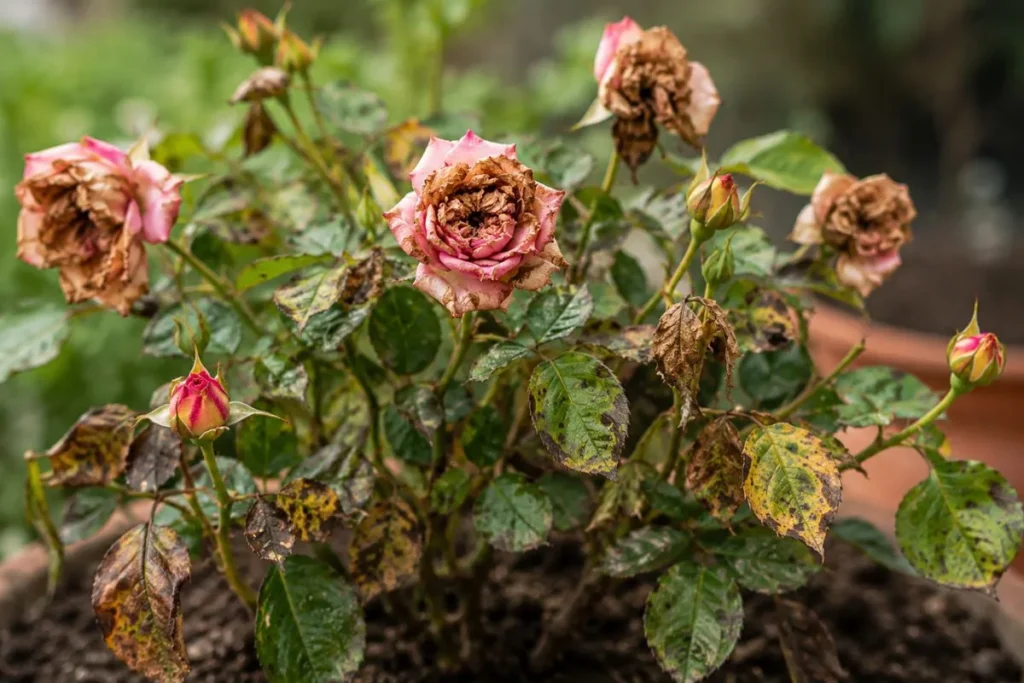
Too little sunlight can affect growth, while extreme heat can stress the foliage. Pests and diseases can also spread quickly if you do not catch them early.
Sometimes the cause is easy to spot. You may notice that the soil stays wet for days, the leaves are covered with spots, or tiny insects are gathering around new growth. Other times, the signs are less obvious. Your rose may simply stop growing, lose leaves, or look generally weak.
This is why rose plant problems should be diagnosed from the whole picture rather than from one symptom.
The location of your rose matters too. A plant growing in the ground may have very different problems from a rose plant dying in a pot. Container roses depend heavily on the quality of their soil, drainage, watering routine, and available root space. A rose that has recently been moved may also struggle because of transplant stress.
The good news is that many common rose problems can be corrected. If the roots are still healthy and the plant has viable stems, improving its growing conditions can give it a chance to produce fresh growth.
So, instead of asking only, “Why does my rose look so bad?” start asking what changed. Has the watering routine changed? Has the plant been exposed to unusual heat or cold? Did you recently repot it? Are insects feeding on the leaves? Is the soil staying wet or drying out too quickly?
Common Reasons Why Is My Rose Plant Dying?
If you keep asking why is my rose plant dying, the problem may come from one or more basic care issues. A rose needs the right balance of water, sunlight, soil, nutrients, and protection from pests and diseases.
When one of these areas goes wrong, the plant can start showing signs of stress such as wilting, yellow leaves, brown leaves, leaf loss, or weak growth. Here are the 11 most common reasons to check.
Overwatering Is Suffocating the Roots
One common answer to why is my rose plant dying is overwatering. Roses need moisture, but their roots also need oxygen. When the soil stays wet for too long, the roots can become stressed and may eventually develop rose plant root rot.
The plant may look wilted even though the soil is wet, which can make the problem confusing. If you suspect overwatering roses, check the soil before watering again. If it remains soggy for long periods, allow excess moisture to drain and avoid watering again until the soil has dried to an appropriate level.
Underwatering Is Causing Wilting and Stress
If you are wondering why is my rose plant dying while the leaves look dry and wilted, underwatering may be the problem. When a rose does not receive enough moisture, its leaves can droop, curl, or become dry, while flowers may fade quickly.
Underwatering roses is especially common during hot weather or when roses are growing in containers that dry out quickly. Check the soil before watering. If it feels very dry and the plant is wilting, give it a thorough watering and then monitor the soil so it does not become extremely dry again.
Poor Drainage Is Damaging the Root System
Poor drainage is another important reason why is my rose plant dying. Even if you are watering correctly, heavy or compacted soil can hold excess moisture around the roots. A container with blocked or missing drainage holes can cause the same problem.
These rose plant soil problems can prevent the roots from getting the air they need and increase the risk of root damage. Use well-draining soil and make sure excess water can escape freely. Choosing the best soil for roses means finding a growing medium that holds enough moisture without remaining saturated.
Your Rose Is Not Getting Enough Sunlight
Sometimes the answer to why is my rose plant dying is simply not enough light. Roses need plenty of sunlight to support strong growth and flowering. When a rose grows in deep shade, it may become weak, produce fewer flowers, and struggle to maintain healthy foliage.
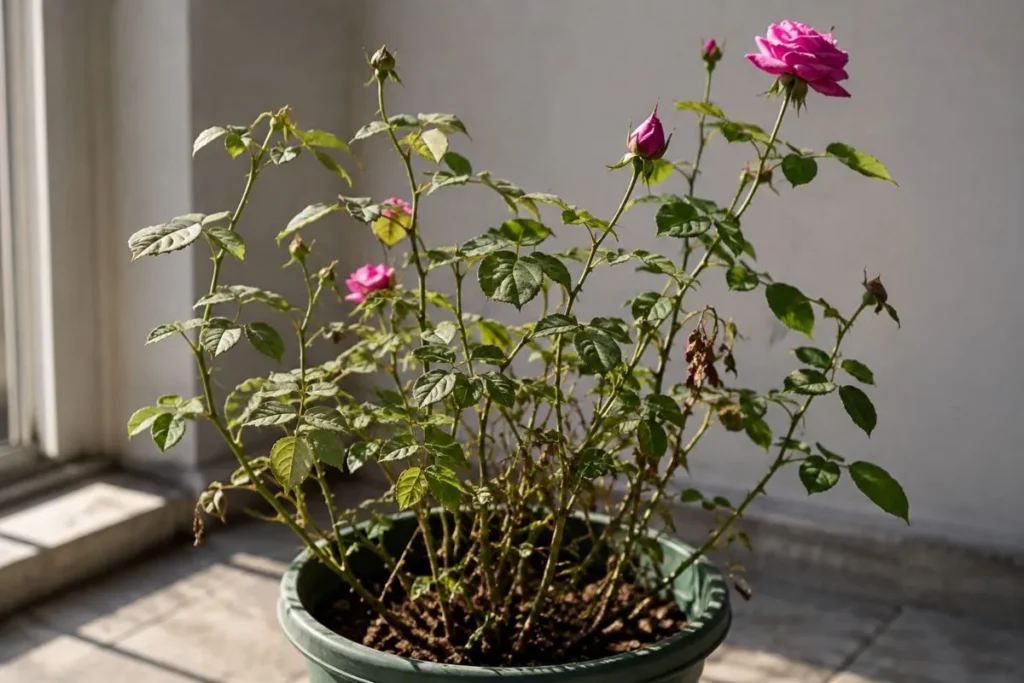
Check the plant’s location throughout the day and look for buildings, trees, walls, or other plants blocking the light. Understanding rose plant sunlight requirements can help you determine whether lack of sunlight roses is contributing to the problem.
Too Much Intense Sun Can Stress the Plant
While roses need good sunlight, excessive heat and intense exposure can also contribute to why is my rose plant dying. Very strong sun combined with hot, dry conditions can stress the foliage and flowers.
You may notice rose leaves turning brown or looking scorched after periods of extreme heat. The solution is not necessarily to move the rose into deep shade. Instead, make sure it receives suitable light while maintaining adequate moisture and protecting it from unusually harsh conditions.
Nutrient Deficiencies Can Weaken Your Rose
If you are still asking why is my rose plant dying after checking water and sunlight, nutrition may deserve attention. Roses need essential nutrients for healthy leaves, stems, roots, and flowers.
A deficiency can lead to weak growth, poor flowering, or unusual foliage color. However, do not assume every yellow leaf means your rose needs fertilizer.
Nutrient deficiency roses can look similar to problems caused by watering or root stress. Check the basic growing conditions first, then consider nutrition if the plant continues to show signs of poor growth.
Overfertilizing Can Burn the Roots
Using too much fertilizer can also explain why is my rose plant dying. Excess fertilizer can cause salts to build up in the soil and damage the roots. This may lead to unhealthy foliage and poor overall growth.
If your rose started declining after you increased feeding, overfertilizing roses may be contributing to the problem. Avoid assuming that more fertilizer will produce more flowers. Follow the product instructions carefully and be especially cautious when feeding a rose that is already stressed.
Aphids and Other Pests Are Draining Plant Strength
Pests can be another reason why is my rose plant dying. Insects such as aphids feed on soft plant tissue and new growth, weakening the rose over time. Aphids on roses often gather around young leaves, stems, buds, and flower growth.
Spider mites can also cause problems, especially in warm and dry conditions. Inspect the leaves regularly, including their undersides, and look for tiny insects, speckled damage, curling leaves, or fine webbing. Catching rose plant pests early makes them much easier to manage.
Fungal Diseases Can Quickly Damage Roses
Disease may also explain why is my rose plant dying, especially when the leaves develop unusual spots, coatings, or widespread discoloration. Rose black spot disease can cause dark spots on leaves and may eventually lead to yellowing and leaf drop.
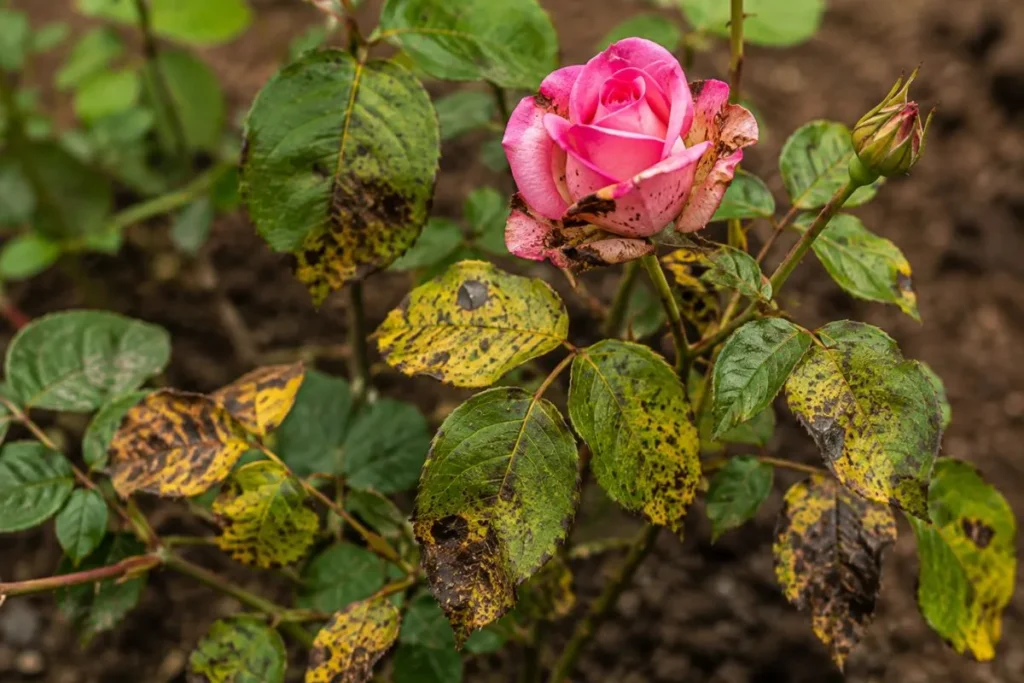
Powdery mildew can create a pale, powdery coating, while rose rust disease can produce rust-colored markings. These are common examples of fungal diseases roses may experience.
If the foliage continues to develop unusual symptoms, inspect the plant carefully for signs of a rose plant disease rather than assuming the problem is simply related to watering.
Transplanting Can Shock a Rose Plant
If you are wondering why is my rose plant dying shortly after moving it, transplant stress may be responsible. Transplanting can disturb the roots and expose the rose to a new environment at the same time.
Changes in soil, sunlight, temperature, moisture, and airflow can all add stress. A rose plant dying after transplanting may show wilting, leaf loss, or slowed growth.
If the decline began soon after moving the plant, give it stable conditions and avoid making several additional changes at once. Consistent care can give the roots time to adjust.
Growing Roses in the Wrong Container Can Cause Problems
If your rose is growing in a container, the pot itself may explain why is my rose plant dying. A container that is too small can restrict the roots, while poor soil can stay too wet or dry too quickly.
A pot without proper drainage can also create serious root problems. If you are asking why is my rose plant dying in a pot, first check the drainage holes and make sure they are not blocked. Also examine the soil and available root space.
If the roots are severely crowded, the plant may need a more suitable container, but avoid unnecessary repotting because disturbing the roots can add further stress.
Why Is My Rose Plant Dying Suddenly?
A common belief is that why is my rose plant dying suddenly means the plant has an incurable disease or is already beyond saving. That is not always true.
A sudden decline often means the rose has experienced a sharp change in its growing conditions. Heat, watering stress, root damage, pests, disease, or a recent move can all cause a rose to look dramatically worse in a short time. If you are asking why is my rose plant dying, the first step is to look for what changed before the sudden decline.
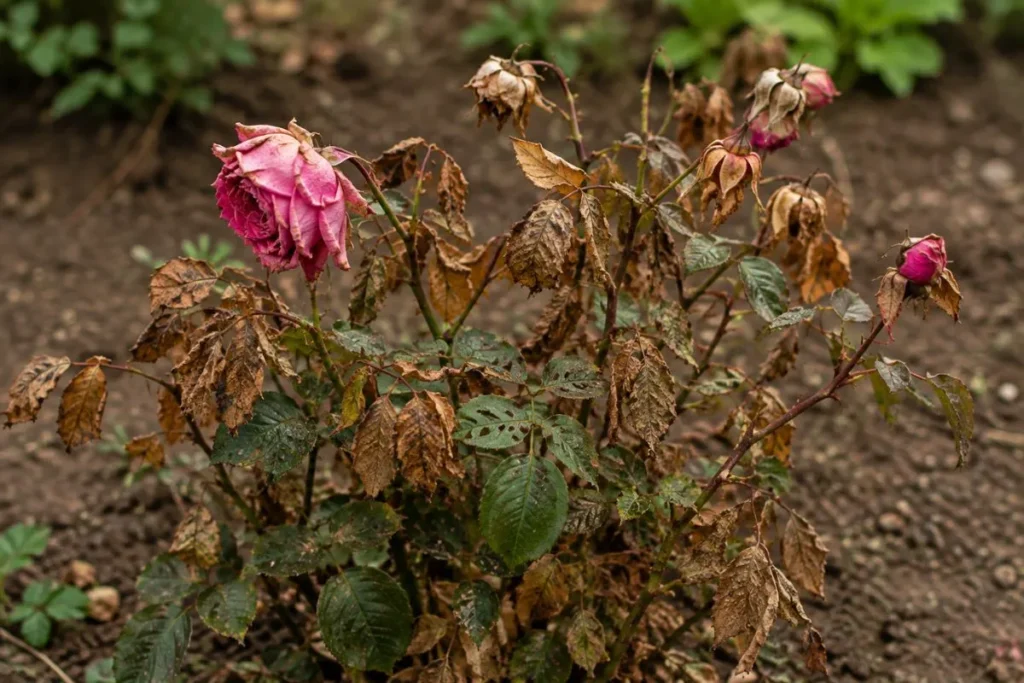
If you are searching why is my rose plant dying suddenly, start by thinking about what changed just before the decline began. Did the weather become unusually hot?
Did you move the rose? Did you recently repot it? Has the soil stayed wet or become extremely dry? Did you notice insects or unusual spots on the leaves? These clues can help reveal what is causing my rose plant to die and explain why is my rose plant dying so quickly.
Sudden Changes in Watering
A major change in watering can quickly stress a rose and may explain why is my rose plant dying. If the soil becomes extremely dry, the plant may wilt and its foliage can lose its healthy appearance. On the other hand, suddenly giving a struggling rose large amounts of water can leave the roots sitting in excess moisture.
Instead of reacting immediately, check the soil and determine its actual condition. The goal is to restore a balanced moisture level without creating another problem.
Extreme Heat or Cold
Weather changes can also explain why is my rose plant dying suddenly. A sudden heat wave can increase water loss from leaves and soil, while unusually cold conditions can stress tender growth.
Look for signs that appeared after a major temperature change. Wilted foliage during extreme heat may be environmental stress rather than a permanent decline. Likewise, sudden damage following an unusually cold period may indicate temperature injury.
Give the rose a stable growing environment and avoid making several drastic changes at the same time. This can help answer why is my rose plant dying when the decline started after unusual weather.
Root Problems Can Cause Rapid Decline
The roots support everything above the soil. If they become seriously stressed, the plant can decline quickly and this may be one reason why is my rose plant dying.
Poor drainage, prolonged wet soil, physical root damage, or severe dryness can interfere with normal root function. A rose may then wilt, lose leaves, or stop producing healthy growth.
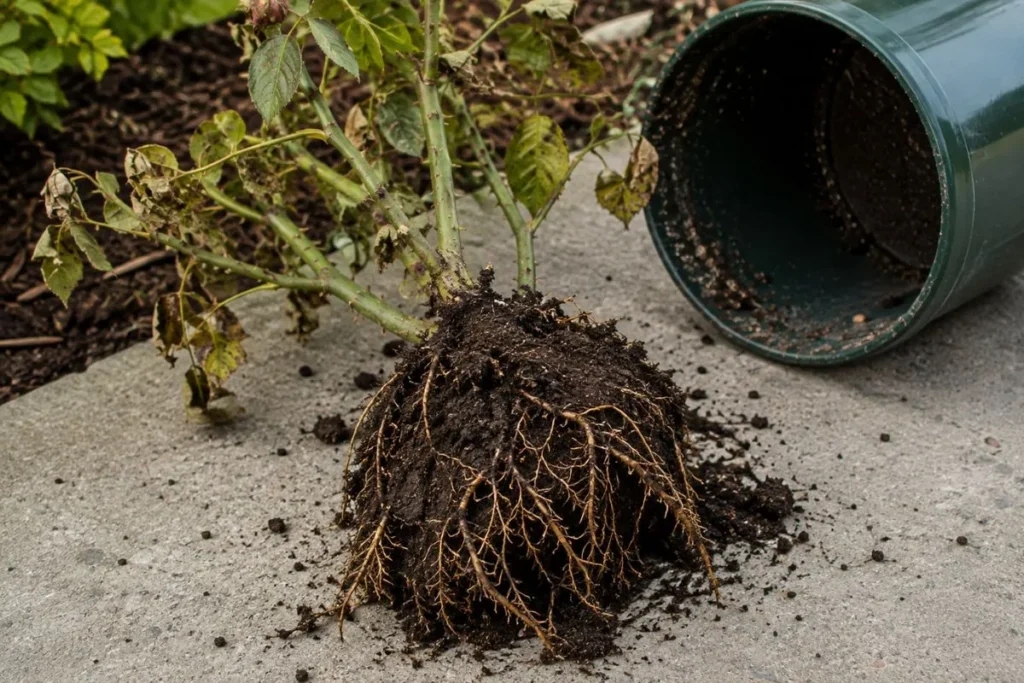
If the plant looks severely stressed while the soil remains unusually wet, investigate the root environment instead of simply watering again.
A Pest Infestation May Have Spread Quickly
Sometimes a rose looks healthy one week and noticeably weaker the next because pests have multiplied. A sudden pest problem can be another answer to why is my rose plant dying suddenly.
Check the underside of leaves, new shoots, flower buds, and stems. Look for aphids, spider mites, distorted new growth, tiny insects, speckled leaves, or fine webbing.
A sudden increase in rose plant pests can weaken the plant quickly, especially when the infestation is left untreated.
Disease Can Cause a Rapid Change
Disease is another possibility when the plant’s condition changes quickly and may explain why is my rose plant dying.
Look for unusual leaf spots, rapidly spreading discoloration, powdery growth, rust-colored markings, or large amounts of leaf drop. These symptoms can point toward a rose plant disease rather than a simple watering mistake.
Do not treat every sudden brown or yellow leaf as a fungal problem, though. Compare the symptoms with the plant’s recent growing conditions before deciding what is happening.
Transplant Shock Can Look Sudden
If you recently moved your rose, transplant stress can explain a sudden decline and may help answer why is my rose plant dying after transplanting.
A rose may respond to root disturbance by wilting, dropping leaves, or temporarily slowing its growth. The change can seem sudden because the plant has to adjust to both disturbed roots and a new environment.
If the decline began shortly after transplanting, avoid repeatedly moving the plant again. Give it stable conditions and allow it time to adjust.
What to Check First When a Rose Suddenly Declines
When a rose suddenly looks much worse, do not immediately apply fertilizer, pesticide, or extra water. Start with a simple inspection to understand why is my rose plant dying.
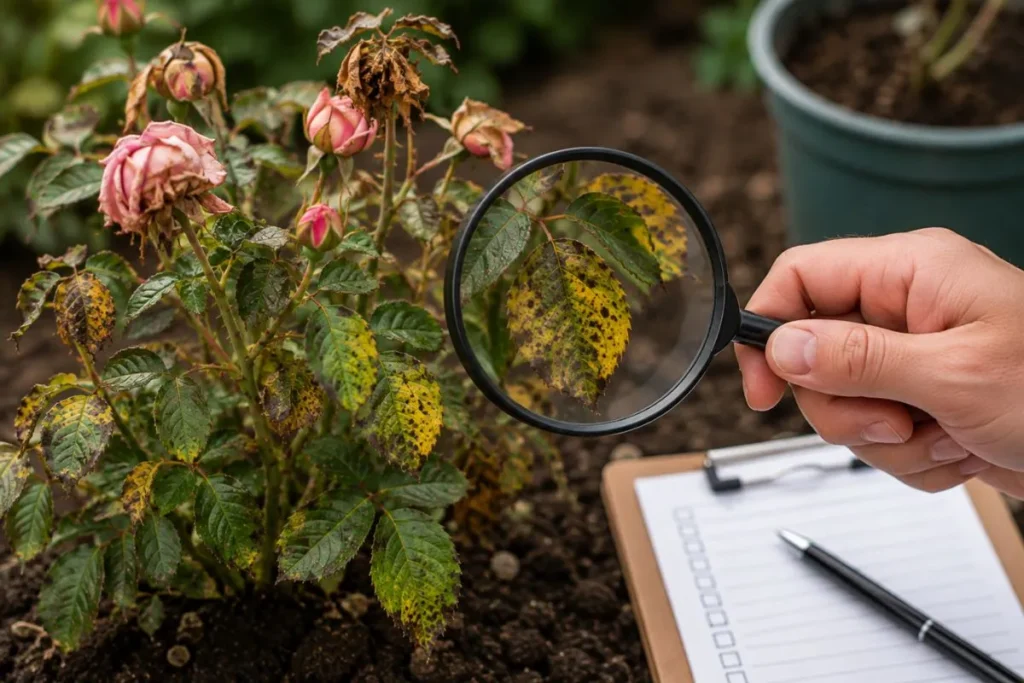
Check the soil moisture, drainage, leaves, stems, and plant location. Look for pests or unusual symptoms and think about anything that changed recently.
This approach is much more useful than guessing because the same symptom can have several different causes.
Why Is My Rose Plant Dying With Yellow Leaves?
Yellow leaves do not automatically mean your rose plant is dying. That is one of the easiest mistakes to make when diagnosing rose problems. A few yellowing older leaves can be part of the plant’s normal growth cycle, while widespread yellowing may signal stress.
If you are asking why is my rose plant dying, the important part is understanding where the yellowing starts, how quickly it spreads, and what the rest of the plant looks like.
If you are asking why is my rose plant dying with yellow leaves, look at the yellow leaves together with the soil, roots, sunlight, watering routine, and overall plant condition. This gives you a much clearer picture than leaf color alone.
Overwatering Can Cause Yellow Leaves
One possible reason for why is my rose plant dying is excess moisture around the roots.
When soil stays wet for too long, the roots may struggle to function properly. The plant can respond with pale or yellow foliage, weak growth, and an overall decline.
Check the soil before adding more water. If it remains wet for extended periods, investigate drainage and the condition of the growing medium.
Yellow leaves combined with consistently wet soil are a stronger warning sign than yellow leaves by themselves.
Underwatering Can Also Cause Yellowing
Too little moisture can also contribute to yellow foliage, particularly when the plant has been severely stressed.
If the soil is very dry and the leaves are yellow, limp, or beginning to dry around the edges, water stress may be involved.
This is why you should never diagnose the problem from color alone. Compare the leaves with the soil condition.
A rose growing in a container may require closer monitoring because potting soil can dry out faster during hot or windy weather.
Nutrient Problems May Affect Leaf Color
Nutrient problems can sometimes cause yellowing leaves and may contribute to why is my rose plant dying.
If the plant is growing poorly and the foliage consistently looks pale despite appropriate watering and lighting, nutrition may deserve attention. However, avoid immediately adding large amounts of fertilizer.
Too much fertilizer can create another problem and may damage the roots.
Instead, consider the plant’s overall condition and recent feeding history. A nutrient deficiency roses problem should be considered only after the basic care conditions have been checked.
Poor Light Can Contribute to Weak Yellowing Foliage
A rose that does not receive enough usable light may struggle to maintain strong growth, which can contribute to why is my rose plant dying.
If the plant is growing in a shaded location, check whether nearby structures, trees, or other plants are blocking sunlight.
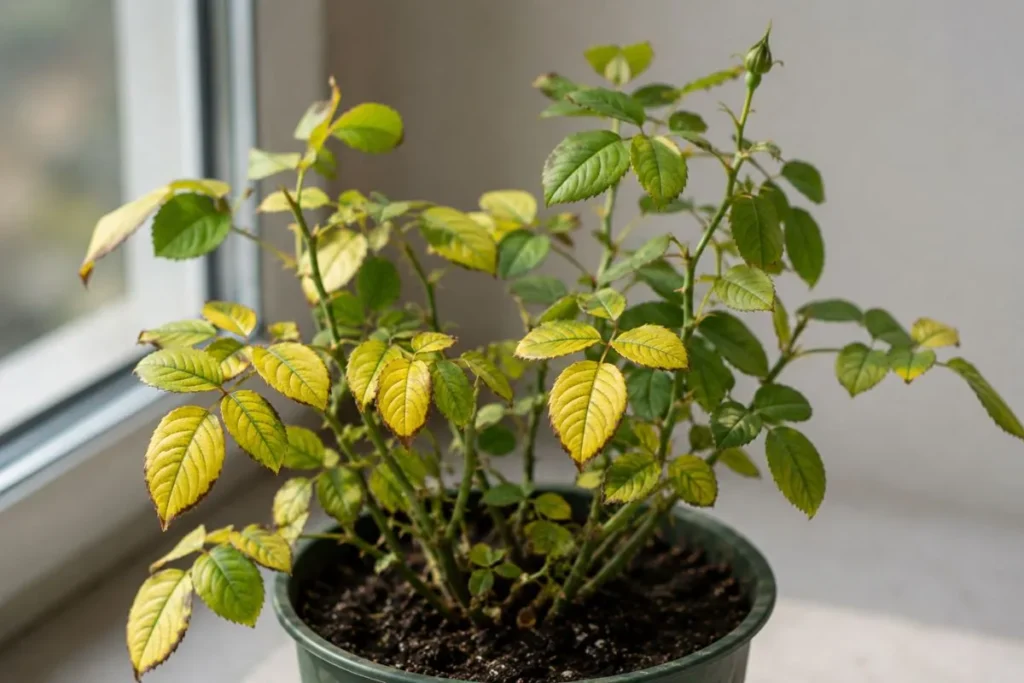
Lack of sunlight roses can lead to weak growth and reduced flowering, so the plant’s location is worth reviewing when yellow leaves appear.
Do not respond by suddenly exposing a shade-stressed plant to extreme sunlight. If you need to change its location, make the adjustment carefully and monitor how it responds.
Natural Aging Can Cause Some Yellow Leaves
Not every yellow leaf is a warning sign or proof of why is my rose plant dying.
Older leaves naturally age and may eventually turn yellow before dropping. If only a few of the oldest leaves are affected while the newer foliage remains healthy, natural aging may be the explanation.
The key is to look at the overall pattern.
A small amount of yellowing on older leaves is very different from rapid yellowing across many leaves, especially when new growth is also affected.
Disease Can Cause Yellowing
Some rose diseases can cause yellowing along with spots, lesions, or premature leaf drop and may be another reason why is my rose plant dying.
If yellow leaves also have dark spots or other unusual markings, inspect them carefully. Rose black spot disease, for example, can cause spotted foliage followed by yellowing and leaf loss.
Yellowing accompanied by unusual patterns should not automatically be treated as a watering problem. Look at the complete symptom picture before taking action.
How to Tell Whether Yellow Leaves Are Serious
The number, age, and location of affected leaves can help you judge the situation and understand why is my rose plant dying with yellow leaves.
If one or two old leaves are slowly turning yellow while the rest of the rose looks healthy, there may be little reason for concern.
If many leaves are turning yellow at once, the plant is losing leaves rapidly, or new growth is also becoming pale, take a closer look at the soil, roots, sunlight, pests, and disease symptoms.
This is particularly important when trying to understand why is my rose plant dying, because several different problems can produce similar symptoms.
What Should You Do About Yellow Rose Leaves?
Do not start by removing every yellow leaf or adding extra fertilizer.
First, inspect the soil and check whether it is excessively dry or wet. Then examine the plant for pests, disease symptoms, and signs of poor growing conditions.
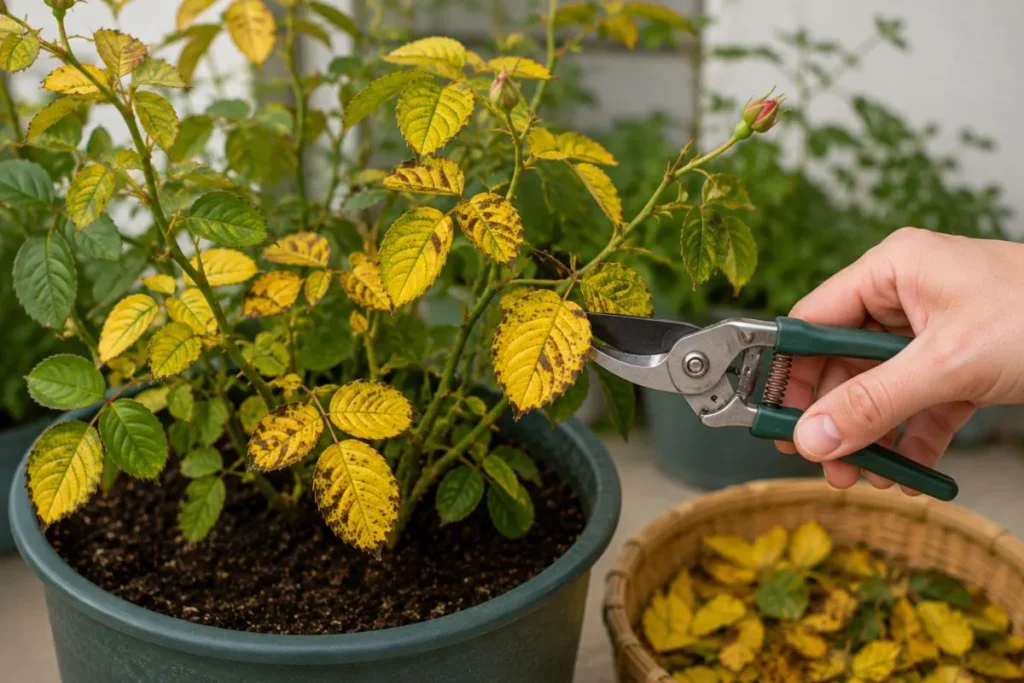
Look at where the rose is growing and consider whether it receives enough suitable sunlight. Also think about any recent changes in watering, feeding, repotting, or weather.
Once you identify the likely cause, correct that specific problem. This gives the rose a better chance to produce healthy new growth.
Remember, an older yellow leaf may not recover. The real sign of rose plant recovery is healthier new growth and a reduction in the symptoms affecting the plant.
Why Is My Rose Plant Dying and Losing Leaves?
A common belief is that rose leaves falling off always means the plant is dying. That is not necessarily true. Roses can naturally lose older leaves, especially when conditions change, but sudden or widespread leaf loss usually deserves a closer look.
If you are asking why is my rose plant dying and losing leaves, focus on how quickly the leaves are dropping, which leaves are affected, and whether the plant has other symptoms.
Natural Leaf Loss Can Be Normal
A rose does not keep every leaf forever. Older foliage can naturally yellow, weaken, and eventually fall as the plant replaces it with newer growth.
If only a few older leaves are dropping while the rest of the plant looks strong, there may not be a serious problem. Healthy new shoots, firm stems, and continued growth are good signs.
The concern starts when rose leaves falling off happens rapidly or affects large parts of the plant. If this happens, consider why is my rose plant dying instead of assuming the leaf loss is normal.
Sudden Environmental Changes Can Trigger Leaf Drop
Roses respond to changes in their environment. A sudden move, major temperature change, unusual heat, or change in light can put the plant under stress and may explain why is my rose plant dying and losing leaves.
For example, a rose that has been growing in one location for a long time may react after being moved to a completely different spot. Changes in sunlight, wind exposure, temperature, and moisture can all affect the foliage.
If your rose plant losing leaves started soon after a major environmental change, give the plant stable conditions and avoid repeatedly moving it.
Water Stress Can Lead to Leaf Loss
Both very dry and consistently wet conditions can contribute to leaf drop and may be part of the answer to why is my rose plant dying.
When a rose becomes severely stressed from insufficient moisture, it may lose leaves as it tries to conserve resources. On the other hand, prolonged wet conditions can damage the root system and eventually cause foliage to decline.
This is why the soil is an important clue when you are trying to understand why is my rose plant dying and losing leaves.
Check the moisture before watering. Do not automatically add more water simply because leaves are falling.
Disease Can Cause Widespread Leaf Drop
Disease can also cause a rose to lose foliage prematurely and may explain why is my rose plant dying and losing leaves.
Pay close attention if falling leaves are accompanied by spots, discoloration, powdery growth, or unusual markings. For example, rose black spot disease can damage foliage and contribute to premature leaf loss.
If the leaves are dropping while showing obvious signs of disease, treat the problem as more than simple environmental stress.
Remove badly affected foliage when appropriate and keep an eye on the remaining leaves for new symptoms.
Pests Can Cause Leaves to Drop
A serious pest infestation can weaken a rose enough to cause significant leaf loss and may be another reason why is my rose plant dying.
Inspect the undersides of leaves, new growth, stems, and buds. Aphids can cluster around tender shoots, while spider mites may cause fine speckling and other signs of damage.
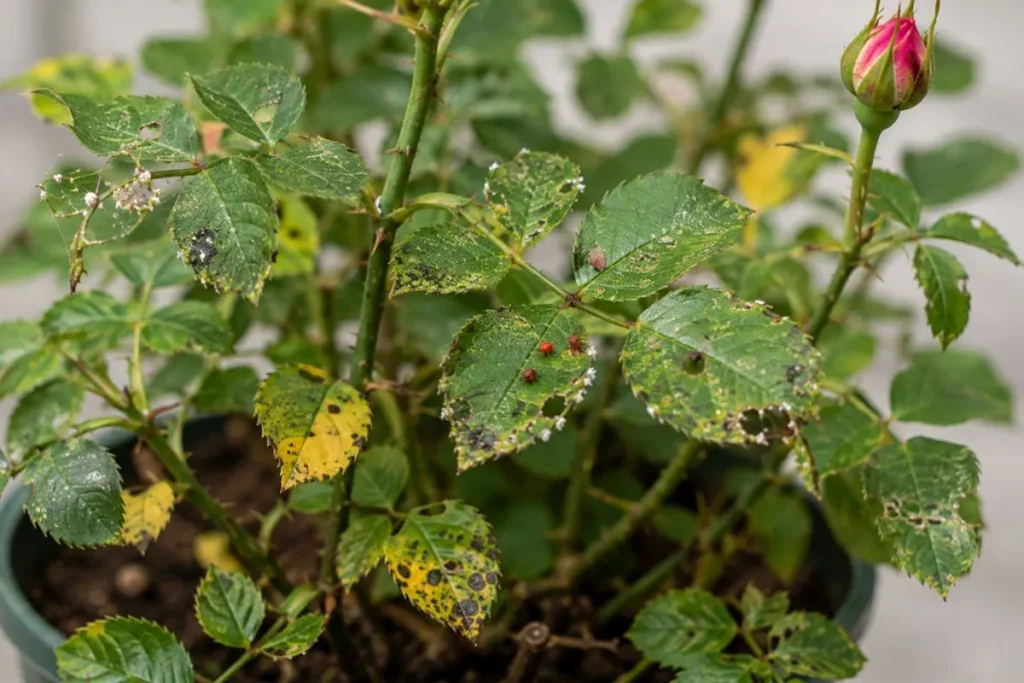
If you notice rose plant pests along with widespread leaf loss, deal with the infestation promptly. A plant under constant pest pressure has a harder time producing healthy new foliage.
Root Problems Can Affect the Foliage
Leaves depend on a functioning root system for water and nutrients. When the roots are damaged, the plant may struggle to support its foliage and this can help explain why is my rose plant dying and losing leaves.
Poor drainage, compacted soil, prolonged moisture, or severe dryness can all put stress on the roots.
If your rose is losing leaves while the soil remains unusually wet or the plant has stopped producing healthy growth, inspect its growing conditions carefully. In severe cases, rose plant root rot may be involved.
Look at Which Leaves Are Falling
The location of the leaf loss can provide a useful clue when determining why is my rose plant dying.
If mostly older leaves are dropping while new growth remains healthy, natural aging may be involved.
If newer leaves are also falling, the problem may be more serious. Rapid loss across both old and new foliage suggests that the plant is experiencing ongoing stress.
Also look at the leaves before they fall. Are they yellow? Brown? Spotted? Curled? Dry? These details can help narrow down the cause.
Leaf Loss After Transplanting
A rose may also lose leaves after being moved or repotted. This can help explain why is my rose plant dying after transplanting.
Root disturbance can temporarily affect the plant’s ability to support its existing foliage. A change in sunlight, soil, moisture, or temperature can add further stress.
If rose plant dying after transplanting symptoms include leaf drop, avoid making repeated changes. Give the plant a stable location and consistent care while it adjusts.
What Should You Do When Your Rose Is Losing Leaves?
Start with observation rather than immediately cutting everything back or adding fertilizer.
Check the soil moisture and drainage. Inspect the leaves and stems for pests or disease symptoms. Look at the plant’s location and consider whether it has recently experienced unusual weather or a change in care.
If only a few old leaves are falling and new growth looks healthy, monitor the plant rather than assuming the worst. But if the rose is rapidly losing leaves and looks weak overall, identify and correct the underlying stress as soon as possible.
The goal is not simply to stop the current leaf drop. The real goal is to create conditions that allow the rose to produce strong, healthy new foliage. That is the clearest sign that your rose plant recovery is moving in the right direction
Frequently Asked Questions About a Dying Rose Plant
Why Is My Rose Plant Dying?
If you are wondering why is my rose plant dying, several factors could be responsible. Common causes include watering problems, poor drainage, insufficient sunlight, nutrient issues, pests, diseases, transplant stress, and unsuitable growing conditions.
Start by checking the soil, leaves, roots, plant location, and recent changes in care. Finding the specific cause is the first step toward helping a dying rose plant recover.
Why Is My Rose Plant Dying Suddenly?
Why is my rose plant dying suddenly is a common concern when a healthy-looking rose declines quickly. Sudden changes in temperature, watering, sunlight, or location can cause rapid stress. Pest infestations, disease, and root problems can also cause a quick decline.
Think about what changed shortly before the symptoms appeared. That clue can help you identify the problem faster.
Why Is My Rose Plant Dying With Yellow Leaves?
If you are asking why is my rose plant dying with yellow leaves, check the soil first. Both excessive moisture and severe dryness can contribute to yellow foliage. Poor lighting, nutrient problems, disease, and natural aging can also cause yellow leaves.
Look at how many leaves are affected and whether the newest growth is also turning yellow. Widespread yellowing deserves more attention than one or two older yellow leaves.
Why Is My Rose Plant Dying and Losing Leaves?
If you are searching why is my rose plant dying and losing leaves, look at the pattern of leaf loss. A few older leaves falling naturally may not be a concern, but rapid leaf drop can indicate stress.
Watering problems, disease, pests, root damage, temperature changes, and transplant shock can all cause rose leaves falling off. Check the soil and inspect the leaves before changing your care routine.
Why Is My Rose Plant Dying in a Pot?
If you are wondering why is my rose plant dying in a pot, check the container and soil. Poor drainage, a blocked drainage hole, compacted soil, insufficient root space, and inconsistent watering can all affect a potted rose.
Make sure excess water can escape and that the plant has suitable soil and enough room for healthy root growth. Also check whether the container receives adequate sunlight.
Why Is My Rose Plant Dying After Transplanting?
Why is my rose plant dying after transplanting can often be explained by transplant shock. Moving a rose can disturb its roots and suddenly change its soil, light, temperature, and moisture conditions.
If the plant began wilting or losing leaves soon after being moved, give it a stable location and consistent care. Avoid repeatedly moving or repotting it while it is already stressed.
Why Is My Rose Plant Dying After Repotting?
If you are asking why is my rose plant dying after repotting, the roots may have experienced stress during the process. Changes in soil, drainage, container size, watering, or light can also affect the plant.
Do not immediately add extra fertilizer. Give the rose stable conditions and monitor its new growth while making sure the soil is neither excessively dry nor constantly wet.
How Do I Save a Dying Rose Plant?
To learn how to save a dying rose plant, first identify the cause. Check the soil moisture, drainage, sunlight, roots, leaves, and stems. Look for pests or disease symptoms and think about any recent changes to the plant’s environment.
Once you identify the likely problem, correct that specific issue. Avoid making several major changes at once because a stressed rose needs stable conditions.
How Do I Revive a Dying Rose Bush?
If you want to know how to revive a dying rose bush, start with the basics. Make sure the roots have suitable moisture and drainage, provide appropriate sunlight, remove severely damaged growth when necessary, and inspect the plant for pests and disease.
Give the rose time to respond after correcting the problem. Healthy new growth is one of the best signs that the plant is beginning to recover.
How Do I Bring a Dying Rose Plant Back to Life?
To understand how to bring a dying rose plant back to life, avoid trying random treatments. First determine whether the main problem is water, soil, light, temperature, pests, disease, or transplant stress.
Correct the underlying issue and keep the plant’s conditions stable. Damaged leaves may not recover, but fresh, healthy growth can show that your rose plant recovery is moving in the right direction.
Conclusion:
If you are still asking why is my rose plant dying, remember that a struggling rose is not always a lost cause. Yellow leaves, wilting, falling foliage, weak growth, and other symptoms are often signs that the plant is under stress rather than proof that it cannot recover.
The key is to find the cause instead of treating only the symptoms. Check the soil and drainage, review the plant’s sunlight, inspect the leaves for pests or disease, and think about any recent changes in watering, weather, repotting, or location. Once you identify the problem, make the appropriate correction and give your rose time to respond.
Avoid making several major changes at once. A stressed rose needs consistent conditions while it recovers. Also remember that damaged leaves may not return to their original appearance. The better sign of rose plant recovery is healthy new growth, stronger foliage, and fewer new symptoms.
Whether you are dealing with why is my rose bush dying, why are my roses dying, or simply trying to learn how to save my dying rose plant, the same principle applies:
find the underlying problem, correct it, and provide steady care. With the right conditions and a little patience, your rose may have a much better chance of growing strong and healthy again.

Plant Nest Blog’s author is passionate about plants, gardening, and sustainable living. Through research and practical experience, they share helpful plant care tips, gardening guides, and easy solutions to help readers grow healthier plants and create greener spaces.