
Many people believe that if they water their plants regularly and give them some sunlight, the plants should automatically grow. But that is not always how it works.
If you keep asking, “Why are my plants not growing?”, the problem may have nothing to do with how often you water them. Plants need the right balance of light, water, nutrients, healthy roots, good soil, and suitable growing conditions to produce strong new growth.
Slow plant growth can be frustrating, especially when your plant looks healthy but seems stuck. You may notice that it has not produced new leaves for weeks, remains the same size, or simply looks weaker than it did before.
In some cases, the plant is not dying at all. It may simply be dealing with one small problem that is preventing normal growth.
This is why adding more fertilizer or watering more often is not always the answer.
In fact, doing too much can sometimes make plant growth problems worse. The better approach is to find the actual cause first and then make the right adjustment.
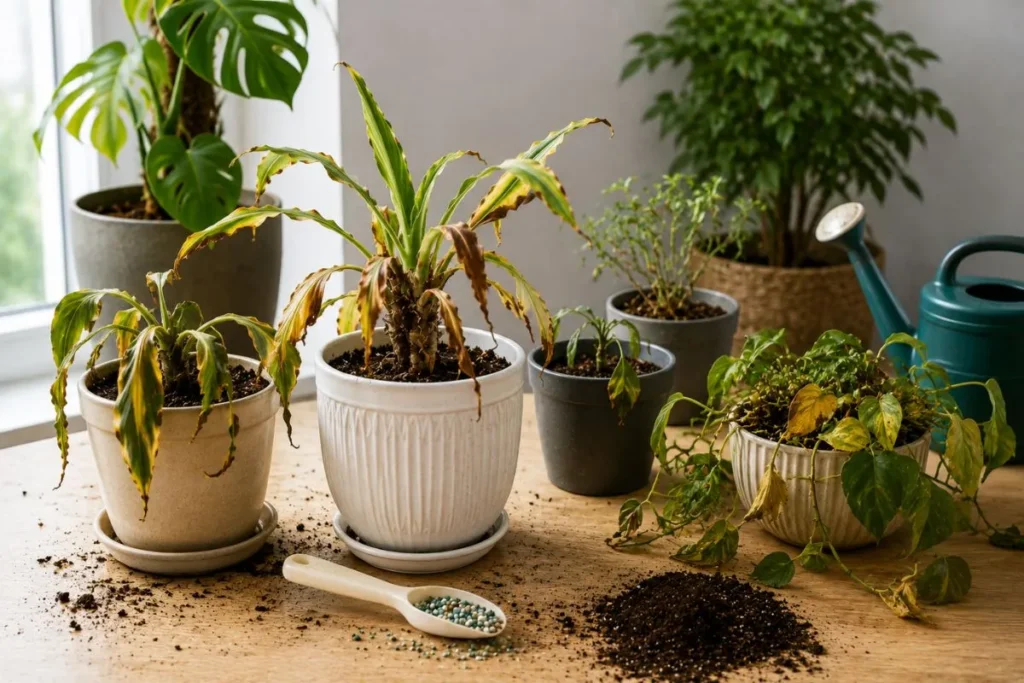
So, why are my plants not growing even though I water them? Common reasons include poor lighting, incorrect watering, poor soil drainage, nutrient deficiencies, compacted soil, root problems, pests, diseases, temperature stress, unsuitable humidity, and even a plant’s natural growth cycle.
The good news is that most of these problems can be identified by looking closely at your plant and its growing environment. A few changes can often make a big difference.
Whether you are dealing with indoor plants not growing, outdoor plants that seem stuck, or a plant that is growing much more slowly than expected, the first step is to understand what could be holding it back.
In this guide, we will look at the most common causes of stunted plant growth and what you can do about them. By the end, you should have a much clearer idea of what your plant needs to start producing healthy new growth again.
Why Are My Plants Not Growing? 11 Common Reasons
If you keep wondering, “Why are my plants not growing?”, the answer usually comes down to one or more problems with the plant’s growing environment. A plant needs the right combination of light, water, nutrients, healthy roots, suitable soil, and stable conditions to keep producing new growth.
Here are the 11 most common reasons why are my plants not growing, along with the main problems to look for.
Not Enough Light
One of the first things to check when asking why are my plants not growing is light. Plants need enough light to carry out photosynthesis and produce the energy required for healthy growth.
When a plant does not receive enough light, you may notice slow growth, smaller leaves, pale foliage, or weak and stretched stems. This is especially common when indoor plants are not growing because they are placed too far from a suitable window.
Too Much or Too Little Water
If you are asking why are my plants not growing even though I water them, your watering habits may actually be part of the problem.
Both overwatering and underwatering can cause slow plant growth. Too much water can leave roots sitting in wet soil, while too little water can prevent the plant from getting enough moisture to support new growth.
Instead of watering simply because it is a certain day, check the soil and consider the needs of your particular plant.
Poor Soil Drainage
Poor drainage is another common answer to why are my plants not growing. Roots need water, but they also need oxygen. When excess water cannot drain away, the soil can stay wet for too long.
This creates poor growing conditions for the roots and can eventually contribute to root damage. If your plant’s soil remains soggy for long periods, check the container, drainage holes, and quality of the growing mix.
Lack of Essential Nutrients
Sometimes the answer to why are my plants not growing is a lack of nutrients. Plants need essential nutrients to produce healthy leaves, stems, roots, and new growth.
A nutrient deficiency may cause pale leaves, weak stems, small new leaves, or stunted plant growth. Nitrogen, phosphorus, and potassium are especially important, although plants also need several micronutrients.
However, do not assume that adding more fertilizer will automatically solve the problem. A plant must have healthy roots and suitable growing conditions to use those nutrients properly.
Compacted or Poor-Quality Soil
If you have fixed the light and watering but still wonder why are my plants not growing, take a closer look at the soil.
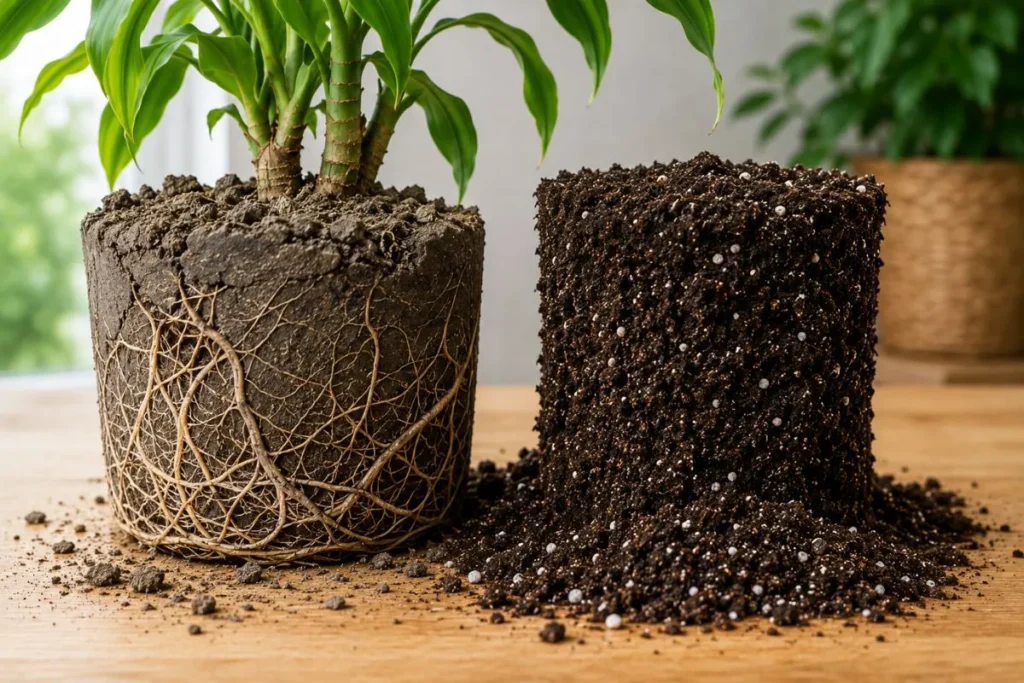
Compacted soil can become hard and restrict root movement. It can also make it harder for water and air to move through the root zone. As a result, the roots may struggle to function properly, leading to poor plant growth.
Good-quality growing media should give roots enough space, air, moisture, and access to nutrients.
Root Problems or Root-Bound Plants
Healthy roots are essential when it comes to understanding why are my plants not growing. Even if the leaves look fine, problems below the soil can slow or stop new growth.
Damaged roots may struggle to absorb water and nutrients. A root-bound plant can also become restricted when its roots fill the available container space.
If a plant has been in the same container for a long time and its growth has slowed noticeably, the root system may be worth checking.
Pests Can Slow Plant Growth
Pests are another reason why are my plants not growing normally. Tiny insects can feed on leaves, stems, or plant sap and weaken the plant over time.
You may notice distorted new leaves, tiny marks, sticky residue, holes, or unusually weak growth. Some pests are difficult to spot at first, so inspect the undersides of leaves and around new growth.
Catching pests on plants early can prevent a small problem from turning into a major plant growth issue.
Plant Diseases Can Cause Stunted Growth
Plant diseases can also explain why are my plants not growing as expected. Some diseases affect the leaves, while others attack stems or roots.
Watch for unusual spots, discoloration, rotting tissue, distorted leaves, or sudden changes in growth. A plant that was growing normally but suddenly becomes weak may be dealing with a disease or another form of stress.
Good watering practices, suitable air circulation, and clean growing conditions can help reduce many common plant health problems.
Incorrect Temperature or Humidity
Temperature and humidity can have a bigger effect on growth than many gardeners realize. If you are wondering why are my plants not growing, consider whether the plant is exposed to extreme heat, cold drafts, or very dry air.
Some plants naturally prefer warm and humid conditions, while others tolerate drier environments. When the conditions are outside a plant’s preferred range, growth can slow and other signs of plant stress may appear.
Unsuitable Growing Conditions
Sometimes there is not one obvious reason why are my plants not growing. Several smaller problems may be affecting the plant at the same time.
For example, a plant may receive limited sunlight, grow in compacted soil, and experience inconsistent watering. Each problem can place stress on the plant, and together they can lead to slow plant growth.
Look at the entire growing environment instead of focusing on only one factor. Light, water, soil, nutrients, roots, temperature, humidity, pests, and diseases all work together.
Natural Growth Cycles
Finally, your plant may simply be growing at its normal pace. Not every plant grows quickly, and some naturally slow down during certain seasons or stages of development.
So, if you are asking why are my plants not growing, do not immediately assume that something is wrong. A mature plant may naturally produce new growth more slowly than a young, actively growing plant.
Plant variety also matters. Some plants are naturally fast growers, while others take much longer to produce noticeable changes.
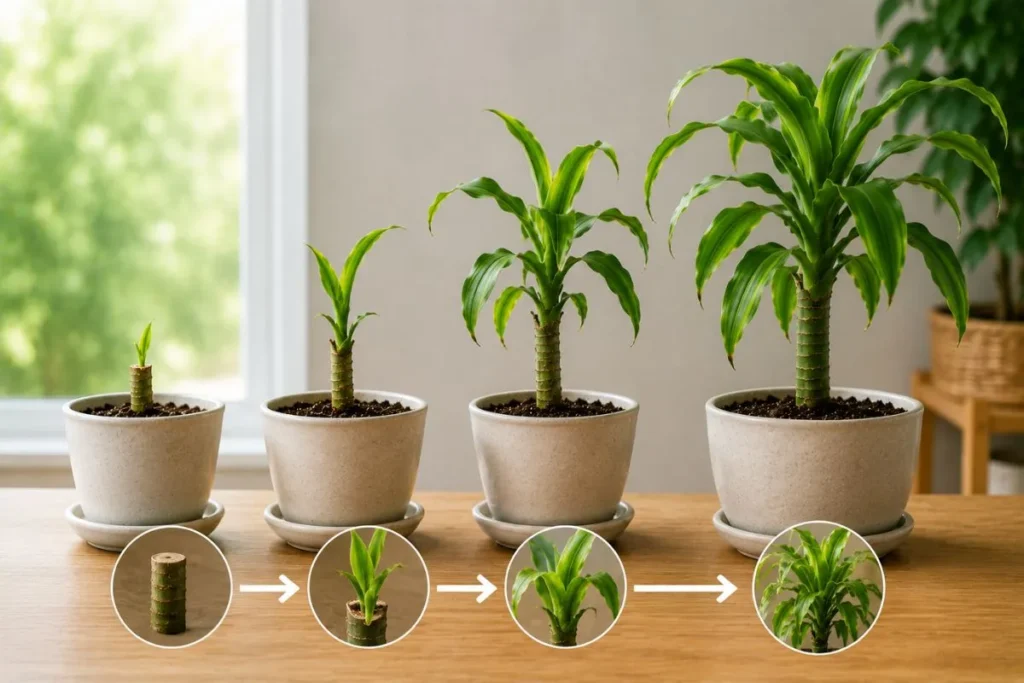
Understanding the plant’s normal growth pattern can help you separate a genuine plant growth problem from normal slow development.
The key is to avoid guessing. If you know why your plants are not growing, you can address the actual problem instead of making unnecessary changes that may create even more stress.
Your Plants May Not Be Getting Enough Light
Many people assume that placing a plant near a window automatically gives it enough sunlight. That is not always true. A bright-looking room can still have too little usable light for a plant to grow well.
So, if you keep asking “why are my plants not growing?”, do not judge the light only by how bright the room looks. The amount, intensity, and duration of light all matter.
Light is one of the most important plant growth requirements because plants use it to make energy through photosynthesis. When a plant does not receive enough suitable light, it may survive for quite some time but produce very little new growth.
This is why insufficient sunlight for plants can lead to slow or weak development even when watering and soil conditions seem fine.
Why Light Is Essential for Plant Growth
Plants need light to carry out photosynthesis, the natural process that allows them to convert light energy into chemical energy. In simple terms, light gives a plant the power it needs to build and maintain its leaves, stems, roots, and new growth.
When light levels are suitable, a plant can produce enough energy to support healthy development. But when light is limited, the plant has less energy available for active growth.
You may notice that it stays the same size for a long time or produces new leaves much more slowly.
This is one reason why are my plants not growing new leaves is often linked to lighting conditions. The plant may still be alive and green, but it does not have enough energy to produce vigorous new growth.
The right amount of light depends on the plant. A sun-loving plant may need several hours of strong direct light, while a shade-tolerant plant may prefer bright indirect light. Giving every plant the same lighting conditions can therefore create problems.
Signs Your Plant Needs More Light
Your plant cannot tell you that it needs a brighter location, but its growth can give you useful clues. Look closely at the leaves and stems for changes that suggest lack of sunlight.
One common sign is leggy growth. The stems may become long and thin as the plant stretches toward the nearest light source. Instead of growing compact and full, the plant may look sparse or uneven.
Small leaves can also indicate that the plant is struggling to get enough energy for normal development. If new leaves are consistently smaller than expected, check whether the plant is receiving enough light.
Another clue is pale or weak-looking foliage. Although pale leaves can have several causes, insufficient light is one possibility worth checking.
You may also notice that the plant seems to stop producing new growth. This can make you wonder, “Why won’t my plants grow?” Before adding fertilizer, look at the lighting conditions first.
A plant that consistently grows toward one side of a room is also giving you a useful signal. If the stems and leaves lean toward a window, the plant may be trying to reach a stronger light source.
How Much Light Do Plants Need?
There is no single light level that works for every plant. Different species have different requirements, so the first step is to understand what your particular plant prefers.
Bright indirect light works well for many popular houseplants. The plant receives plenty of light without sitting directly under intense sunlight for long periods.
Direct sunlight is better suited to plants that naturally grow in bright, open environments. These plants can often handle stronger rays than plants adapted to shaded conditions.
Low-light conditions may work for certain shade-tolerant plants, but low light does not mean no light. Even plants marketed as low-light plants still need enough light to carry out photosynthesis and maintain healthy growth.
This distinction is important for anyone asking why are my indoor plants not growing. A plant can survive in a dim room while barely growing. Survival and vigorous growth are not the same thing.
Also consider the distance from a window. Light intensity can drop significantly as a plant is moved farther away from the source. A spot that looks bright to your eyes may provide much less usable light than the area directly beside a window.
The direction of the window matters too. A plant near a bright window may receive very different conditions depending on the direction it faces, nearby buildings, curtains, trees, and seasonal changes.
How to Fix Insufficient Sunlight
If you suspect that insufficient sunlight for plants is causing slow growth, start with a simple adjustment. Move the plant to a brighter location that matches its light requirements.
Do not make a dramatic change without considering the plant’s needs. A plant that has been living in low light may need time to adjust before being exposed to strong direct sunlight.
If possible, place the plant closer to a suitable window. Keep an eye on its leaves and overall appearance over the following weeks. You can also rotate the pot occasionally so different sides receive more even exposure.
Clean windows can also help. Dust, curtains, screens, and other barriers can reduce the amount of light reaching your plant. Small changes to the surroundings may improve the available light without moving the plant very far.
For rooms with very little natural light, a grow light can be useful. This can be especially helpful for indoor plants during darker seasons or in spaces where natural sunlight is limited.
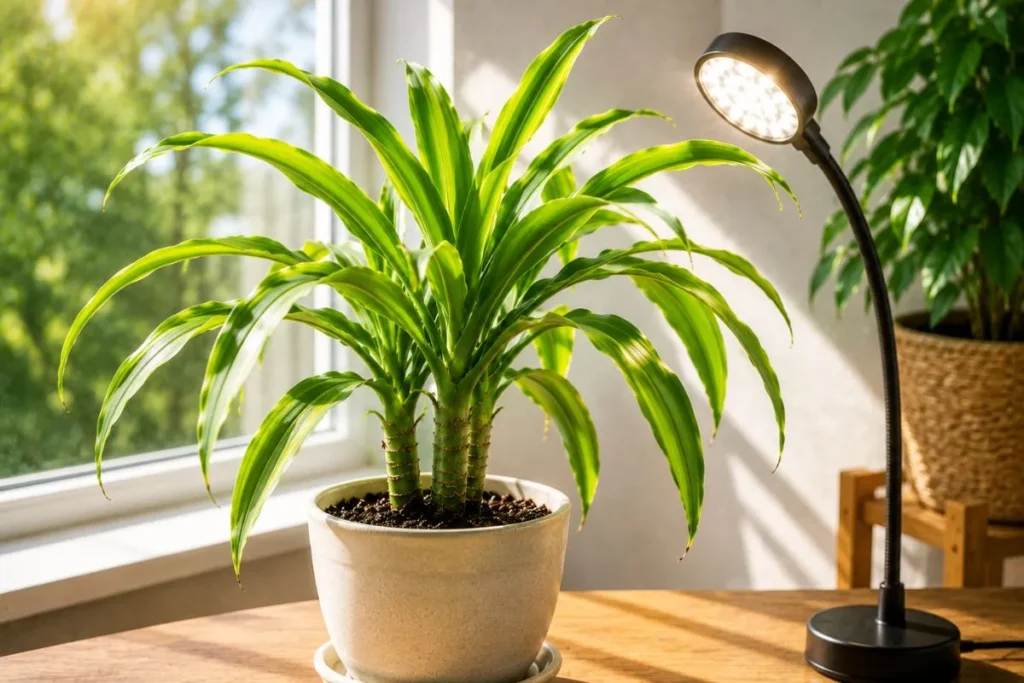
The goal is not simply to give your plant more light. The goal is to provide the right light for that particular plant.
If your plant receives enough water and nutrients but still has weak or slow growth, light should be one of the first things you investigate. Once the lighting matches the plant’s needs, it has a much better chance of producing healthy new growth.
So, if you are still asking “why are my plants not growing?”, take a fresh look at their light. Sometimes the solution is not another dose of fertilizer or more water. It may simply be a better spot with the right amount of usable light.
Overwatering or Underwatering Can Stop Plant Growth
Many gardeners think that giving a struggling plant more water will help it grow faster. But that is not always true. More water does not automatically mean more growth.
If you keep asking, “why are my plants not growing even though I water them?”, your watering routine could actually be part of the problem.
Plants need water to transport nutrients, maintain healthy tissues, and support important processes such as photosynthesis. At the same time, plant roots need oxygen to function properly.
When the soil stays soaked for too long, roots can become stressed. When the soil becomes too dry, the plant may not have enough moisture to support healthy new growth.
The goal is not to water your plants as often as possible. The goal is to maintain the moisture level that suits the particular plant.
Why Watering Problems Cause Slow Growth
Water is essential for healthy plant development, but both overwatering and underwatering can interfere with growth. This is one reason watering problems are so often connected with slow plant growth.
When you overwater a plant, excess moisture fills the spaces between soil particles. This reduces the amount of oxygen available around the roots. Roots need oxygen to remain healthy and perform their normal functions.
If the soil stays saturated for too long, the roots can become weak or damaged.
Once the root system becomes unhealthy, the plant may struggle to absorb water and nutrients properly. The leaves may look weak, and new growth can slow down or stop.
Underwatering causes a different type of stress. When there is not enough moisture around the roots, the plant cannot maintain normal water movement through its tissues. It may begin conserving energy instead of producing new leaves and stems.
This is why there is no universal watering schedule that works for every plant. A plant growing in a small pot may dry out much faster than one growing in a large container
. Temperature, humidity, soil type, sunlight, and plant size also affect how quickly moisture disappears.
Instead of watering simply because a certain number of days have passed, pay attention to the actual condition of the soil and plant.
Signs of Overwatering
If you are trying to understand why are my plants not growing, check how long the soil remains wet after watering. Soil that stays soggy for an extended period can be a warning sign.
Yellow leaves are often associated with overwatering, although yellowing can also happen for other reasons. The more useful clue is when yellowing appears alongside constantly wet soil and poor growth.
An overwatered plant may also wilt even though the soil feels wet. This can seem confusing, but damaged roots may not be able to absorb water properly. As a result, the plant can look thirsty despite sitting in moist soil.
A bad smell coming from the growing medium can also indicate that the root environment is unhealthy. In serious cases, the roots may become dark, soft, or mushy. This can lead to root rot, which can severely affect the plant’s ability to support new growth.
If you notice slow growth, wet soil, yellowing leaves, and weak foliage at the same time, take a closer look at your watering habits before adding more water.
Signs of Underwatering
Underwatering can also explain why are my plants not growing. When the root zone does not receive enough moisture, the plant may struggle to maintain healthy leaves and produce new growth.
One of the easiest signs to notice is extremely dry soil. The growing medium may feel dry several inches below the surface, depending on the size of the container and the plant’s needs.
Leaves may begin to droop, curl, or develop dry brown edges. Some plants may also drop leaves when water stress becomes severe.
A plant that is repeatedly allowed to become extremely dry may slow its growth because it is using its limited resources to survive rather than develop new foliage.
However, do not assume that every drooping plant needs water. This is an important mistake to avoid. An overwatered plant can also droop because its damaged roots cannot function properly.
Always check the soil before watering. If the soil is very dry, underwatering may be the problem. If it is already wet, adding more water could make the situation worse.
How to Water Plants Correctly
The best approach to proper plant watering is to pay attention to your plant instead of following a strict calendar.
A schedule such as watering every Monday may work for some plants for a while, but changing weather and indoor conditions can quickly make that routine unsuitable.
Before watering, check the moisture in the soil. You can feel the growing medium with your finger or use another suitable method to determine whether the plant actually needs water.
When watering is needed, water thoroughly enough to moisten the root area. For container plants, make sure the pot has proper drainage holes so excess water can escape.
Good drainage is especially important because water should not remain trapped around the roots. A plant can receive the correct amount of water but still suffer if that water has nowhere to go.
After watering, allow excess moisture to drain away. Avoid leaving the container sitting in standing water for long periods.
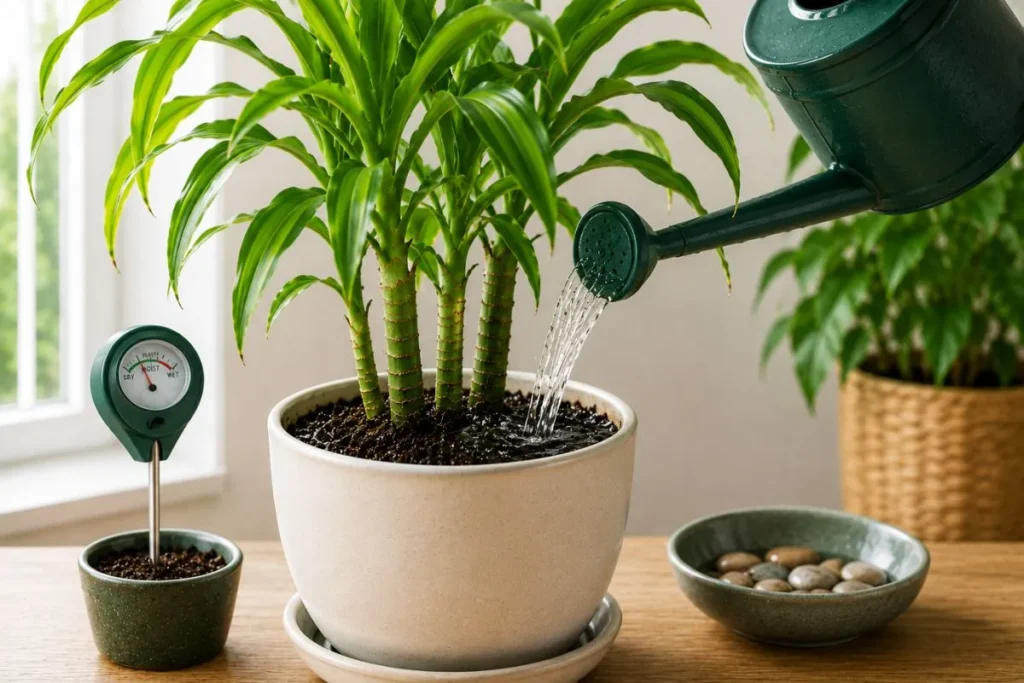
At the same time, do not let every plant become completely dry between waterings. Different plants have different moisture preferences. Some tolerate dry conditions, while others grow better when the soil remains moderately moist.
Your plant’s environment matters too. Hot weather can make soil dry faster, while cooler conditions can slow evaporation. Humidity, sunlight, container size, and the type of growing medium can all change how often watering is needed.
This is particularly important for indoor plants not growing. Indoor soil can sometimes remain wet for much longer than expected, especially when the plant receives limited light or sits in a cool room.
Instead of asking, “Is it time to water?” ask, “Does this plant need water right now?” That small change in thinking can help prevent both overwatering and underwatering.
How to Find the Right Watering Balance
If you suspect watering is behind your plant growth problems, look at the soil, roots, and leaves together rather than relying on one symptom.
If the soil remains wet for a long time, investigate the cause. The container may have poor drainage, the growing medium may hold too much moisture, or the plant may simply be receiving water too frequently.
If the soil becomes extremely dry very quickly, consider the plant’s environment. High temperatures, strong sunlight, low humidity, a small container, or a fast-draining growing medium can all increase moisture loss.
Once you identify the pattern, adjust your watering routine gradually. Avoid suddenly flooding a severely dry plant or repeatedly adding water to soil that is already saturated.
Give the plant time to respond after making a change. Healthy growth does not always return immediately because the plant may need time to recover from previous stress.
So, if you are still asking “why are my plants not growing?”, do not automatically reach for the watering can. Check the soil first. Your plant may need more water, less water, or simply a better balance between moisture and drainage.
Getting watering right gives the roots a healthier environment and creates better conditions for the plant to produce strong, healthy new growth.
Poor Soil Drainage May Be Choking the Roots
Many gardeners believe that simply watering a struggling plant less often will solve the problem. But that is not always true. If the soil cannot drain properly, reducing the amount of water may not fully solve the issue.
If you are asking “why are my plants not growing?”, poor soil drainage could be one of the hidden reasons.
Roots need both water and oxygen to stay healthy. They need enough moisture to absorb nutrients, but they also need air around them. When excess water remains trapped in the soil, the roots can become stressed and may struggle to support healthy plant growth.
Why Well-Draining Soil Matters
If you are wondering why are my plants not growing, it is important to understand the role of well-draining soil. Good soil drainage allows excess water to move away from the roots while keeping enough moisture available for the plant.
Healthy roots need a balance between moisture and oxygen. When water moves through the soil properly, the roots can access the moisture they need without staying surrounded by excess water.
Poor soil drainage creates a different situation. Water can remain around the roots for too long, filling the air spaces within the soil. This reduces the oxygen available to the root system and can lead to weak or damaged roots.
As the roots become stressed, the plant may struggle to absorb water and nutrients efficiently. This can lead to slow plant growth, weak foliage, and fewer new leaves.
So, if you keep asking why are my plants not growing, do not look only at the leaves. Check what is happening underneath the soil as well.
Signs of Poor Soil Drainage
When you are trying to find out why are my plants not growing, one of the easiest things to check is how long the soil remains wet after watering.
If the growing medium stays soggy for a long time, it may not be draining properly. You may also notice that water sits on the surface instead of moving through the soil easily.
A plant growing in poorly drained soil may show yellowing leaves, weak growth, drooping foliage, or a general lack of new development. These symptoms can have several causes, but constantly wet soil makes poor drainage an important possibility.
If you are still wondering why are my plants not growing even though I water them, check whether the roots are actually getting a healthy environment. More water will not help if excess moisture is already trapped around the roots.
In severe cases, poor drainage can contribute to root rot. Damaged roots may become dark, soft, or mushy instead of firm and healthy. Once roots become damaged, the plant can have difficulty supporting normal growth.
How to Improve Soil Drainage
If you have discovered that poor drainage may explain why are my plants not growing, start by checking the container.
Container-grown plants need a suitable way for excess water to escape. If the pot does not drain properly, water can collect around the roots and create poor growing conditions.
Next, look at the growing medium. Compacted or heavy soil can prevent water and air from moving properly through the root zone. This can make it difficult for roots to develop and function normally.
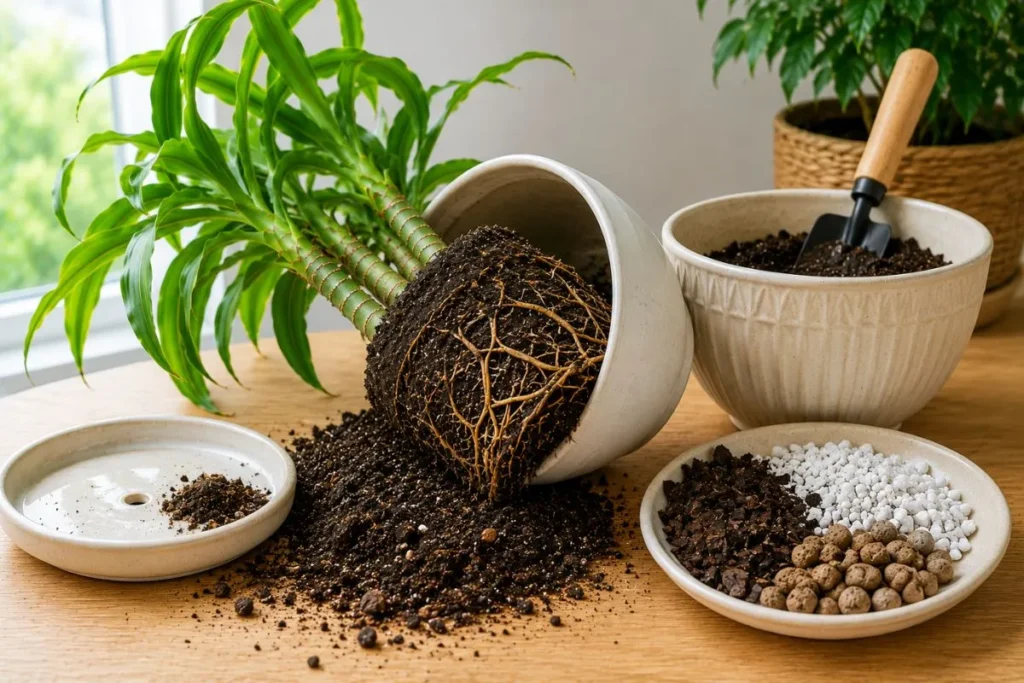
Using a suitable potting mix can improve the growing environment. The right mix depends on the plant because different plants have different moisture and drainage requirements.
If you are asking why are my plants not growing, avoid assuming that every plant needs the same type of soil.
A plant that prefers fast drainage may struggle in a dense moisture-retaining mix, while another plant may need a mix that holds more moisture.
You should also avoid relying only on frequent watering adjustments.
If the soil itself is causing poor drainage, changing your watering schedule may not completely solve the problem. The root environment needs to allow excess water to leave properly.
Why Drainage Matters More Than Simply Watering Less
If you are wondering why are my plants not growing, you may think the obvious answer is to stop watering for a few days. Sometimes allowing the soil to dry slightly can help, but this does not always fix the underlying drainage problem.
Imagine a container with dense, compacted soil. Even if you reduce watering, the soil may continue holding moisture around the roots for too long.
This is why poor soil conditions can continue causing plant growth problems even after you change your watering routine.
Good drainage gives you better control over moisture. It allows excess water to escape instead of remaining trapped in the root zone.
So, when asking why are my plants not growing, look beyond the watering schedule. Ask yourself whether the water can actually move through the soil and leave the container properly.
How Poor Drainage Can Affect Plant Growth
If you are still trying to understand why are my plants not growing, remember that healthy growth begins with healthy roots.
Roots absorb water and nutrients from the growing medium. When they remain in poorly drained soil for too long, they may become stressed or damaged.
A plant with unhealthy roots may produce fewer new leaves and stems. Its growth can become weak or unusually slow. In more serious cases, the plant may stop producing noticeable new growth.
This is why plant root problems are important when diagnosing why are my plants not growing.
The problem may begin below the soil before you see obvious symptoms on the leaves. A plant can look reasonably healthy for a while even though its root environment is gradually becoming unsuitable.
Once the drainage problem is corrected, the plant has a better environment in which its roots can function. However, damaged roots may need time to recover, so do not expect instant new growth.
Give Your Roots the Right Growing Environment
If you are asking why are my plants not growing, take a moment to check the soil before reaching for more fertilizer.
Look at how quickly water drains after watering. Check whether the container allows excess water to escape. Feel the growing medium and see whether it remains wet for an unusually long time.
If the soil is constantly saturated, focus on improving the root environment rather than simply adding more water.
Healthy roots need the right balance of moisture and oxygen. When the soil drains properly, roots have a better chance of absorbing the water and nutrients they need to support healthy growth.
So, if you keep asking “why are my plants not growing?”, poor soil drainage may be the problem hiding beneath the surface. Fixing the drainage can give your roots a healthier environment and create better conditions for steady, healthy plant growth.
23. Frequently Asked Questions:
Frequently Asked Questions About Why Aren’t My Plants Growing
Many gardeners assume that a plant that stops growing must need more fertilizer. But fertilizer is not always the answer.
If you are asking “why are my plants not growing?”, the real cause could be light, water, soil, roots, pests, temperature, or simply the plant’s natural growth rate.
These quick answers will help you narrow down the problem.
Why Aren’t My Plants Growing?
If you are wondering why are my plants not growing, start by checking the basic growing conditions. Your plant may not be getting enough light, may have inconsistent watering, or may be growing in unsuitable soil.
Root problems, nutrient deficiencies, pests, diseases, temperature stress, and low humidity can also affect growth. The best approach is to look at the plant as a whole instead of assuming one problem is responsible.
If the plant looks healthy but has not produced much new growth, also consider its species and normal growth rate. Some plants naturally grow much more slowly than others.
Why Won’t My Plants Grow Even When I Water Them?
If you keep asking why are my plants not growing even though I water them, watering may not be the missing piece.
Plants need more than moisture. They also need sufficient light, healthy roots, oxygen around the root zone, and access to essential nutrients.
Overwatering can actually create growth problems by keeping the soil too wet. If roots become stressed, they may struggle to absorb water and nutrients even when plenty of moisture is available.
Before watering again, check the soil. If it is already wet, adding more water may make the problem worse.
Why Is My Plant Not Growing?
If you are asking why is my plant not growing, look for changes in its environment. Has it recently been moved? Is it receiving enough light? Does the soil dry at a reasonable rate? Are the roots healthy?
A plant can also stop producing noticeable growth after experiencing stress. Changes in temperature, watering, light, or its growing container can temporarily slow development.
If the plant still looks healthy, give it time after correcting the suspected problem. Healthy growth may not restart immediately.
Why Are My Plants Growing Slowly?
Why are my plants growing slowly? This can happen when conditions are adequate for survival but not ideal for active growth.
Limited light is a common possibility. A plant may remain alive in a dim location but produce new leaves very slowly. Poor nutrition, unsuitable soil, root crowding, pests, and temperature changes can also contribute to slow growth.
It is also important to remember that plant varieties have different natural growth rates. A slow-growing plant is not necessarily unhealthy.
Why Have My Plants Stopped Growing?
If you are wondering why have my plants stopped growing, think about what changed before the growth stopped.
A seasonal change, move to a different location, watering change, pest infestation, root problem, or sudden temperature shift could affect the plant.
Some plants naturally reduce their growth during certain seasons. Others may pause after being repotted or experiencing environmental stress.
Look for other signs such as yellowing leaves, wilting, damaged foliage, pests, or changes in the soil. These clues can help you identify whether the growth pause is normal or caused by a problem.
What Causes Stunted Plant Growth?
Stunted plant growth can have several causes. Poor light is one possibility, while inadequate or excessive watering can create another.
Nutrient deficiencies may limit new development, while compacted soil can restrict the roots. Root-bound plants may also struggle when there is not enough room for the root system to expand.
Pests and diseases can interfere with normal growth as well. If a plant is showing unusually small leaves, weak stems, or very little new development, inspect both the foliage and the root environment.
The important thing is to identify the cause instead of treating the symptom.
Can Too Much Fertilizer Stop Plants From Growing?
Yes, too much fertilizer can contribute to poor plant growth. Many gardeners assume that adding more nutrients will make a plant grow faster, but excessive fertilizer can create problems around the roots.
A high concentration of fertilizer salts can make it harder for roots to take up water normally. This can lead to stress, damaged roots, and weaker growth.
So, if you are asking why are my plants not growing despite fertilizer, do not automatically add another dose. First consider whether the plant actually needs additional nutrients and whether its roots and growing conditions are healthy.
Can Poor Soil Stop a Plant From Growing?
Yes. Poor soil can be a major reason why are my plants not growing normally.
Compacted soil can restrict root development and interfere with the movement of air and water. Poor drainage can leave roots too wet, while unsuitable soil may not provide the structure or nutrients the plant needs.
If your plant is growing slowly, check whether the soil is hard, compacted, constantly wet, or difficult for roots to penetrate.
Healthy soil gives roots a better environment to develop, which supports stronger growth above the surface.
Can Lack of Sunlight Stop Plant Growth?
Yes. Lack of sunlight can significantly slow plant growth, particularly in plants that require bright conditions.
Plants use light for photosynthesis, so insufficient light means they may have less energy available for producing new leaves and stems.
If you are asking why are my plants not growing, look at the amount and quality of light your plant receives throughout the day. A room may appear bright to you but still provide inadequate light for a plant.
Signs such as leggy stems, small leaves, pale foliage, and limited new growth can suggest that the plant needs a better light source.
How Long Does It Take for a Struggling Plant to Recover?
There is no single recovery time for every plant. It depends on the cause of the problem, the type of plant, how severe the stress is, and how quickly the growing conditions are corrected.
A plant experiencing mild stress may begin showing improvement relatively soon. A plant with damaged roots or significant nutrient problems may need considerably longer to recover.
If you have discovered why are my plants not growing and corrected the underlying problem, avoid making constant changes. Give the plant stable conditions and watch for signs of new growth.
Conclusion
Many gardeners assume that a plant that stops growing is automatically dying. That is not always the case. If you are still wondering why are my plants not growing, the plant may simply be struggling with one part of its growing environment.
The most important step is to find the actual cause before trying random solutions. Poor light, watering problems, unsuitable soil, poor drainage, nutrient issues, root stress, pests, diseases, temperature, and humidity can all affect healthy plant growth.
Start with the basics. Check whether your plant receives enough suitable light. Look at the soil before watering, and make sure excess moisture can drain away properly. If growth remains slow, inspect the roots, look for pests, and consider whether the plant is receiving the nutrients it needs.
Do not assume that adding more fertilizer or water will automatically make your plant grow faster. Sometimes the best solution is simply correcting the growing conditions and giving the plant enough time to respond.
Remember, why are my plants not growing does not always have one simple answer. Every plant has different needs, and some naturally grow more slowly than others. Once you understand what your particular plant needs, it becomes much easier to spot problems and provide the right care.
With suitable light, proper watering, healthy soil, strong roots, and stable growing conditions, your plant has a much better chance of producing fresh, healthy growth. So, instead of giving up on a plant that seems stuck, take a closer look at what it is telling you. The problem may be easier to fix than you think.

Plant Nest Blog’s author is passionate about plants, gardening, and sustainable living. Through research and practical experience, they share helpful plant care tips, gardening guides, and easy solutions to help readers grow healthier plants and create greener spaces.