
Many people believe that prayer plants are difficult to care for and only experienced plant owners can keep them alive. That’s simply not true. While prayer plants can be a little more particular than some common houseplants, they aren’t impossible to grow.
Once you understand what they need especially when it comes to light, water, and humidity they’re surprisingly easy to care for. In fact, many beginners successfully grow healthy prayer plants by following a few simple routines.
So, how do you take care of a prayer plant? The answer isn’t about doing one big thing perfectly. It’s about creating the right environment and sticking to a consistent care routine.
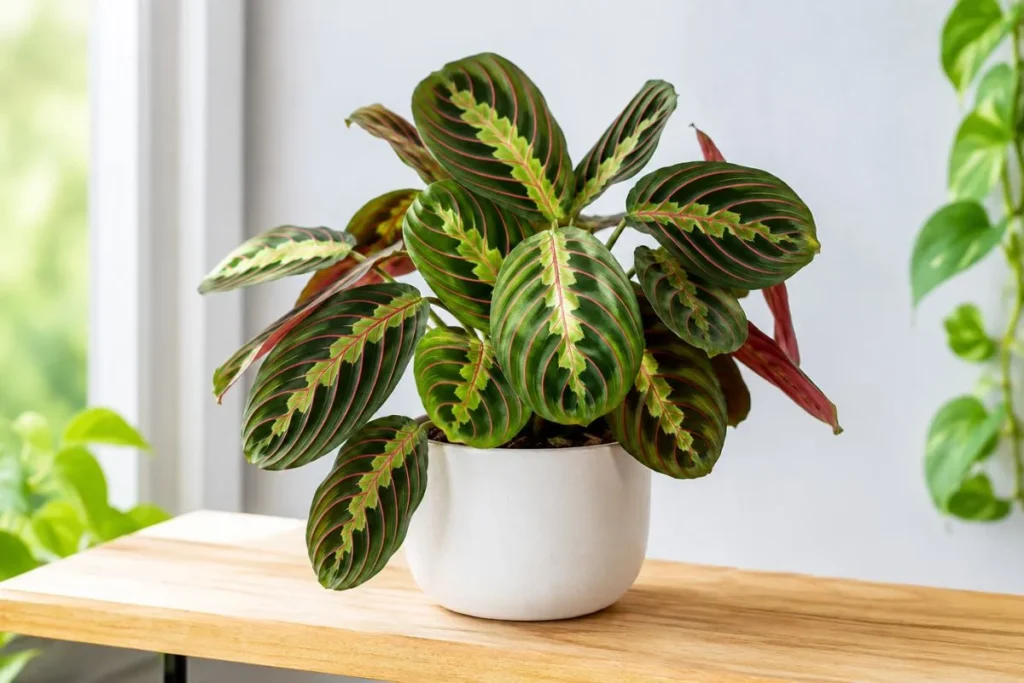
Give your plant bright indirect light, keep the soil slightly moist, maintain good humidity, and avoid sudden temperature changes. These small habits can make a huge difference in keeping your plant healthy.
If you’re new to caring for a prayer plant, don’t worry. This complete prayer plant care guide is written in plain, simple language. You don’t need years of gardening experience or expensive equipment to grow a beautiful Maranta plant.
Whether you’ve just bought your first plant or you’re trying to revive one that’s struggling, this guide will walk you through every step.
By the end of this guide, you’ll understand how to take care of a prayer plant indoors, the ideal light, watering, and humidity conditions, the most common mistakes to avoid, and the best ways to keep your plant healthy throughout the year.
You’ll also learn practical solutions to common problems so your prayer plant can continue producing vibrant, healthy foliage.
What Is a Prayer Plant?
Before learning how to take care of a prayer plant, it’s helpful to understand a little about the plant itself. Knowing where it comes from and how it naturally grows makes it much easier to provide the care it needs.
A prayer plant is a beautiful tropical houseplant that belongs to the Maranta family. Its scientific name is Maranta leuconeura, although most people simply call it a prayer plant.
It is best known for its colorful leaves, which often display different shades of green, cream, red, and pink, depending on the variety.
Unlike many indoor plants that are grown mainly for their flowers, prayer plants are admired for their decorative foliage that instantly adds beauty to any indoor space.
Why Is It Called a Prayer Plant?
The name “prayer plant” comes from one of its most fascinating natural behaviors. During the day, the leaves remain open and flat to absorb as much light as possible.
As evening arrives, the leaves slowly fold upward, creating an appearance similar to hands joined together in prayer. When morning comes, the leaves gradually open again.
This daily movement is called nyctinasty, and it is completely natural. It’s one of the reasons why so many plant lovers enjoy growing prayer plants indoors. Watching the leaves gently move between day and night makes the plant feel alive and adds a unique touch to your home.
If your prayer plant doesn’t fold its leaves every evening, there’s usually no reason to worry. Newly purchased plants, younger plants, or plants experiencing temporary stress may take some time before they display this movement consistently.
Where Do Prayer Plants Come From?
Prayer plants are native to the tropical rainforests of Central and South America, especially Brazil. In their natural habitat, they grow beneath the canopy of tall trees where they receive filtered sunlight instead of direct sun.
The environment is warm, humid, and the soil stays evenly moist while still draining well.
These natural growing conditions explain why indoor prayer plant care is different from caring for succulents or other drought-tolerant plants. Prayer plants naturally prefer moisture, warmth, and humidity rather than dry air and intense sunlight.
Recreating these rainforest conditions inside your home is one of the easiest ways to help your plant thrive.
Different Types of Prayer Plants
There are several beautiful varieties of prayer plants, although they all share similar care requirements. The most popular variety is the Red Prayer Plant (Maranta leuconeura ‘Erythroneura’), which features rich green leaves highlighted by striking red veins. It is widely available and often recommended for beginners because of its attractive appearance.

Another favorite is the Lemon Lime Prayer Plant, known for its vibrant lime-green veins that give the foliage a fresh and colorful look.
Those who prefer darker foliage often choose the Black Prayer Plant, which displays deep green leaves accented with silvery markings for a bold and elegant appearance.
Although these varieties look different, Maranta plant care remains almost identical. They all require bright indirect light, consistently moist soil, warm temperatures, and high humidity to grow well.
Why Prayer Plants Make Excellent Indoor Houseplants
Prayer plants are among the best tropical indoor plants because they adapt well to indoor environments. Instead of needing several hours of direct sunlight, they thrive in bright indirect light, making them an excellent choice for homes and apartments where natural light may be limited.
Their compact growth habit also makes them easy to place on desks, shelves, coffee tables, plant stands, or windowsills with filtered sunlight. They also look beautiful in hanging baskets where their colorful leaves can spread naturally.
If you’re searching for attractive low light houseplants, a prayer plant is an excellent option. While it performs best in bright indirect light, it can also tolerate lower light conditions better than many tropical plants, although its growth may become slower over time.
What Makes Prayer Plants Different from Other Houseplants?
Prayer plants stand out because of their unique daily leaf movement and their striking foliage. They naturally enjoy humid environments, consistently moist soil, and warm temperatures.
Unlike many common houseplants that are valued for flowers, prayer plants are grown almost entirely for their beautiful patterned leaves.
These natural characteristics explain why how to care for a prayer plant indoors is slightly different from caring for other houseplants. Once you understand what the plant naturally prefers, providing the right care becomes much easier.
Are Prayer Plants Good for Beginners?
Yes, they are. Although prayer plants have a reputation for being difficult to care for, they are actually excellent plants for beginners who are willing to follow a simple routine.
One advantage is that they communicate their needs clearly. If the humidity is too low or the watering schedule needs adjusting, the leaves often show early signs such as curling or brown edges, giving you enough time to correct the problem before serious damage occurs.
If you’re wondering how to keep a prayer plant healthy year-round, the answer is consistency. Providing the right amount of light, keeping the soil evenly moist without making it soggy, maintaining good humidity, and avoiding sudden temperature changes are the foundations of successful prayer plant care.
Now that you understand what a prayer plant is, where it comes from, and why it behaves the way it does, you’re ready to learn exactly how to take care of a prayer plant so it grows healthy, vibrant, and full of beautiful foliage.
How to Take Care of a Prayer Plant: The Complete Care Guide
Many people believe that learning how to take care of a prayer plant is complicated because this tropical houseplant has a reputation for being “fussy.”
In reality, the biggest mistake isn’t buying the wrong fertilizer or choosing the wrong pot it’s ignoring the plant’s natural growing conditions. A prayer plant doesn’t need constant attention every day.
It simply needs a home that closely matches the warm, humid rainforest environment where it naturally grows.
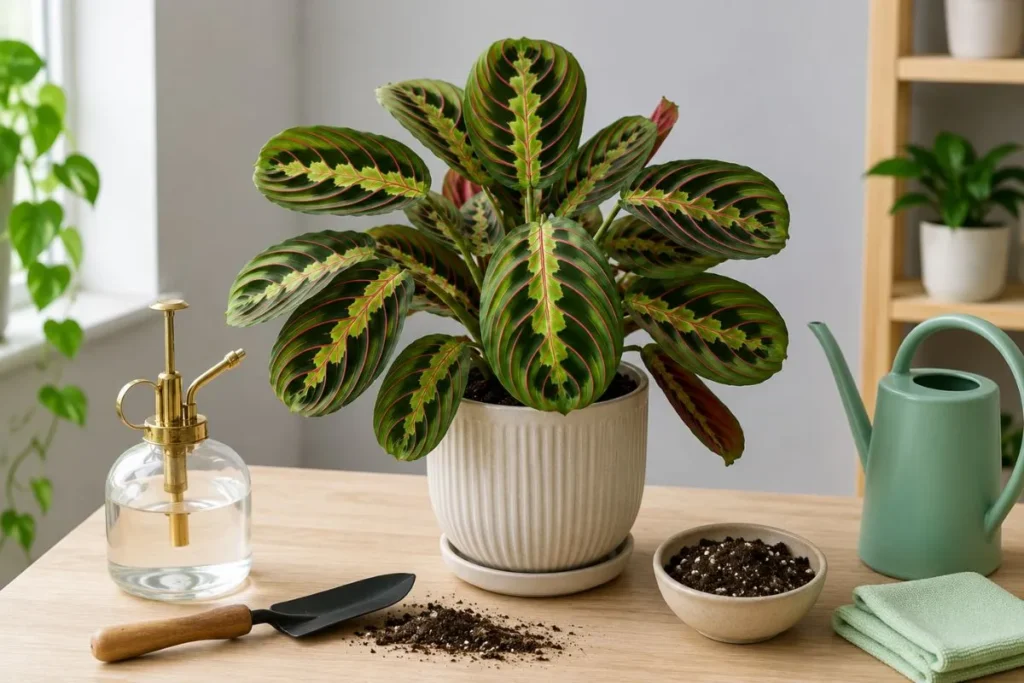
The secret to successful prayer plant care is consistency. Instead of making frequent changes, give your plant steady lighting, regular watering, good humidity, well-draining soil, and occasional feeding. When these basic needs are met, you’ll notice healthier leaves, stronger roots, brighter colors, and steady new growth throughout the year.
Whether you’re looking for how to care for a prayer plant indoors or searching for a complete prayer plant care guide, the following care tips cover everything you need to know.
Give Your Prayer Plant the Right Amount of Light
One of the biggest myths about prayer plants is that they love direct sunlight because they are tropical plants. This couldn’t be further from the truth.
In the wild, prayer plants grow beneath tall rainforest trees where sunlight is naturally filtered through the canopy above. They rarely receive direct sunlight. Instead, they enjoy bright but gentle light throughout the day.
That’s exactly what you should try to recreate inside your home.
The ideal location is a room with bright indirect light. A window facing east is often the best choice because it provides gentle morning sunlight. North-facing windows also work well since they receive consistent indirect light throughout the day.
If your only option is a south- or west-facing window, simply place the plant a few feet away from the glass or use a sheer curtain to soften the sunlight.
If you’re wondering about the best light conditions for a prayer plant, aim for around six to eight hours of bright filtered light every day. This gives the plant enough energy to grow without exposing its delicate leaves to harsh sunlight.
Signs Your Prayer Plant Is Getting Too Much Light
Too much direct sunlight can quickly damage the foliage. Watch for signs such as faded leaf colors, crispy brown patches, dry leaf edges, or curled leaves. The vibrant patterns that make prayer plants so attractive may also begin to fade.
If you notice these symptoms, move the plant farther away from the window or provide filtered light with a curtain.
Signs Your Prayer Plant Needs More Light
Although prayer plants tolerate lower light conditions better than many tropical plants, they still need enough light to stay healthy.
When the plant doesn’t receive sufficient light, you may notice slow growth, smaller new leaves, pale foliage, longer stems stretching toward the nearest window, or less vibrant leaf patterns.
Moving the plant to a brighter location usually solves the problem within a few weeks.
Can Prayer Plants Grow in Low Light?
Yes, they can.
One reason prayer plants are considered excellent low light houseplants is that they adapt reasonably well to rooms without intense sunlight. However, “low light” doesn’t mean “no light.”
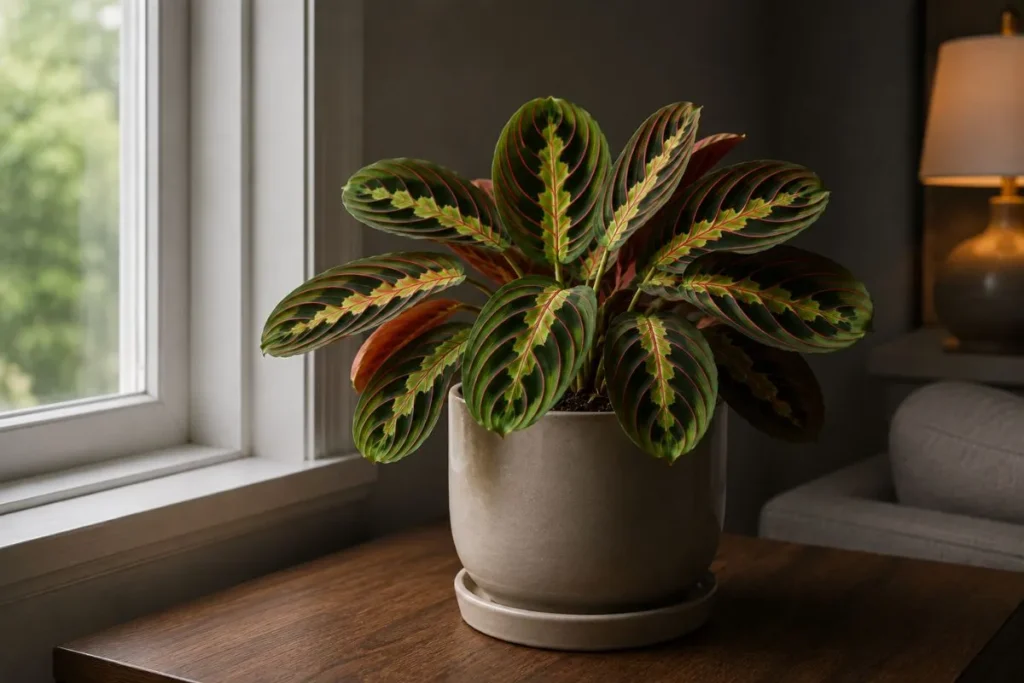
If the room is too dark, the plant will survive but won’t thrive. Growth becomes slower, the leaves lose some of their rich color, and new foliage may appear smaller.
For the healthiest growth, always choose bright indirect light whenever possible.
Water Your Prayer Plant the Right Way
Watering is where most people accidentally damage their prayer plants.
Many beginners either water far too often or wait until the soil becomes completely dry. Neither approach works well.
The key to successful prayer plant watering is keeping the soil consistently moist without allowing it to become soggy.
Think of the soil as a damp sponge. It should feel slightly moist but never dripping wet.
How Often Should You Water a Prayer Plant?
One of the most common questions is, how often should you water a prayer plant?
The answer depends on several factors, including temperature, humidity, pot size, soil type, and the season.
During spring and summer, when the plant is actively growing, most prayer plants need watering about once every 5 to 7 days.
During autumn and winter, growth naturally slows, so watering every 7 to 10 days is often enough.
Rather than following a strict calendar, always check the soil first. Insert your finger about an inch into the soil. If the top layer feels slightly dry, it’s time to water. If it still feels damp, wait another day or two before checking again.
This simple habit creates a much healthier prayer plant watering schedule.
What’s the Best Water to Use?
Prayer plants can be surprisingly sensitive to chemicals found in tap water.
Fluoride, chlorine, and mineral buildup may eventually cause brown leaf tips or discoloration.
Whenever possible, use filtered water, distilled water, or rainwater. If tap water is your only option, let it sit overnight before watering so some of the chlorine can evaporate.
Signs of Overwatering
Overwatering is one of the leading causes of unhealthy prayer plants.
When the roots remain wet for too long, they struggle to absorb oxygen. Eventually, this can lead to root rot.
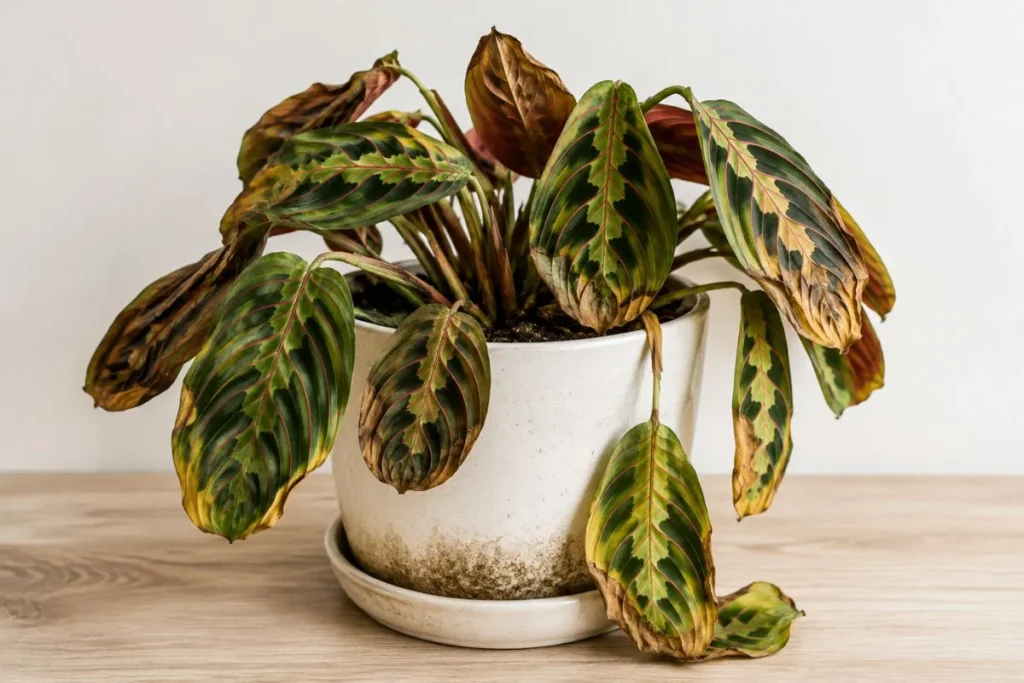
Common symptoms include yellow leaves, soft stems, constantly wet soil, unpleasant odors coming from the pot, and leaves that droop even though the soil feels wet.
If these signs appear, reduce watering immediately and make sure your pot has proper drainage.
Signs of Underwatering
Underwatering creates a different set of problems.
Dry soil prevents the roots from absorbing enough moisture, causing the leaves to curl inward, develop crispy brown edges, wilt, or feel dry to the touch.
Fortunately, underwatering is usually easier to fix than overwatering. Giving the soil a deep, even watering often helps the plant recover within a day or two.
Keep Humidity High
Humidity is one of the biggest secrets behind healthy Maranta plant care.
Many people focus only on watering while forgetting that prayer plants naturally grow in humid tropical forests where moisture is constantly present in the air.
Unfortunately, the air inside most homes is much drier, especially during winter when heating systems are running.
If the humidity drops too low, prayer plants quickly respond with curled leaves, crispy edges, brown tips, slower growth, and dull foliage.
What Is the Best Humidity Level?
For the healthiest growth, maintain humidity between 50% and 70%.
Higher humidity helps the leaves stay soft, colorful, and healthy.
If your home’s humidity is naturally low, don’t worry. There are several simple ways to increase it.
How to Increase Humidity for a Prayer Plant
One of the easiest solutions is placing a humidifier near your plant. This provides consistent moisture throughout the day and is especially useful during winter.
Grouping several houseplants together also helps because plants naturally release moisture into the surrounding air.
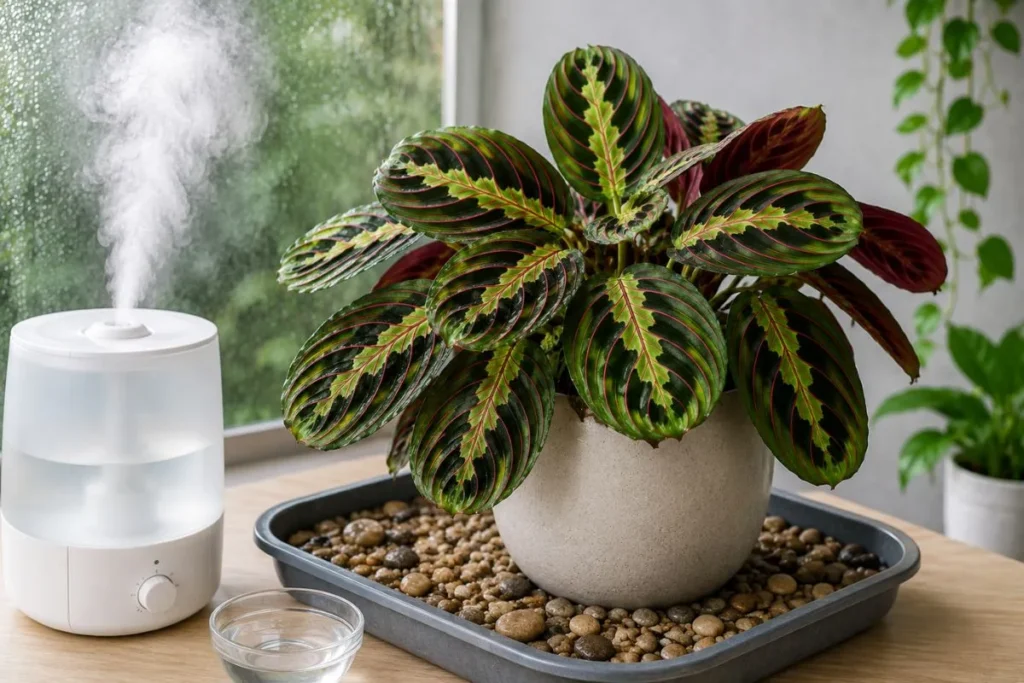
Another simple trick is placing the pot on a pebble tray filled with water. As the water slowly evaporates, it increases humidity around the plant without leaving the roots sitting in water.
Bathrooms and kitchens often have naturally higher humidity, making them excellent locations for prayer plants if they receive enough indirect light.
Should You Mist a Prayer Plant?
Many people regularly mist their plants, believing it’s enough to solve humidity problems.
While occasional misting can temporarily raise humidity, the effect lasts only a short time. It’s better to use a humidifier or pebble tray if you want consistent results.
3.4 Maintain the Ideal Temperature
Prayer plants enjoy warm, stable temperatures throughout the year.
The ideal range is 65°F to 80°F (18°C to 27°C).
Temperatures outside this range can stress the plant and slow its growth.
Cold drafts from windows, air conditioners, or exterior doors can cause leaf curling and discoloration. Likewise, placing the plant near heaters or fireplaces may dry out the leaves.
If you’re following proper prayer plant care indoors, choose a location with steady indoor temperatures and avoid sudden changes.
Prayer Plant Care in Winter
Winter is often the most challenging season.
Because indoor heating dries the air, humidity levels usually drop significantly. During this time, reduce watering slightly since the plant grows more slowly, but don’t let the soil become completely dry.
Keeping humidity high is often more important than increasing watering during winter.
Prayer Plant Care in Summer
During warmer months, your prayer plant grows more actively.
Higher temperatures mean the soil may dry faster, so check moisture levels more often. Increase watering only when needed and continue protecting the plant from harsh afternoon sunlight.
Choose the Best Soil
Healthy roots begin with healthy soil.
The best soil for prayer plants holds enough moisture to keep the roots hydrated while allowing excess water to drain quickly.
Heavy garden soil is usually too dense and should be avoided.
A quality prayer plant potting mix should be light, airy, and rich in organic matter.
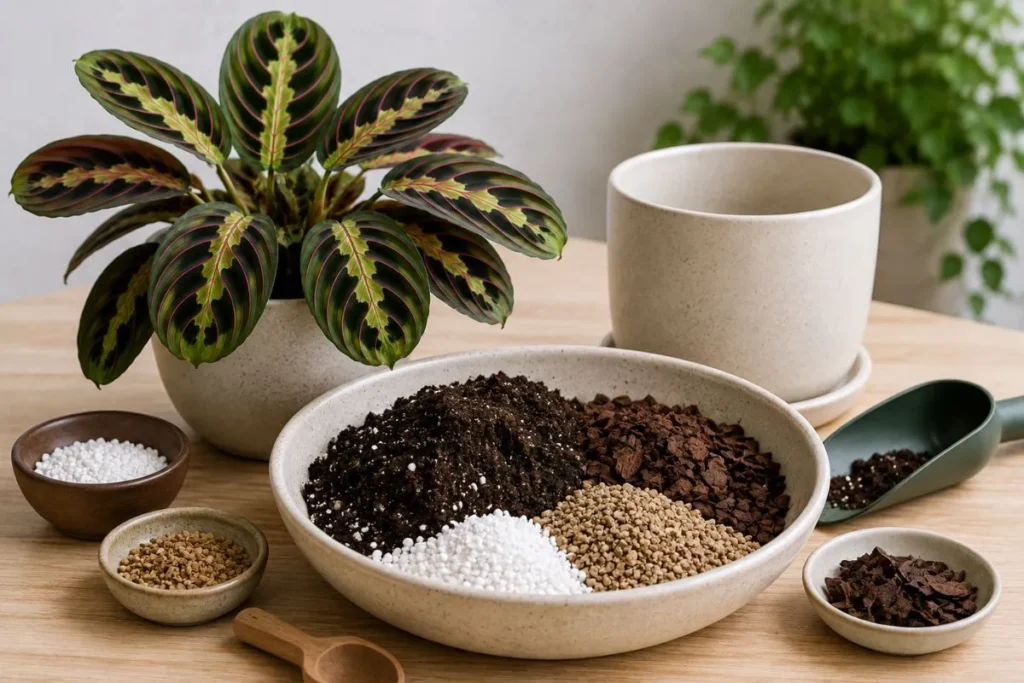
Many gardeners successfully use a mixture of peat moss or coco coir, perlite, and compost or orchid bark. This combination keeps the soil moist while preventing waterlogging.
If you’ve been asking, what is the best soil for a prayer plant?, choose a loose, well-draining mix that balances moisture retention with airflow around the roots.
Pick the Right Pot
Even the perfect soil won’t help if your pot traps excess water.
Always select a container with drainage holes. These allow extra water to escape, preventing soggy soil and reducing the risk of root rot.
When repotting, choose a pot only one or two inches larger than the current one.
A pot that’s too large holds extra moisture for longer periods, increasing the chance of overwatering.
Plastic pots retain moisture longer, making them useful in dry homes. Terracotta pots dry out more quickly because they absorb water through their walls, making them better for humid environments or gardeners who tend to overwater.
Finding the best pot for a prayer plant depends on your watering habits and indoor conditions.
Fertilize for Healthy Growth
Although prayer plants don’t require heavy feeding, regular fertilizing encourages fuller growth and richer leaf color.
During spring and summer, feed your plant every four weeks using a balanced liquid houseplant fertilizer diluted to half strength.
This simple prayer plant feeding schedule provides enough nutrients without overwhelming the roots.
Avoid applying fertilizer to dry soil, as this may burn the roots. Water the plant first, then apply the diluted fertilizer.
During autumn and winter, reduce or completely stop fertilizing since the plant naturally grows more slowly.
If you’re looking for the best fertilizer for prayer plants, choose one with a balanced nutrient ratio designed for indoor foliage plants.
Overfertilizing is just as harmful as underfeeding. Too much fertilizer can cause salt buildup in the soil, leading to brown leaf tips and weakened growth. When in doubt, it’s always better to fertilize lightly than to overdo it.
Prayer Plant Care for Beginners
Many beginners think they need expensive fertilizers, plant gadgets, or years of gardening experience to keep a prayer plant alive. That’s one of the biggest misconceptions about prayer plant care.
In reality, a healthy prayer plant doesn’t need complicated routines. It simply needs consistent care and a little attention to its environment. Once you establish a simple schedule, caring for a prayer plant becomes easy and enjoyable.
If you’re wondering how to take care of a prayer plant indoors without feeling overwhelmed, this beginner-friendly guide will help you build the right habits from day one.
Instead of constantly worrying about every leaf or searching for quick fixes, you’ll learn a practical routine that keeps your plant healthy with very little effort.
Create a Simple Weekly Prayer Plant Care Routine
One of the easiest ways to succeed with indoor prayer plant care is to follow a basic weekly routine. Rather than waiting until your plant shows signs of stress, spending just a few minutes each week checking its condition can prevent most common problems.
Start by checking the soil moisture. Instead of watering on the same day every week, feel the top inch of soil with your finger. If it feels slightly dry, it’s time to water.
If it still feels damp, wait another day or two before checking again. This simple habit helps prevent both overwatering and underwatering.
Next, take a quick look at the leaves. Healthy prayer plants usually have vibrant colors and firm foliage. If you notice dust building up, gently wipe the leaves with a soft, damp cloth. Clean leaves absorb light more efficiently, which supports healthy growth.
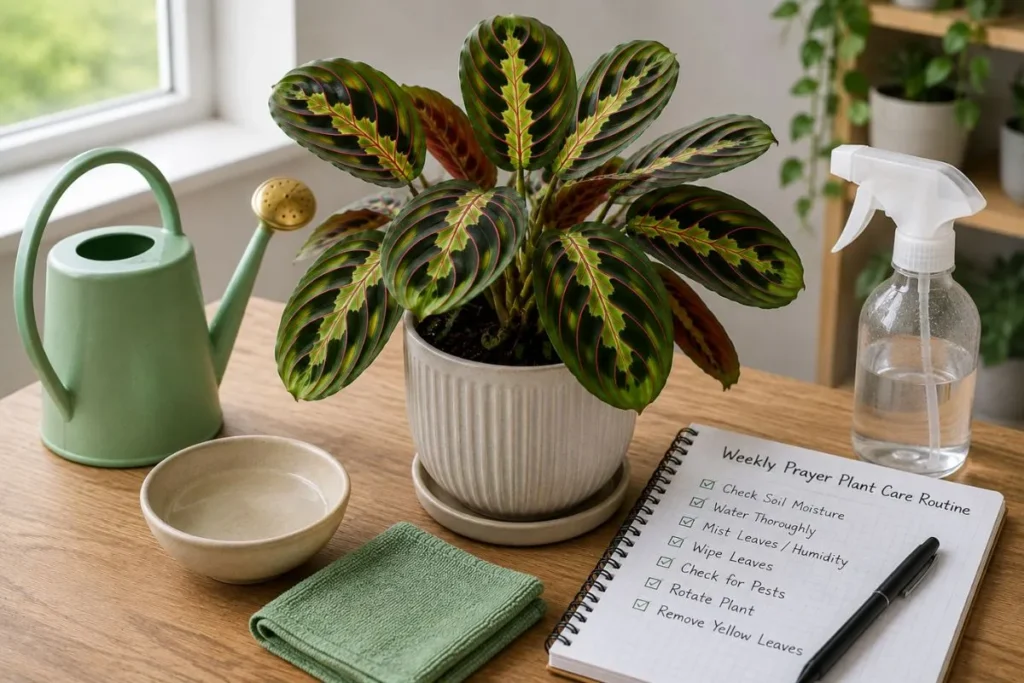
While you’re inspecting the leaves, check for early signs of pests or damage. Catching problems early is much easier than dealing with a serious infestation later.
Finally, rotate the pot about a quarter turn each week. Since houseplants naturally grow toward the light, rotating the plant encourages even growth and prevents it from leaning to one side.
Following this simple weekly routine makes prayer plant maintenance much easier and keeps your plant looking full and balanced.
Monthly Prayer Plant Maintenance
In addition to your weekly routine, your prayer plant also benefits from a little monthly maintenance.
Start by checking whether roots are growing out of the drainage holes. This could be a sign that the plant is becoming root-bound and may need repotting in the future.
Look closely at the soil as well. Over time, compacted soil can reduce airflow around the roots and affect healthy growth. If the soil appears hard or compacted, gently loosen the surface without disturbing the roots.
During the growing season in spring and summer, continue following your prayer plant feeding schedule by applying a balanced liquid fertilizer every four weeks.
Remember not to overfeed the plant because excessive fertilizer can damage the roots and cause brown leaf tips.
Monthly cleaning is another helpful habit. Dust can slowly collect on the beautiful patterned leaves, making it harder for the plant to absorb sunlight. Wiping each leaf with a damp microfiber cloth helps keep your healthy prayer plant looking fresh while improving photosynthesis.
Taking a few extra minutes once a month can make a noticeable difference in the appearance and overall health of your plant.
Beginner Mistakes to Avoid
Even with the best intentions, new plant owners sometimes make simple mistakes that can affect their prayer plant. The good news is that these problems are usually easy to avoid once you know what to look for.
Watering Too Frequently
One of the most common mistakes is watering simply because it’s a certain day of the week.
Prayer plants enjoy consistently moist soil, but constantly wet soil can lead to root problems. Instead of following a calendar, always check the soil before watering. This is one of the easiest ways to improve your prayer plant care indoors routine.
Placing the Plant in Direct Sunlight
Many beginners assume that more sunlight always means faster growth.
However, direct afternoon sunlight can scorch the delicate leaves and fade their beautiful patterns. Bright indirect light is always the safer choice for Maranta plant care.
Ignoring Humidity
Watering alone isn’t enough for tropical plants.
Because prayer plants naturally grow in humid rainforests, dry indoor air can quickly cause brown leaf tips and curled leaves. If your home has low humidity, using a humidifier or placing the plant near other houseplants can make a big difference.
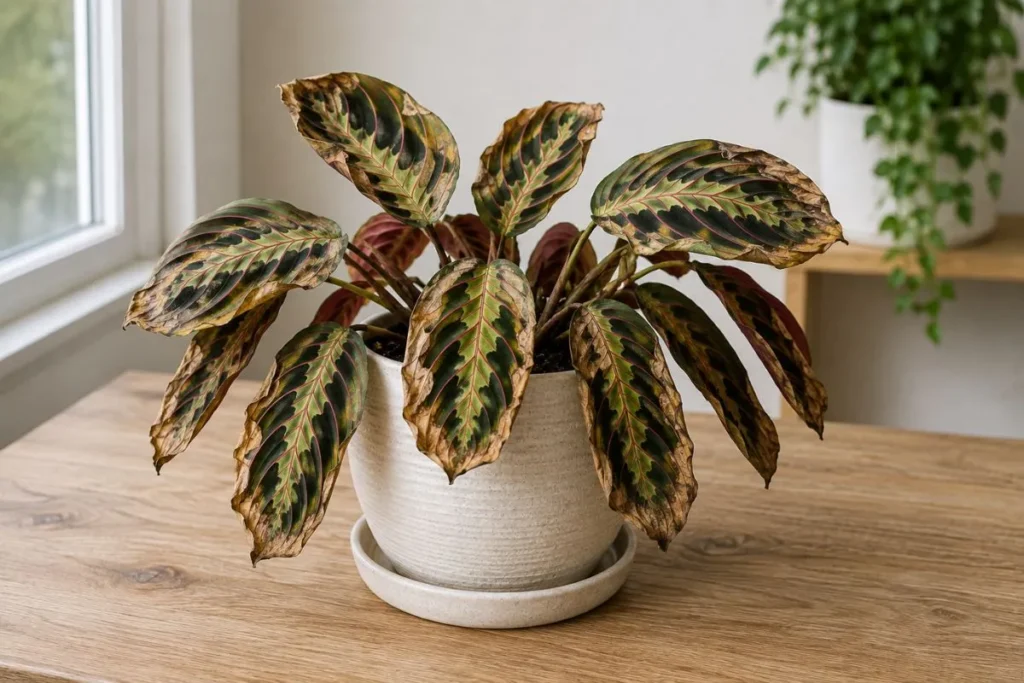
Maintaining proper humidity is one of the simplest ways to keep a prayer plant healthy year-round.
Choosing the Wrong Location
Some people move their prayer plant from room to room every few days, hoping to find the “perfect” spot.
Prayer plants prefer stability. Frequent changes in temperature, lighting, and humidity can stress the plant and slow its growth.
Once you find a bright location away from direct sunlight, leave the plant there unless it clearly needs a better environment.
Overfertilizing
It’s easy to think that more fertilizer will produce faster growth, but that’s rarely true.
Too much fertilizer often causes salt buildup in the soil, leading to brown leaf edges and weak roots.
A balanced fertilizer applied during the growing season is more than enough for healthy growth.
Forgetting to Check for Pests
Many beginners don’t notice pests until the damage becomes obvious.
Take a few moments each week to inspect both the top and underside of the leaves. Early detection makes treatment much easier and helps prevent pests from spreading to other indoor plants.
Letting the Soil Dry Out Completely
Unlike many drought-tolerant houseplants, prayer plants don’t like sitting in completely dry soil for long periods.
Allowing the soil to dry excessively may cause curling leaves, drooping stems, and slower growth.
Maintaining consistent moisture is one of the foundations of successful prayer plant care.
Easy Habits That Help Your Prayer Plant Thrive
You don’t need a complicated schedule to grow a beautiful prayer plant. In fact, small daily habits often have the greatest impact over time.
Take a quick glance at your plant whenever you walk past it. Healthy leaves, vibrant colors, and steady new growth usually indicate that your care routine is working well. If something changes, such as curling leaves or brown tips, treat it as an early signal rather than waiting for the problem to get worse.
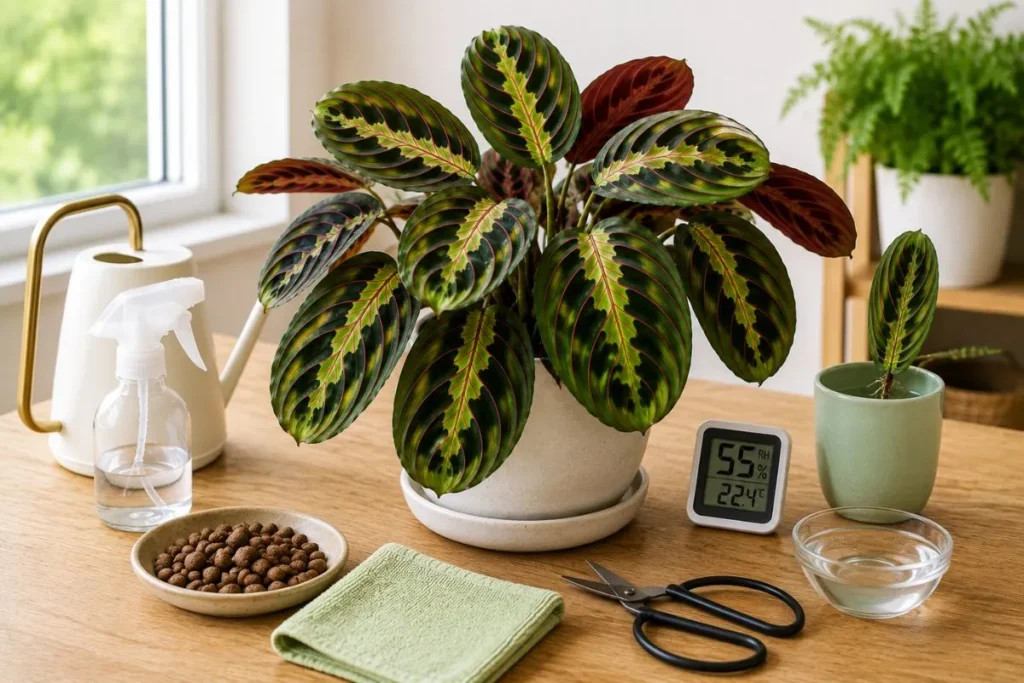
It’s also helpful to avoid making several changes at once. If your prayer plant isn’t looking its best, adjust one thing at a time, such as increasing humidity or moving it to a brighter location. This makes it much easier to identify what works.
Most importantly, be patient. Prayer plants don’t grow overnight, but with consistent care they reward you with lush foliage, striking leaf patterns, and steady growth throughout the year.
5. How to Keep a Prayer Plant Healthy All Year
Many people believe that once they’ve learned how to take care of a prayer plant, the care routine stays exactly the same throughout the year. That’s a common misconception.
Just like many tropical houseplants, a prayer plant’s needs change with the seasons. The amount of light, humidity, temperature, and even watering frequency should be adjusted as the weather changes.
The good news is that these adjustments are small and easy to make. You don’t need to completely change your prayer plant care routine every few months. Instead, paying attention to seasonal changes will help your plant continue producing healthy, colorful leaves all year long.
If you’ve been wondering how to keep a prayer plant healthy year-round, this seasonal care guide will show you exactly what to do during every season.
Spring: The Season of New Growth
Spring is when your prayer plant wakes up after the slower winter months. As temperatures rise and daylight hours become longer, the plant begins producing fresh leaves and stronger roots.
This is the perfect time to encourage healthy growth.
Start by checking whether your plant needs repotting. If roots are growing through the drainage holes or the soil dries much faster than usual, moving it into a slightly larger pot can give the roots more room to grow.
Spring is also the ideal time to restart fertilizing if you paused during winter. A balanced liquid fertilizer applied once every four weeks provides the nutrients your plant needs for new growth.
Because the plant becomes more active during this season, you’ll probably notice the soil drying a little faster than before. Check the moisture regularly and adjust your watering schedule if necessary, but avoid watering simply because the weather is warmer.
This is also an excellent season to clean the leaves. Removing dust allows your prayer plant to absorb more light and maintain its beautiful foliage.
If you’re following a complete prayer plant care guide, spring is often the easiest season because the plant naturally wants to grow.
Summer: Support Active Growth Without Stress
Summer is usually the fastest growing season for prayer plants. Warm temperatures and longer daylight hours encourage continuous leaf production, but this is also when many owners accidentally expose their plants to too much heat or direct sunlight.
One of the biggest priorities during summer is protecting the leaves from harsh afternoon sun. Even though prayer plants love bright conditions, direct sunlight can quickly scorch their delicate foliage.
If sunlight becomes stronger during the afternoon, move the plant slightly farther from the window or use a sheer curtain to filter the light.
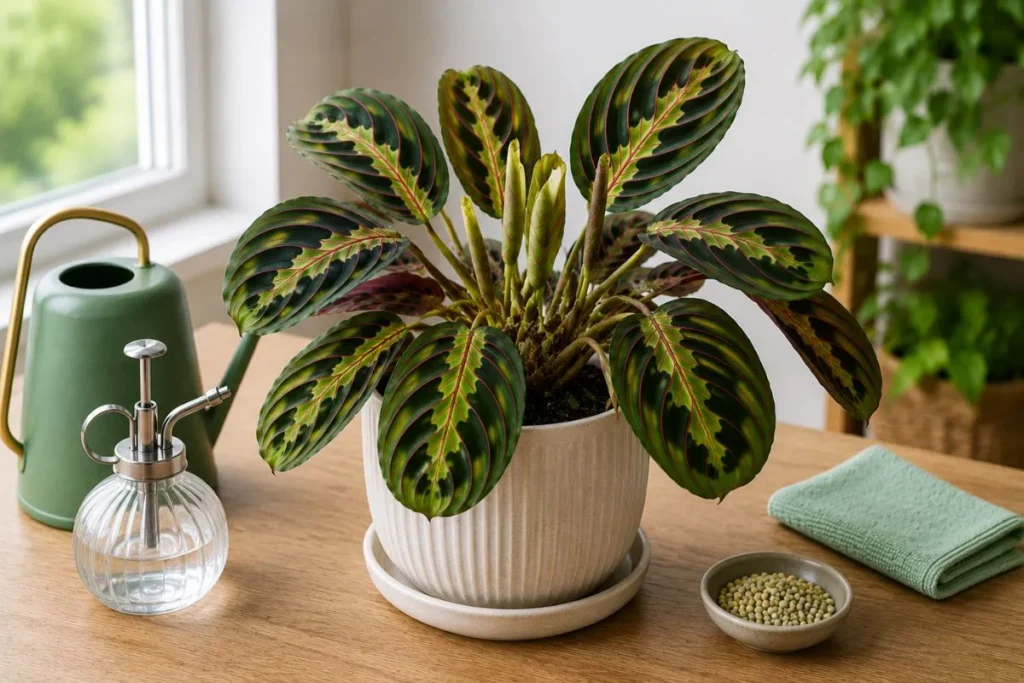
Because warmer weather causes moisture to evaporate more quickly, check the soil more frequently. Depending on your home’s temperature and humidity, your plant may need watering a little more often than it did during spring.
Humidity also becomes important during hot weather, especially if you’re using air conditioning. Air conditioners remove moisture from indoor air, which can cause leaf edges to become dry.
Keeping humidity levels between 50% and 70% helps maintain healthy foliage throughout the summer months.
Summer is also the perfect time to inspect your plant regularly for pests. Warm conditions can encourage spider mites and other common houseplant insects, so checking the leaves each week can prevent larger problems later.
Following these simple habits makes prayer plant care indoors much easier during the hottest months of the year.
Autumn: Prepare Your Prayer Plant for Slower Growth
As daylight hours begin to shorten, your prayer plant naturally slows its growth. This doesn’t mean something is wrong. It’s simply entering a quieter stage of its growing cycle.
During autumn, begin reducing fertilizer applications. If you’ve been feeding your plant every month throughout spring and summer, this is the time to gradually stop until the next growing season.
You’ll also notice that the soil remains moist for longer periods because the plant uses less water. Instead of following the same watering routine you used in summer, always check the soil before watering.
Autumn is also a great time to inspect your plant for any damaged or aging leaves. Removing yellow or dried foliage allows the plant to focus its energy on healthy growth.
Continue providing bright indirect light because shorter days naturally reduce the amount of available sunlight.
These small adjustments help your healthy prayer plant transition comfortably into winter.
Winter: Focus on Protection Instead of Growth
Winter is usually the slowest season for prayer plants.
Many new plant owners become concerned when they notice fewer new leaves during this time. Fortunately, this is completely normal.
Rather than encouraging rapid growth, your goal during winter is simply to maintain the plant’s health.
One of the biggest challenges is dry indoor air caused by heating systems. Low humidity is one of the main reasons prayer plants develop crispy brown leaf edges during winter.
Using a humidifier is one of the easiest ways to improve prayer plant humidity throughout the colder months. If a humidifier isn’t available, placing your plant near other houseplants can also help increase moisture in the surrounding air.
Watering should also be adjusted.
Because the plant grows more slowly, it doesn’t need as much water. Always check the soil first instead of watering on a fixed schedule.
Keep the plant away from cold windows, exterior doors, fireplaces, and heating vents. Sudden temperature changes can stress the plant and cause curling leaves.
If you’re wondering about prayer plant care in winter, remember that consistency matters more than growth. Protect the plant from cold temperatures, maintain humidity, and avoid overwatering.
Seasonal Care Checklist
Although every home is different, following a seasonal routine makes caring for a prayer plant much easier throughout the year.
During spring, focus on encouraging new growth by restarting fertilization, checking for repotting needs, and increasing watering as required.
During summer, protect the leaves from direct sunlight, monitor soil moisture more frequently, and maintain good humidity to support active growth.
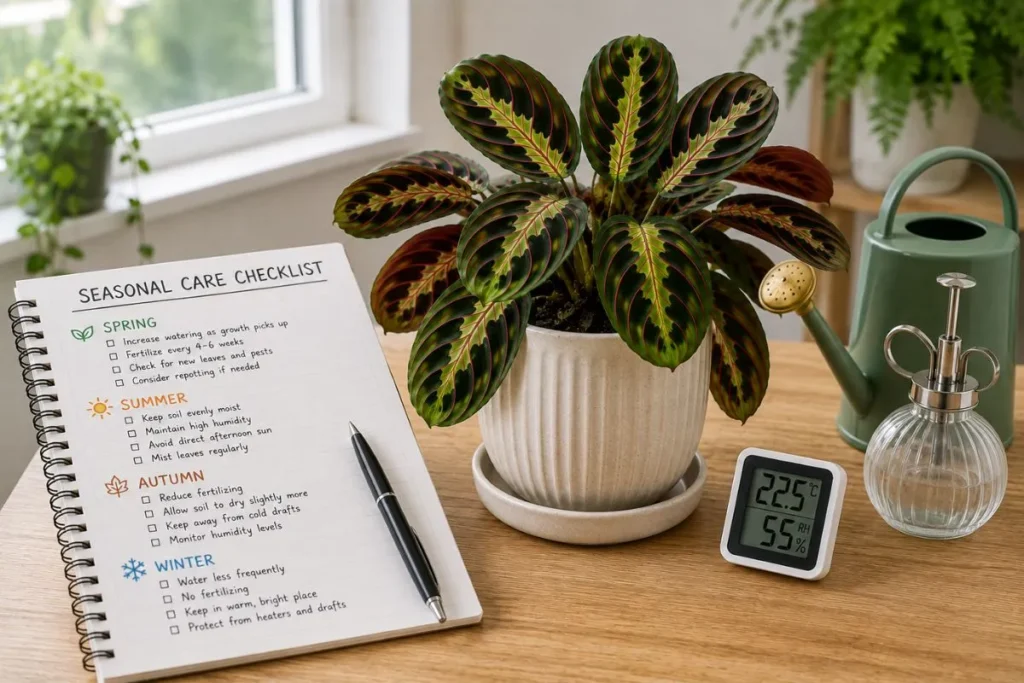
During autumn, begin reducing fertilizer, water slightly less often, and continue providing bright indirect light while removing damaged foliage.
During winter, prioritize stable temperatures, higher humidity, careful watering, and protection from cold drafts to keep your plant healthy until spring returns.
Making these small seasonal adjustments prevents unnecessary stress and allows your plant to grow naturally throughout the year.
Watch for Seasonal Changes in Your Plant
One of the best ways to improve your prayer plant maintenance routine is to observe how your plant responds to each season.
Healthy prayer plants communicate their needs through their leaves. Bright, colorful foliage and steady new growth usually indicate that your care routine is working well.
On the other hand, curling leaves, brown tips, yellowing foliage, or drooping stems often suggest that something in the environment needs adjusting.
Instead of making several changes at once, adjust one factor at a time. For example, if the air becomes dry during winter, increase humidity before changing your watering schedule.
If the leaves appear faded during summer, move the plant away from direct sunlight before increasing fertilizer.
This gradual approach makes it easier to understand your plant’s needs and avoids creating additional stress.
Consistency Is the Secret to Year-Round Success
If there’s one lesson every plant owner should remember, it’s that consistency beats perfection.
You don’t need to spend hours caring for your prayer plant every week. Small, regular actions such as checking the soil, maintaining humidity, cleaning the leaves, and adjusting your routine with the seasons are enough to keep your plant thriving.
Whether you’re following this prayer plant care guide for the first time or looking to improve your indoor prayer plant care, staying consistent will reward you with lush growth, vibrant foliage, and a healthier plant every season of the year.
Frequently Asked Questions (FAQ)
Many people think they need to search multiple websites to find reliable answers about how to take care of a prayer plant. In reality, most prayer plant problems have simple solutions. Whether you’re a beginner or an experienced plant owner, these frequently asked questions will help you better understand your plant’s needs and keep it thriving indoors.
How Do You Take Care of a Prayer Plant Indoors?
If you’re wondering how do you take care of a prayer plant indoors, the answer is surprisingly simple. Place your plant in a location that receives bright indirect light, keep the soil consistently moist without making it waterlogged, maintain moderate to high humidity, and use a well-draining potting mix.
Feed it with a balanced fertilizer during the growing season and protect it from direct sunlight, cold drafts, and sudden temperature changes.
Following these basic care practices will help your prayer plant produce healthy, colorful leaves throughout the year.
How Often Should You Water a Prayer Plant?
One of the most common questions about prayer plant care is how often to water.
There isn’t a fixed schedule because watering depends on your home’s temperature, humidity, and the season. Instead of watering on specific days, check the top inch of soil with your finger. If it feels slightly dry, it’s time to water.
During spring and summer, most prayer plants need watering about once every five to seven days. During autumn and winter, watering every seven to ten days is usually enough since the plant grows more slowly.
Always avoid letting the soil become completely dry or remain constantly soggy.
What Is the Best Soil for a Prayer Plant?
The best soil for a prayer plant is light, loose, and well-draining while still holding enough moisture for healthy root growth.
A quality indoor potting mix combined with perlite and coco coir or peat moss works well because it provides excellent drainage while keeping the roots evenly moist.
Heavy garden soil should be avoided because it retains too much water and can lead to root problems.
Why Are My Prayer Plant Leaves Turning Brown?
Brown leaves are usually a sign that one or more growing conditions need adjustment.
The most common causes include low humidity, inconsistent watering, mineral buildup from tap water, excessive fertilizer, or too much direct sunlight.
If you notice brown leaf tips, first check your watering routine and humidity levels. Using filtered or distilled water and increasing humidity often solves the problem.
Can a Prayer Plant Grow in Low Light?
Yes, prayer plants can tolerate lower light conditions better than many tropical houseplants.
However, they don’t grow as quickly in dim rooms. Their leaf colors may become less vibrant, and new growth may slow down over time.
For the healthiest growth, provide bright indirect light whenever possible. This gives your plant enough energy to maintain its colorful foliage without exposing it to harsh sunlight.
How Do You Increase Humidity for a Prayer Plant?
Since prayer plants naturally grow in tropical rainforests, they appreciate humid environments.
The easiest way to increase humidity is by using a humidifier. You can also group several houseplants together or place the pot on a pebble tray filled with water. These methods create a more humid environment around the plant without soaking the roots.
Maintaining humidity between 50% and 70% helps prevent curled leaves and brown edges while supporting healthy growth.
How Do You Revive a Dying Prayer Plant?
If your prayer plant looks unhealthy, don’t panic. Most struggling plants can recover with proper care.
Start by identifying the cause of the problem. Check the soil for excess moisture or dryness, inspect the leaves for pests, and evaluate the lighting conditions. Trim away damaged leaves and adjust your watering routine if necessary.
If root rot is present, repot the plant into fresh, well-draining soil after removing damaged roots.
With consistent care and patience, many prayer plants recover and begin producing healthy new leaves.
How Long Do Prayer Plants Live?
With proper prayer plant maintenance, these beautiful houseplants can live for many years.
Many indoor prayer plants continue growing for five to ten years or even longer when they receive the right light, watering, humidity, and occasional repotting.
As the plant matures, regular pruning and propagation can also help keep it healthy and encourage fresh growth.
Should I Mist My Prayer Plant?
Occasional misting isn’t harmful, but it isn’t the best long-term solution for increasing humidity.
The moisture from misting evaporates quickly, so its effect only lasts for a short time.
If your home has dry air, using a humidifier or pebble tray is much more effective for maintaining consistent humidity and promoting healthy foliage.
When Should I Repot My Prayer Plant?
Prayer plants usually need repotting every one to two years.
Signs that it’s time to repot include roots growing through the drainage holes, soil drying out much faster than normal, slowed growth, or the plant becoming root-bound.
Spring is generally the best time to repot because the plant is entering its active growing season and can recover more quickly.
Choose a pot that is only one or two inches larger than the current one and fill it with fresh, well-draining potting mix.
Conclusion
Many people assume that keeping a prayer plant healthy requires expert gardening skills, but by now you’ve seen that isn’t the case. Learning how to take care of a prayer plant is all about understanding its natural needs and following a simple, consistent routine.
Once you recreate the warm, humid conditions that this tropical plant loves, it becomes much easier to grow and maintain.
Throughout this prayer plant care guide, you’ve learned everything you need to help your plant thrive. From choosing the right location with bright indirect light to maintaining proper watering, humidity, temperature, soil, and fertilizing, every small step contributes to healthier growth.
These simple practices not only encourage vibrant foliage but also help prevent many common problems before they start.
Remember that no houseplant is perfect all the time. It’s completely normal for your prayer plant to occasionally develop a yellow leaf, a brown tip, or slower growth during certain seasons.
Instead of worrying, use these changes as signals that your plant may need a small adjustment. Checking the soil before watering, maintaining steady humidity, and avoiding sudden environmental changes are often enough to get your plant back on track.
If you’re new to caring for a prayer plant, don’t feel discouraged if you make a few mistakes along the way. Every experienced plant owner started as a beginner.
The more time you spend observing your plant, the better you’ll understand its needs. Over time, you’ll notice how it responds to changes in light, watering, and humidity, making prayer plant care indoors feel natural and effortless.
The best part about growing a prayer plant is watching it reward your care. Healthy leaves with bold patterns, fresh new growth, and the fascinating nightly movement of its foliage are all signs that your efforts are paying off.
With patience and consistency, your prayer plant can remain a beautiful part of your indoor garden for many years.
Whether you searched for how to take care of a prayer plant indoors, how to keep a prayer plant healthy year-round, or simply wanted a reliable prayer plant care guide, you now have all the knowledge needed to grow a thriving Maranta plant with confidence.

Plant Nest Blog’s author is passionate about plants, gardening, and sustainable living. Through research and practical experience, they share helpful plant care tips, gardening guides, and easy solutions to help readers grow healthier plants and create greener spaces.