
If you’re wondering how often to water ponytail palm, the good news is that this plant doesn’t need frequent watering. Its thick, swollen trunk stores water, allowing it to survive dry periods.
However, watering too often can cause root rot, yellow leaves, and other problems that are harder to fix than underwatering.

The trick is knowing when the soil has dried enough for another drink. In this guide, you’ll learn how frequently to water a ponytail palm indoors, how seasons affect its watering needs, how to recognize signs of overwatering, and how to keep its roots healthy without following a complicated schedule.
How Often to Water Ponytail Palm?
A ponytail palm (Beaucarnea recurvata) generally needs watering every 2–4 weeks during the active growing season. During fall and winter, you may only need to water it every 4–6 weeks or even less frequently, depending on your home’s conditions.
These are starting points, not strict rules. Your plant’s watering needs depend on sunlight, temperature, humidity, pot size, soil type, and drainage.
Here is a simple watering schedule to help you get started:
| Season | Approximate watering frequency |
| Spring | Every 2–3 weeks |
| Summer | Every 2–4 weeks |
| Fall | Every 3–5 weeks |
| Winter | Every 4–6 weeks or longer |
Don’t water simply because the calendar says it’s time. Check the soil first. If the soil still feels damp, wait a few more days before checking again.
A ponytail palm growing near a sunny window may dry out faster than one sitting in a cooler, low-light room. That’s why checking soil moisture is more reliable than following a fixed ponytail palm water schedule.
What Factors Affect Your Plant’s Watering Needs?
Two ponytail palms can need completely different watering schedules, even when they are growing in the same home. A few environmental factors make a noticeable difference.
Light Exposure
Light plays a major role in how quickly your plant uses water.
A ponytail palm near a bright, sunny window usually grows more actively and may need water sooner. On the other hand, a plant in a dim corner uses less water, so its soil stays wet for longer.
If your plant receives several hours of bright indirect light, check its soil regularly. If it sits in a low-light location, be especially careful not to water too often.
Temperature and Humidity
Warm temperatures encourage faster growth and increase water use. During hot summer weather, the soil may dry out more quickly.
Cool indoor temperatures slow growth, especially during winter. Your plant may need much less water during this period.

Humidity also affects how quickly moisture leaves the soil. Homes with dry indoor air may experience faster moisture loss, although sunlight and temperature generally play a bigger role.
Pot Size and Drainage
The container can make a bigger difference than you might expect.
A large pot holds more soil and moisture than a small one. If the pot is much bigger than the root system, the extra soil may stay wet for too long.
Always choose a container with drainage holes. Terracotta pots are another good option because their porous sides allow moisture to evaporate more easily than plastic or glazed ceramic pots.
Soil Type
Ponytail palms need a loose, well-draining potting mix. Regular garden soil or dense potting soil can hold too much moisture around the roots.
A cactus and succulent potting mix works well because it allows excess water to drain away. You can also improve drainage by adding materials such as pumice or perlite.
How to Tell When Your Ponytail Palm Needs Water
You don’t need expensive moisture meters to understand when your plant is thirsty. A few simple checks can help you avoid watering too early.
Check the Soil With Your Finger
Push your finger about 2–3 inches into the soil. If it still feels damp, wait before watering.
For a larger pot, checking only the surface isn’t enough. The top layer may feel dry while the lower soil remains wet.

A wooden chopstick can help you check deeper moisture. Insert it into the soil and pull it out. If it comes out dark and damp with soil sticking to it, wait longer. If it comes out mostly clean and dry, the soil may be ready for watering.
Check the Weight of the Pot
This is one of the easiest tricks once you become familiar with your plant.
Lift the pot after watering and notice its weight. Check it again when the soil has dried. You’ll begin to recognize the difference between a wet and dry container.
This method works especially well for smaller ponytail palms that you can lift comfortably.
Watch for Changes in the Leaves
Leaves can offer clues about watering problems, but don’t rely on them alone.
A thirsty ponytail palm may develop dry, crispy leaf tips. However, brown tips can also result from other environmental problems.
Likewise, yellowing leaves may indicate excessive moisture, but older leaves naturally turn yellow and die as the plant grows.
Always check the soil before deciding whether your plant needs more water.
How to Water a Ponytail Palm Correctly
Knowing when to water is only half the job. The way you water also matters because these plants don’t like sitting in soggy soil.
Follow this simple approach whenever your plant is ready for a drink.
Check the Soil First
Make sure the soil has dried sufficiently before adding water. Don’t water if the lower part of the potting mix still feels wet.

This simple check helps protect the roots from excessive moisture.
Water the Soil Thoroughly
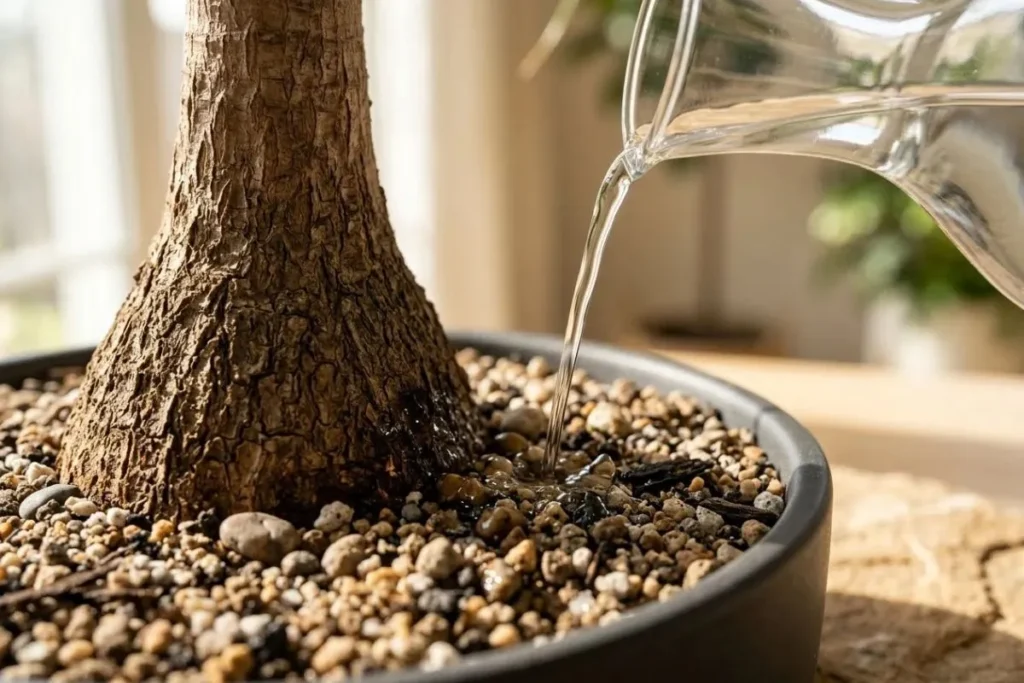
Pour water slowly over the soil surface until it starts flowing through the drainage holes.
Avoid pouring water directly into the center of the swollen trunk. The base should remain dry rather than collecting standing water.
Let Excess Water Drain
Allow the pot to drain completely. Empty the saucer or decorative outer container after watering.
Never leave your ponytail palm sitting in a pool of water. Even a plant that tolerates drought can develop serious root problems when its roots stay wet.
Step 4: Wait Before Watering Again
Let the soil dry before the next watering session.
Don’t add small amounts of water every few days. Deep watering followed by a proper drying period is generally better than repeatedly keeping the soil slightly moist.
How Seasonal Changes Affect Watering Frequency
Your plant doesn’t need the same amount of water throughout the year. Its growth pattern changes with the seasons, so your watering routine should change too.
Spring: Increase Watering Gradually
Spring is when ponytail palms usually begin growing more actively.
As temperatures rise and daylight increases, the plant may start using more moisture. Check the soil every couple of weeks and water when it has dried sufficiently.
Don’t suddenly increase watering just because spring has arrived. Let the actual soil condition guide you.
Summer: Check Soil More Often
Summer often brings brighter light and warmer indoor temperatures. These conditions can make the potting mix dry faster.
Check the soil regularly, particularly if your plant sits near a sunny window. A small plant in a terracotta pot may dry out faster than a larger plant in a plastic container.
Even during hot weather, avoid watering while the soil remains damp.
Fall: Start Reducing Watering
As daylight decreases and temperatures become cooler, growth usually slows down.
Your plant may take longer to use the available moisture. Increase the time between watering sessions instead of sticking to your summer routine.
Winter: Water Sparingly
Winter is usually the period when ponytail palms need the least water.
Indoor heating can make the air dry, but that doesn’t automatically mean the roots need more moisture. The soil may remain wet for several weeks because the plant is growing slowly.
Wait until the soil has dried properly before watering again.
Signs You’re Overwatering Your Ponytail Palm
Overwatering is one of the most common reasons ponytail palms struggle indoors. Their swollen trunks store moisture, so they don’t need constantly damp soil.
Here are some warning signs to watch for.

Yellowing Leaves
If several leaves turn yellow while the soil stays wet, excessive watering could be the problem.
Check the drainage holes and soil condition. If the potting mix smells unpleasant or remains soggy, inspect the roots for possible rot.
Soft or Mushy Trunk
A healthy ponytail palm has a firm, swollen trunk.
If the base becomes soft, mushy, or develops dark areas, it may indicate serious rot. This is more concerning than a few brown leaf tips and requires immediate attention.
Remove the plant from its pot and inspect the roots and lower trunk. If rot is present, remove affected tissue with a clean, sterilized cutting tool and repot the healthy portion in fresh, well-draining soil if enough healthy tissue remains.
Persistently Wet Soil
Soil that stays wet for weeks is a warning sign, particularly when the plant is not actively growing.
Check whether the container has drainage holes. Dense soil, oversized pots, and poor drainage can all contribute to this problem.
Unpleasant Soil Smell
A sour or rotten smell coming from the potting mix can indicate decaying roots or organic material.
Don’t try to solve this problem by simply reducing the next watering amount. Check the roots and correct the drainage issue.
Common Watering Mistakes to Avoid
Even an easy-care ponytail palm can struggle when its watering routine doesn’t match its growing conditions.
Here are a few mistakes worth avoiding.
Watering Every Week
Weekly watering is often too frequent for indoor ponytail palms. Their thick trunks store water, and their roots prefer a drying period between watering sessions.
Check the soil instead of following a weekly routine.
Using a Pot Without Drainage Holes
A decorative container without drainage can trap excess moisture around the roots.
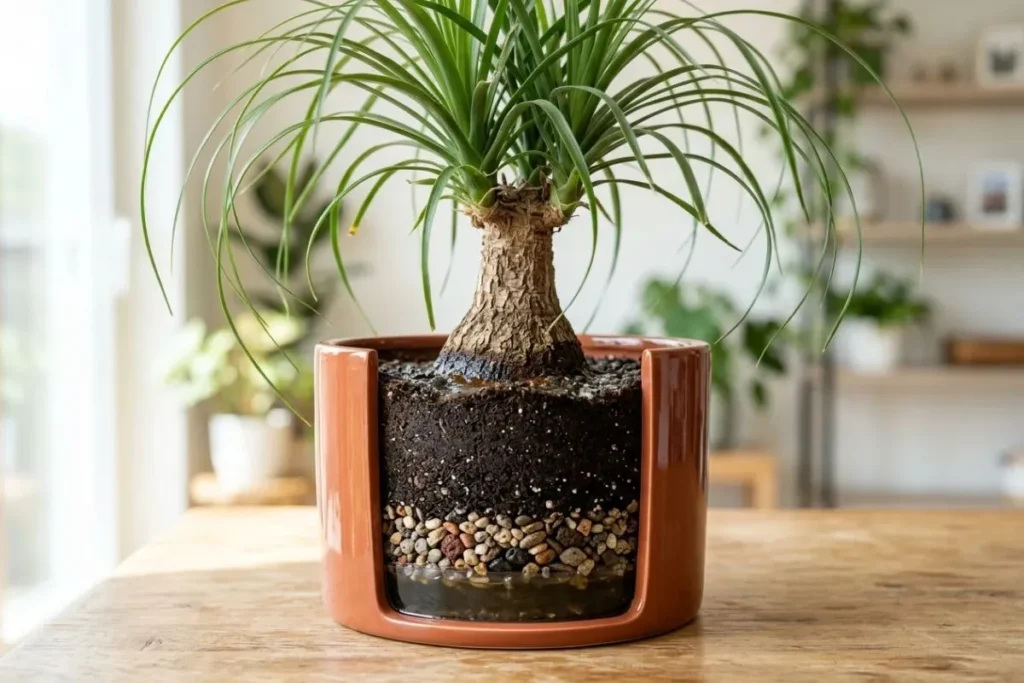
If you like decorative pots, keep your plant in a nursery pot with drainage holes and place it inside the decorative container. Remove it when watering and allow it to drain completely.
Following the Same Schedule All Year
A summer watering routine may be too frequent during winter.
Adjust your watering habits as daylight, temperature, and plant growth change.
Ignoring the Soil Below the Surface
Dry topsoil doesn’t always mean the entire pot is ready for water.
Check deeper into the pot before watering, especially when your plant grows in a large container.
Misting Instead of Watering
Misting the leaves doesn’t replace proper root watering. Ponytail palms don’t need regular misting to stay healthy.
Focus on appropriate soil moisture, good drainage, and suitable light instead.
How to Choose the Right Soil and Pot for Better Watering
A good watering routine becomes much easier when your plant grows in the right container and potting mix.
Ponytail palms prefer conditions that allow water to move through the soil rather than collect around their roots.
A cactus or succulent potting mix is a practical choice. If your current mix feels dense, adding pumice or perlite can improve airflow and drainage.
Choose a pot only slightly larger than the root ball. An oversized container can hold unnecessary moisture and increase the time it takes for the soil to dry.
Terracotta is particularly useful if you tend to overwater because it allows moisture to escape through its sides. However, plastic pots can also work well if you adjust your watering routine accordingly.
Most importantly, make sure the container has open drainage holes. Good drainage makes it much easier to maintain healthy roots.
Frequently Asked Questions
Can I water my ponytail palm once a month?
Yes. Once a month may be suitable for many indoor ponytail palms, particularly during cooler months. However, plants in warm, bright locations may need water sooner. Always check the soil before watering.
Should I water my ponytail palm from the top or bottom?
Top watering is generally the easiest option. Pour water over the soil until it drains through the bottom. Empty the saucer afterward to prevent the roots from sitting in excess water.
Does a ponytail palm need less water in winter?
Yes. Growth usually slows during winter, so the plant uses less moisture. You may only need to water every 4–6 weeks or less, depending on indoor conditions.
How do I know if my ponytail palm is overwatered?
Yellow leaves, persistently wet soil, an unpleasant soil smell, and a soft trunk can indicate overwatering. Check the roots if you notice several of these symptoms.
Can a ponytail palm recover from overwatering?
It can recover if the damage isn’t too severe. Remove it from soggy soil, inspect the roots, trim rotten sections with a sterilized tool, and repot it in fresh, well-draining soil. Severely damaged plants may not recover.
Should I mist my ponytail palm?
No, regular misting isn’t necessary. Ponytail palms are adapted to dry conditions and don’t need extra moisture sprayed onto their leaves.
How much water does a ponytail palm need?
There isn’t one fixed amount. Water thoroughly until excess moisture flows through the drainage holes, then let the soil dry before watering again. The amount depends on the pot size and soil mixture.
Can I use tap water for my ponytail palm?
Yes, ordinary tap water is generally suitable. If your water is very hard or contains high levels of dissolved minerals, filtered water may help reduce mineral buildup in the soil.
Final Thoughts
Ponytail palms are easy to care for when you understand their natural ability to store water. They don’t need frequent drinks, and keeping their soil constantly moist can do more harm than good.
For most indoor plants, watering every 2–4 weeks during the growing season and less frequently in winter is a useful starting point. However, always check the soil, consider your indoor conditions, and allow excess water to drain completely.
The best watering routine isn’t about watering on a particular day. It’s about giving your ponytail palm water when it actually needs it.

Plant Nest Blog’s author is passionate about plants, gardening, and sustainable living. Through research and practical experience, they share helpful plant care tips, gardening guides, and easy solutions to help readers grow healthier plants and create greener spaces.