
Growing your own watermelons sounds exciting until the vines spread everywhere but the fruits refuse to grow. If you’re wondering how to grow a watermelon plant, the secret is to give it enough sunlight, warm soil, regular water, and plenty of room to spread.
With the right growing conditions, even a beginner can enjoy fresh, juicy watermelons straight from the garden.
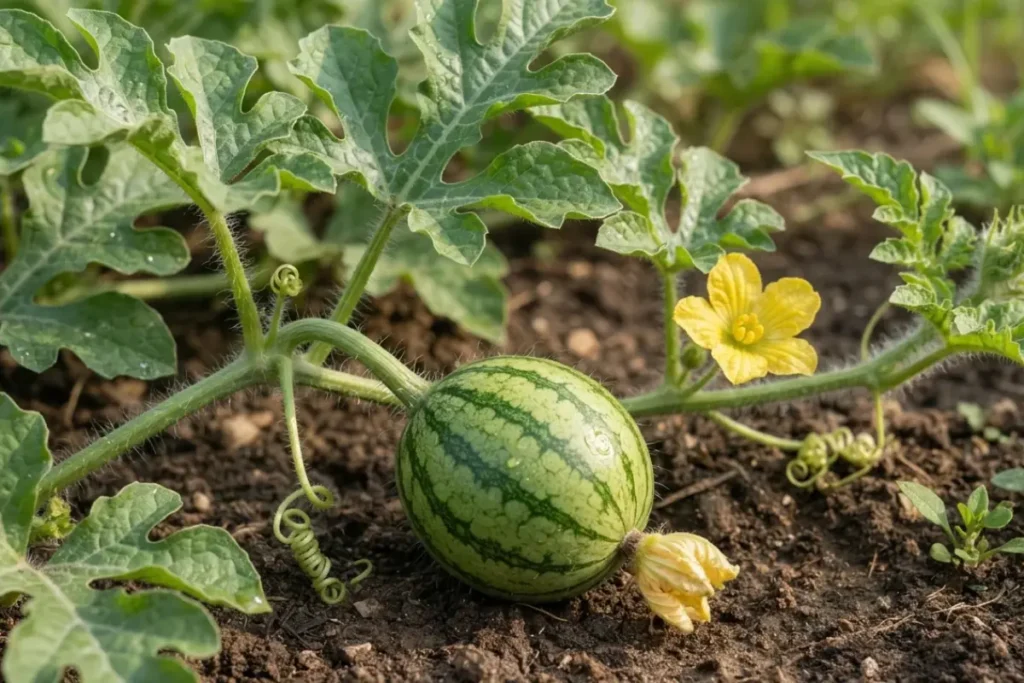
The good news is that watermelon plants don’t need complicated care, but they do need attention at the right time. From choosing the right seeds and preparing the soil to watering, feeding, pollinating, and harvesting, here’s how to help your watermelon plant grow strong and produce sweet, healthy fruits.
Choose the Right Watermelon Variety for Your Garden
Before planting, decide which type of watermelon you want to grow. Different varieties have different growing periods, fruit sizes, and space requirements. Choosing the right one can make a big difference, especially if you have a small backyard or a short growing season.
Some watermelons need plenty of room for their long vines, while compact varieties are easier to manage in smaller gardens.
Popular Watermelon Varieties in the USA
Sugar Baby:
This small, round watermelon usually weighs around 8–10 pounds. It is a good choice for home gardeners who want an earlier harvest.
Crimson Sweet:
A popular variety with sweet red flesh, green-striped skin, and medium-to-large fruits. It needs plenty of room to spread.
Charleston Gray:
This variety produces large, oblong fruits with light green skin. It is often grown in warmer regions.
Moon and Stars:
An unusual heirloom variety with dark green skin covered in small yellow spots. It adds something different to a home vegetable garden.
Golden Midget:
A smaller watermelon variety with yellow skin when ripe. It is worth considering if you want something different from traditional red watermelons.
For a first attempt, Sugar Baby is a practical option because its smaller fruits are easier to manage than large watermelon varieties.
Pick the Best Location With Full Sunlight
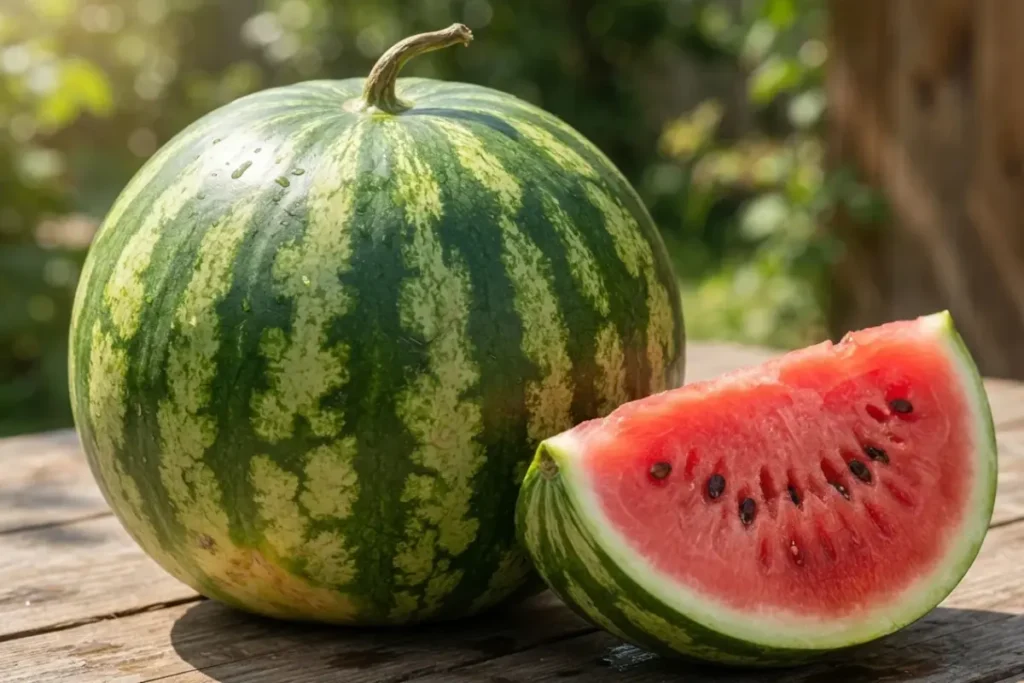
Watermelons love warm, sunny conditions. Choose a garden location that receives at least 8 hours of direct sunlight each day. More sunlight helps the vines grow vigorously and supports fruit development.
Avoid planting near large trees, fences that create heavy shade, or buildings that block sunlight for most of the day.
Good air circulation also matters. Crowded plants stay damp longer after watering or rain, which can encourage fungal diseases.
If you’re growing watermelon in a raised bed, place it near an edge so the vines can grow outward instead of taking over your other vegetables.
Prepare Loose, Well-Draining Soil
Healthy soil gives watermelon roots the space and nutrients they need to develop. These plants grow best in loose, fertile, well-draining soil with plenty of organic matter.
A slightly acidic to neutral soil pH of approximately 6.0–7.0 works well.
Before planting, loosen the soil about 12 inches deep. Remove weeds, rocks, and large clumps that could interfere with root development.
Mix in finished compost to improve soil structure and provide organic matter. If your garden soil contains heavy clay, raised beds or well-prepared planting hills can help improve drainage.
Why Soil Drainage Matters
Watermelon roots need moisture, but they don’t like sitting in waterlogged soil. Excess water can reduce oxygen around the roots and increase the risk of root problems.
A simple way to check drainage is to water a small area and observe how quickly the water disappears. If it remains pooled for a long time, improve the soil before planting.
Avoid adding excessive nitrogen fertilizer. Too much nitrogen encourages leafy vine growth at the expense of flowers and fruit production.
How to Grow a Watermelon Plant From Seeds
Growing watermelons from seeds is straightforward when you provide the right temperature and moisture.
You can start seeds indoors or sow them directly into the garden. Your choice depends on your local climate and the length of your growing season.
Starting Seeds Indoors
If you live in an area with a shorter growing season, start watermelon seeds indoors about 2–4 weeks before your expected last spring frost.
Use individual biodegradable pots or containers because watermelon seedlings don’t enjoy having their roots disturbed.
Fill the containers with a quality seed-starting mix. Plant each seed about 1 inch deep and water gently.
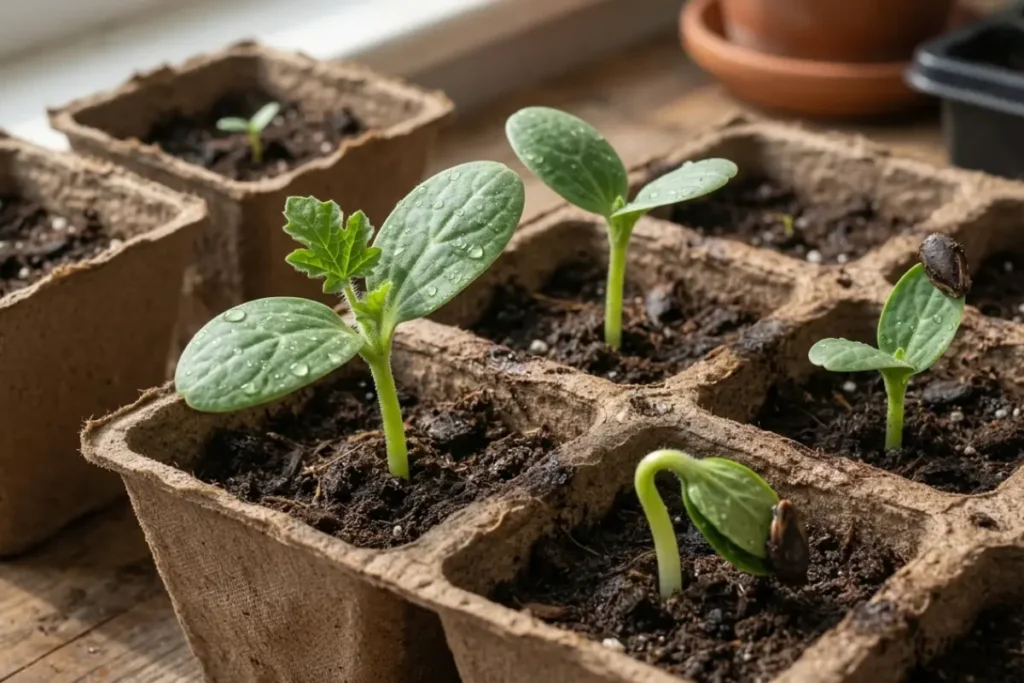
Keep the containers somewhere warm. Watermelon seeds generally germinate best in soil temperatures around 80–90°F.
Once seedlings emerge, provide plenty of bright light to prevent them from becoming weak and leggy.
Direct Sowing Seeds Outdoors
If your growing season is long and warm, direct sowing is often easier.
Wait until the danger of frost has passed and the soil temperature reaches at least 70°F. Cold soil can delay germination and cause seeds to rot.
Plant 2–3 seeds about 1 inch deep in each planting spot. Once seedlings develop a few true leaves, keep the strongest plant and remove the weaker ones.
Avoid pulling seedlings roughly because you could disturb the roots of the plant you want to keep.
Plant Watermelon Seeds at the Right Spacing
Watermelon vines need enough room to spread. Plant spacing depends on the variety and whether you’re using rows, hills, or raised beds.
For traditional sprawling varieties, allow approximately 3–5 feet between plants and 6–8 feet between rows. Compact varieties may need less space, so check the seed packet before planting.
You can also plant watermelons in small hills.
Create a low mound of loose soil about 6–12 inches high. Plant 2–3 seeds in the mound and thin them to one healthy plant after germination.
Hills can help soil warm up faster in cooler spring conditions and improve drainage in heavier soil.
However, don’t make the mound too small. Watermelon roots spread beyond the immediate planting area, so the surrounding soil should also be loose and fertile.
Water Your Watermelon Plants Correctly
Water is essential for healthy vines and developing fruits. However, watering too frequently or allowing the soil to dry out completely can create problems.
Watermelon plants generally need about 1–2 inches of water per week from rainfall and irrigation, although the exact amount depends on soil type, temperature, plant size, and weather.
Water deeply rather than giving the plants frequent, shallow drinks.
Best Watering Practices
Water near the base of the plant instead of spraying the leaves. A soaker hose or drip irrigation system works especially well because it delivers moisture directly to the root zone.
Early morning is a good time to water. It gives plants moisture before the hottest part of the day.
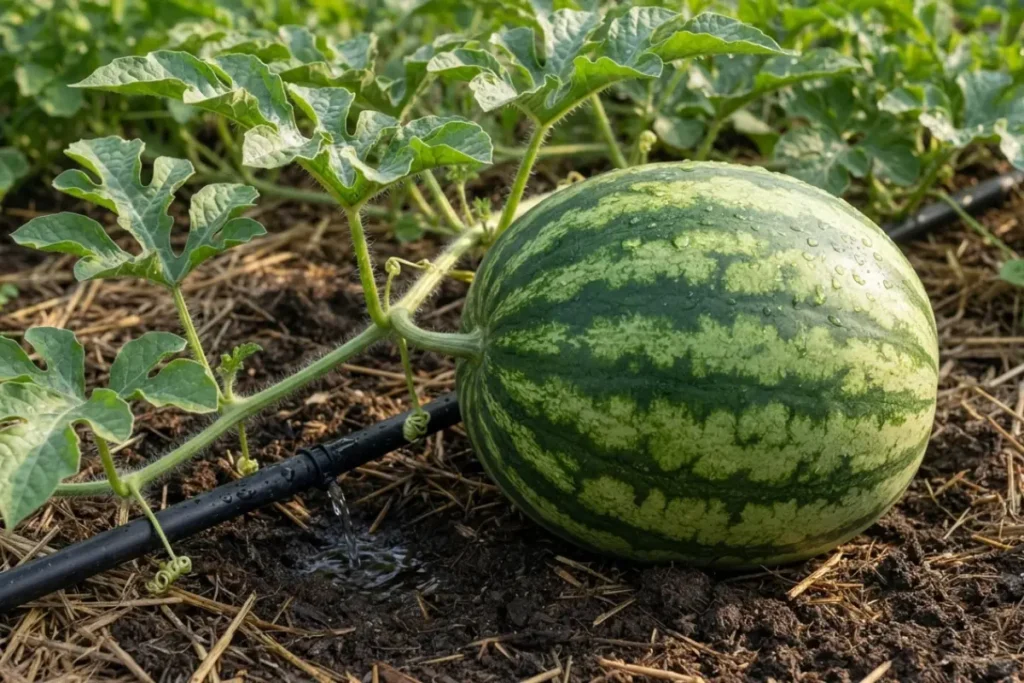
Pay extra attention when flowers appear and fruits begin developing. Inconsistent moisture during fruit growth can contribute to problems such as blossom-end rot and poor fruit development.
As fruits approach maturity, avoid sudden changes in watering. Keep the soil reasonably consistent rather than allowing it to become extremely dry and then soaking it heavily.
Use Mulch to Protect the Soil and Vines
Mulching is one of the easiest ways to make watermelon care more manageable.
A layer of organic mulch helps the soil retain moisture, limits weed growth, and reduces temperature fluctuations around the roots.
You can use clean straw, shredded leaves, untreated grass clippings in thin layers, or compost.
Apply mulch after the soil has warmed up. Keep it slightly away from the main stem to reduce the risk of stem rot.
Mulch can also help keep developing fruits off bare, wet soil. This reduces direct contact with damp ground and makes it easier to keep the growing area clean.
Fertilize Watermelon Plants for Healthy Growth
Watermelons need nutrients to develop strong vines, healthy leaves, flowers, and fruits.
Before planting, mix finished compost into the soil. A soil test is the best way to determine whether your garden needs additional fertilizer.
If you use a balanced vegetable fertilizer, follow the product’s label for application rates.
Understand the Main Nutrients
Nitrogen (N): Supports leafy growth and healthy vines. Too much can produce excessive foliage with fewer fruits.
Phosphorus (P): Supports root development and energy transfer within the plant.
Potassium (K): Helps regulate water movement and supports overall plant development and fruit quality.
Once the vines begin spreading, avoid repeatedly applying high-nitrogen fertilizer.
A fertilizer with a more balanced nutrient profile may be suitable depending on your soil test. Don’t assume that adding more fertilizer will automatically produce bigger or sweeter watermelons.
Encourage Flowers and Pollination
Healthy watermelon vines eventually produce male and female flowers. However, seeing flowers doesn’t always mean you’ll get fruits.
Watermelons depend on pollinators, particularly bees, to transfer pollen from male flowers to female flowers.
Male flowers usually appear first. Female flowers have a small swollen structure behind the flower that looks like a tiny watermelon.
How to Identify Female Flowers
Look closely at the base of the flower.
Male flowers grow on thin stems without a swollen base. Female flowers have a small rounded ovary behind the petals.
If pollination is poor, female flowers may fall off without producing fruit.
How to Hand-Pollinate Watermelons
If you don’t see many bees around your garden, hand-pollination can help.
Choose a freshly opened male flower and gently remove its petals. Touch its pollen-covered center to the center of a freshly opened female flower.
Do this in the morning when flowers are open.
Avoid handling the flowers roughly. A gentle touch is enough to transfer pollen.
You can also attract pollinators by growing nearby flowers such as zinnias, cosmos, and sunflowers.
Train and Manage Watermelon Vines
Watermelon vines can spread several feet in different directions. Without a little planning, they may quickly cover nearby garden beds.
Allow the vines to grow naturally across the ground if you have enough space.
If you’re gardening in a smaller area, gently guide the vines toward an open section of the garden. Avoid repeatedly moving or twisting them because the stems can break easily.
Can You Grow Watermelons Vertically?
Yes, you can grow smaller watermelon varieties on a strong trellis.
However, large fruits need individual support. Use sturdy mesh slings or fabric hammocks attached securely to the trellis.
Choose compact varieties and build the support system before the fruits become heavy.
Don’t use a weak tomato cage for a full-size watermelon plant. Its vines and fruits can quickly become too heavy.
Protect Young Watermelons From Pests and Diseases
Watermelon plants can attract several common garden pests. Checking the leaves and stems regularly helps you catch problems before they spread.
Common Watermelon Pests
Aphids
These tiny insects gather on new growth and underneath leaves. They suck plant sap and may cause curled or distorted leaves.
Cucumber Beetles
These beetles feed on watermelon leaves and flowers. Some also spread bacterial wilt, which can damage or kill plants.
Squash Bugs
Although more commonly associated with squash, squash bugs may occasionally feed on other cucurbits and damage young plants.
Spider Mites
These tiny pests can cause pale speckling and fine webbing on leaves, especially during hot, dry weather.
For small aphid infestations, a strong stream of water can help dislodge them. Row covers can protect young plants from certain insect pests, but remove them when flowers open so pollinators can reach the blossoms.
Common Watermelon Diseases
Powdery Mildew
Powdery mildew appears as white, powder-like patches on watermelon leaves. It can spread across the foliage and weaken the plant if left untreated.
Downy Mildew
Downy mildew causes yellow or pale angular patches on leaves, often with fuzzy growth underneath in humid conditions. Infected leaves may gradually weaken and die.
Anthracnose
Anthracnose can create dark, sunken lesions on leaves and other plant parts. Severe infections may affect plant growth and reduce fruit quality.
To reduce disease problems, provide good airflow, avoid overhead watering, remove badly affected plant material, and rotate crops.
Don’t plant watermelons in the same garden area every year. Rotating cucurbit crops with unrelated vegetables helps reduce the buildup of certain pests and diseases
Support Developing Fruits as They Grow
Once pollination succeeds, tiny watermelons begin developing behind female flowers.
At this stage, avoid unnecessary disturbance around the vines.
If your watermelon grows directly on the ground, place a layer of clean straw or a flat piece of cardboard beneath the fruit. This helps reduce direct contact with damp soil.
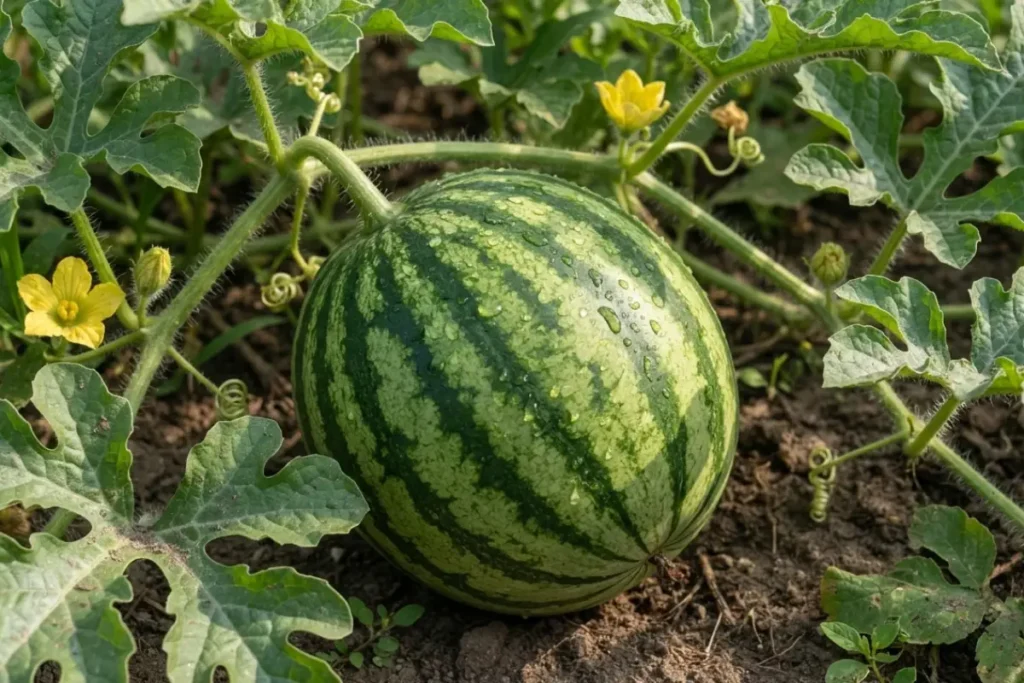
For vertically grown plants, use a breathable sling that supports the fruit without squeezing it.
You don’t need to lift or turn the watermelon regularly. Frequent handling can damage the stem or vine.
One useful trick is to place a small marker near each developing fruit so you can track its growth and estimate when it may be ready for harvest.
Know When Your Watermelon Is Ready to Harvest
Knowing when to harvest is one of the trickiest parts of growing watermelons.
Unlike some fruits, watermelons don’t continue getting sweeter after harvest. Picking too early can leave you with a pale, less flavorful fruit.
Fortunately, several signs can help you judge ripeness.
Check the Tendril Near the Fruit
Look at the small curly tendril closest to the fruit’s stem.
When this tendril turns brown and dries out, it can be a useful sign that the watermelon is approaching maturity.
However, don’t rely on this sign alone because it isn’t equally reliable for every variety.
Look at the Ground Spot
The area where the watermelon touches the soil is called the ground spot.
A ripe watermelon often develops a creamy yellow ground spot rather than a pale white one.
Check the Fruit’s Skin
The skin of a mature watermelon may look less shiny and more dull than that of an immature fruit.
You can also gently tap the fruit, but the sound is subjective and difficult to judge without experience.
Check the Expected Growing Time
Most watermelon varieties take roughly 70–100 days from planting to maturity, depending on the variety and growing conditions.
Always check the seed packet for the expected harvest window.
When the signs suggest ripeness, cut the fruit from the vine using clean garden shears. Leave a short piece of stem attached.
Common Mistakes That Stop Watermelon Plants From Producing Fruit
Sometimes a watermelon plant looks healthy but produces very few fruits. The problem may be related to growing conditions rather than the seeds themselves.
Here are some common mistakes worth avoiding.
Planting Too Early
Cold soil slows seed germination and weakens young plants. Wait until the soil is warm enough before planting watermelons.
Providing Insufficient Sunlight
Watermelons need full sun to grow well and produce fruit. Too much shade can reduce flowering and limit fruit production.
Overwatering
Constantly wet soil can damage roots and affect plant growth. Water deeply but allow excess moisture to drain properly.
Using Too Much Nitrogen
Excess nitrogen encourages leafy growth but may reduce fruit production. Use a balanced fertilizer and avoid overfeeding your watermelon plants.
Ignoring Pollination
Female flowers need successful pollination to develop fruits. Encourage bees to visit your garden or hand-pollinate flowers when necessary.
Planting Too Closely
Crowded vines compete for sunlight, water, and nutrients. Give each watermelon plant enough room to spread and grow.
Harvesting Too Early
Cutting a watermelon before it matures can result in bland, less-sweet flesh. Check the signs of ripeness before harvesting your fruit.
A little observation and timely care can help you identify these problems before they affect your entire harvest.
Growing Watermelon Plants at Home in Containers
Don’t have a large backyard? You can still enjoy homegrown watermelons in containers.
The key is choosing a compact variety and providing a large enough pot.
Choose a Large Container
Use a container with a capacity of at least 20 gallons for a compact watermelon plant. Larger containers can provide more room for roots and help maintain consistent moisture.
Make sure the pot has several drainage holes at the bottom.
Use Quality Potting Mix
Fill the container with a well-draining potting mix designed for vegetables.
Avoid using ordinary garden soil by itself because it can become compacted in containers.
Provide Enough Sunlight
Place the pot in a location that receives at least 8 hours of direct sunlight.
Balconies, patios, and sunny outdoor spaces can work well if they provide enough room for the vines.
Water More Carefully
Container plants can dry out faster than plants growing in the ground.
Check the soil regularly, especially during hot summer weather. Water when the upper layer begins to dry, making sure excess water can drain away.
Support the Vines and Fruits
If space is limited, train the vines onto a sturdy trellis. Use individual slings to support developing watermelons.
For container gardening, smaller varieties such as Sugar Baby are generally easier to manage than large varieties.
Frequently Asked Questions About Growing Watermelons
How long does it take to grow a watermelon plant?
Most watermelon varieties take approximately 70–100 days from planting to maturity. The exact time depends on the variety, temperature, sunlight, and growing conditions.
Can I grow a watermelon plant from a store-bought watermelon?
Yes, you can save seeds from a store-bought watermelon and try growing them. However, if the fruit came from a hybrid variety, the new plant may not produce fruits with the same characteristics.
Choose seeds from a ripe watermelon, clean them, dry them thoroughly, and store them in a cool, dry place until planting.
How many watermelons grow on one plant?
A watermelon plant may produce 2–4 fruits under suitable growing conditions, although the number varies with the variety, plant health, pollination, and growing season.
Smaller varieties may produce more fruits than large-fruited types.
Do watermelon plants need full sun?
Yes. Watermelons need at least 8 hours of direct sunlight daily for strong growth, flowering, and fruit development.
Why is my watermelon plant flowering but not producing fruit?
Poor pollination is one possible reason. Male flowers often appear before female flowers, so give the plant time. If female flowers open but fruits fail to develop, encourage bee activity or try hand-pollination.
How often should I water a watermelon plant?
Watermelon plants generally need around 1–2 inches of water per week from rainfall and irrigation. Adjust watering according to soil moisture, weather, and plant development.
Can watermelon grow in pots?
Yes. Choose a compact variety, use a large container with good drainage, and provide plenty of sunlight. A sturdy trellis and fruit-supporting slings can help save space.
What is the best month to plant watermelon in the USA?
The best planting month depends on your USDA growing zone and local frost dates. In many regions, gardeners plant watermelons from late spring to early summer, once the soil is warm and the danger of frost has passed.
Why are my watermelons growing but not getting bigger?
Small fruits may result from poor pollination, insufficient sunlight, inconsistent watering, nutrient problems, or a naturally small-fruited variety. Check the growing conditions before adding extra fertilizer.
Should I prune watermelon vines?
Most home gardeners don’t need to prune watermelon vines. Healthy foliage helps the plant produce energy for fruit development. Remove damaged or diseased leaves, but avoid excessive pruning.
Conclusion:
Growing watermelons at home becomes much easier when you understand what the plant needs at each stage. Start with good-quality seeds, prepare warm and well-draining soil, provide plenty of sunlight, and maintain consistent moisture.
Pay particular attention to pollination and fruit development because these stages determine whether your plant produces a successful harvest. With proper spacing, regular care, and patience, you can enjoy fresh, homegrown watermelons from your own garden.

Plant Nest Blog’s author is passionate about plants, gardening, and sustainable living. Through research and practical experience, they share helpful plant care tips, gardening guides, and easy solutions to help readers grow healthier plants and create greener spaces.