
Many people assume that a dying corn plant simply needs more water. But that is not always true. In fact, overwatering can be one of the reasons a corn plant starts to decline.
So, if you keep asking, “why is my corn plant dying?”, do not immediately reach for the watering can. First, look at the plant, soil, roots, and growing conditions.
The corn plant, scientifically known as Dracaena fragrans, is a popular indoor plant because it can adapt to typical home conditions. However, it still needs the right balance of light, water, soil, humidity, and temperature to stay healthy.
When one of these conditions is far from what the plant needs, problems can slowly appear.
You may notice corn plant leaves turning yellow, brown tips, drooping foliage, curling leaves, or leaves falling off. Sometimes the plant may stop producing healthy new growth.
These signs can be worrying, but they do not always mean your plant is beyond saving.
If you are searching for why is my indoor corn plant dying, start by thinking about what has changed.
Has the plant been moved to a darker location? Has your watering routine changed? Does the soil stay wet for several days? Has the plant recently been repotted? Could pests be hiding underneath the leaves?
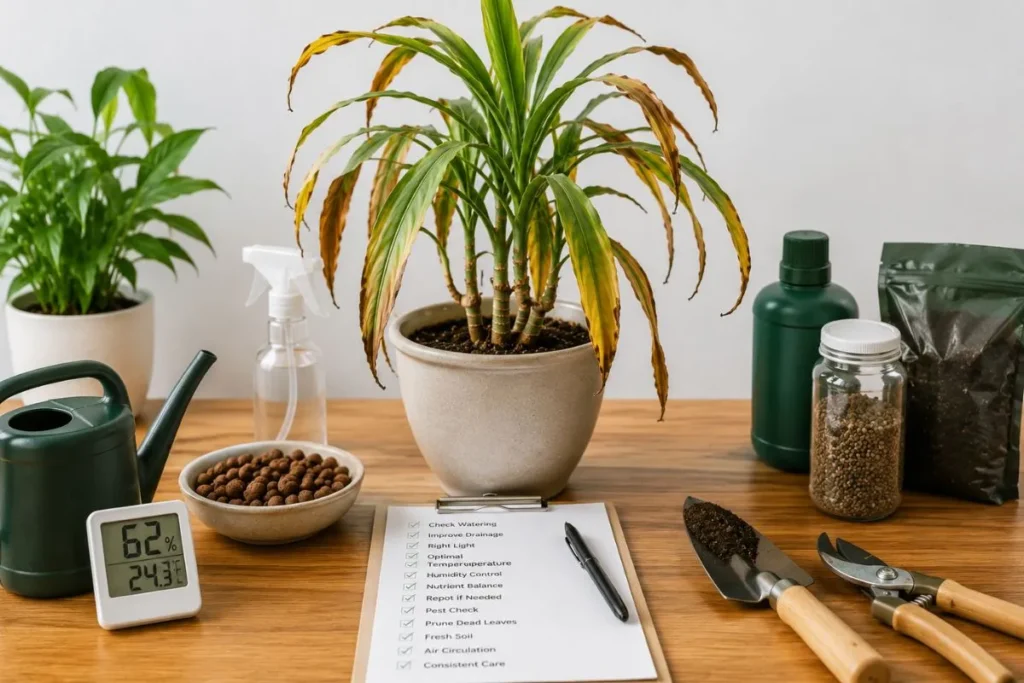
These questions can help you find the real cause.
It is also important not to treat every symptom in the same way. Yellow leaves do not always mean your corn plant needs fertilizer. Drooping leaves do not always mean it needs more water.
Brown tips can have several causes, including dry air, watering problems, or environmental stress.
The good news is that many corn plant problems can be corrected when you catch them early. The key is to identify the source of the stress instead of making several changes at once.
In this guide, we will look at the most common reasons a corn plant starts declining and explain what you should look for.
Whether your plant is losing leaves, turning yellow, developing brown tips, or simply looking weak, understanding the cause is the first step toward recovery.
Why Is My Corn Plant Dying? 11 Common Causes
If you are wondering why is my corn plant dying, there is usually a reason behind the change. Corn plants can be affected by watering problems, poor drainage, unsuitable lighting, dry air, temperature changes, soil problems, nutrient issues, pests, diseases, and root stress.
Instead of guessing, look at the plant and its environment together. The following 11 causes are the most important ones to investigate.
Overwatering
If you are asking why is my corn plant dying, overwatering is one of the first problems to check. Corn plants do not like sitting in constantly wet soil.
When excess moisture remains around the roots, the roots may struggle to get enough oxygen.
Over time, this can weaken the root system and contribute to corn plant root rot. Yellow leaves, drooping foliage, wet soil, and leaf loss may appear as the problem develops.
Underwatering
Another possible answer to why is my corn plant dying is underwatering. When the soil becomes extremely dry, the plant can become stressed and may struggle to maintain healthy foliage.
You may notice drooping leaves, brown tips, curling foliage, or leaves falling off. If severe dryness happens repeatedly, the plant may also slow its growth and become increasingly weak.
Poor Drainage
If you keep wondering why is my corn plant dying, check whether excess water can actually escape from the container. Poor drainage can leave the roots surrounded by moisture for too long.
A container with inadequate drainage or soil that holds excessive water can create unhealthy root conditions. This makes corn plant drainage an important part of proper corn plant care.
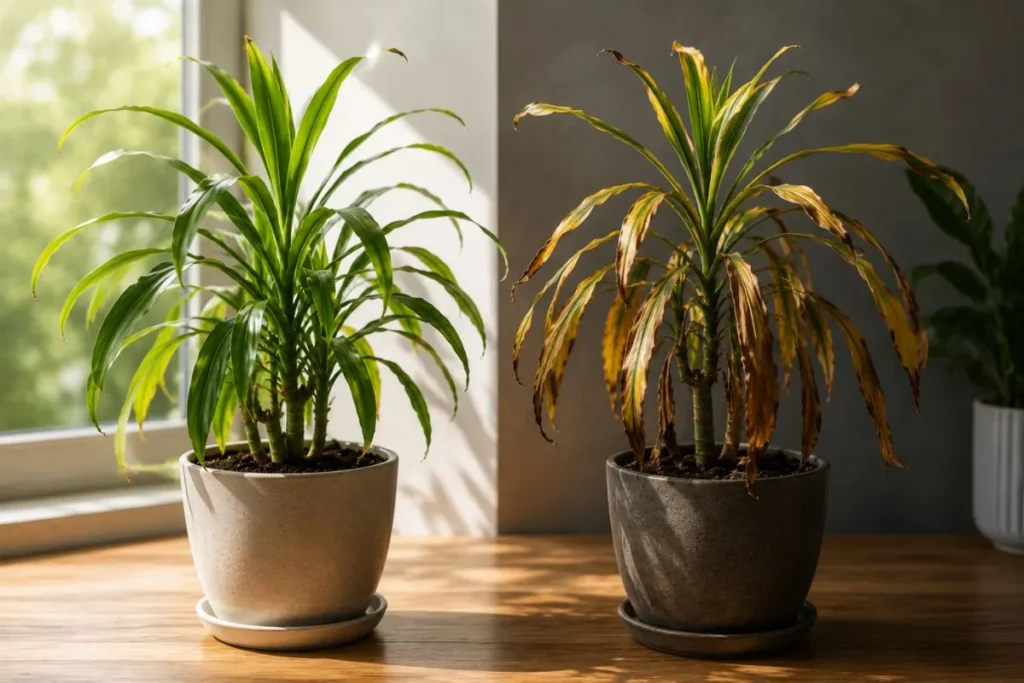
Too Much or Too Little Light
Light can also explain why is my corn plant dying. Corn plants need suitable light to maintain healthy foliage and growth.
Very low light can contribute to weak growth and leaf loss. On the other hand, harsh direct sunlight can damage leaves and cause brown or scorched areas.
Finding the right balance is important, especially for an indoor corn plant that may not receive enough natural light.
Low Humidity
If you are trying to understand why is my corn plant dying, consider the humidity around it. Dry indoor air can contribute to brown leaf tips, dry edges, curling foliage, and general plant stress.
This can become more noticeable when the plant is placed close to heating systems, air conditioners, or other sources of dry air.
Temperature Stress
Sudden temperature changes can put stress on a corn plant. Cold drafts, very hot conditions, and direct exposure to heating or cooling vents can all affect its health.
If you are wondering why is my corn plant dying after moving it to a new location, check whether the new spot has a very different temperature.
Stable conditions are generally better than frequent changes, particularly for an indoor corn plant.
Poor Soil
Soil problems can also contribute to why is my corn plant dying. A growing medium that is too compacted, heavy, or poorly draining can make it difficult for roots to receive the right balance of air and moisture.
If the soil stays wet for a long time or becomes hard and compacted, the roots may struggle to function properly. This can eventually lead to corn plant growth problems.
Nutrient Problems
If you are asking why is my corn plant dying, nutrient problems are another possibility. A plant needs essential nutrients to maintain healthy foliage and produce new growth.
A deficiency may contribute to pale leaves, yellowing, or weak growth. However, adding fertilizer without knowing the cause can sometimes create another problem.
Pests
Too much fertilizer can cause salt buildup around the roots and place additional stress on the plant. So, fertilizer should not be treated as a universal solution for every corn plant problem. Pests
Small pests can gradually weaken a corn plant without being obvious at first. If you are wondering why is my corn plant dying, inspect the leaves, stems, and undersides of the foliage carefully.
Spider mites, mealybugs, scale insects, and aphids can feed on the plant and cause visible damage. You may notice sticky residue, tiny insects, webbing, speckled leaves, distorted growth, or unexplained leaf loss.
Regular inspection can help you catch corn plant pests before they become a serious problem.
Diseases and Root Problems
Diseases and root problems can also explain why is my corn plant dying. Root damage is especially concerning because unhealthy roots cannot support the foliage properly.
If the roots are damaged, the plant may struggle to absorb water and nutrients. This can result in yellow leaves, drooping, leaf drop, and weak growth.
Corn plant root rot is particularly important to watch for when the soil remains excessively wet or drainage is poor.
Repotting Stress or Root-Bound Conditions
If you are asking why is my corn plant dying after repotting, transplant stress may be responsible. Moving a plant can disturb its roots, and the plant may need time to adjust.
On the other hand, a root-bound corn plant can also struggle when its roots become tightly packed inside the container. Crowded roots may have less room to develop and can affect the plant’s overall growth.
If your corn plant has been in the same container for a long time and its growth has slowed, inspect the root system before making major changes.
These causes show why why is my corn plant dying does not have one universal answer. The same symptom can come from very different problems.
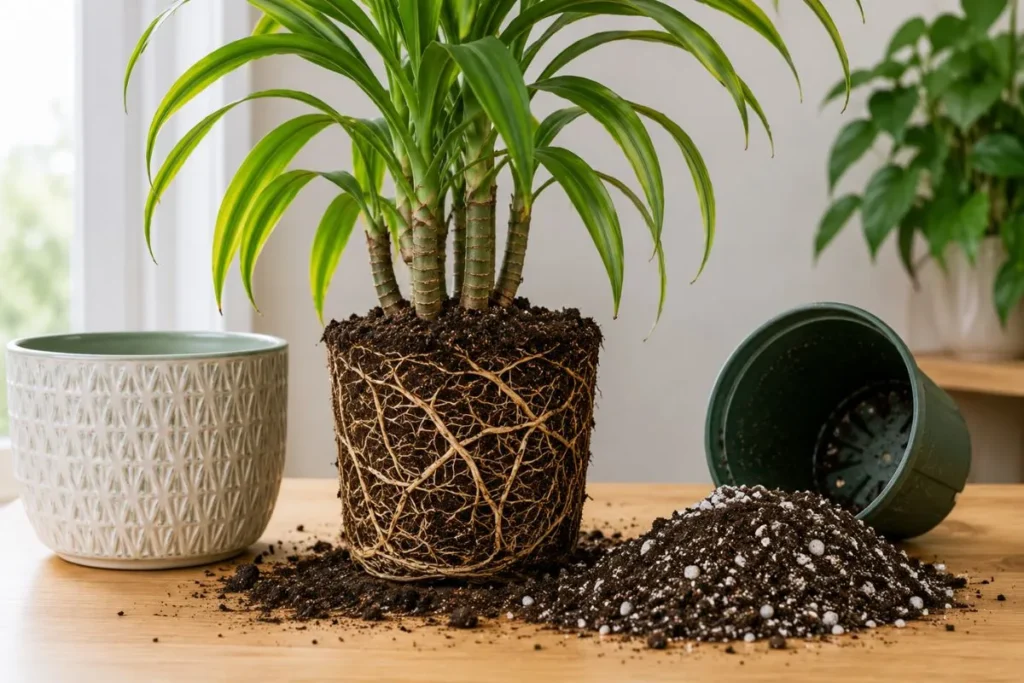
For example, yellow leaves may be linked to excess moisture, low light, nutrient issues, or root stress. Brown tips may be related to humidity or watering, while leaf drop can follow environmental changes or more serious root problems.
The best approach is to look for several clues at once. Check the soil, foliage, roots, lighting, temperature, and recent changes in care. Once you understand what is stressing your corn plant, you can choose a solution that addresses the actual problem rather than simply treating the visible symptom.
Overwatering Can Cause Your Corn Plant to Die
Many people assume that when a corn plant looks weak or starts drooping, it needs more water. But that is not always true. Adding more water to an already wet corn plant can make the problem much worse. So, if you are asking “why is my corn plant dying?”, check the soil before reaching for the watering can.
A corn plant, or Dracaena fragrans, needs moisture, but its roots also need oxygen. When the soil remains saturated for too long, the roots can become stressed and may eventually start to decay. Once the roots are damaged, the plant can struggle even when there is plenty of water around them.
How Overwatering Damages Corn Plant Roots
If you are wondering why is my corn plant dying, pay close attention to the condition of the root zone. When you water too frequently, water can fill the air spaces between soil particles. This reduces the oxygen available around the roots.
Healthy roots need oxygen to carry out their normal functions. When they remain surrounded by excess moisture, they can become weak and less effective at absorbing water and nutrients.
This can create a confusing situation. The soil may be very wet, but the plant can still look thirsty because damaged roots are not working properly.
Over time, corn plant overwatering can contribute to root damage and corn plant root rot. As the roots decline, you may notice yellow leaves, drooping foliage, leaf loss, or weak growth.
The problem often becomes worse when watering is based on a fixed schedule rather than the actual moisture level of the soil. Your corn plant may need water less frequently during cooler or darker conditions and more frequently when the environment is warmer and brighter.
Instead of watering because a certain number of days have passed, check the soil first.
Signs of an Overwatered Corn Plant
If you are searching for why is my corn plant dying, several symptoms can suggest that excess water is involved. One common sign is yellow foliage, especially when the soil remains wet for a long time.
Drooping leaves can also occur. This is easy to misunderstand because drooping is often associated with underwatering. However, a corn plant with damaged roots may also droop because the roots cannot function normally.
If you are asking why is my corn plant dying and losing leaves, check the moisture level of the soil. Excessive corn plant leaf drop combined with constantly wet soil can indicate serious water stress.
The soil itself provides another useful clue. If it remains soggy long after watering, the plant may not be getting the root environment it needs.
In more advanced cases, the roots may become dark, soft, or mushy. You may also notice an unpleasant smell coming from the soil.
These symptoms can indicate Dracaena root rot, particularly when they occur alongside prolonged wet conditions and poor drainage.
How Overwatering Leads to Root Rot
If you are wondering why is my corn plant dying, root rot is one of the most serious problems associated with excessive moisture.
Root rot is not caused by simply watering a plant once or twice. The bigger concern is prolonged moisture around the roots, especially when the soil drains poorly and remains saturated.
When roots become stressed and damaged, they can lose their ability to absorb water and nutrients effectively. The plant may then begin showing symptoms above the soil, even though the original problem started below it.
This is why a corn plant can look thirsty while sitting in wet soil. The plant may have plenty of water available, but damaged roots cannot use it properly.
Early signs may include slower growth, yellow leaves, weak foliage, or repeated leaf loss. As the root damage becomes more severe, the plant can decline rapidly.
If you suspect corn plant root rot, continuing to keep the soil wet can make recovery much more difficult.
How to Fix an Overwatered Corn Plant
If corn plant overwatering is the reason you are asking why is my corn plant dying, the first step is to stop adding unnecessary water. Allow the excess moisture to drain rather than continuing to water because the leaves look droopy.
Next, check the container. Excess water needs a way to escape. If the pot does not drain properly, the soil may remain saturated even after you reduce watering.
The growing medium is also important. Dense or compacted soil can hold excessive moisture around the roots. A suitable growing medium with appropriate drainage can provide a healthier root environment.
If the corn plant shows severe signs of root damage, inspect the roots carefully. Healthy roots should be firm, while severely damaged roots may appear dark, soft, or mushy.
Make any necessary changes carefully. A plant that is already stressed can be damaged further by unnecessary root disturbance.
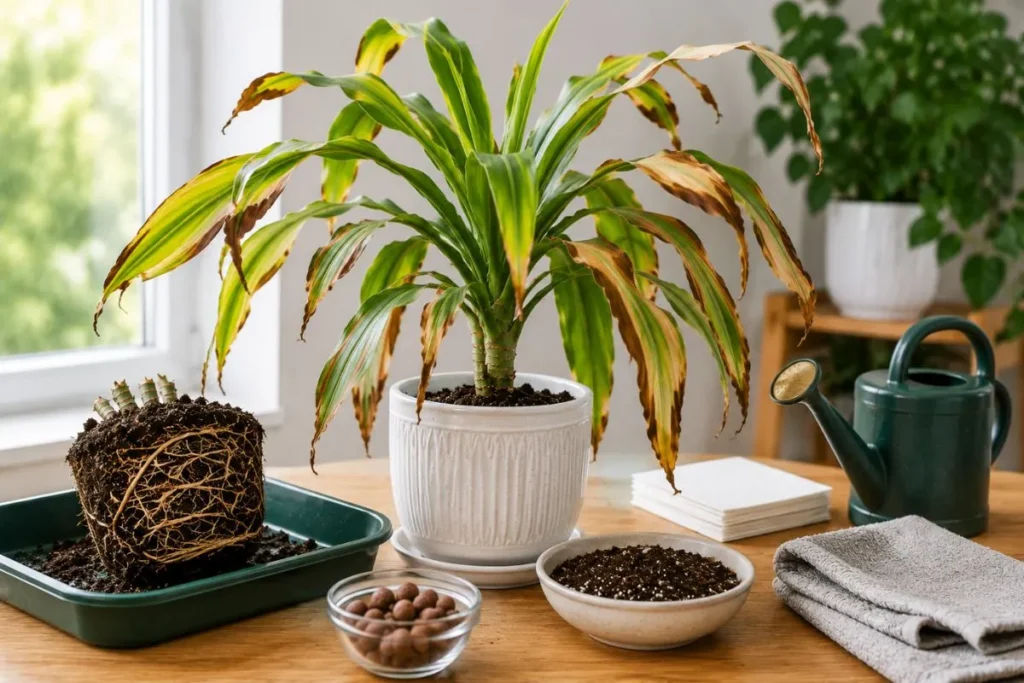
After correcting the moisture problem, do not immediately return to frequent watering. Allow the plant to settle into its improved environment and check the soil before watering again.
It is also better to avoid heavy fertilizing while the plant is severely stressed. A damaged root system may not be able to use nutrients properly, and excessive fertilizer can add another source of stress.
If you have been asking “why is my corn plant dying?”, remember that more water does not always mean better care. Sometimes the best thing you can do is reduce excess moisture, improve drainage, and give the roots time to recover.
Once the root environment becomes healthier, your corn plant has a much better chance of producing stronger foliage and returning to healthy growth.
Underwatering Can Make Your Corn Plant Wilt and Die
Many people assume that a drooping corn plant always needs more water, but that is not necessarily true. Before deciding why is my corn plant dying, check the soil first.
A plant can droop because of several problems, and adding water to already wet soil can create even more stress.
However, when the soil is genuinely dry, underwatering can be a major reason your corn plant starts to struggle. A corn plant needs enough moisture to keep its leaves, stems, and roots functioning properly.
When it repeatedly becomes too dry, the plant can lose strength and begin showing visible signs of stress.
Signs of an Underwatered Corn Plant
If you are asking why is my corn plant dying, start by checking the moisture level of the soil. If the growing medium feels extremely dry below the surface, underwatering may be contributing to the problem.
One of the first signs is often corn plant wilting. The leaves may droop and lose their usual firmness because the plant is not receiving enough moisture.
You may also notice dry, brown leaf tips or edges. In more severe cases, the leaves can curl inward and become increasingly dry.
If you are wondering why is my corn plant dying and losing leaves, prolonged dryness could be one possible explanation. A severely underwatered corn plant may drop leaves because it cannot maintain all of its foliage with limited water.
Another useful clue is the soil itself. When a plant has been underwatered for too long, the soil may become very dry and sometimes pull away from the sides of the container.
However, do not assume that every drooping corn plant needs water. An overwatered plant with damaged roots can also droop because its roots cannot absorb moisture properly. Always check the soil before deciding what action to take.
Why Underwatering Causes Corn Plant Stress
If you are trying to understand why is my corn plant dying, it helps to understand what happens when the plant does not receive enough water.
Water supports many important functions inside a corn plant. It helps maintain the structure of leaves and stems and allows nutrients to move through the plant.
When the soil becomes too dry, the roots cannot take up enough moisture to keep these processes working normally. The leaves may lose their firmness and begin to wilt.
If dry conditions continue, the plant may start conserving its limited resources. Instead of putting energy into new foliage, it may focus on keeping existing tissues alive.
This can explain why is my corn plant losing leaves when the plant has been repeatedly exposed to dry soil.
Long periods of underwatering can also slow growth. A stressed corn plant may produce fewer new leaves because healthy development requires a reliable supply of moisture.
Repeatedly allowing the soil to become extremely dry and then soaking it heavily can create additional stress. A more consistent approach is usually better than allowing severe drying between every watering.
How to Water a Corn Plant Correctly
If you are wondering why is my corn plant dying, proper watering starts with checking the soil rather than following a strict calendar.
Before watering, feel the growing medium and determine whether it is actually dry enough to need moisture. If the soil is still damp, adding more water may create an overwatering problem instead.
When the soil is dry, water thoroughly enough to moisten the root zone. Do not simply wet the top layer because the deeper roots also need access to moisture.
Make sure the container has suitable drainage. Excess water should be able to escape instead of remaining trapped around the roots.
How often you need to water will depend on the plant’s environment. A corn plant in a warm, bright room may use water faster than one growing in a cooler location with less light.
Container size, soil type, humidity, temperature, and light can all affect how quickly the soil dries.
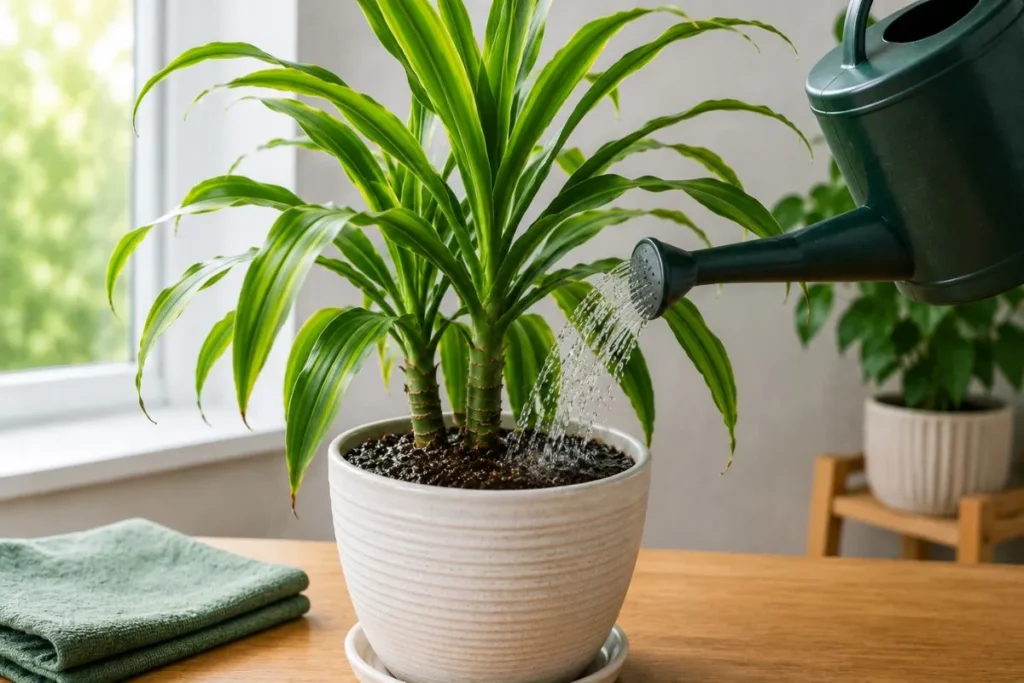
This means there is no single watering schedule that works for every corn plant. Instead of thinking, “It has been seven days, so I must water,” check the actual condition of the soil.
If your plant has become severely dry, give it the moisture it needs, but avoid creating constantly saturated soil afterward. The goal is to provide adequate moisture while maintaining proper drainage.
If you are still asking “why is my corn plant dying?”, remember that both underwatering and overwatering can cause similar symptoms. The difference is often found by checking the soil and looking at the plant’s overall condition.
Once you establish a consistent watering routine based on your corn plant’s actual needs, watch for signs of improvement. Firmer leaves, healthier foliage, and eventually fresh growth can indicate that the plant is recovering.
With the right moisture balance, your corn plant has a much better chance of overcoming water stress and returning to healthy growth.
Poor Drainage Can Slowly Kill Your Corn Plant
Many people think that simply watering a corn plant less often will fix every problem caused by wet soil. But that is not always true. If water cannot escape from the pot properly, the roots may continue sitting in excess moisture.
So, if you are asking “why is my corn plant dying?”, poor drainage could be the problem hiding below the soil.
A healthy corn plant needs a balance between moisture and oxygen around its roots. The soil should hold enough water for the plant to use, but excess water should be able to move away.
When that balance is missing, the roots can become stressed and the plant may begin to decline.
Why Corn Plants Need Well-Draining Soil
If you are wondering why is my corn plant dying, take a close look at the soil around its roots. Corn plants need moisture, but their roots also need oxygen.
Well-draining soil allows excess water to move away while retaining enough moisture to support the plant.
When water remains trapped around the roots, the air spaces in the soil can become filled with moisture. This reduces the oxygen available to the roots and can interfere with their normal function.
Over time, stressed roots may struggle to absorb water and nutrients effectively. The plant can then develop yellow leaves, weak growth, drooping foliage, or other signs of stress.
This is why corn plant drainage is an important part of proper corn plant care. Even if you are not watering excessively, poor drainage can keep the root zone too wet.
The type of soil also matters. A heavy or compacted growing medium may hold too much moisture and make it difficult for air and water to move through the root zone.
Signs of Poor Drainage
If you keep asking why is my corn plant dying, observe what happens to the soil after watering. If the growing medium stays wet for a long time, poor drainage may be affecting the roots.
Water may also remain on the surface instead of moving through the soil. In some cases, the container may drain very slowly, leaving the root zone saturated.
A corn plant growing in poorly drained soil may develop yellow leaves, drooping foliage, weak growth, or excessive leaf loss. These symptoms can have other causes, but constantly wet soil is an important clue.
If you are asking why is my corn plant dying and losing leaves, check the root environment before giving it more water. Excess moisture can contribute to root damage and corn plant root rot.
In severe cases, damaged roots may become dark, soft, or mushy. The soil may also develop an unpleasant smell when root problems become advanced.
How to Improve Corn Plant Drainage
If poor drainage may explain why is my corn plant dying, start with the container. Make sure the pot has suitable drainage holes so excess water can leave the root zone.
A decorative container without drainage can trap water around the roots. If you use an outer decorative pot, make sure the actual growing container can drain properly.
Next, check the corn plant soil. If it has become hard, compacted, or excessively dense, water may not move through it properly.
Using an appropriate growing medium can create better conditions for the roots. The goal is to provide enough moisture without allowing the soil to remain saturated for long periods.
Avoid assuming that every corn plant needs exactly the same soil conditions. The right growing medium depends on the plant, container, watering habits, and growing environment.
If the plant is already stressed, make changes carefully. Unnecessary root disturbance can add more stress to an already struggling plant.
Why Drainage Matters More Than Simply Watering Less
If you are wondering why is my corn plant dying, simply reducing the amount of water may not solve the underlying drainage problem.
For example, if the pot has poor drainage, moisture may remain trapped around the roots even after you reduce watering frequency. Similarly, compacted soil can continue holding water for too long.
This is why corn plant soil and drainage should be considered together. Healthy roots need both moisture and oxygen.
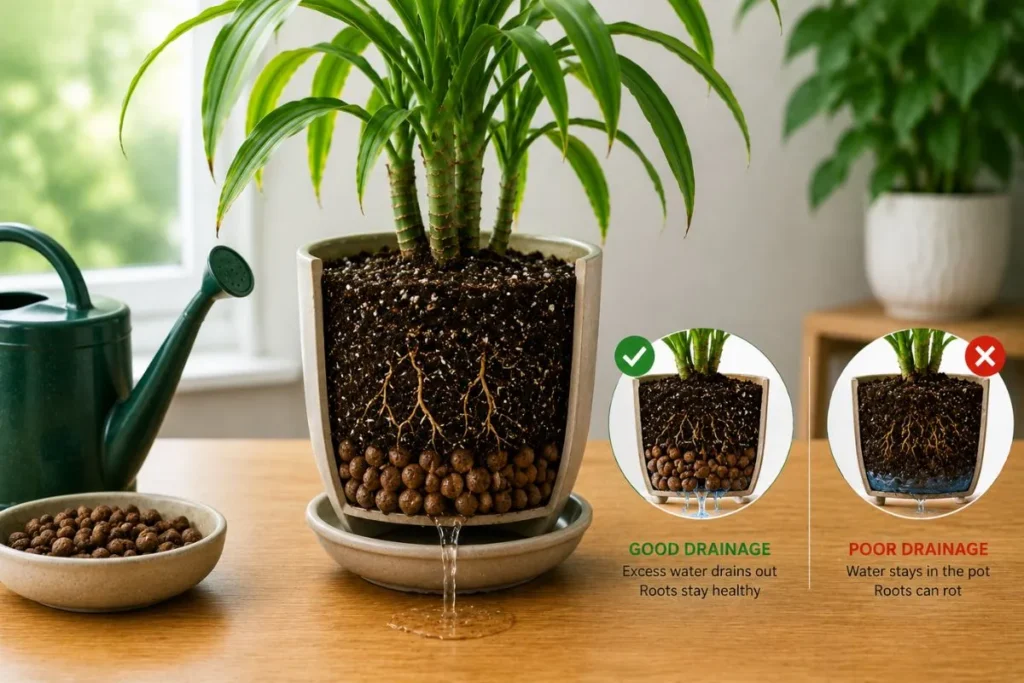
Good drainage allows excess water to leave the root zone instead of remaining around the roots. This gives the plant a healthier environment for absorbing water and nutrients.
So, when asking why is my corn plant dying, do not look only at how often you water. Check whether the water can actually move through the soil and escape from the container.
How Poor Drainage Can Affect Plant Growth
If you are still asking why is my corn plant dying, remember that healthy growth starts with healthy roots.
When roots remain in poorly drained soil for too long, they may become stressed or damaged. This can reduce their ability to absorb water and nutrients.
As the roots struggle, the corn plant may develop weak growth, yellow foliage, drooping leaves, or increased leaf drop. In serious cases, prolonged moisture can contribute to corn plant root rot.
A plant can sometimes look reasonably healthy above the soil while root problems are already developing underneath. That is why sudden changes in growth should not be ignored.
Once the drainage problem is corrected, the roots have a better environment in which to function. However, damaged roots may need time to recover, so healthy new growth may not appear immediately.
Give Your Roots the Right Growing Environment
If you are asking why is my corn plant dying, check the soil and container before reaching for more fertilizer.
Observe how quickly water drains after watering. Check whether the soil remains wet for an unusually long time, and make sure excess water has somewhere to escape.
If the root zone is constantly saturated, focus on improving drainage and soil conditions rather than adding more water.
Healthy roots need the right balance of moisture and oxygen. When the soil drains properly, the roots have a better chance of functioning normally and supporting healthy foliage.
So, if you keep asking “why is my corn plant dying?”, poor drainage may be the hidden problem beneath the surface. Correcting the drainage issue can give your corn plant a healthier root environment and a better chance of recovering.
Frequently Asked Questions: Why Is My Corn Plant Dying?
Many people start searching for why is my corn plant dying after noticing yellow leaves, brown tips, drooping foliage, or sudden leaf loss. These symptoms can be worrying, but they do not always mean your corn plant is beyond saving. The important thing is to identify the cause before trying to fix it.
Why Is My Corn Plant Dying?
If you are wondering why is my corn plant dying, start by checking its basic growing conditions. Overwatering, underwatering, poor drainage, unsuitable light, low humidity, temperature stress, poor soil, nutrient problems, pests, diseases, and root damage can all affect a corn plant.
Look at the soil, leaves, roots, and location together. These clues can help you identify what is causing the stress.
Why Is My Corn Plant Dying and Losing Leaves?
If you are asking why is my corn plant dying and losing leaves, check for recent changes in its environment. Watering problems, low light, temperature changes, pests, and root problems can all cause excessive leaf loss.
Some older leaves may naturally turn yellow and fall as the plant grows. However, sudden or heavy corn plant leaf drop usually deserves closer attention.
Why Is My Corn Plant Turning Yellow?
If you are wondering why is my corn plant turning yellow, check the soil moisture first. Overwatering is a common reason for corn plant yellow leaves, especially when the soil remains wet for extended periods.
Low light, nutrient problems, root stress, and natural aging can also cause yellow foliage. Look for other symptoms before deciding what treatment your plant needs.
Why Is My Corn Plant Turning Brown?
If you are asking why is my corn plant turning brown, pay attention to where the browning appears. Brown tips may be associated with dry air, inconsistent watering, or other environmental stress.
Brown patches on the leaves can also occur when the plant receives harsh direct sunlight. Check the plant’s light, moisture, humidity, and overall growing conditions before making changes.
Why Is My Corn Plant Drooping?
If you keep asking why is my corn plant drooping, check the soil before watering. Very dry soil may indicate underwatering, while constantly wet soil can point toward overwatering and root problems.
Temperature stress and sudden changes in the growing environment can also cause corn plant wilting. A drooping plant does not automatically need more water.
Why Is My Corn Plant Losing Leaves?
If you are wondering why is my corn plant losing leaves, think about what has changed recently. A new location, different light conditions, watering problems, temperature fluctuations, pests, or root damage can trigger leaf loss.
Inspect the leaves and soil carefully. If the plant is losing many leaves quickly, look for additional signs that can help identify the underlying problem.
Why Is My Corn Plant Dying After Repotting?
If you are asking why is my corn plant dying after repotting, transplant stress may be the reason. Repotting can disturb the roots, and the plant may need time to adjust to its new container.
Watering too frequently after repotting can also create problems, particularly if the new soil holds moisture for a long time.
Give the plant stable conditions and avoid making several additional changes while it adjusts.
Why Is My Indoor Corn Plant Dying?
If you are wondering why is my indoor corn plant dying, examine its indoor environment. Low light, dry air, inconsistent watering, temperature fluctuations, and pests can all affect an indoor corn plant.
Check its location carefully. Keep the plant away from extreme drafts, heating vents, and strong temperature changes while providing suitable light.
Why Is My Dracaena Dying?
If you are asking why is my Dracaena dying, remember that the common corn plant is Dracaena fragrans. Many of the same problems can affect both names, including overwatering, poor drainage, unsuitable light, pests, root rot, and environmental stress.
Check the soil and root conditions first, then examine the plant’s light and surrounding environment. Finding the actual cause is more useful than changing everything at once.
How Can I Save a Dying Corn Plant?
If you want to save a dying corn plant, begin by finding the source of the stress. Check the soil moisture, drainage, roots, lighting, temperature, humidity, and leaves for signs of pests or disease.
Correct the underlying problem gradually and give the plant stable conditions. Avoid excessive watering or fertilizer in an attempt to make recovery happen faster.
A stressed corn plant may need time before it produces healthy new growth. Stronger foliage and fresh growth are encouraging signs that your plant is beginning to recover.
Conclusion:
Many people assume that once a corn plant starts turning yellow, developing brown tips, or losing leaves, it is already dying and cannot recover. That is not always true. If you are still asking “why is my corn plant dying?”, the plant may simply be reacting to a problem that can be identified and corrected.
The most important thing is to find the cause instead of making random changes. Overwatering, underwatering, poor drainage, unsuitable light, low humidity, temperature stress, poor soil, nutrient problems, pests, diseases, and root issues can all affect the health of a corn plant.
Start by checking the soil and root environment. Then look at the amount of light your plant receives and consider whether its location exposes it to extreme temperatures or dry air. If you notice pests or signs of disease, deal with those problems before they become more severe.
Do not assume that more water or fertilizer will automatically make your plant healthier. In some cases, too much water can contribute to root rot, while excessive fertilizer can place additional stress on the roots. Your corn plant needs balanced care rather than simply more care.
If your plant has already suffered damage, give it time to recover after you correct the underlying problem. New leaves may not appear immediately, especially if the roots have been stressed. Consistent care and stable growing conditions give the plant a better chance to rebuild its strength.
So, when you ask “why is my corn plant dying?”, remember to look at the whole plant and its environment. Check the water, soil, drainage, light, roots, humidity, temperature, nutrients, and foliage before deciding what action to take.
With the right care and a little patience, a struggling corn plant can regain its strength and return to producing healthy, attractive foliage. The key is simple: find the problem, fix the cause, and give your plant time to recover.

Plant Nest Blog’s author is passionate about plants, gardening, and sustainable living. Through research and practical experience, they share helpful plant care tips, gardening guides, and easy solutions to help readers grow healthier plants and create greener spaces.