
Many people think the answer to how big does a money tree plant get is simple and that every Money Tree reaches the same size. That isn’t true. A Money Tree can stay compact for years in a small indoor pot, while the same species can grow into a large tropical tree outdoors. Its final size depends on where it grows and how well it is cared for, not just its age.
If you’ve ever wondered how tall does a money tree plant get or whether it can become too large for your home, you’re in the right place. Understanding its natural growth habits helps you set realistic expectations and provide better care.
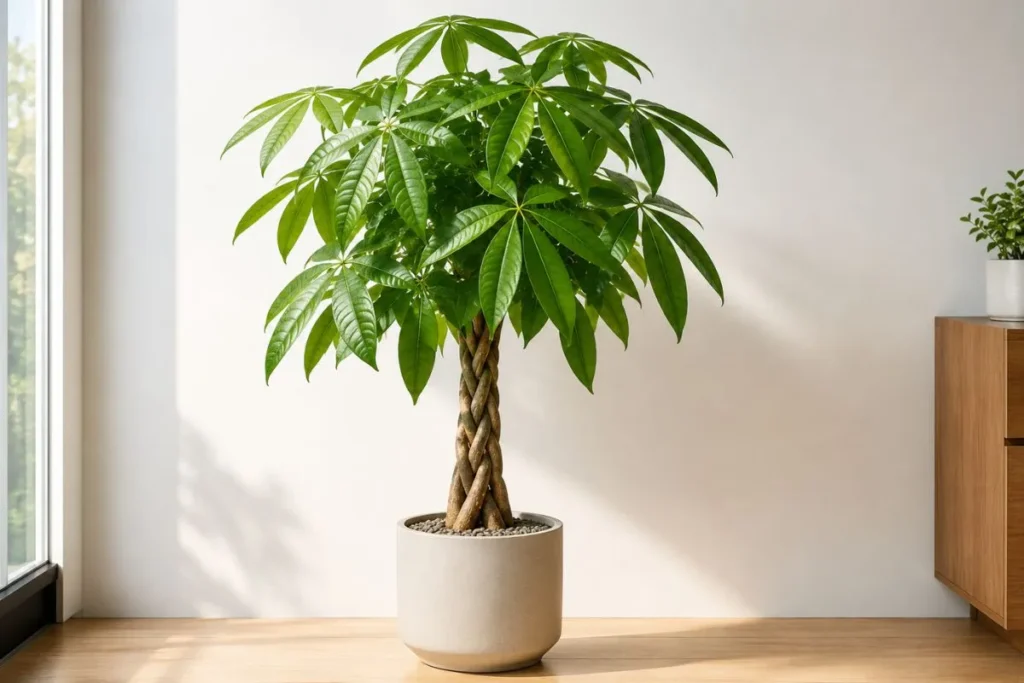
Whether you’re growing one as a decorative houseplant or planning to plant it outdoors in a warm climate, knowing its potential size can help you choose the right location, pot, and maintenance routine.
In this complete guide, you’ll discover how big does a money tree plant get indoors, how large it can become outside, what affects its growth rate, and how to encourage healthy development without letting it outgrow your space.
We’ll also cover practical care tips, common mistakes, and simple ways to manage the size of your Money Tree so it stays healthy and attractive for years to come.
What Is a Money Tree Plant?
Meet the Money Tree (Pachira aquatica)
Before understanding how big does a money tree plant get, it’s helpful to know a little about the plant itself. The Money Tree, scientifically known as Pachira aquatica, is a tropical tree native to the wetlands and rainforests of Central and South America.
In its natural environment, it enjoys warm temperatures, high humidity, and plenty of space to grow, which allows it to reach a much larger size than most people expect.
Today, the Money Tree is one of the most popular indoor plants around the world. Its glossy green leaves, attractive braided trunk, and reputation for bringing good luck and prosperity have made it a favourite choice for homes and offices. Although many people grow it as a compact houseplant, it’s actually a tree that can continue growing for many years when given the right conditions.
One reason the Money Tree has become so popular is that it adapts well to indoor living. It tolerates average household conditions better than many tropical plants, making it an excellent option for beginners.
With bright indirect light, well-draining soil, and consistent watering, a healthy Money Tree develops strong stems, lush foliage, and steady growth over time.
The braided trunk commonly seen in garden centres isn’t a natural growth habit. Young stems are carefully woven together while they are still flexible, creating the distinctive appearance many people associate with the Money Tree. As the plant matures, the braided stems gradually become thicker, giving it an even more striking appearance.
Why Growth Size Varies
One of the biggest reasons people get confused about how large does a money tree grow is that no two growing environments are exactly the same. The size of a Money Tree depends on several factors, including whether it’s grown indoors or outdoors, the amount of available light, the size of its container, and the level of care it receives throughout the year.
A Money Tree grown indoors usually has limited root space because it lives in a pot. This naturally slows its growth and keeps it at a manageable height. Regular pruning and repotting also help control its size, which is why most indoor Money Trees remain compact enough for living rooms, offices, and apartments.
Outdoor Money Trees have a completely different experience. In tropical and subtropical climates, where temperatures remain warm throughout the year, roots can spread freely into the ground.
With abundant sunlight, moisture, and nutrients, the tree can grow much taller and wider than a container-grown plant. This explains why gardeners often report very different answers when discussing money tree outdoor size.
Climate also plays a major role. A Money Tree growing in a warm, humid region has a much longer growing season than one kept indoors in a cooler climate. More active growing months mean faster development and a greater mature size over time.
Care routines make a noticeable difference as well. Plants that receive bright indirect light, balanced fertiliser during the growing season, proper watering, and occasional repotting generally grow more vigorously than neglected plants.
On the other hand, poor lighting, compacted soil, root-bound conditions, or inconsistent watering can significantly reduce growth, even if the plant is otherwise healthy.
Understanding these differences makes it much easier to predict money tree mature size and set realistic expectations. Rather than comparing your plant with someone else’s, it’s better to focus on providing the best possible environment.
A well-cared-for Money Tree will reward you with healthy leaves, steady growth, and a beautiful shape, regardless of whether you choose to keep it small indoors or allow it to develop into a much larger specimen outdoors.
How Big Does a Money Tree Plant Get? (Complete Size Guide)
Many people believe there is one fixed answer to how big does a money tree plant get, but that isn’t how this plant grows. A Money Tree doesn’t automatically reach the same height in every home or garden.
Its mature size depends on where it grows, how much space its roots have, and the care it receives over the years. Understanding these differences helps you set realistic expectations and care for your plant with confidence.
How Big Does a Money Tree Plant Get Indoors?
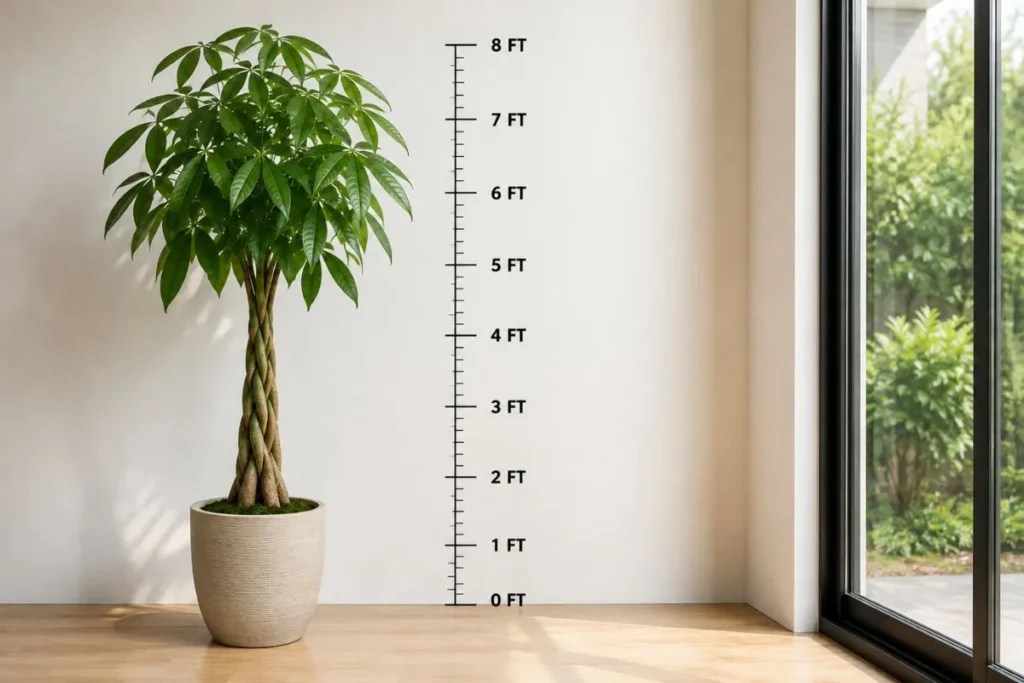
If you’re wondering how big does a money tree plant get indoors, the good news is that it usually stays at a practical size for homes and offices. Most indoor Money Trees grow between 4 and 8 feet (1.2 to 2.4 metres) tall.
With regular pruning and proper care, many owners keep their plants even shorter, making them ideal for shelves, corners, and bright living spaces.
The width of an indoor Money Tree generally reaches 2 to 3 feet (60 to 90 centimetres) as the canopy becomes fuller. Its glossy green leaves spread outward, creating a balanced, tree-like shape without taking over the room.
Growing in a container naturally limits root expansion, which is one of the biggest reasons the money tree indoor size remains manageable. A pot restricts how far the roots can spread, slowing overall growth while still allowing the plant to stay healthy. Repotting into a slightly larger container every few years encourages steady development without causing excessive growth.
Light also influences indoor size. A Money Tree placed in bright indirect light usually develops stronger stems and fuller foliage than one kept in a dim corner. Consistent watering, well-draining soil, and occasional feeding during spring and summer also contribute to healthy growth.
Although indoor plants rarely reach their maximum potential, they can continue growing for many years. A well-maintained Money Tree often becomes a beautiful statement plant that adds height and greenery without becoming difficult to manage.
How Big Does a Money Tree Plant Get Outdoors?
The answer to how big does a money tree plant get outdoors is very different. In tropical and subtropical regions where Pachira aquatica grows naturally, this attractive houseplant transforms into a large shade tree. Given enough space and the right climate, it commonly reaches 30 to 60 feet (9 to 18 metres) in height.
The canopy expands as the tree matures, often spreading 20 to 35 feet (6 to 10.5 metres) wide. This impressive money tree outdoor size allows it to provide generous shade while producing a strong, upright trunk and broad crown.
Outdoor growth is possible because the roots are no longer confined to a container. Instead, they spread freely through the soil, absorbing more water and nutrients. Combined with warm temperatures, high humidity, and a long growing season, these conditions support much faster and larger growth than most indoor environments can provide.
Even outdoors, the final size varies depending on climate, soil quality, available moisture, and maintenance. Trees growing in ideal tropical conditions generally become much larger than those planted in regions with cooler winters or shorter growing seasons.
How Tall Does a Money Tree Plant Get?
One of the most common questions people ask is how tall does a money tree plant get. The answer depends entirely on where it is grown.
As an indoor plant, the Money Tree usually reaches 4 to 8 feet tall, although careful pruning can keep it closer to 3 or 4 feet if desired. This makes it one of the best tropical trees for indoor decorating because it offers impressive height without becoming overwhelming.
Outdoors, however, how tall can a money tree plant grow is a completely different story. In frost-free climates, mature trees regularly grow 30 feet or more, while exceptional specimens can approach 60 feet under ideal conditions.
It’s important to remember that height develops gradually. A healthy Money Tree adds new stems and leaves each growing season rather than shooting upward overnight. With patience and consistent care, you’ll notice steady progress year after year.
How Large Does a Mature Money Tree Become?
Many plant owners also ask how large does a mature money tree become because they want to know what to expect over the long term.
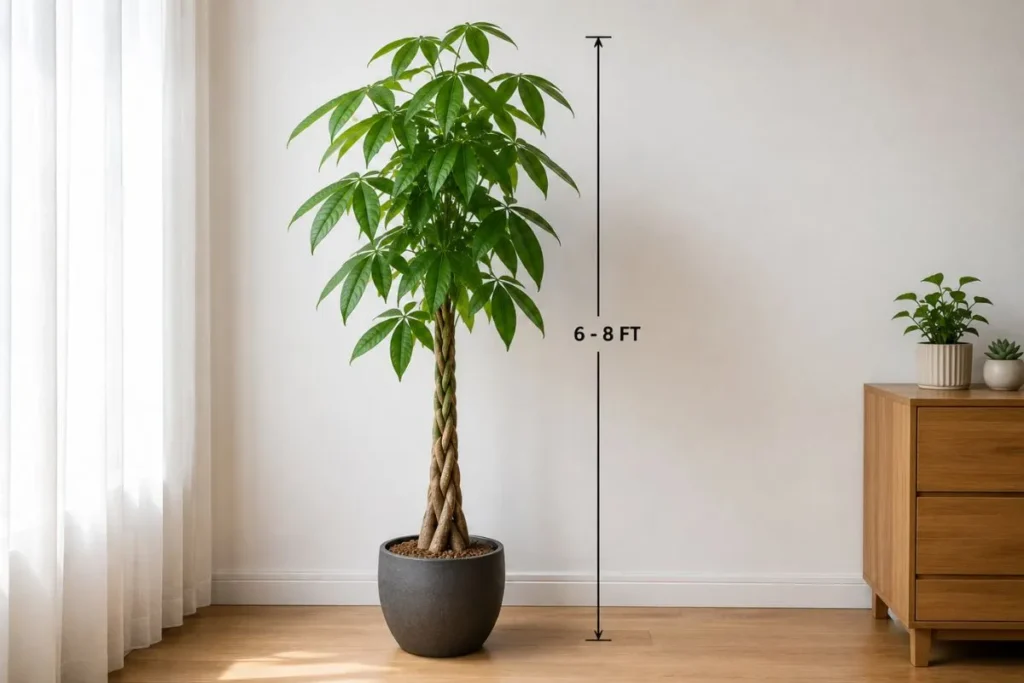
A mature indoor Money Tree typically reaches its full size after several years of healthy growth. At maturity, it usually stands between 4 and 8 feet tall with a rounded canopy measuring 2 to 3 feet across. This compact money tree mature size makes it suitable for homes, offices, reception areas, and other indoor spaces where larger trees would be impractical.
Outdoors, maturity takes longer, but the results are much more dramatic. A mature tree develops a thick trunk, dense branches, and an expansive canopy that can rival many landscape trees. In favourable climates, it becomes a striking ornamental specimen with lush foliage and an impressive presence.
The mature size of any Money Tree depends on several factors, including genetics, available space, sunlight, watering habits, soil quality, and routine maintenance. Plants that receive consistent care generally produce healthier foliage, stronger stems, and more balanced growth than those grown in poor conditions.
Rather than focusing only on maximum height, it’s helpful to think about overall health and structure. A well-shaped Money Tree with vibrant green leaves and sturdy branches is far more attractive than a taller plant that has grown weak due to poor care. By understanding how big can a money tree get, you can plan ahead and provide the right environment for your plant to thrive at every stage of its life.
How Fast Does a Money Tree Plant Grow?
Many people believe that once they know how big does a money tree plant get, their plant should reach that size within a year or two. In reality, Money Trees are steady growers, not overnight growers.
They don’t become tall simply because they are old. Their growth rate depends on the environment, the season, and how well they are cared for. With the right conditions, your Money Tree will grow consistently and develop into a healthy, attractive plant over time.
Average Growth Rate
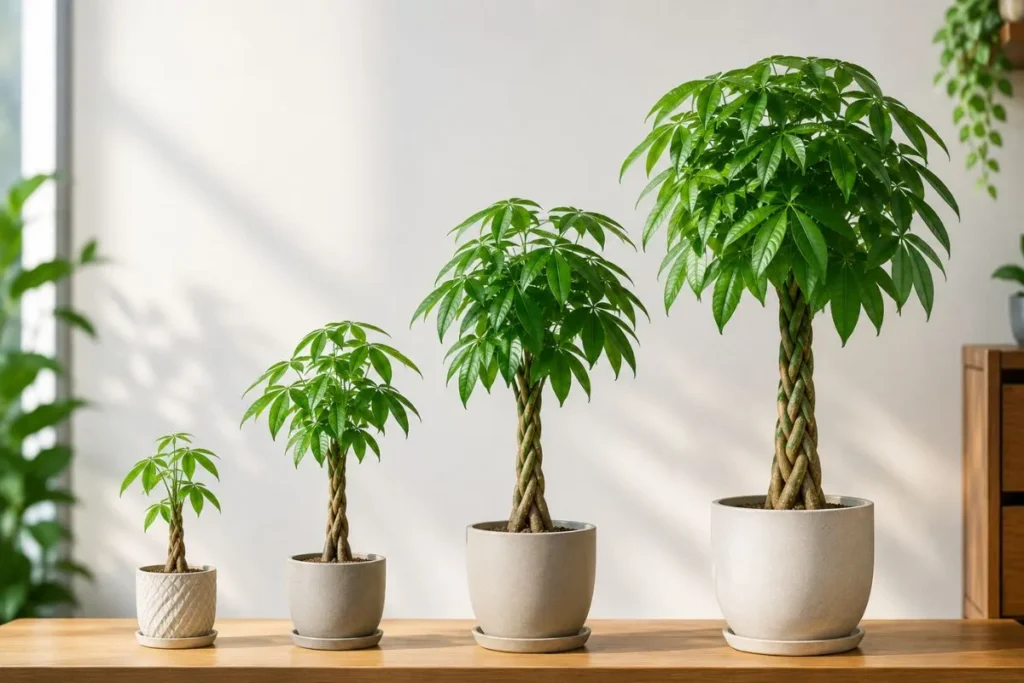
If you’ve been wondering how fast does a money tree plant grow, the answer is encouraging. A healthy Money Tree usually grows 12 to 24 inches (30 to 60 centimetres) each year during its active growing season. Some plants grow slightly faster, while others grow more slowly depending on their environment and care.
Indoor Money Trees generally grow at the slower end of this range because they have less root space and receive lower light levels than plants growing outdoors. Even so, they continue producing new stems and leaves every year when their basic needs are met.
Outdoor Money Trees often grow more quickly because they benefit from unrestricted root growth, warmer temperatures, and a longer growing season. In tropical climates, healthy trees can add noticeable height each year, gradually developing into impressive landscape trees.
Keep in mind that growth is rarely perfectly consistent. Some years your Money Tree may grow more than expected, while other years it may focus on strengthening its roots or producing fuller foliage instead of gaining height.
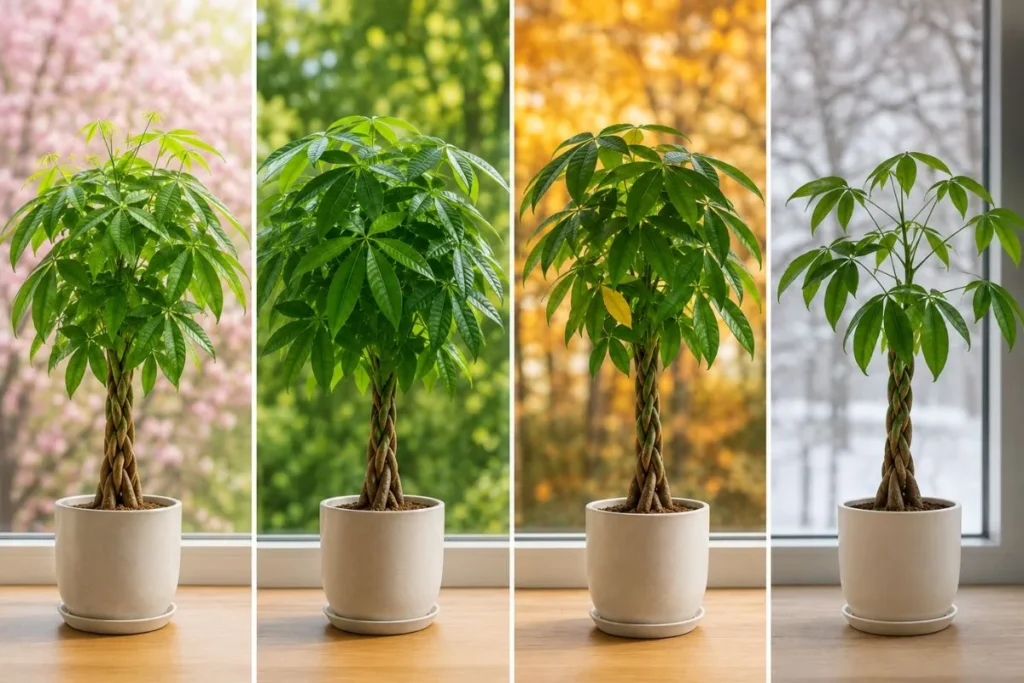
Growth During Different Seasons
Understanding seasonal growth helps explain why your Money Tree sometimes appears to stop growing.
Spring
Spring is when the Money Tree wakes up after winter. As temperatures rise and daylight hours become longer, the plant begins producing fresh leaves and new shoots. This is one of the best times to notice visible growth.
Regular watering, bright indirect light, and a balanced fertiliser can support healthy development throughout the season. If you’re planning to repot your plant, spring is usually the safest time because the roots recover more quickly.
Summer
Summer is typically the fastest-growing period for Pachira aquatica. Warm temperatures and longer days encourage vigorous stem and leaf growth. During this time, the plant uses more water and nutrients, so maintaining a consistent care routine is important.
If your Money Tree receives plenty of bright indirect light and proper humidity, you’ll often see several flushes of new growth throughout the summer months.
Autumn
As autumn arrives, growth naturally begins to slow. Shorter days and cooler temperatures signal the plant to reduce its activity. You may still notice a few new leaves, but the overall growth rate becomes much slower than it was during spring and summer.
This is a good time to reduce fertiliser and avoid making major changes unless necessary.
Winter
Winter is the slowest season for Money Tree growth. In many homes, the plant enters a period of rest rather than active development. It may produce very little new growth, and that’s completely normal.
During winter, avoid overwatering because the plant uses less moisture. Keeping it in bright indirect light and away from cold draughts helps maintain healthy foliage until active growth resumes in spring.
How Fast Does a Money Tree Plant Grow in Ideal Conditions?
The answer to how fast does a money tree plant grow depends largely on the environment you create. A healthy Money Tree can grow close to 2 feet (60 centimetres) per year when its growing conditions are close to ideal.
Bright indirect sunlight is one of the biggest factors influencing money tree growth rate. Plants placed near a well-lit window usually produce stronger stems and larger leaves than those kept in darker rooms. Light provides the energy needed for photosynthesis, which directly affects growth.
Well-draining soil also plays an important role. Healthy roots absorb water and nutrients more efficiently, supporting steady development throughout the growing season. Heavy or poorly draining soil can slow growth by stressing the root system.
Consistent watering is equally important. Allowing the top layer of soil to dry slightly between waterings encourages healthy roots while preventing problems caused by excess moisture. Overwatering can slow growth just as much as underwatering.
Humidity and temperature make a noticeable difference too. Since Money Trees are tropical plants, they grow best in warm environments with moderate to high humidity. Stable indoor temperatures and occasional humidity support help the plant maintain healthy foliage and continuous growth.
Feeding during spring and summer with a balanced fertiliser provides essential nutrients for new leaves, stronger stems, and steady height increases. However, too much fertiliser won’t make a Money Tree grow faster. Overfeeding can damage the roots and create more problems than benefits.
Finally, patience is one of the most important parts of growing a healthy Money Tree. Every plant develops at its own pace, and consistent care produces much better long-term results than trying to force rapid growth.
By providing the right light, watering routine, soil, humidity, and occasional repotting, you’ll encourage a strong money tree growth rate while helping your plant reach its natural size over time.
What Determines How Big a Money Tree Plant Gets?
Many first-time plant owners think that how big does a money tree plant get depends only on age. That isn’t true. A ten-year-old Money Tree can still be smaller than a three-year-old one if it has been growing in poor conditions.
Healthy growth is influenced by several factors working together, including light, pot size, watering, soil, nutrients, and climate. When these conditions are right, your Money Tree can reach its full potential and stay healthy for many years.
Light Requirements
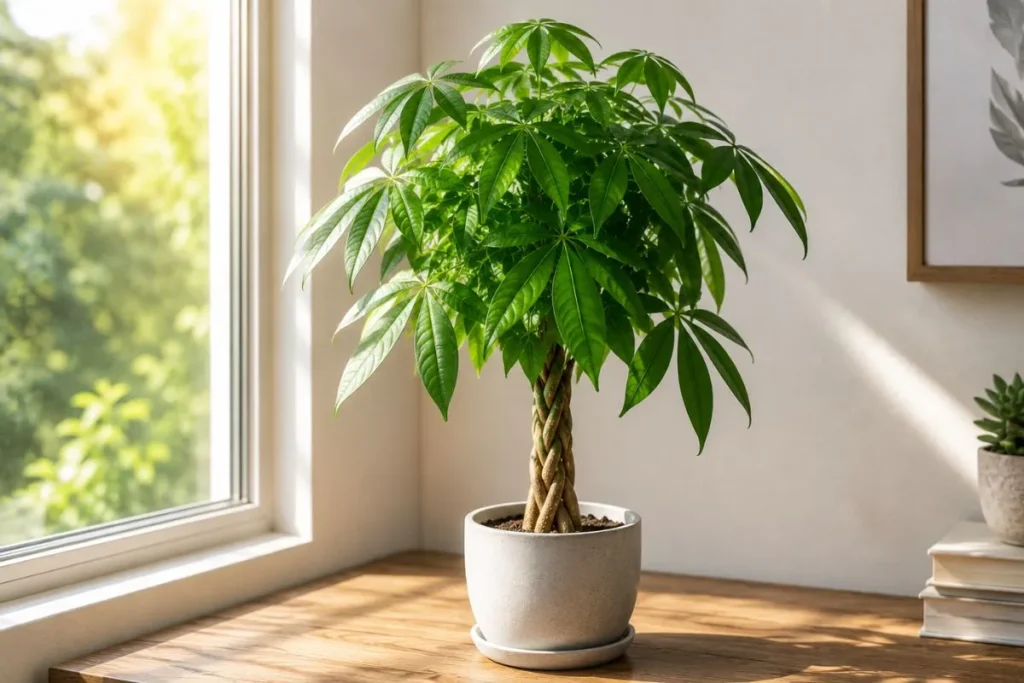
Light is one of the biggest factors affecting the size of a Money Tree. Although this tropical plant can tolerate lower light levels for a while, it grows best in bright indirect light. The more energy the plant receives through photosynthesis, the more efficiently it produces new leaves, stems, and healthy roots.
A Money Tree placed near a bright east- or south-facing window with filtered sunlight usually grows more evenly than one kept in a dark corner. Good lighting encourages compact, strong growth and fuller foliage.
Too little light slows the money tree growth considerably. You may notice smaller leaves, thin stems, wider gaps between leaves, or very little new growth during the growing season. If you want your Money Tree to reach its natural money tree mature size, providing enough light should always be a priority.
Pot Size
The container your plant grows in has a direct impact on how big can a money tree get indoors. Since roots need space to expand, the size of the pot naturally influences how much the plant can grow above the soil.
A small container limits root development and slows overall growth. While this can be useful if you prefer a compact indoor plant, keeping a Money Tree in the same undersized pot for many years may eventually cause it to become root-bound.
On the other hand, choosing a pot that is only 1 to 2 inches larger than the current one allows the roots to expand gradually without creating excess moisture around them. This steady approach supports healthy growth while reducing the risk of overwatering.
If you’re wondering does pot size affect money tree growth, the answer is definitely yes. A properly sized container gives the roots enough room to develop while keeping the plant stable and healthy.
Watering Habits
Watering is another important factor that determines how large does a money tree grow. The goal is to keep the soil evenly moist without allowing it to stay soggy.
Overwatering is one of the most common reasons Money Trees stop growing. Waterlogged soil reduces oxygen around the roots, increasing the risk of root rot. Once the roots become damaged, the plant struggles to absorb water and nutrients, leading to slow growth and yellowing leaves.
Underwatering can also limit growth. When the plant doesn’t receive enough moisture, it conserves energy by slowing leaf and stem development. Extended dry periods may even cause leaves to curl or drop.
The best approach is to water thoroughly when the top 2 to 3 inches of soil feel dry. This simple routine encourages a healthy root system and supports steady growth throughout the growing season.
Soil Quality
Healthy roots need the right growing medium to support long-term development. A loose, well-draining soil mix allows air, water, and nutrients to move freely around the roots while preventing excess moisture from collecting.
The best soil for a Money Tree usually contains a mixture of quality potting soil, perlite, and bark or coarse sand. This combination improves drainage while still holding enough moisture for healthy growth.
Heavy, compacted soil slows root development and reduces the plant’s ability to absorb nutrients. Over time, poor soil conditions can affect both the money tree plant height and the overall health of the plant.
Refreshing the potting mix every few years during repotting also helps maintain healthy root growth and supports continuous development.
Fertiliser
Nutrients play an important role in helping a Money Tree produce new leaves, thicker stems, and stronger roots. During spring and summer, feeding with a balanced liquid fertiliser every four to six weeks gives the plant the nutrients it needs for healthy growth.
However, more fertiliser doesn’t mean faster growth. Applying excessive fertiliser can damage the roots, burn the foliage, and slow development instead of improving it.
A moderate feeding schedule encourages healthy Pachira aquatica growth without overwhelming the plant. During autumn and winter, it’s usually best to reduce or stop fertilising because growth naturally slows.
Humidity and Temperature
Since the Money Tree is a tropical species, warm temperatures and moderate to high humidity have a significant effect on its overall size and health.
The ideal temperature range is between 18°C and 27°C (65°F to 80°F). Stable temperatures encourage continuous growth, while sudden cold draughts or prolonged exposure to temperatures below 10°C (50°F) can slow development and damage the foliage.
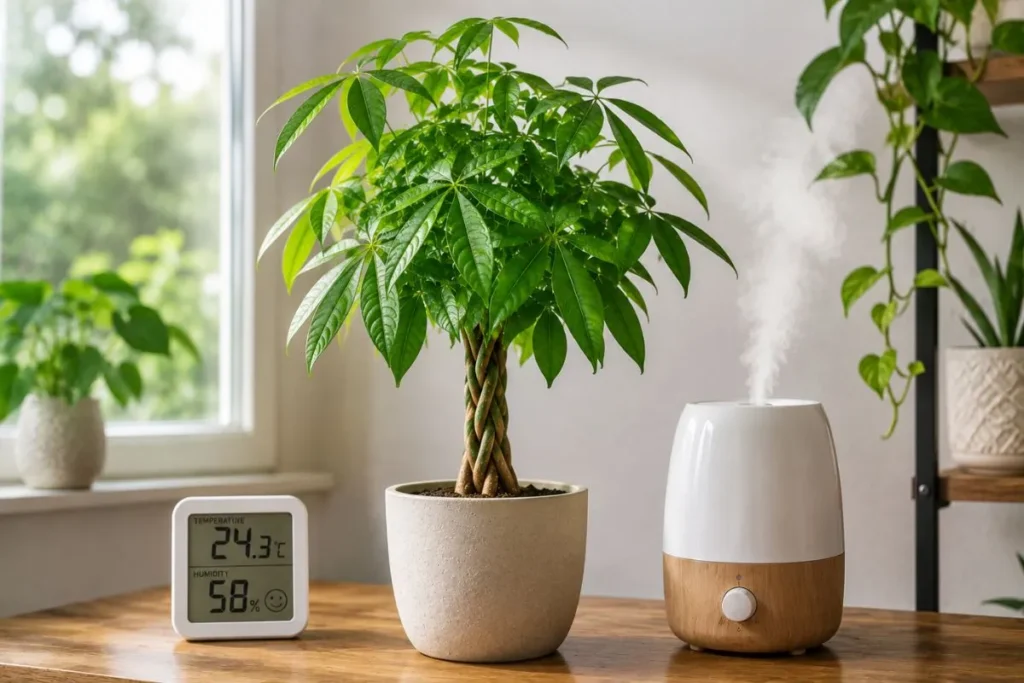
Humidity also matters. Dry indoor air may cause brown leaf edges and reduce the plant’s ability to produce healthy new growth. Maintaining humidity levels around 50% to 60% helps keep the leaves vibrant and supports steady development throughout the growing season.
When all these factors work together bright indirect light, the right pot size, consistent watering, well-draining soil, balanced fertiliser, and suitable humidity—your Money Tree has the best chance of reaching its natural size. Instead of focusing only on how big does a money tree plant get, it’s more helpful to create an environment where the plant can grow steadily, develop strong roots, and produce lush, healthy foliage year after year.
Does Pot Size Affect Money Tree Growth?
People often assume that a bigger pot will instantly make a Money Tree grow faster, but that’s a common misconception. While pot size does influence growth, choosing an oversized container isn’t the answer. The right pot should provide enough room for healthy root development without holding excess water. A properly sized container encourages balanced growth and helps the plant stay healthy over the long term.
How Root Space Controls Plant Size
Roots are the foundation of every healthy plant. When a Money Tree has enough room to spread its roots, it can absorb more water and nutrients, which supports stronger stems and fuller foliage. If the roots become crowded, growth slows naturally, even if the rest of the plant looks healthy.
Choosing the Right Pot Size
When repotting a Money Tree, always move to a container that is only 1 to 2 inches larger than the current pot. This gives the roots extra space without leaving too much wet soil around them. A pot with drainage holes is essential because it allows excess water to escape and helps prevent root rot.
Can a Small Pot Keep a Money Tree Smaller?
Yes, a smaller container can help control the size of a Money Tree. If you’re wondering how to keep a money tree plant small, keeping it in an appropriately sized pot and pruning it regularly are effective methods. However, don’t leave the plant root-bound for too long.
Repotting every two to three years keeps the roots healthy while allowing you to manage the plant’s size naturally. A balanced approach is the best way to enjoy a compact, healthy Money Tree without restricting its overall health.
Frequently Asked Questions
People often askor quick answers about how big does a money tree plant get, but the correct answer often depends on the plant’s growing conditions. Below are the most frequently asked questions to help clear up common confusion.
How Big Does a Money Tree Plant Get Indoors?
A Money Tree grown indoors usually reaches 4 to 8 feet (1.2 to 2.4 metres) tall and spreads about 2 to 3 feet (60 to 90 centimetres) wide. Regular pruning, proper lighting, and the size of the pot all influence its final indoor size.
How Big Does a Money Tree Plant Get Outdoors?
If you’re wondering how big does a money tree plant get outdoors, it can grow 30 to 60 feet (9 to 18 metres) tall in tropical and subtropical climates. It also develops a broad canopy, making it much larger than an indoor-grown Money Tree.
How Tall Can a Money Tree Plant Grow?
The answer to how tall can a money tree plant grow depends on where it is planted. Indoors, most plants stay below 8 feet, while outdoor specimens growing in ideal conditions can reach 60 feet at full maturity.
How Large Does a Mature Money Tree Become?
A mature indoor Money Tree generally grows to 4 to 8 feet with a compact canopy. Outdoors, a mature tree becomes much larger, developing a thick trunk and a wide, rounded crown that provides plenty of shade.
Does Pot Size Affect Money Tree Growth?
Yes. Pot size has a direct impact on root development and overall plant growth. A slightly larger pot encourages healthy roots, while a pot that is too small limits growth. However, using an oversized container can increase the risk of overwatering.
How Fast Does a Money Tree Plant Grow?
A healthy Money Tree typically grows 12 to 24 inches (30 to 60 centimetres) each year during the growing season. Bright indirect light, proper watering, balanced fertiliser, and warm temperatures help maintain a steady money tree growth rate.
How to Make a Money Tree Grow Taller?
To encourage healthy height growth, place your Money Tree in bright indirect light, water it correctly, feed it during spring and summer, repot when necessary, and maintain moderate humidity. Consistent care produces better results than trying to speed up growth.
How to Keep a Money Tree Plant Small?
If you prefer a compact houseplant, prune it regularly, avoid moving it into an excessively large pot, and maintain a balanced care routine. These simple steps help control its size while keeping the plant healthy.
How Big Can a Money Tree Get in a Pot?
Even in a container, a healthy Money Tree can grow to around 6 to 8 feet if it receives excellent care and is repotted into slightly larger containers over time. Smaller pots naturally restrict its overall size.
Is a Money Tree a Fast-Growing Indoor Plant?
Compared with many popular houseplants, the Money Tree has a moderate growth rate. It isn’t the fastest-growing indoor tree, but with proper care, it grows steadily each year and develops into an attractive, long-lasting houseplant.
Conclusion
Some people mistakenly believe there’s one simple answer to how big does a money tree plant get, but as you’ve seen throughout this guide, its final size depends on much more than age alone. The growing environment, available root space, light, watering routine, soil quality, and overall care all play an important role in determining how large the plant will become.
For most homes, an indoor Money Tree reaches a manageable height of 4 to 8 feet, making it an excellent choice for adding greenery without taking over your living space. In contrast, a Money Tree planted outdoors in a warm tropical climate can grow into an impressive tree reaching 30 to 60 feet tall. Knowing this difference helps you set realistic expectations and choose the best location for your plant.
If your goal is to encourage healthy growth, provide bright indirect light, well-draining soil, consistent watering, moderate humidity, and a balanced fertiliser during the growing season.
Repotting when necessary and pruning regularly will also help your Money Tree stay healthy while allowing you to manage its size naturally. These simple habits support steady money tree growth and help the plant develop strong roots, vibrant leaves, and a balanced shape.
Whether you’re trying to learn how big does a money tree plant get indoors, wondering how tall can a money tree plant grow, or simply looking after your first Pachira aquatica, the key is consistency rather than perfection. With the right care and a little patience, your Money Tree can thrive for many years, becoming a beautiful focal point that brings lasting greenery and charm to your home.

Plant Nest Blog’s author is passionate about plants, gardening, and sustainable living. Through research and practical experience, they share helpful plant care tips, gardening guides, and easy solutions to help readers grow healthier plants and create greener spaces.