
Many people assume aloe vera will thrive in any plant pot, but that’s far from the truth. Although it’s one of the easiest succulents to grow, the wrong container can lead to poor drainage, waterlogged roots and slow, unhealthy growth. Choosing the best pot for an aloe vera plant is about much more than appearance.
The right pot helps excess moisture escape, improves root health and creates the ideal conditions for a strong, long-lasting plant. As aloe vera stores water in its thick leaves, it prefers soil that dries out quickly rather than remaining damp for extended periods. A suitable pot plays a key role in preventing root rot and keeping your plant healthy year-round.
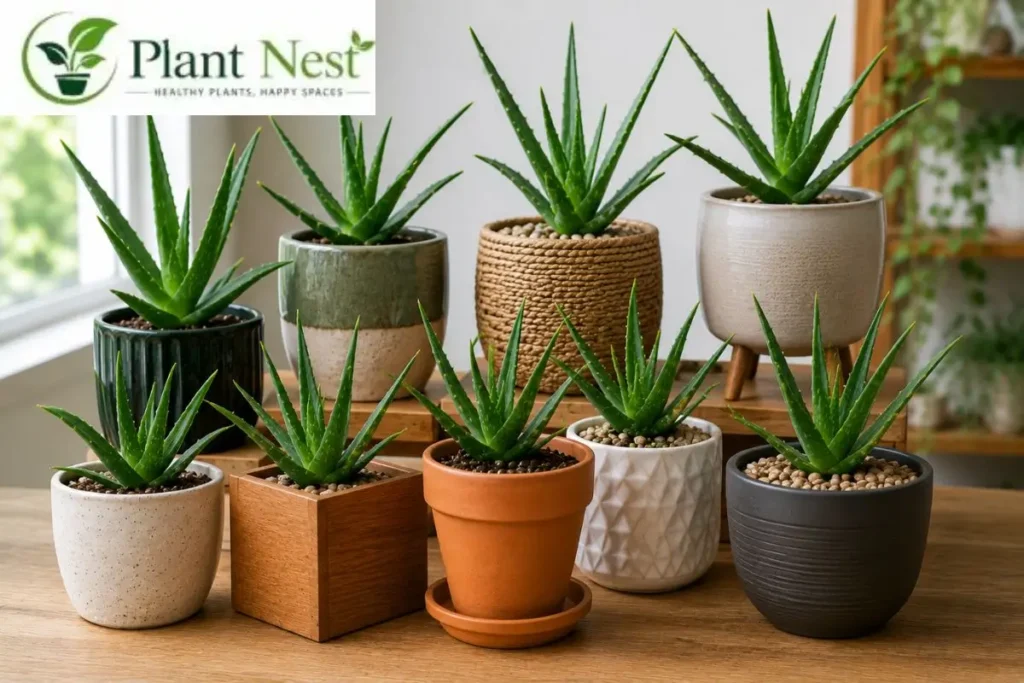
The size and material of the container are equally important. A pot that’s too large can hold excess moisture around the roots, while one that’s too small can restrict healthy growth. Likewise, materials such as terracotta, ceramic, plastic and concrete all affect drainage, airflow and watering frequency in different ways.
Choosing the right planter to suit your home and care routine makes maintaining aloe vera much easier while encouraging stronger roots, healthier foliage and better stability as the plant matures. In this guide, you’ll learn how to choose the best pot for an aloe vera plant, discover which materials perform best, find the ideal pot size and avoid common mistakes that can limit your plant’s growth.
What Makes the 17 Best Pot for an Aloe Vera Plant?
Choosing the right container is one of the simplest ways to keep aloe vera healthy for years. Native to dry, arid climates, this resilient succulent thrives in free-draining conditions where moisture never lingers around the roots. Recreating that environment at home starts with selecting the right planter rather than relying on regular watering alone.
The 17 Best Pot for an Aloe Vera Plant shares a few essential features. The correct size, effective drainage, suitable material and a stable design all work together to promote healthy roots and steady growth. Understanding these factors makes it much easier to choose a pot that suits both your plant and your home.
Pot Size
A common mistake is choosing a pot that’s far bigger than the plant needs. Although it may seem like extra space encourages faster growth, oversized containers usually retain too much moisture, increasing the risk of root rot.
Instead, choose a planter that’s only slightly wider than the root ball. A container around 5–8 cm (2–3 inches) wider than the existing root system provides enough room for gradual growth while allowing the compost to dry evenly between waterings. This balance helps prevent excess moisture without restricting the roots.
If the pot is too small, the roots eventually become cramped and the plant may struggle to grow. Watch for roots emerging through the drainage holes, offsets crowding the container or a top-heavy plant becoming unstable. These are clear signs it’s time to move up to the next pot size, increasing gradually rather than choosing a much larger container all at once.
Drainage Holes
If there’s one feature that should never be overlooked, it’s proper drainage. Aloe vera roots need oxygen as much as they need water, and waterlogged compost quickly deprives them of both.
Always choose a pot with drainage holes so excess water can drain away immediately after watering. This reduces the risk of root rot and creates a healthier growing environment. Place the pot on a saucer to catch excess water, but remember to empty it afterwards so the roots aren’t left sitting in standing water.
If you prefer a decorative planter without drainage, use it as an outer cover rather than planting directly into it. Keep the aloe vera in a nursery pot with drainage holes and simply place it inside the decorative container. This approach combines healthy root conditions with an attractive display.
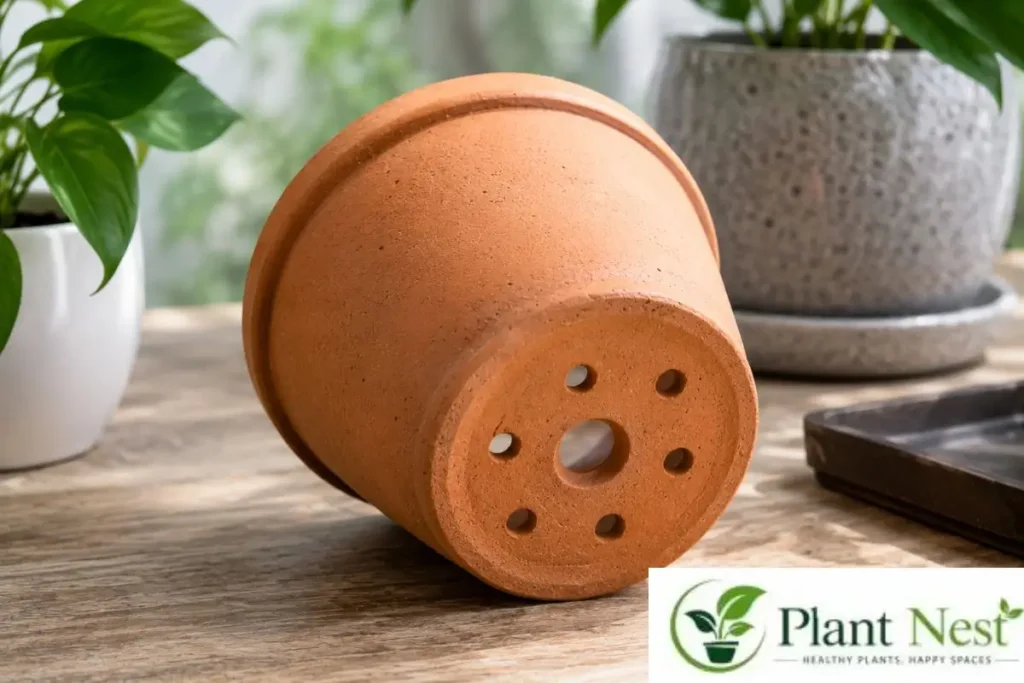
Pot Material
The material of a planter has a noticeable effect on moisture retention, airflow and overall maintenance. Choosing the right option depends on your watering habits and the conditions inside your home.
Terracotta remains one of the most reliable choices because its porous surface allows moisture to evaporate through the sides of the pot. This helps the compost dry more evenly and is particularly useful if you occasionally overwater.
Glazed ceramic pots offer greater weight and stability while providing a wide choice of attractive finishes. As they retain moisture slightly longer than terracotta, they’re well suited to warm, dry homes where compost dries quickly.
Plastic pots are lightweight, affordable and easy to move. Because they hold moisture for longer, they’re a practical option for anyone who sometimes forgets to water their plants. However, they require a little more care to avoid keeping the soil too wet.
Concrete planters are exceptionally sturdy and work well for larger, mature aloe vera plants that need extra stability. Their weight makes them less convenient to move, but they provide excellent long-term support.
Whatever material you choose, drainage should always take priority over appearance. A well-designed planter creates the ideal environment for healthy roots and long-lasting growth.
Pot Shape and Stability
The shape of a pot is just as important as its size. Aloe vera has a shallow root system, so it naturally performs better in wide, shallow containers than in deep, narrow ones.
A broader planter gives the roots space to spread while encouraging the compost to dry more evenly. It also provides better balance as the fleshy leaves become larger and heavier over time.
Mature plants can become surprisingly top-heavy, making stability an important consideration. A sturdy pot with a wide base helps prevent tipping, protecting both the foliage and the root system from unnecessary damage.
When choosing a planter, think beyond its appearance. Selecting a pot that supports the plant’s future growth will keep it healthier, more stable and easier to care for in the years ahead.
The 17 Best Pot for an Aloe Vera Plant combines the ideal size, reliable drainage, a suitable material and a stable shape. When these features come together, your aloe vera is far more likely to develop strong roots, produce healthy green foliage and thrive with minimal maintenance.
Best Pot Materials for Aloe Vera (Pros & Cons)
Many gardeners assume there’s only one suitable material for growing aloe vera, but that’s not the case. The 17 best pot for an aloe vera plant will vary depending on your watering routine, indoor environment and personal preferences. Each type of planter influences drainage, moisture retention and root health differently, so choosing the right one can make a noticeable difference to your plant’s long-term success.
Rather than focusing on appearance alone, consider how each material performs in everyday use. Below, you’ll find the advantages and drawbacks of the most popular options, helping you select the ideal pot for healthy, thriving aloe vera.
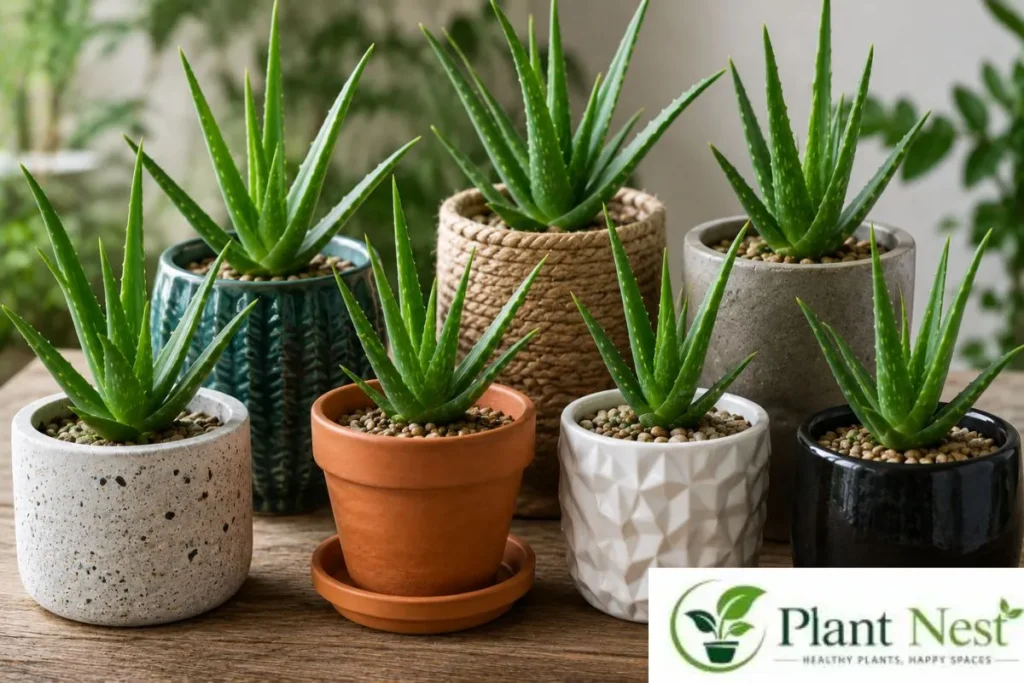
Terracotta Pots
Terracotta is widely regarded as one of the best choices for succulents, and for good reason. Its naturally porous surface allows both air and moisture to pass through the sides of the pot, helping the compost dry more quickly after watering. This creates the dry conditions aloe vera naturally prefers and significantly reduces the risk of root rot.
The breathable nature of terracotta also encourages stronger root development by improving airflow beneath the soil. If you occasionally water a little too generously, this extra ventilation offers valuable protection against excess moisture.
The main disadvantage is that terracotta dries out faster than other materials, particularly during warm weather. You may need to check the soil more regularly, and the pots can crack if dropped or exposed to freezing temperatures. Even so, they’re an excellent option for beginners and experienced growers alike who want a reliable, low-maintenance planter.
Ceramic Pots
Ceramic pots combine practicality with decorative appeal, making them a popular choice for indoor plants. They suit almost any home décor while providing a stable environment for aloe vera when used correctly.
Because ceramic planters are heavier than plastic, they offer excellent support for mature plants that can become top-heavy as they grow. This added weight helps prevent the pot from tipping over, protecting both the roots and the fleshy leaves.
Glazed ceramic retains moisture slightly longer than terracotta, making it well suited to warm or centrally heated homes where soil dries quickly. However, this also means watering should be less frequent to avoid overly damp compost. Always choose a ceramic pot with drainage holes, as good drainage remains essential regardless of the material.
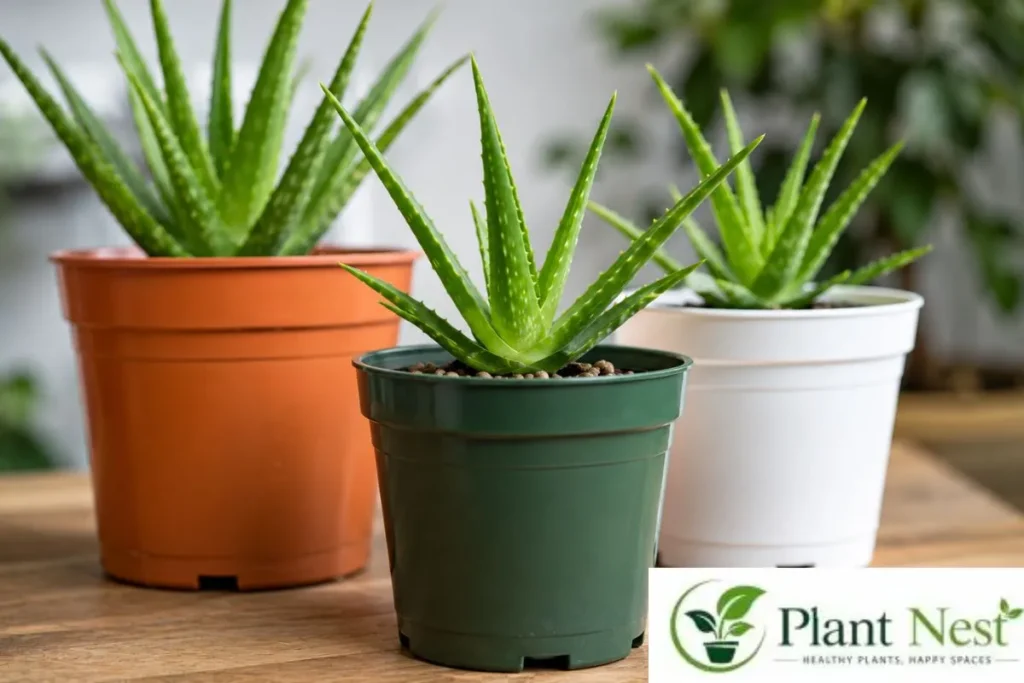
Plastic Pots
Plastic planters are an affordable and practical option that often performs better than many people expect. Although they may lack the natural appearance of clay or ceramic, they provide an excellent growing environment when paired with the right compost and sensible watering.
Their lightweight design makes them easy to move, whether you’re repositioning your aloe vera for better sunlight or bringing it indoors during colder weather. Plastic also retains moisture for longer, which can be helpful if your watering routine isn’t always consistent.
As plastic isn’t porous, the compost stays damp for longer than it would in terracotta. To prevent overwatering, choose a sturdy pot with plenty of drainage holes and use a free-draining succulent potting mix. With the right care, plastic pots offer excellent value without compromising plant health.
Concrete Pots
Concrete planters have become increasingly popular thanks to their modern appearance and exceptional durability. They’re particularly well suited to larger aloe vera plants that need a strong, stable base as they mature.
Their weight provides excellent stability, reducing the likelihood of tall or mature plants toppling over. Concrete is also extremely hard-wearing, making it suitable for both indoor and outdoor use with very little maintenance.
The main drawback is its weight. Once filled with compost, a concrete planter can be difficult to move, so it’s best suited to a permanent location. Depending on the finish, concrete may also allow the soil to dry more quickly, so it’s worth checking moisture levels occasionally to maintain the right balance.
Which Pot Material Is Best?
After comparing the options, it’s clear there isn’t a single perfect material for every home. The right choice depends on how you care for your plants and the growing conditions you can provide.
If you tend to overwater or you’re new to caring for succulents, terracotta is often the safest option. Its breathable structure helps excess moisture evaporate naturally, creating healthier conditions for the roots.
Ceramic is an excellent choice if you want an attractive planter without sacrificing functionality. As long as it has drainage holes and you avoid overwatering, it provides a reliable home for aloe vera.
Plastic is ideal if you’re looking for a lightweight, budget-friendly solution that’s easy to move around. When combined with a well-draining succulent compost, it supports healthy growth while requiring very little investment.
Concrete is best reserved for larger, established plants that benefit from additional weight and stability. Its durability makes it a worthwhile long-term option, particularly if the planter is unlikely to be moved.
Whichever material you choose, the same principles always apply. The 17 best pot for an aloe vera plant should provide excellent drainage, enough space for healthy root development and conditions that allow the compost to dry between waterings. A well-chosen planter not only complements your home but also helps your aloe vera grow stronger, stay healthier and thrive for years to come.
Best Pot Size for an Aloe Vera Plant
It’s easy to think a larger pot will help aloe vera grow faster, but the opposite is often true. An oversized container holds more compost than the roots can absorb, leaving it damp for longer after watering.
As aloe vera thrives in well-drained soil that dries between waterings, choosing the right-sized planter is far more important than choosing the biggest one available. That’s why selecting the 17 best pot for an aloe vera plant starts with understanding the needs of its root system rather than focusing on the size of the foliage.
A well-proportioned pot encourages stronger root growth, improves drainage and makes watering much easier to manage. Whether you’re caring for a young aloe on a sunny windowsill or a mature specimen indoors, the correct pot size creates the ideal conditions for healthy, long-term growth.
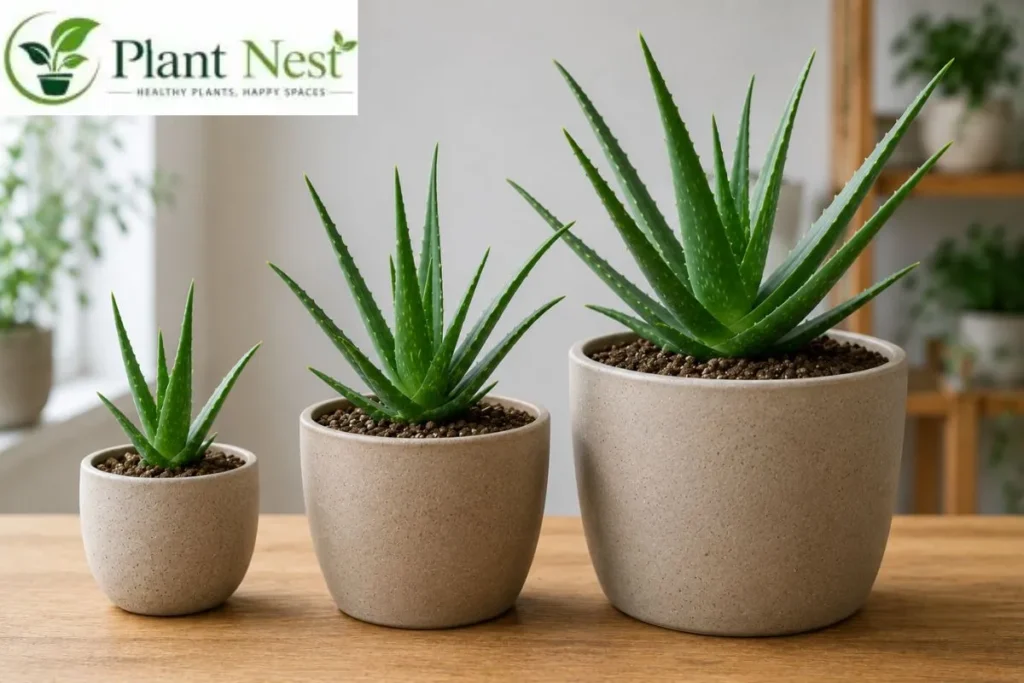
Pot Size for Small Aloe Vera Plants
Young aloe vera plants grow best in containers that comfortably fit their root system without leaving too much unused compost. A slightly snug fit allows the soil to dry evenly while giving the roots enough room to establish themselves.
As a general guide, choose a pot that’s around 5–8 cm (2–3 inches) wider than the root ball. For most young plants, a container measuring 10–15 cm (4–6 inches) in diameter is ideal, although this will vary depending on the size of the plant.
If your aloe has produced offsets, often called pups, make sure there’s enough space for healthy root development without overcrowding the pot. Resist the temptation to place a small plant in a much larger decorative container, as excess compost retains unnecessary moisture and can lead to root problems.
Pot Size for Mature Aloe Vera Plants
As aloe vera matures, its root system expands and the leaves become broader, thicker and heavier. A slightly larger pot provides the extra support needed while still allowing the compost to dry efficiently.
Most established plants perform well in containers measuring 20–30 cm (8–12 inches) in diameter. This size offers sufficient room for continued growth without holding excessive moisture around the roots.
Keep an eye on your plant for signs that it’s ready to be repotted. Roots growing through the drainage holes, compost drying unusually quickly or several pups filling the container all indicate that it’s time to move up one pot size. When choosing a new planter, always base your decision on the size of the root system rather than the height of the leaves.
Pot Size for Large Aloe Vera Plants
A mature aloe vera can become an impressive feature indoors, but its increasing size also demands greater stability. Choosing the right planter helps support the weight of the plant while allowing the roots to continue developing naturally.
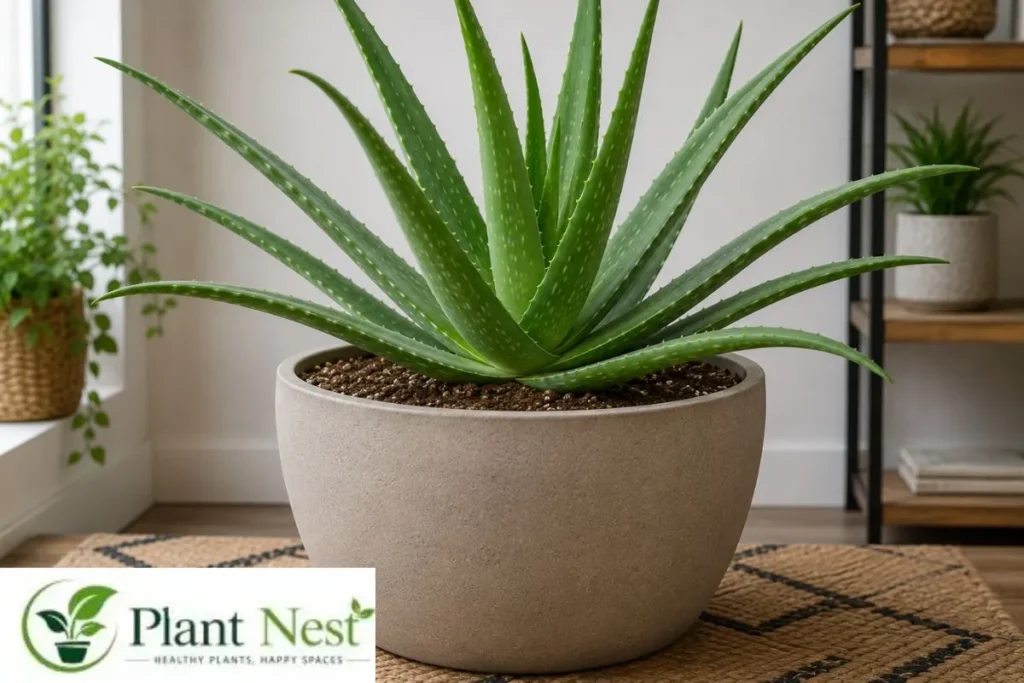
Large specimens generally thrive in pots measuring 30–40 cm (12–16 inches) in diameter. A wide container is usually a better choice than a deep one because aloe vera naturally develops shallow roots that spread out rather than grow down.
Heavy ceramic or concrete planters work particularly well for larger plants, as their weight reduces the risk of the container tipping over. Even so, avoid selecting a pot that’s far larger than necessary. Excess compost stays wet for longer, creating conditions that can damage healthy roots.
When Should You Repot Aloe Vera?
Unlike many houseplants, aloe vera doesn’t need frequent repotting. Allowing the plant to remain undisturbed for a couple of years often encourages stronger root development and healthier growth.
In most cases, repotting every two to three years is sufficient. Spring is the ideal time, as the plant is entering its active growing season and adapts more quickly to its new container.
Rather than following a strict schedule, let the plant guide your decision. Roots emerging through the drainage holes, a pot full of offsets, compost that dries unusually fast or a plant that’s becoming unstable are all reliable signs that it’s ready for a larger home.
How Much Bigger Should the New Pot Be?
When repotting aloe vera, bigger isn’t always better. Moving into a pot that’s far too large increases the amount of damp compost surrounding the roots, making overwatering much more likely.
A new container should be only 5–8 cm (2–3 inches) wider than the current one. This gradual increase gives the roots space to expand without leaving excessive amounts of unused compost.
Pair the correctly sized pot with a free-draining succulent compost and adequate drainage holes to create the ideal growing environment. Together, these simple choices encourage healthier roots, more vigorous growth and a stronger, longer-lasting plant.
Final Thoughts on Choosing the Right Pot Size
Selecting the right pot size is all about balance. Aloe vera needs enough room for its roots to grow comfortably, but not so much that excess compost stays wet after watering.
Whether you’re buying your first planter or upgrading an established plant, focus on the size of the root system rather than the overall appearance. Combined with good drainage, a suitable succulent compost and sensible watering habits, the 17 best pot for an aloe vera plant provides the perfect foundation for healthy roots, vibrant foliage and years of tro5. Best Pot for an Aloe Vera Plant: Top Expert Picks
Choosing the right planter does far more than enhance your décor. The right combination of pot, drainage and potting mix creates the ideal environment for healthy roots and steady growth. If you’re searching for the 17 best pot for an aloe vera plant, these expert recommendations will help you choose the most suitable option based on your growing conditions and level of experience.
Best Pot for Aloe
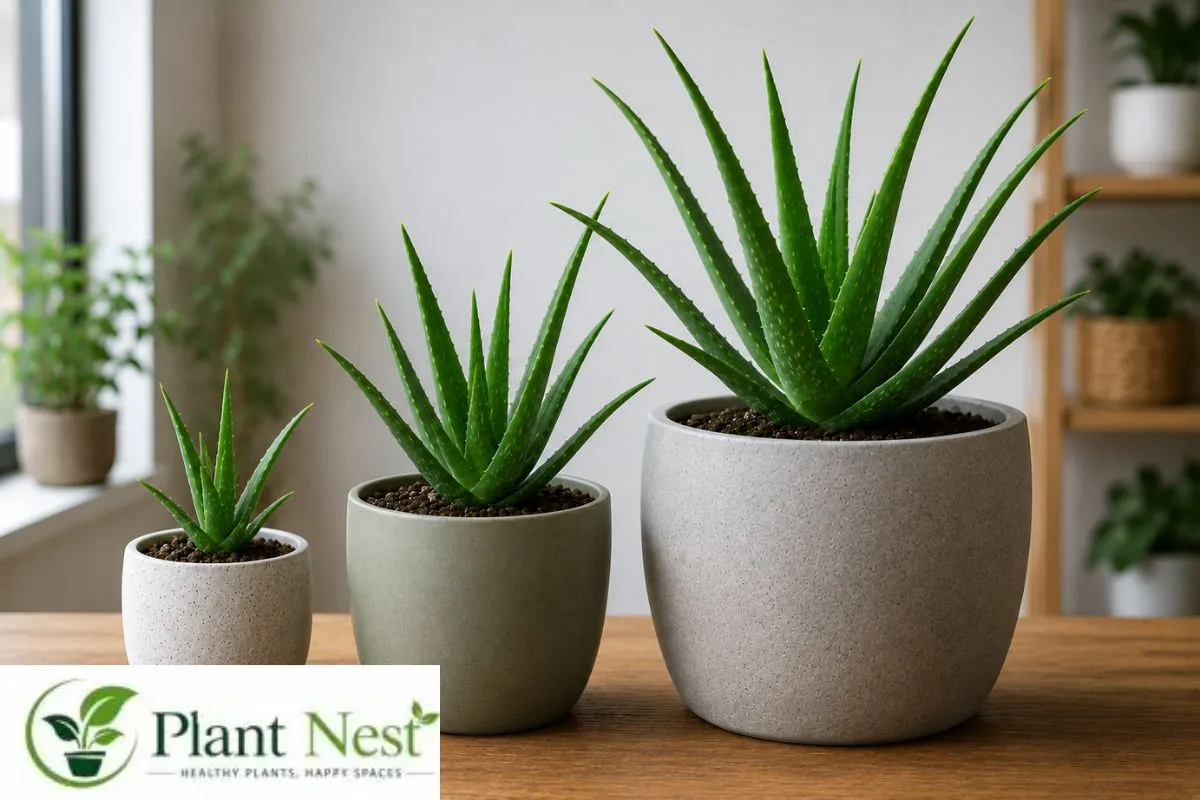
A terracotta planter remains one of the most dependable choices for growing aloe vera. Its porous clay construction allows excess moisture to evaporate naturally through the sides, helping the compost dry evenly after watering. This simple feature significantly reduces the risk of root rot, one of the most common issues affecting succulents.
Terracotta also offers excellent stability without being excessively heavy, making it suitable for both young and mature plants. For the best results, choose a pot with at least one drainage hole and place it on a matching saucer to catch excess water. Although terracotta dries out more quickly during warm weather, it consistently provides the conditions aloe vera needs to thrive.
Aloe Vera with Pot
Buying an aloe vera with pot is a convenient way to start your collection, particularly if you’re new to caring for succulents. However, the container supplied with the plant isn’t always intended for long-term use. Many retailers sell aloe vera in lightweight nursery pots that are designed for transport rather than healthy, long-term growth.
Allow the plant time to settle into its new environment before considering repotting. Once the roots begin to outgrow the original container, move it into a slightly larger planter with excellent drainage. Upgrading at the right time encourages stronger root development while reducing the risk of excess moisture around the roots.
Best Soil to Plant Aloe Vera
Even the finest planter won’t deliver good results without the best soil to plant aloe vera. This drought-tolerant succulent performs best in a loose, gritty growing medium that drains rapidly and allows plenty of air to reach the roots.
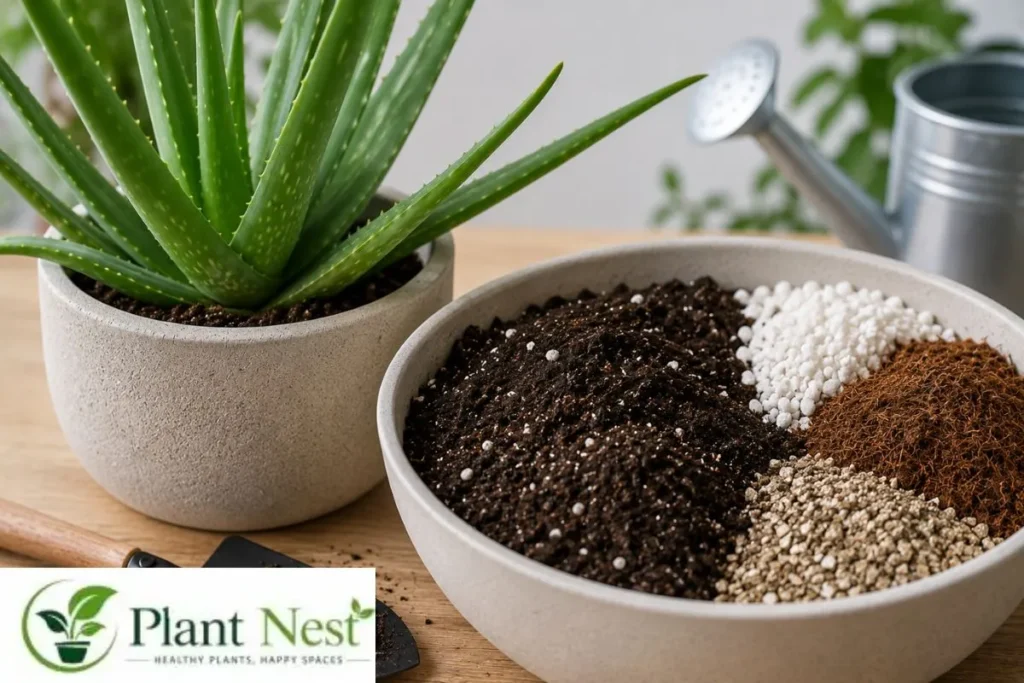
A ready-made cactus or succulent compost is an excellent choice because it’s formulated to prevent waterlogging. If you prefer mixing your own, blend quality compost with coarse sand, perlite and horticultural grit. This creates a well-draining growing medium that supports healthy root growth while preventing excess moisture from building up.
Aloe Vera Plant Potting Soil
Choosing the right aloe vera plant potting soil is just as important as selecting the right planter. Standard garden soil is generally too heavy for container-grown succulents and tends to retain moisture for longer than aloe vera can tolerate.
Instead, use a light, free-draining potting mix containing ingredients such as perlite, pumice or coarse sand. These improve aeration, encourage stronger root development and help water drain away efficiently. Replacing old, compacted compost every few years also keeps the growing environment fresh and supports healthy new growth.
Best Soil for Aloe Vera
The best soil for aloe vera should strike the perfect balance between drainage and moisture retention. It needs to allow water to flow through quickly while holding just enough moisture for the roots to absorb what they need.
A quality succulent mix prevents compaction beneath the surface, ensuring oxygen continues to circulate around the roots. If your aloe vera isn’t thriving despite receiving plenty of sunlight, tired or poorly draining compost may be the underlying cause. Refreshing the potting mix whenever you repot your plant helps maintain vigorous, healthy growth.
Potting Mix for Aloe Vera
A well-formulated potting mix for aloe vera closely replicates the dry, sandy conditions found in the plant’s natural habitat. Commercial cactus compost works well, but many experienced growers improve drainage further by adding extra perlite, pumice or coarse grit.
A loose, airy mix dries evenly after watering and prevents moisture from collecting around the roots. This not only reduces the risk of root rot but also encourages stronger, healthier root systems. Combined with a planter that drains freely, the right potting mix provides the ideal foundation for long-term success.
Aloe Plant Dirt
Many people assume ordinary garden soil makes suitable aloe plant dirt, but it’s rarely the right choice. Garden soil is often dense, compact and slow to drain, creating conditions that can quickly lead to unhealthy roots.
Instead, choose a growing medium that’s light, crumbly and well aerated. Mixing coarse sand, perlite or pumice into the compost improves drainage and allows the roots to breathe more easily. Whether you’re planting a young pup or repotting a mature specimen, using the right soil is one of the simplest ways to keep your aloe vera healthy, resilient and thriving for years to come.
Frequently Asked Questions (FAQs)
What is the best pot for an aloe vera plant?
The ideal pot has drainage holes, fits the root system without being oversized and encourages healthy root growth. If you’re looking for the 17 best pot for an aloe vera plant, terracotta is one of the top recommendations because its porous surface allows excess moisture to evaporate, helping to reduce the risk of root rot.
What size pot does an aloe vera plant need?
Choose a planter that’s around 5–8 cm (2–3 inches) wider than the root ball. This gives the roots enough room to grow while preventing excess compost from holding too much moisture after watering.
Is terracotta better than ceramic for aloe vera?
Both materials work well, but they suit different growing conditions. Terracotta dries out more quickly, making it ideal if you tend to overwater. Ceramic retains moisture slightly longer and provides greater stability for larger plants. Whichever you choose, make sure it includes drainage holes.
Can aloe vera grow in a plastic pot?
Yes, aloe vera grows perfectly well in a plastic pot provided it has adequate drainage. Plastic containers are lightweight, affordable and retain moisture for longer than terracotta, so it’s important to avoid watering too frequently.
Does an aloe vera pot need drainage holes?
Yes, drainage holes are essential. They allow excess water to escape after watering, preventing waterlogged compost and protecting the roots from rot. No matter which planter you choose, proper drainage should always be a priority.
How often should I repot an aloe vera plant?
Most aloe vera plants only need repotting every two to three years. Repot sooner if roots begin growing through the drainage holes, the plant becomes root-bound or new offsets start overcrowding the container.
Can I plant aloe vera in a decorative pot?
Yes, but it’s best to use a decorative pot as an outer cover. Keep your aloe vera in a nursery pot with drainage holes and place it inside the decorative container. This approach combines good drainage with an attractive display.
What is the best soil for aloe vera?
A fast-draining cactus or succulent potting mix is the best option. A blend containing perlite, pumice or coarse sand improves drainage, increases airflow around the roots and helps prevent excess moisture from building up.
How do I prevent root rot in aloe vera?
Preventing root rot starts with using a well-draining pot and suitable succulent compost. Allow the soil to dry between waterings, avoid leaving the pot standing in water and only water when the compost feels dry. These simple steps help keep the roots healthy throughout the year.
Can aloe vera grow indoors all year round?
Yes, aloe vera thrives indoors throughout the year when given the right conditions. Place it in a bright spot with plenty of indirect sunlight, use free-draining soil and avoid overwatering. With consistent care, it can remain healthy and continue growing for many years.
Conclusion
Choosing the 17 best pot for an aloe vera plant is about far more than appearance. The right planter creates the ideal environment for healthy roots by providing adequate drainage, enough growing space and the stability a succulent needs as it matures. Making the right choice from the start can significantly reduce the risk of overwatering, root rot and other common growing problems.
Throughout this guide, you’ve discovered how pot size, material and drainage all influence the health of an aloe vera plant. You’ve also learned why a fast-draining succulent potting mix, sensible watering habits and repotting only when necessary are just as important as the planter itself. Together, these factors create the perfect conditions for strong roots, vibrant foliage and steady, healthy growth.
There’s no single planter that’s right for every home. The best choice depends on your watering routine, indoor environment and the size of your plant. Terracotta is ideal for improving drainage, ceramic combines style with stability, plastic offers a lightweight and affordable option, while concrete provides excellent support for larger specimens. Whatever material you choose, always prioritise drainage holes and pair the pot with a quality succulent compost.
With the right combination of planter, soil and care, aloe vera is one of the easiest and most rewarding houseplants to grow. Investing in the 17 best pot for an aloe vera plant today will help your succulent develop a stronger root system, healthier leaves and long-lasting vigour. Choose wisely now, and your aloe vera will reward you with years of attractive, low-maintenance growth.

Plant Nest Blog’s author is passionate about plants, gardening, and sustainable living. Through research and practical experience, they share helpful plant care tips, gardening guides, and easy solutions to help readers grow healthier plants and create greener spaces.