
A watermelon can look big, healthy, and ready to eat while still being surprisingly underripe inside. That’s what makes harvesting watermelon a little tricky.
The key is knowing how to harvest watermelon before you cut it from the vine. Fortunately, the fruit gives you several useful clues, including the color of the ground spot, the condition of the tendril, the appearance of the rind, and the sound it makes when tapped.
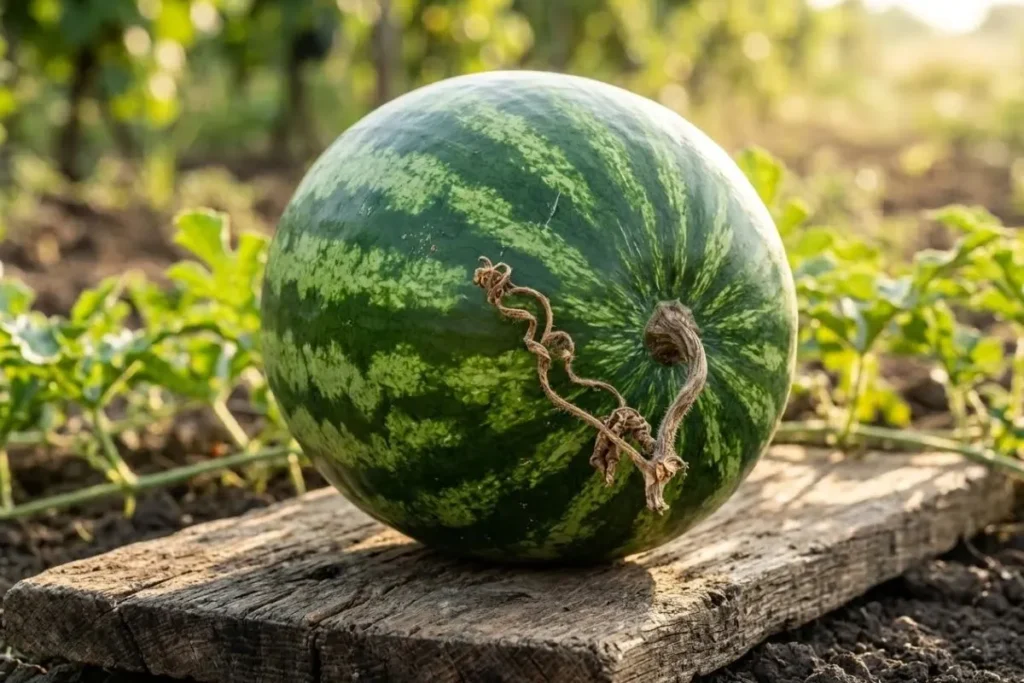
Unlike tomatoes or peaches, watermelon doesn’t continue ripening much after you pick it. So if you harvest too early, you may end up with pale flesh, less sweetness, and a disappointing crunch.
Here’s how to use those signs together and when to pick watermelon for the best possible result.
How to Know When to Harvest Watermelon
If you’re standing in the garden wondering whether that watermelon is ready, start with these checks.
Check the Ground Spot
One of the easiest ways to judge watermelon maturity is to look at the part of the fruit resting against the soil.
This area is called the ground spot.
When the watermelon is immature, the ground spot is often white or pale green. As the fruit matures, this spot typically changes to a creamy yellow or yellowish color.
A strong yellow or creamy ground spot is a useful sign that the watermelon has reached maturity.
However, don’t treat the ground spot as the only test. Different varieties can show different coloration, and growing conditions can affect its appearance.
Look at the Tendril
Check the small curly tendril closest to the watermelon.
When the fruit is developing, this tendril is usually green and flexible. As the watermelon approaches maturity, the tendril may dry out and turn brown.
A dry, brown tendril is one of the more useful clues when deciding when to pick watermelon.
But again, use it together with other signs. A brown tendril by itself doesn’t guarantee that every watermelon is perfectly ripe.
Examine the Rind
Pay attention to the watermelon’s overall appearance.
A developing watermelon often has a bright, glossy appearance. As it approaches maturity, the rind may become somewhat duller.
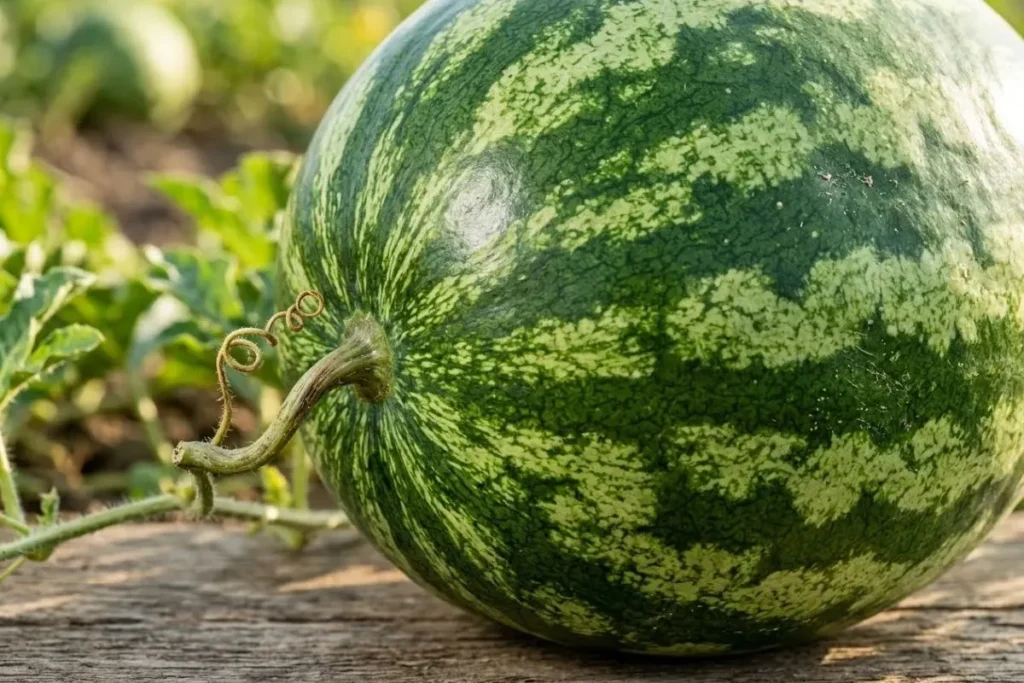
The color and pattern depend heavily on the variety, so learn what a mature version of your particular watermelon should look like.
For striped watermelons, the contrast between the stripes can also become more noticeable as the fruit matures.
Consider the Watermelon’s Size
Size can give you a helpful clue, but it shouldn’t be your only deciding factor.
Different varieties produce very different fruit sizes. A small personal-size watermelon may be completely mature while a larger variety needs much more time.
If you know the expected mature size of your variety, compare your fruit with that description.
A watermelon that is still noticeably smaller than its normal mature size may need more time.
Listen to the Sound
You’ve probably heard the advice to knock on a watermelon and listen for a deep, hollow sound.
There is some useful information in this traditional method, but sound is subjective. Two people can tap the same watermelon and describe the sound differently.
If you’re experienced with a particular variety, the tapping method can become a helpful additional clue.
For beginners, though, don’t rely on sound alone. The ground spot and tendril provide more practical visual clues.
How to Harvest Watermelon Properly
Once you’ve decided that the watermelon is ready, harvesting it is simple.
Inspect the Fruit
Before cutting, check the watermelon from several sides.
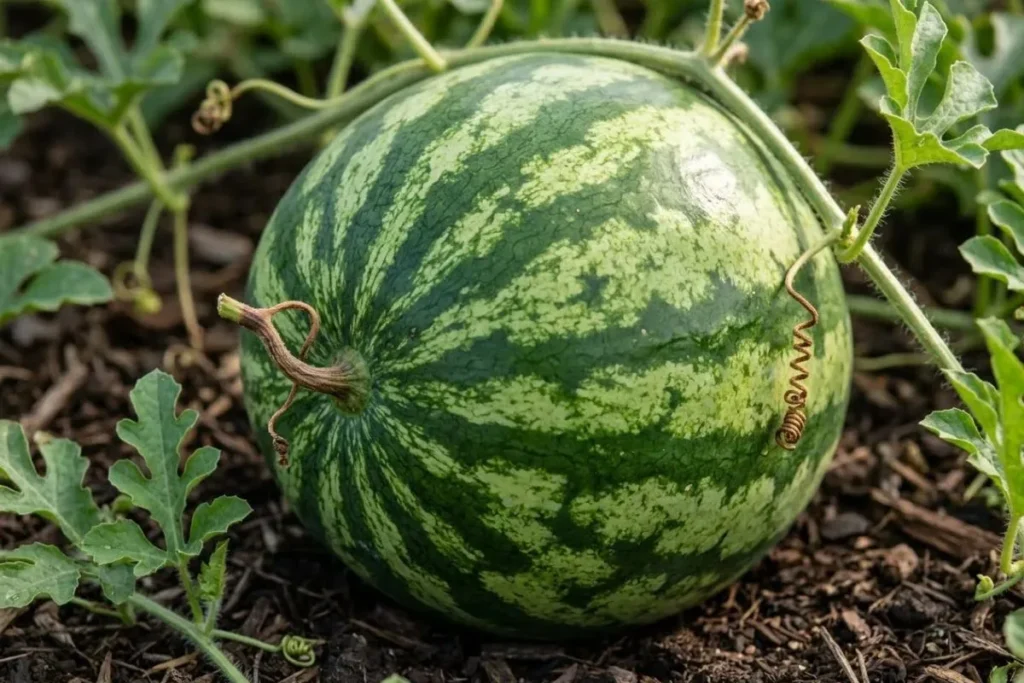
Look at the ground spot, tendril, rind color, size, and overall condition. Make sure the fruit isn’t showing signs of rot, severe cracking, or pest damage.
Use a Sharp Tool
Use a clean, sharp knife, pruning shears, or garden clippers to cut the stem.
Avoid pulling or twisting the watermelon away from the vine. Rough handling can damage both the fruit and the plant.
Cut the Stem
Cut the stem close to the watermelon, leaving a small piece of stem attached if possible.
A clean cut is better than tearing the stem.
If you’re harvesting several watermelons, clean your cutting tool between plants when practical, especially if you notice signs of disease.
Handle the Fruit Carefully
Watermelons may look tough, but the rind can still be damaged by hard drops or rough handling.
Carry the fruit carefully and avoid throwing or rolling it across rough surfaces.
Bruises and cracks can shorten its storage life.
When to Pick Watermelon From the Vine
The best time to pick watermelon is when the fruit has reached maturity, not simply when it looks large.
If the watermelon is still growing rapidly and the ground spot remains pale, it may need more time.
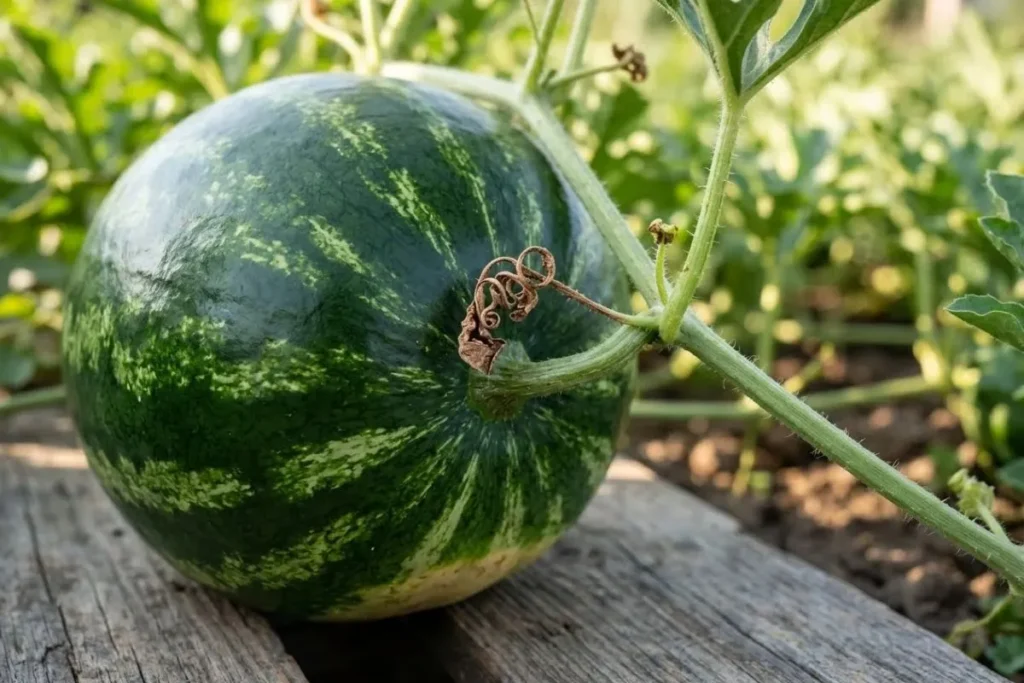
On the other hand, waiting too long can also be a problem. Overripe fruit may develop a softer texture or other quality issues.
A good approach is to start checking your watermelons regularly as they approach their expected harvest period.
This gives you time to notice changes instead of trying to guess the exact harvest day.
Can You Tell if a Watermelon Is Ripe Without Cutting It Open?
Yes, you can make a good estimate without cutting it.
The best approach is to combine several external signs:
Ground spot: Look for a creamy or yellowish color.
Tendril: Look for a tendril near the fruit that has dried and turned brown.
Rind: Look for a mature, less glossy appearance.
Size: Compare the fruit with the expected mature size of its variety.
Sound: Use tapping as an additional clue rather than your only test.
The more of these signs that agree, the more confidence you can have that the watermelon is ready.
How Long Does It Take for Watermelon to Mature?
Watermelon maturity depends on the variety, weather, soil conditions, and growing environment.
Seed packets often provide an approximate number of days to maturity, but that number should be treated as a guideline rather than an exact harvest date.
Warm growing conditions can influence development, while unfavorable weather can slow it down.
That’s why experienced gardeners pay attention to the fruit itself rather than harvesting strictly according to the calendar.
What Happens If You Pick a Watermelon Too Early?
This is one of the biggest reasons gardeners want to learn how to know when to harvest watermelon.
If you pick an immature watermelon, it may not develop the sweetness and texture you’d expect from a fully mature fruit.
The flesh may be less sweet, less colorful, or firmer than it should be.
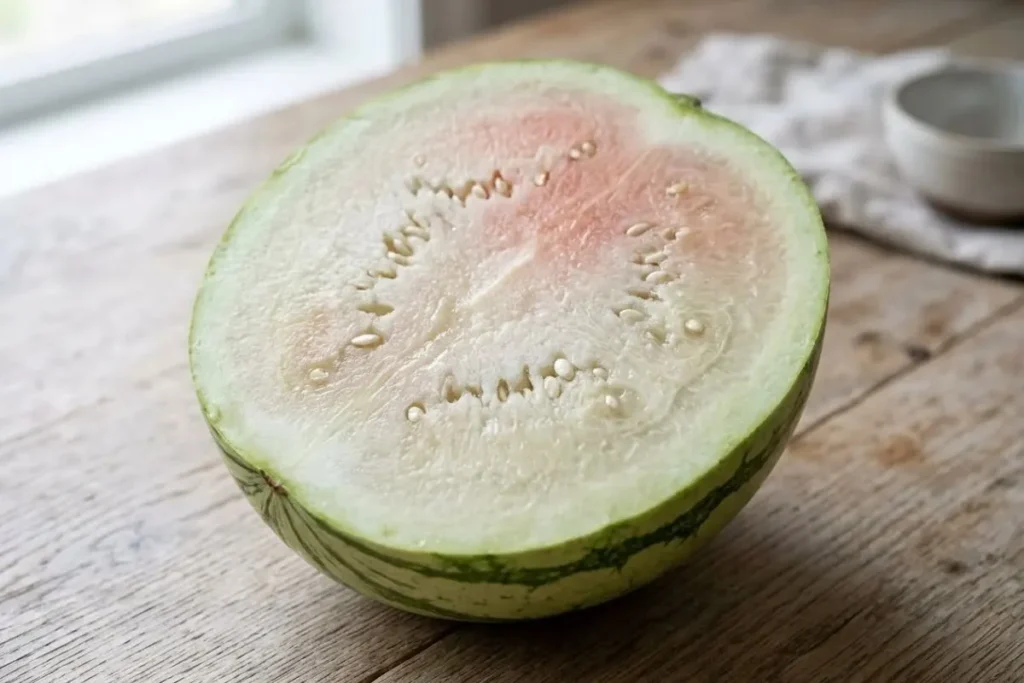
Watermelon doesn’t behave like some fruits that continue to ripen substantially after harvest. Once you’ve cut it from the vine, you’re generally not going to turn an immature watermelon into a perfectly ripe one by simply leaving it on the kitchen counter.
That’s why getting the harvest timing right matters.
What Happens If You Leave Watermelon on the Vine Too Long?
Waiting too long isn’t ideal either.
An overmature watermelon can lose some of its desirable texture and may become vulnerable to cracking, pests, or decay.
In some cases, the fruit can begin deteriorating before you realize it has passed its prime.
This is why you shouldn’t wait indefinitely for every possible ripeness sign to become extremely obvious. Look at the whole plant and fruit together.
How to Harvest Watermelon in Hot Weather
If you’re growing watermelon in a hot climate, including areas with very warm summers, pay extra attention to the condition of the plant and fruit.
Harvest during the cooler part of the day when possible, such as early morning.
Avoid leaving freshly harvested watermelons sitting in intense heat for long periods. Move them to a shaded, suitable storage area after harvesting.
Also keep an eye on the plant’s water supply during the growing season. Hot weather can increase moisture loss from the soil, so consistent watering is important for healthy plant development.
Common Watermelon Harvesting Mistakes
Even a healthy watermelon crop can be disappointing if you harvest at the wrong time.
Harvesting only by size
A large watermelon isn’t automatically ripe. Size should be considered alongside other maturity signs.
Relying only on the tapping test
The sound method can be difficult for beginners to judge. Use it as one clue rather than the deciding factor.
Ignoring the ground spot
The underside of the fruit can tell you a lot about maturity, so don’t forget to check it.
Picking because the fruit looks big
A watermelon can reach an impressive size before it’s fully mature.
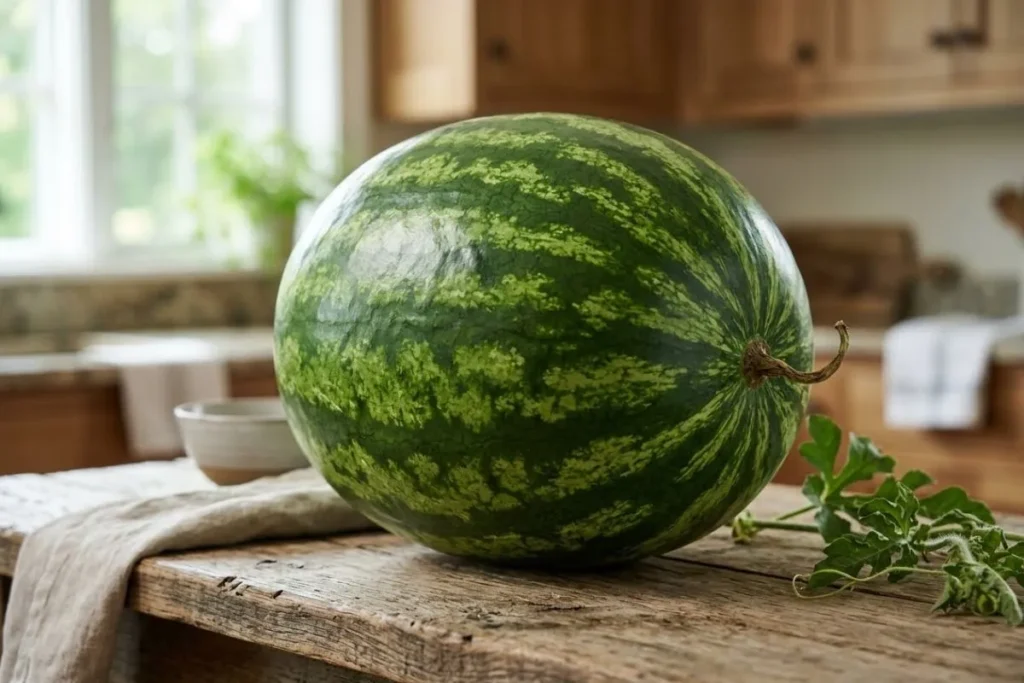
Waiting for the watermelon to become soft
Don’t wait for a watermelon to become soft like a peach. A ripe watermelon should still feel firm.
Pulling the fruit from the vine
Don’t yank the watermelon off the plant. Cut the stem cleanly with a suitable tool.
How to Store Watermelon After Harvest
After harvesting, handle the watermelon gently and keep it in a clean, dry location.
Whole watermelons can generally be kept at room temperature for a period of time, but storage life depends on maturity and conditions.
Once you cut a watermelon, refrigerate the unused portion promptly in a clean, covered container.
Cut watermelon should not be left sitting at room temperature for extended periods.
Frequently Asked Questions
How do I know when to harvest watermelon?
Look for several signs together. A creamy or yellow ground spot, a dry brown tendril near the fruit, mature size, and a duller rind can all indicate that the watermelon is ready.
When should I pick watermelon?
Pick watermelon when it has reached its mature size and shows several signs of ripeness. Don’t rely solely on the number of days since planting.
What color should the bottom of a ripe watermelon be?
The ground spot of a mature watermelon is often creamy yellow or yellowish rather than bright white or green.
Should the watermelon tendril be green or brown?
A tendril close to a mature watermelon often becomes dry and brown. This is a useful harvesting clue, particularly when combined with other signs.
Does watermelon ripen after you pick it?
Watermelon does not continue to ripen substantially after harvest in the same way as fruits such as bananas or peaches. Picking at the right maturity stage is therefore important.
Can you tell if a watermelon is ripe by knocking on it?
Tapping can provide a clue, but it’s not a foolproof method. Use it along with the ground spot, tendril, rind, and expected size.
Should I harvest watermelon in the morning or evening?
Harvesting during a cooler part of the day can be more comfortable for you and can help reduce the fruit’s exposure to intense heat immediately after picking.
Can you pick a watermelon too early?
Yes. An immature watermelon may have less sweetness and an inferior texture because it hasn’t completed its development on the plant.
Conclusion:
Knowing how to harvest watermelon is mostly about learning to read the fruit rather than relying on one magic sign.
Check the ground spot. Look at the nearby tendril. Consider the rind, size, and overall condition. Use the tapping method as an extra clue rather than your only test.
When several signs point in the same direction, it’s usually a much better time to harvest.
And if you’re still unsure when to pick watermelon, remember one simple rule: don’t harvest just because the fruit is big. Harvest when the watermelon looks mature from several different clues.
That small bit of patience can make a big difference in the sweetness and texture of the watermelon you bring to the table.

Plant Nest Blog’s author is passionate about plants, gardening, and sustainable living. Through research and practical experience, they share helpful plant care tips, gardening guides, and easy solutions to help readers grow healthier plants and create greener spaces.