
At first, it might seem that peeled potatoes can sit in water for as long as they like without losing their quality, but that’s not true. If you’re wondering how long can potatoes stay in water, the answer depends on how you store them and whether they’re peeled, sliced, or diced.
Keeping raw potatoes covered with cold water in the refrigerator helps prevent browning while you prepare them for cooking.
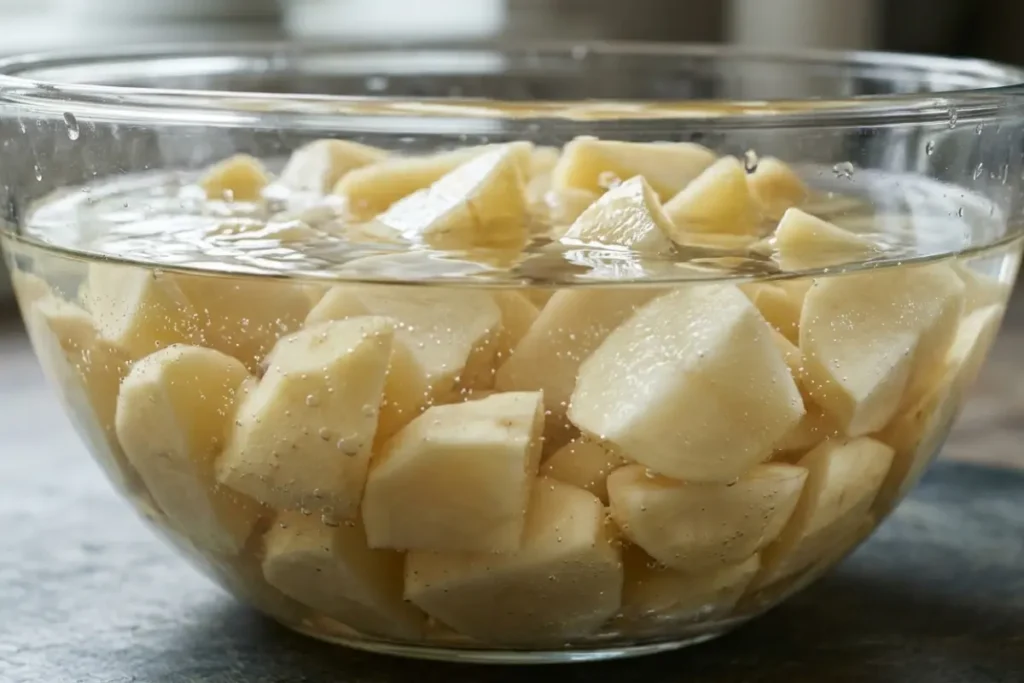
Soaking potatoes ahead of time can make meal preparation easier, especially when you’re planning to make fries, mashed potatoes, roasted potatoes, or a family dinner.
However, temperature and storage time matter. In this guide, you’ll learn how to store peeled potatoes in water, whether you can leave cut potatoes overnight, and how to keep them fresh and ready to cook.
How Long Can Potatoes Stay in Water?
The length of time potatoes can stay in water depends mainly on storage temperature, the size of the pieces, and how fresh they were before soaking. For the best quality, keep peeled or cut potatoes completely submerged in cold water inside a covered container in the refrigerator.
Avoid leaving them at room temperature for extended periods, as water doesn’t prevent harmful bacteria from growing.
How Long Can Peeled Potatoes Stay in Water in the Refrigerator?
Peeled potatoes can generally stay in cold water in the refrigerator for up to 24 hours without a major loss of quality. This is useful if you want to peel potatoes the night before cooking or prepare ingredients ahead of a busy day.
Keep the potatoes fully covered with water and store them in a clean, covered container at 40°F (4°C) or below.
Over time, potatoes may lose some water-soluble nutrients, and their texture can change if you soak them for too long. Before cooking, drain the water and check the potatoes for any unusual smell, slimy texture, or signs of spoilage. Refrigeration helps keep them fresh, but it doesn’t make potatoes safe indefinitely.
How Long Can Cut Potatoes Stay in Water?
Cut potatoes, including sliced, diced, and chopped potatoes, can generally be soaked in cold water in the refrigerator for up to 24 hours. This works well when you’re preparing potatoes for French fries, soups, curries, or roasted dishes. Keeping the pieces submerged helps prevent their exposed surfaces from turning brown.
Smaller pieces have more exposed surface area than whole peeled potatoes, so they may release more starch into the water. You might notice that the water becomes cloudy, which is often normal during soaking.
For better results, keep the container covered and refrigerated, then drain and dry the potatoes before frying or roasting them.
How Long Can Potatoes Stay in Water Before Cooking?
If you’re preparing potatoes before cooking, try to use them within 24 hours when they’re stored properly in the refrigerator. This gives you time to wash, peel, and cut them ahead of a meal without leaving the preparation until the last minute.
The ideal soaking time also depends on your recipe. For example, you may soak potato strips before frying to remove some surface starch, while potatoes for boiling may not need a long soak at all.
Longer soaking isn’t always better because it can affect texture and allow some water-soluble nutrients to leach into the water.
How Long Can Potatoes Stay in Water at Room Temperature?
You shouldn’t leave peeled or cut potatoes sitting in water at room temperature for extended periods. Although water can help prevent browning, it doesn’t stop bacteria from multiplying. For food safety, refrigerate prepared potatoes promptly instead of leaving them on the kitchen counter.
If you’ve left potatoes in water for several hours, consider how long they’ve been sitting out and the surrounding temperature. A common food-safety guideline is to refrigerate perishable prepared foods within two hours, or within one hour when temperatures exceed 90°F (32°C). If potatoes have been left out beyond those limits, the safer choice is to discard them rather than rely on smell or appearance alone.
Can Potatoes Stay in Water Overnight?
Yes, you can usually leave peeled or cut potatoes in water overnight if you keep them fully submerged in a covered container in the refrigerator. This is a practical way to prepare ingredients in advance for breakfast, lunch, or dinner the next day.
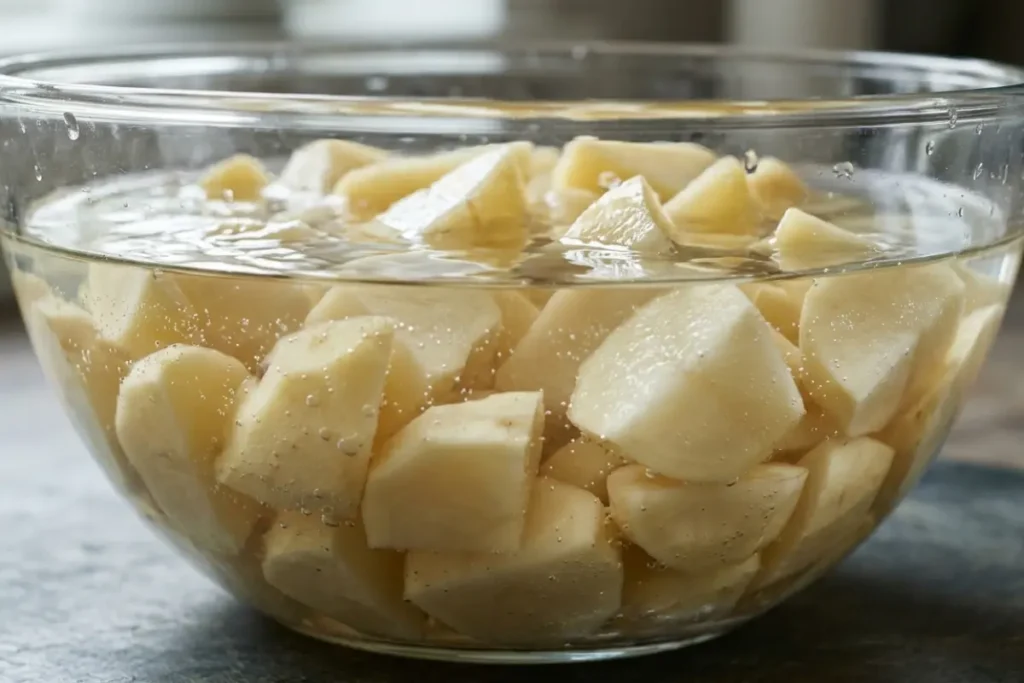
For example, if you’re making homemade fries tomorrow, you can cut the potatoes tonight, cover them with cold water, and refrigerate them. When you’re ready to cook, drain them and pat them dry with a clean towel. Removing excess moisture is especially important before frying because water can cause hot oil to splatter.
Can Potatoes Stay in Water for 24 Hours?
Potatoes can generally remain in cold water for up to 24 hours in the refrigerator, but this should be treated as a practical quality guideline rather than a guarantee of safety. Freshness before soaking, refrigerator temperature, cleanliness, and handling all make a difference.
If you’re preparing potatoes a day ahead, use fresh potatoes, a clean container, and cold water. Keep them refrigerated throughout storage and cook them promptly when you’re ready. Avoid extending the soaking time unnecessarily, as prolonged exposure to water can affect texture and cause some nutrients to leach out.
How to Store Peeled Potatoes in Water Properly
Many people think that placing peeled potatoes in a bowl of water is enough to keep them fresh, but proper storage involves more than that. If you want to know how to store peeled potatoes in water, focus on using cold water, keeping the potatoes fully submerged, and choosing a clean container. These simple steps help prevent browning and protect the quality of your potatoes before cooking.
Peel and Cut the Potatoes Before Soaking
Start by washing your potatoes under running water to remove dirt from the skin. Peel them with a clean peeler, then cut them according to your recipe. You can leave them whole, slice them for homemade chips, cut them into strips for French fries, or dice them for soups and curries.
The way you cut potatoes depends on how you plan to cook them. For example, evenly sized potato cubes work well for boiling, while similarly sized strips help French fries cook more evenly.
If you’re preparing potatoes ahead of time, avoid cutting them into unnecessarily small pieces because smaller pieces have more exposed surfaces.
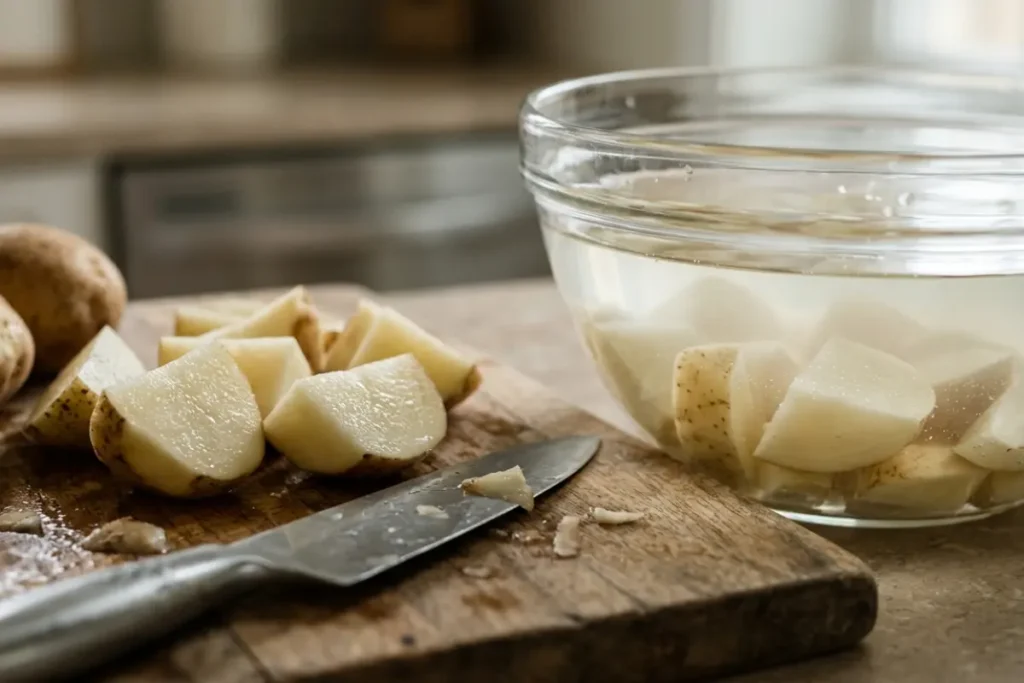
Use a clean knife and cutting board to reduce the risk of contamination. Once you’ve prepared the potatoes, move them into the water promptly instead of leaving the cut pieces exposed to air. This is a simple way to keep peeled potatoes looking fresh while you finish preparing the rest of your meal.
Cover the Potatoes Completely With Cold Water
One of the easiest ways to prevent peeled potatoes from turning brown is to keep every piece covered with cold water. When potato flesh is exposed to air, natural enzymes trigger a reaction that causes discoloration. Submerging the potatoes helps limit this reaction and keeps the exposed surfaces from drying out.
Place the peeled or cut potatoes in a clean bowl or food-safe container. Add enough cold water to cover all the pieces, including those near the top. If a few pieces float above the surface, gently move them around so they become fully submerged.
Cold water is useful for preparing potatoes before cooking, but it doesn’t replace refrigeration. If you’re storing potatoes for several hours or overnight, put the covered container in the refrigerator. Avoid leaving the bowl on the counter for extended periods, even if the potatoes remain underwater.
Store Potatoes in the Refrigerator
Refrigeration is important when you’re storing peeled potatoes in water for later use. A bowl of water on the kitchen counter might help prevent browning, but it doesn’t keep the potatoes at a safe temperature for extended storage.
After covering the potatoes with cold water, place the container in a refrigerator set to 40°F (4°C) or below. Keep it away from raw meat, seafood, and other foods that could contaminate the water.
Try to maintain a consistent refrigerator temperature instead of repeatedly leaving the potatoes out while preparing other ingredients.
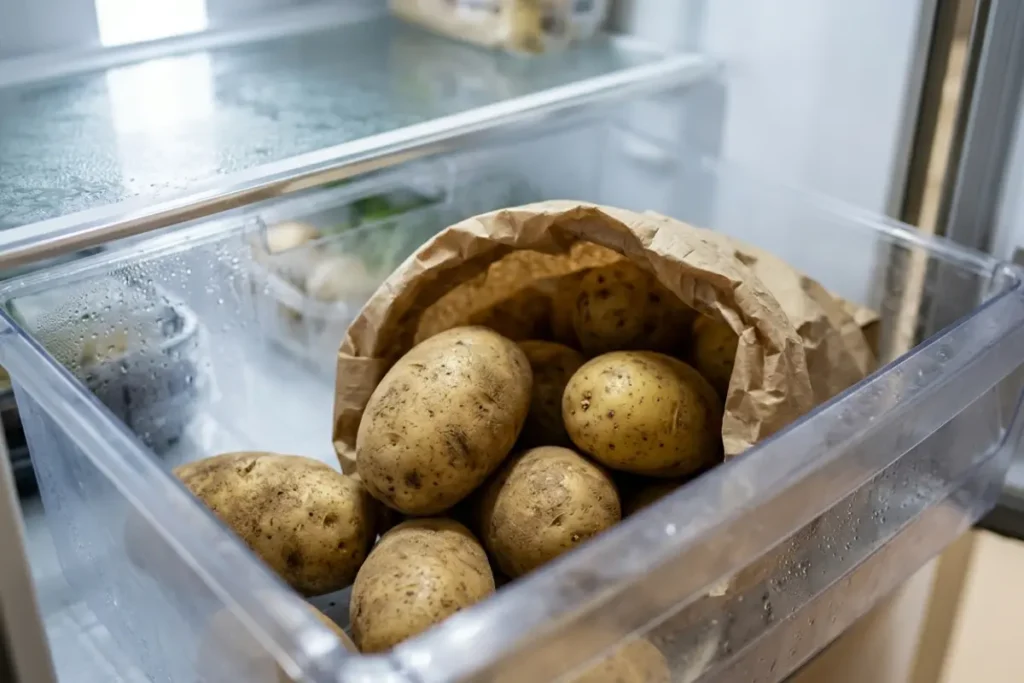
If you’re preparing dinner the following day, refrigerated storage can make your cooking routine easier. You can peel and cut the potatoes in advance, then drain and prepare them when needed. For the best quality, avoid soaking them longer than necessary, and check their condition before cooking.
Use a Clean, Covered Container
The container you choose also matters when storing raw potatoes in water. A clean glass bowl, food-safe plastic container, or other suitable food-storage container works well. Make sure it has enough room for the potatoes and water without overflowing.
Cover the container with a suitable lid to protect the potatoes from spills, food particles, and odors inside the refrigerator. If you don’t have a lid, use clean food-safe covering that fits securely. Avoid containers that are dirty, cracked, or difficult to clean properly.
Don’t use a container that previously held raw meat or another food unless you’ve washed it thoroughly with hot, soapy water. A clean container helps reduce contamination and keeps the soaking water in better condition.
Before cooking, inspect the potatoes. If they have developed a slimy surface, an unpleasant odor, or other clear signs of spoilage, discard them. Remember that a clean container and refrigeration help with safe storage, but they can’t make spoiled potatoes safe to eat.
Should You Change the Water When Soaking Potatoes?
You don’t usually need to change the water if you’re soaking potatoes for a short period in the refrigerator. However, you may notice that the water becomes cloudy as starch washes off the cut surfaces. This is common, especially with diced potatoes and potato strips.
If you want to remove more surface starch for a recipe such as crispy French fries, you can rinse the potatoes and place them in fresh cold water before cooking. The amount of starch released depends on the potato variety, the size of the pieces, and how long you soak them.
Changing the water doesn’t replace proper storage. Keep the potatoes refrigerated throughout the process, use clean utensils, and avoid repeatedly leaving them at room temperature. When you’re ready to cook, drain the soaking water and dry the potatoes thoroughly if you’re frying or roasting them.
For crispy potatoes, removing excess moisture is particularly important. Wet potatoes can splatter in hot oil and may not brown as evenly. A clean kitchen towel or paper towel can help remove surface water before cooking.
How to Keep Potatoes From Turning Brown in Water
Many people believe that peeled potatoes will stay perfectly white as long as they sit in water, but that’s not always true. If you’re wondering how to keep potatoes from turning brown in water, it helps to understand what causes discoloration and how to store the potatoes properly.
Cold water can slow browning, but exposed pieces, poor storage, and long soaking times can still affect their appearance and quality.
Why Do Peeled Potatoes Turn Brown?
Have you ever peeled potatoes for dinner, only to find that they look brown or gray a little later? This happens because potatoes contain natural enzymes that react with oxygen when the flesh is exposed to air.
This process is called enzymatic browning, and it can change the color of freshly peeled or cut potatoes.
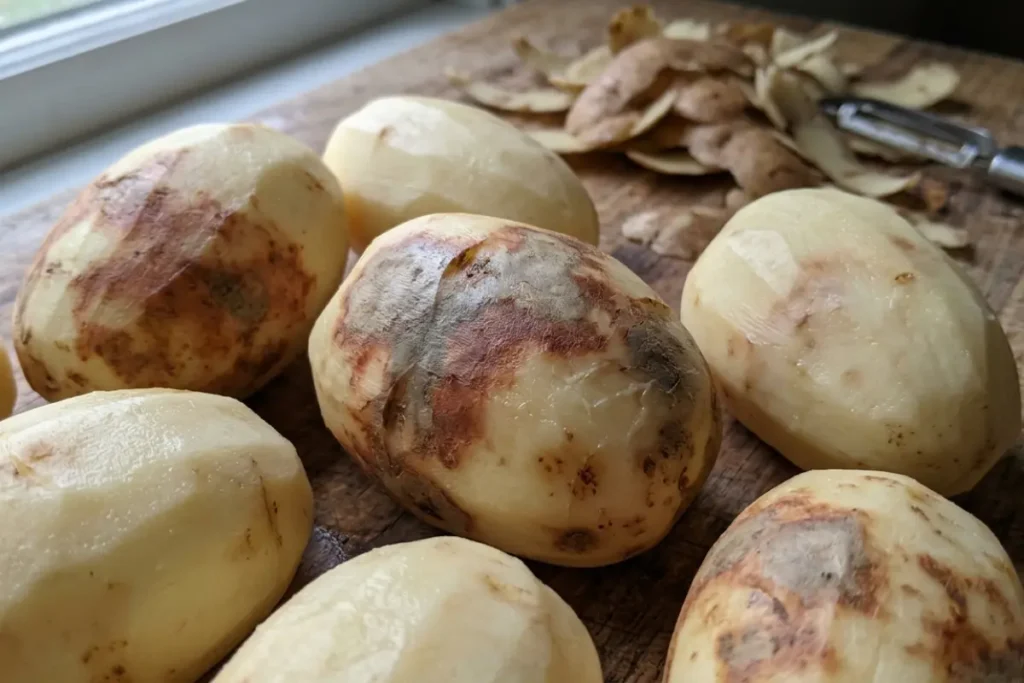
The reaction usually starts on the exposed surface. That’s why sliced, diced, or chopped potatoes may discolor faster than whole potatoes with their skin intact. The potato variety, freshness, temperature, and amount of exposed surface can also affect how quickly the color changes.
Browning doesn’t automatically mean that a potato has spoiled. It often results from a natural chemical reaction rather than harmful bacteria. However, if the potatoes also smell unpleasant, feel slimy, or show other signs of spoilage, don’t use them.
To keep peeled potatoes looking fresh, avoid leaving them exposed to air for long periods. Prepare them with clean utensils and place them in cold water promptly. If you aren’t cooking them straight away, refrigerate them in a covered container.
Does Cold Water Prevent Potatoes From Turning Brown?
Cold water helps prevent potatoes from turning brown by reducing their exposure to oxygen. When you fully submerge peeled or cut potatoes, you limit the contact between their exposed surfaces and the air. This helps preserve their natural color while you prepare the rest of your ingredients.
For the best results, place the potatoes in a clean bowl and add enough cold water to cover every piece. Check that slices or cubes haven’t remained above the waterline. Then cover the container and refrigerate it if you’re not cooking the potatoes immediately.
Keep in mind that cold water slows browning rather than guaranteeing that discoloration will never happen. Potatoes may still develop some color during storage, especially if pieces remain exposed or the potatoes were already damaged.
Also, don’t confuse preventing browning with preventing spoilage. Cold water alone doesn’t make potatoes safe for extended storage at room temperature. Refrigeration and proper handling remain important when you’re preparing potatoes ahead of time.
Should You Add Salt or Lemon Juice to Potato Water?
You don’t normally need to add salt or lemon juice when storing peeled potatoes in water. Plain cold water is generally enough to help prevent browning during short-term preparation.
Lemon juice contains citric acid, which can slow enzymatic browning in some foods. However, adding it to potato water may affect the flavor of your potatoes, so it’s not necessary for everyday storage. If a particular recipe recommends an acidic soaking solution, follow the recipe’s instructions.
Salt is sometimes used when soaking potatoes for specific cooking methods, but it isn’t required simply to keep peeled potatoes fresh. Adding salt won’t replace refrigeration or make improperly stored potatoes safe.
For most home cooks, the simplest approach is to use clean, cold water and a covered container. Keep the potatoes refrigerated until you’re ready to cook them, and avoid adding extra ingredients unless they’re needed for your recipe.
How to Keep Peeled Potatoes Fresh Overnight
Preparing potatoes the night before can save time, especially when you’re planning a large meal. The good news is that you can usually prepare peeled or cut potatoes overnight if you store them correctly.
First, wash the potatoes, remove the skins, and cut them into the sizes you need. Place them in a clean container and cover them completely with cold water. Secure the lid and put the container in the refrigerator at 40°F (4°C) or below.
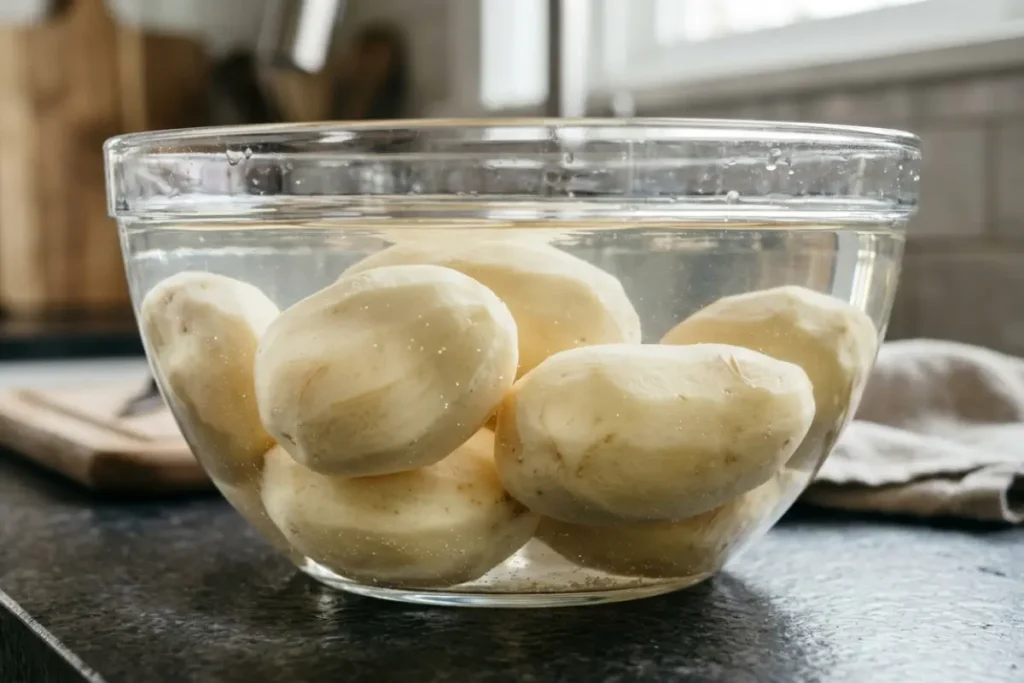
When you’re ready to cook, drain the water and inspect the potatoes. If you’re making mashed potatoes or boiled potatoes, you can proceed with your recipe. If you’re preparing French fries or roasted potatoes, dry the surfaces thoroughly to help them brown more evenly.
For best quality, aim to use the potatoes within about 24 hours rather than leaving them soaking for several days. Extended soaking can affect texture and cause some water-soluble nutrients to pass into the water.
One more tip: don’t leave the container on the kitchen counter overnight. Even when potatoes remain underwater, room-temperature storage can allow bacteria to grow. Refrigeration is the better choice for keeping prepared potatoes in good condition.
Why Are My Potatoes Turning Brown Even in Water?
If your potatoes are turning brown even though you’ve placed them in water, don’t assume that you’ve done everything wrong. Several factors can explain why discoloration still occurs.
Some potato pieces may be exposed to air. If the water level is too low, pieces near the top may remain partly uncovered. Add enough cold water to submerge all the potatoes.
The potatoes may have started browning before soaking. If peeled potatoes sit on a cutting board for several minutes, the enzymatic reaction may already have begun. Place them in water soon after peeling or cutting.
The potatoes may have bruises or damaged areas. Handling and cutting can expose more of the potato’s flesh to oxygen. Remove damaged areas when preparing potatoes, and handle them gently.
The soaking water may not be cold. Water left at room temperature won’t provide the same cooling effect as refrigerated storage. If you’re preparing potatoes ahead of time, cover the container and refrigerate it promptly.
The potatoes may have been soaking longer than necessary. Extended soaking can change their texture and quality, even when they remain submerged. For most advance preparation, using them within about 24 hours is a sensible goal.
A little browning by itself doesn’t always mean potatoes are unsafe to eat. Check their overall condition, including smell and texture, and discard them if they show clear signs of spoilage. By keeping the pieces submerged, using clean equipment, and maintaining proper refrigeration, you can reduce discoloration and keep your potatoes ready for cooking.
Frequently Asked Questions About How Long Potatoes Can Stay in Water
How long can potatoes stay in water in the refrigerator?
Peeled or cut potatoes can usually stay in cold water in the refrigerator for up to 24 hours. Keep them completely covered with water in a clean, covered container and store them at 40°F (4°C) or below.
Can I leave peeled potatoes in water overnight?
Yes, you can leave peeled potatoes in water overnight if you keep them refrigerated. Cover them completely with cold water to help prevent browning and maintain their quality until you are ready to cook.
Is it safe to leave potatoes soaking in water at room temperature?
No, leaving peeled or cut potatoes at room temperature for several hours is not recommended. Refrigerate them promptly, and discard potatoes that have been left out for more than two hours, or one hour when temperatures exceed 90°F (32°C).
Why do potatoes turn brown even when soaked in water?
Potatoes may turn brown because their cut surfaces react with oxygen. Water helps reduce this reaction, but some parts may remain exposed if the potatoes float above the water. Make sure every piece stays fully submerged and keep the container refrigerated.
Should I change the water when soaking potatoes?
Changing the water is not usually necessary for short soaking periods when the potatoes are refrigerated. However, if the water becomes cloudy from released starch, you can replace it with fresh, cold water before cooking.
Does soaking potatoes in water remove starch?
Yes, soaking potatoes in water can remove some surface starch. This may help potato pieces become crispier when fried. However, soaking does not remove all the starch inside the potatoes.
Can I cook potatoes after soaking them for 24 hours?
You can generally cook potatoes that have been properly refrigerated in clean water for up to 24 hours. Before cooking, check for unusual odors, sliminess, or other signs of spoilage. If the potatoes look or smell spoiled, throw them away.
Conclusion:
Knowing how long can potatoes stay in water makes meal preparation easier and helps you keep peeled or cut potatoes fresh until cooking time. In most cases, you can store potatoes in cold water in the refrigerator for up to 24 hours.
However, proper storage is important to maintain their texture, prevent browning, and reduce the risk of spoilage.
To get the best results, peel and cut your potatoes with a clean knife, place them in a clean container, and cover every piece completely with cold water. Keep the container covered and refrigerate it at 40°F (4°C) or below.
These simple steps help prevent the cut surfaces from turning brown and make it easier to prepare potatoes ahead of time.
Remember that leaving potatoes in water at room temperature for too long is not a safe storage method. Refrigeration is essential, especially when you plan to soak potatoes overnight. Before cooking, check the potatoes for unusual odors, slimy surfaces, or other signs of spoilage.
If you notice anything suspicious, discard them rather than risk eating unsafe food.
Whether you are preparing potatoes for mashed potatoes, French fries, roasted potatoes, or another favorite recipe, soaking them properly can save time and help you achieve better results.
Follow these practical tips, avoid common storage mistakes, and use your potatoes within the recommended time for the best quality and freshness.

Plant Nest Blog’s author is passionate about plants, gardening, and sustainable living. Through research and practical experience, they share helpful plant care tips, gardening guides, and easy solutions to help readers grow healthier plants and create greener spaces.