
Many people think fall plants for planters are only useful for adding a few colorful flowers before winter arrives. That is not really the case. With the right choices, your containers can stay attractive throughout the cooler season.
Fall is actually a great time to refresh tired summer pots with flowers, foliage, and other seasonal container plants that handle cooler weather well.
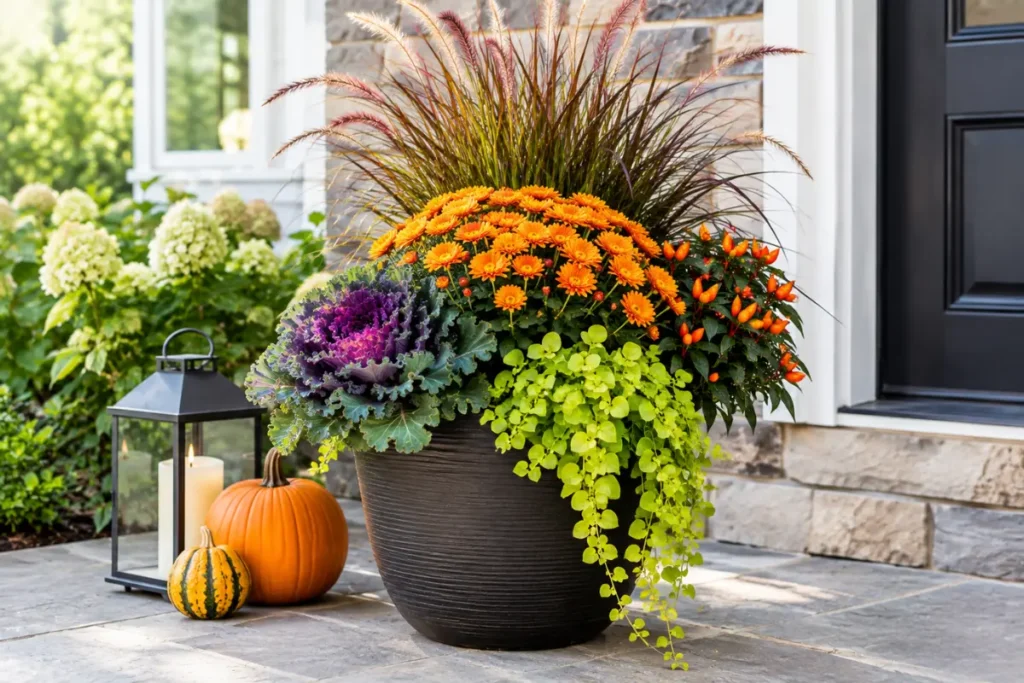
You don’t need a large garden to enjoy an autumn display. A few well-chosen fall plants for containers can instantly brighten a porch, patio, balcony, or entryway.
From colorful flowers to eye-catching foliage, autumn plants for planters give outdoor spaces a fresh seasonal look without requiring a major gardening project.
What Makes a Good Fall Plant for a Planter?
Not every plant is a good match for a fall container. The best fall container plants can handle changing temperatures, fit comfortably in their pots, and suit the amount of sunlight available.
When choosing plants for fall containers, think about the conditions first rather than picking a plant simply because it looks pretty.
Choose Plants That Handle Cooler Weather
Fall weather can change quickly. Warm afternoons may be followed by chilly nights, so choosing cool season container plants is important. Look for plants that naturally perform well as temperatures drop and can maintain their color during the autumn months.
Hardy fall container plants are especially useful if you want your planters to stay attractive with less fuss.
Consider Sunlight Before Choosing a Plant
Sunlight can make or break a container garden. A sunny porch may need different plants than a shaded entryway. Before buying anything, check how many hours of direct sunlight your planter receives.
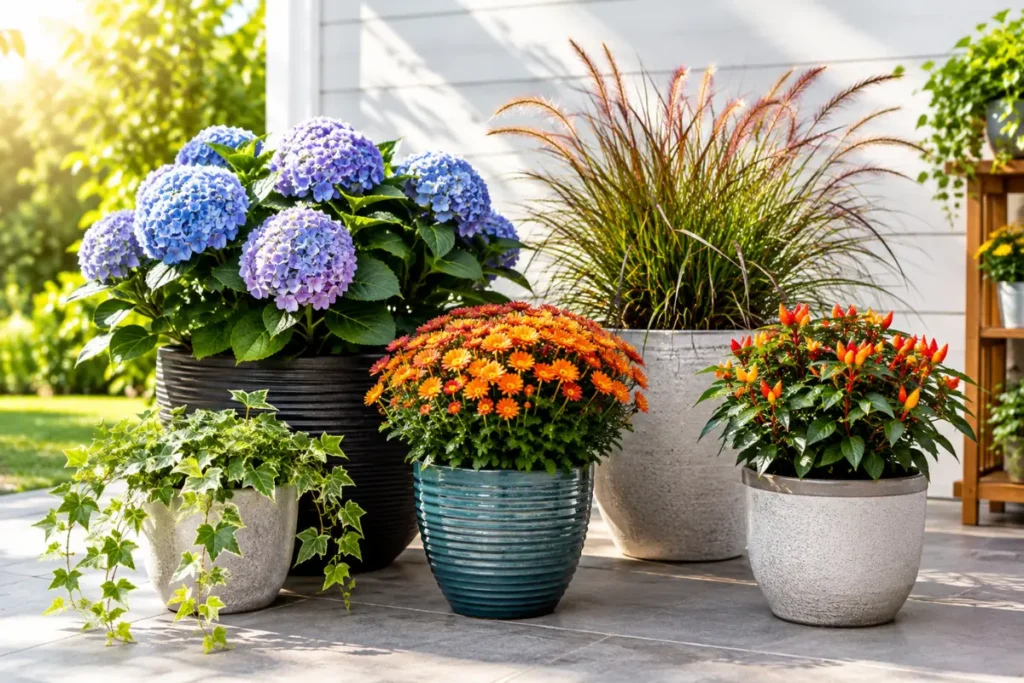
If your container gets plenty of sun, look for plants suited to bright conditions. For shaded areas, choose options that can handle lower light. This simple step can help you find the best fall plants for planters in full sun or the best fall plants for planters in shade without wasting money on plants that struggle in the wrong location.
Think About Container Size
The size of your planter matters, too. Small containers are perfect for compact plants, while larger pots give roots more room and allow you to create layered combinations. If you are working with fall plants for small planters, avoid cramming too many plants into one pot.
A crowded container may look great on planting day but can quickly become difficult to maintain. Give each plant enough room to grow, and choose a container with good drainage. This is especially important for fall plants for outdoor pots, where excess water can become a problem during rainy weather.
Look for Seasonal Color
Fall planters don’t have to rely on flowers alone. Colorful leaves and interesting textures can make a container just as attractive. Look for plants for fall color, including flowering plants and fall foliage plants, then combine different shapes and shades for more visual interest.
For example, a bright flowering plant can provide the main focal point while a foliage plant fills the space around it. This approach creates colorful fall container plants that look natural and balanced rather than like a collection of unrelated plants.
Best Fall Plants for Planters
It is easy to assume that fall plants for planters are limited to mums, but there are plenty of other options worth trying. Flowers, colorful foliage, and hardy seasonal plants can all work together to create an attractive container.
Choosing a mix of textures and colors also makes your planters look more interesting than using a single plant.
Chrysanthemums (Mums)
Mums are one of the easiest ways to bring an instant fall look to a container. Their dense blooms come in shades such as yellow, orange, red, pink, purple, and white, so you can easily match them with your outdoor space.
They are especially popular as fall flowers for planters because their full shape makes even a simple pot look finished.
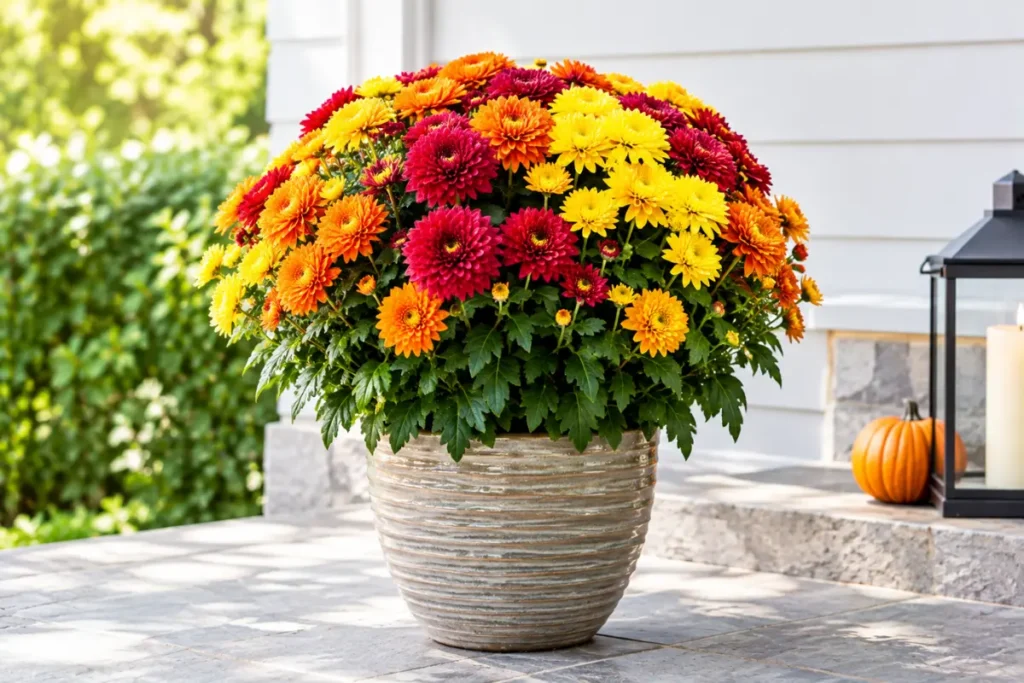
Place mums where they receive suitable sunlight, and keep the potting mix from staying constantly soggy. If you want a classic autumn display, combine mums with foliage plants around the edges. Fall mums in planters can also work well on steps, patios, and near entry doors.
Pansies
Pansies are a great choice when you want colorful flowers during cooler weather. Their cheerful blooms come in many combinations, making them useful for both small pots and larger mixed containers. They can add plenty of color without taking over the entire planter.
Use pansies around taller plants or group several colors together for a simple seasonal display. They are particularly useful when looking for pansies for fall planters that can continue adding interest as the weather becomes cooler.
Violas
Violas look similar to pansies but usually have smaller flowers, which makes them excellent for filling spaces between larger plants. Their compact growth works especially well in mixed fall container plants.
You can place violas around the front of a planter while using a taller plant in the center. This gives the container more depth and creates a fuller appearance without making it feel overcrowded.
For smaller containers, violas for fall containers can also provide plenty of seasonal color on their own.
Ornamental Kale
Not every beautiful fall planter needs flowers. Ornamental kale brings bold, textured foliage that can make a container stand out. Its leaves often develop attractive green, purple, white, or pinkish tones as temperatures become cooler.
Because of its strong foliage shape, ornamental kale works nicely as a focal plant or as part of a mixed arrangement. Ornamental kale in planters is a smart option when you want a fall display that depends more on foliage than flowers.
Ornamental Cabbage
Ornamental cabbage offers another way to add dramatic foliage to an autumn container. Its large leaves form a rounded shape and can provide a strong contrast beside smaller flowering plants.
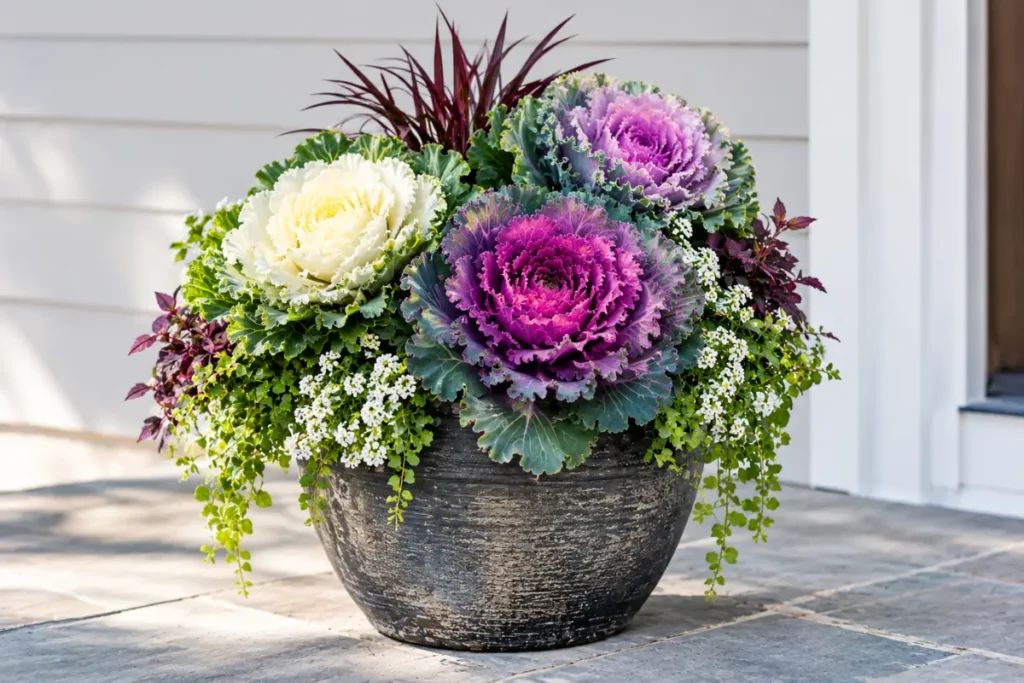
Try placing ornamental cabbage in a larger pot with flowers around it. The difference in leaf size and flower shape can make the entire arrangement feel more layered. Ornamental cabbage for fall is especially useful when you want a bold seasonal centerpiece.
Asters
Asters are a useful choice for gardeners who want flowers later in the growing season. Their small, daisy-like blooms can add a softer look to containers and pair nicely with plants that have larger or heavier foliage.
Use asters as part of a mixed arrangement rather than relying only on their flowers. When combined with contrasting foliage, asters for fall containers can help create a more natural and balanced display.
Heuchera
Heuchera is worth considering when foliage is your main priority. Its leaves can come in several shades, including green, burgundy, bronze, and other rich tones. That makes it useful for adding depth even when other plants are not blooming heavily.
Because its foliage provides lasting visual interest, heuchera for fall planters can work well as a supporting plant in mixed containers. Pair it with flowers for contrast or let its leaves become the main feature.
Sedum
Sedum can add a different texture to an autumn planter. Many varieties have thick leaves and a structured growth habit, giving containers a more interesting shape. Some also produce clusters of flowers that add another seasonal detail.
Use sedum with plants that have softer or larger leaves to create contrast. Sedum for fall containers can be especially useful when you want a container that does not depend entirely on traditional fall flowers.
Fall Herbs
Your fall containers do not have to be purely decorative. Some herbs can also be grown in containers during cooler weather, giving you something useful as well as attractive.
Choose herbs that suit your local conditions and the amount of sunlight available. Keep them in containers with proper drainage, and avoid combining herbs with plants that require completely different watering conditions.
Fall herbs in containers can be a practical addition to a patio, balcony, or kitchen garden area.
Best Fall Plants for Containers in Full Sun
A common mistake is thinking that sunny containers are too difficult to manage once summer ends. In reality, plenty of fall plants for planters can handle bright outdoor conditions when you choose them carefully.
The key is not simply finding a plant that likes sun. You also need to consider how quickly the container dries out, how much space the roots have, and how the plant responds to cooler autumn temperatures.
Choose Plants That Can Handle Bright Sun
If your porch, patio, balcony, or garden receives several hours of direct sunlight, focus on plants that naturally perform well in bright conditions. The best fall plants for planters in full sun should be able to handle direct light without quickly wilting or losing their seasonal color.
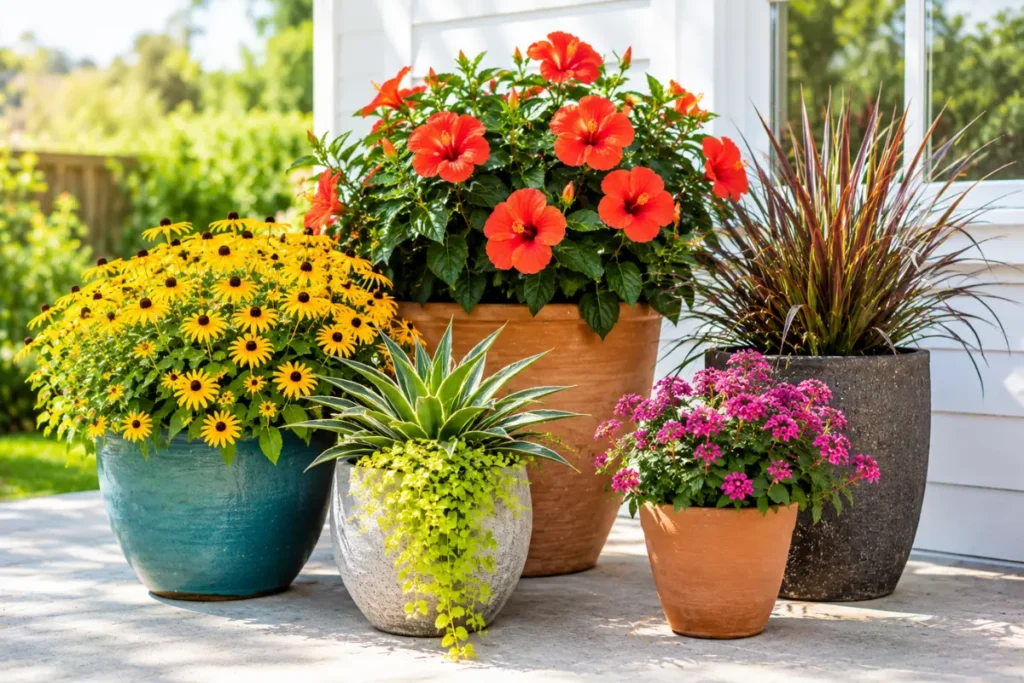
Flowering plants are an easy way to add interest to sunny containers. You can also mix flowers with foliage plants to create more depth. Instead of filling the entire pot with one type of plant, use a taller focal plant with smaller plants around it. This creates a fuller fall container garden while making better use of the available space.
Remember That Sunny Containers Dry Out Faster
One thing that often gets overlooked is the container itself. A plant may tolerate full sun, but the soil inside a pot can dry out much faster than soil in the ground. Warm sunlight, wind, and a smaller amount of soil can all increase moisture loss.
Check the potting mix regularly by feeling the surface and the soil beneath it. Water when the plants need it rather than following a strict schedule. At the same time, avoid keeping the soil constantly soaked. Good drainage is just as important as regular watering for fall plants for outdoor containers.
Use Containers That Suit the Plants
Large pots can be helpful for sunny locations because they generally hold more potting mix and moisture than very small containers. That does not mean every plant needs a huge pot, though.
Match the container to the mature size of the plant. If you are growing several fall container plants together, make sure there is enough room for their roots. A container that is too small can dry out quickly and make the plants harder to maintain.
Add Color With Flowers and Foliage
Full-sun containers can look especially attractive when you combine different types of plants. Flowering plants provide bright seasonal color, while foliage plants add texture and help the arrangement look full even when individual flowers are between blooms.
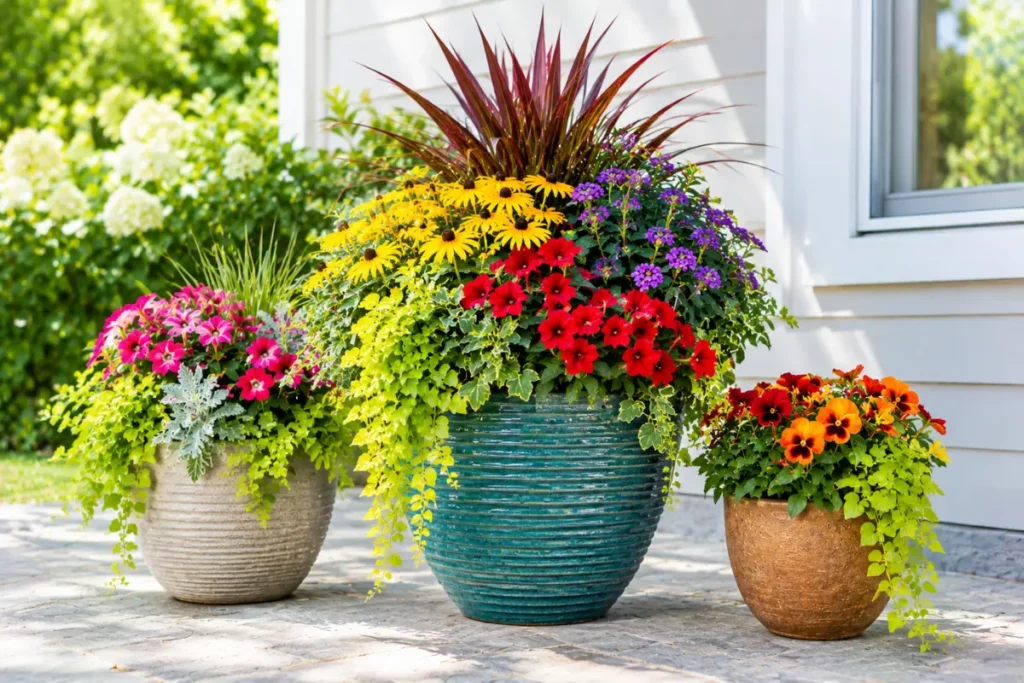
For example, you can combine colorful flowers with a foliage plant that has a different leaf shape. This creates colorful fall container plants with more visual variety. You can also use warm seasonal shades alongside green or darker foliage for a stronger autumn feel.
Protect the Container From Harsh Conditions
A sunny location can also expose containers to strong wind and sudden temperature changes. Tall plants may become unstable in lightweight pots, while exposed containers can experience faster moisture loss.
If strong weather is expected, move portable pots to a more sheltered spot when practical. This is especially useful for smaller containers. A little protection can help your best autumn plants for containers stay attractive for longer.
Best Fall Plants for Planters in Shade
It is easy to think that a shady porch or patio cannot have an attractive fall display. That is not true. You don’t need hours of direct sunlight to grow beautiful fall plants for planters.
The trick is to choose plants that naturally handle lower light and use their foliage, texture, and seasonal color to make the container stand out.
Understand How Much Shade Your Planter Gets
Before choosing plants, take a little time to watch the area. Some spaces receive a few hours of gentle morning sunlight, while others stay shaded almost all day. This difference matters when choosing the best fall plants for planters in shade.
A container with bright indirect light can support different plants than one sitting in deep shade. If you’re unsure, observe the area throughout the day. Knowing your light conditions makes it much easier to choose plants for autumn planters that can grow well instead of simply hoping they will adapt.
Focus on Colorful Foliage
Shade does not mean your planter has to look plain. In fact, foliage can become the star of the arrangement. Plants with burgundy, bronze, purple, green, or variegated leaves can add plenty of seasonal interest without relying on large flowers.
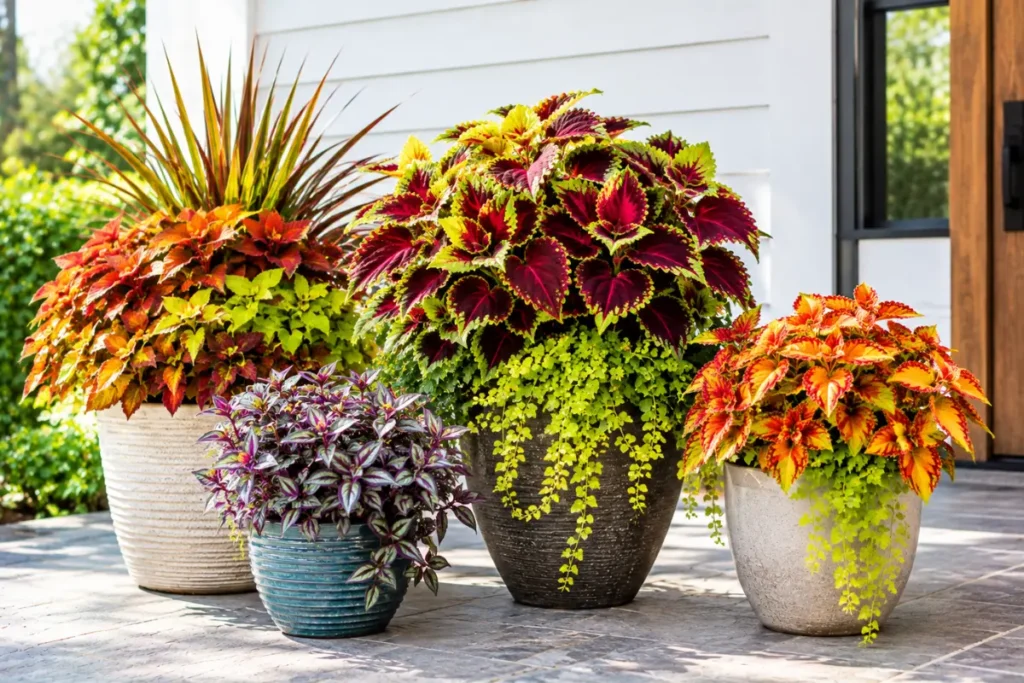
Fall foliage plants are especially useful for shaded containers because their leaves can provide consistent color and texture. Combine different leaf shapes to create contrast. A plant with broad leaves can look great beside one with smaller or more delicate foliage.
Use Heuchera for Texture and Color
Heuchera is a strong option when you’re looking for attractive foliage in a shaded container. Its leaves come in a range of colors and can give a planter a rich, layered appearance.
You can use heuchera for fall planters as the main foliage feature or combine it with smaller companion plants. Its colorful leaves can also help fill the container when flowers are not the main focus.
Add Ornamental Foliage for a Seasonal Look
Ornamental plants can give shaded containers more structure. Plants with bold leaves or interesting textures help prevent the arrangement from looking flat.
When choosing fall plants for shade containers, think about contrast. Pair lighter foliage with darker leaves, or combine large leaves with smaller textures. Even a simple two- or three-plant combination can look polished when the shapes work well together.
Don’t Overwater Shaded Containers
Shaded areas usually lose moisture more slowly than sunny locations. That means you may not need to water as often. However, this does not mean the soil should remain wet.
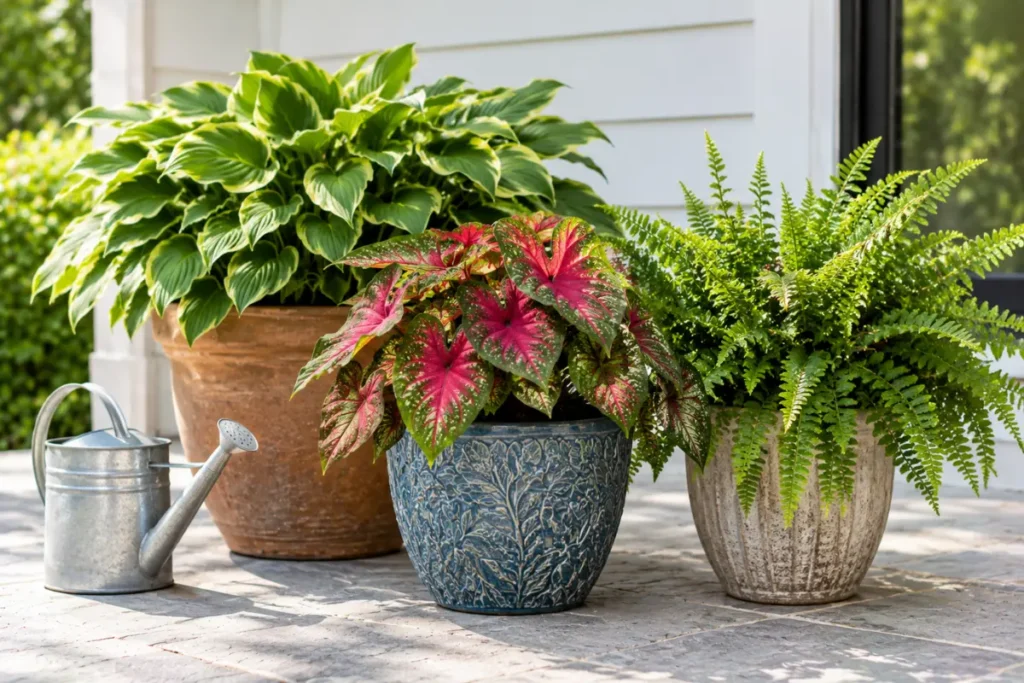
Always check the potting mix before watering. If the soil still feels moist, give it more time. Make sure your container has drainage holes so excess water can escape. Good drainage is particularly important for low maintenance fall plants because constantly wet roots can create unnecessary problems.
Choose Plants With Similar Care Needs
When creating a mixed container, don’t simply choose plants because their colors look good together. Check whether they have similar light, water, and soil requirements.
This makes caring for your fall plants for containers much easier. Plants that need similar conditions can share the same pot without one becoming too dry while another stays too wet.
FAQs About Fall Plants for Planters
It is easy to think that choosing fall plants for planters is simply about picking a few colorful flowers and placing them in a pot. In reality, the right choice depends on sunlight, temperature, container size, and how much care you want to give. Here are some common questions to help you choose the right plants.
What Are the Best Fall Plants for Planters?
Some of the best options include mums, pansies, violas, ornamental kale, ornamental cabbage, asters, heuchera, and sedum. These plants can handle cooler fall conditions while adding attractive flowers or foliage to containers.
Can Fall Plants Grow in Containers?
Yes. Many fall container plants grow very well in pots when they have enough space, proper drainage, suitable light, and regular watering. Containers also make it easy to move plants when the weather becomes too cold.
What Are the Best Fall Plants for Planters in Full Sun?
Mums, pansies, violas, asters, and sedum can work well in sunny locations, depending on your local climate. Choose plants that can handle several hours of direct sunlight and remember that sunny containers may dry out faster.
What Are the Best Fall Plants for Planters in Shade?
Heuchera, some varieties of pansies and violas, and attractive foliage plants can work well in partly shaded locations. For plants for autumn planters in shade, focus on varieties that can tolerate lower light rather than choosing plants based only on flower color.
How Often Should I Water Fall Plants in Containers?
There is no single watering schedule that works for every container. Check the soil regularly and water when the top layer feels dry. Cooler weather may reduce how quickly the soil dries, so avoid watering automatically when the plant does not need it.
Do Fall Plants Need Fertilizer?
Some fall plants may benefit from light feeding, but not every container needs frequent fertilizer. If the potting mix already contains nutrients, additional feeding may not be necessary right away. Always follow the requirements of the specific plant.
Can I Keep Fall Plants in Planters During Winter?
That depends on the plant and your local winter temperatures. Some hardy cool season container plants can tolerate cold weather, while tender plants may decline after freezing temperatures arrive. Container roots can also become colder than roots in the ground.
How Can I Make a Fall Planter Look Fuller?
Combine plants with different heights, textures, and growth habits. A taller plant in the center or back, medium-sized flowers around it, and a trailing plant near the edge can create a fuller fall container garden without overcrowding the pot.
What Are Good Fall Flowers for Containers and Pots?
Mums, pansies, violas, and asters are popular choices for fall flowers for containers. They offer seasonal color and can be combined with foliage plants for a more interesting display.
Are Fall Plants for Planters Low Maintenance?
Some are. Pansies, violas, sedum, and certain foliage plants can be relatively easy to maintain when placed in suitable conditions. Choosing low maintenance fall plants for planters is a smart option if you do not want to spend a lot of time caring for your containers.
Can I Use Fall Plants in Small Containers?
Yes, but choose plants that match the size of the pot. Smaller containers have less soil and can dry out or become crowded more quickly. Compact flowers and smaller foliage plants are usually better choices for fall plants for small planters.
How Long Do Fall Plants Last in Containers?
Their lifespan varies by plant, weather, and growing conditions. Some can remain attractive for several weeks or even longer, while others may decline quickly after a hard freeze. Choosing plants suited to your local fall temperatures can help extend the display.
Conclusion:
It is easy to believe that fall planters have to be complicated or expensive to look beautiful. They do not. With the right plants, a suitable container, and a little care, you can create an attractive seasonal display without much work.
When choosing fall plants for planters, think about your available sunlight, container size, local weather, and how much maintenance you want to do. Flowers such as mums, pansies, violas, and asters can bring bright seasonal color, while foliage plants can add texture and interest.
You can also mix different plant heights and textures to create a fuller look. Whether you are decorating a porch, patio, balcony, or garden, the right fall container plants can give your outdoor space a fresh autumn feel.
The best approach is simple: choose plants that suit your growing conditions, give them proper drainage and care, and enjoy the seasonal color while it lasts.

Plant Nest Blog’s author is passionate about plants, gardening, and sustainable living. Through research and practical experience, they share helpful plant care tips, gardening guides, and easy solutions to help readers grow healthier plants and create greener spaces.