
A lot of people assume that how to plant sage seeds is complicated and that sage is easier to grow from an established plant. That isn’t necessarily true. With the right timing, light, moisture, and planting method, even beginners can start growing sage from seed at home.
A few simple steps can give your seeds a strong start.
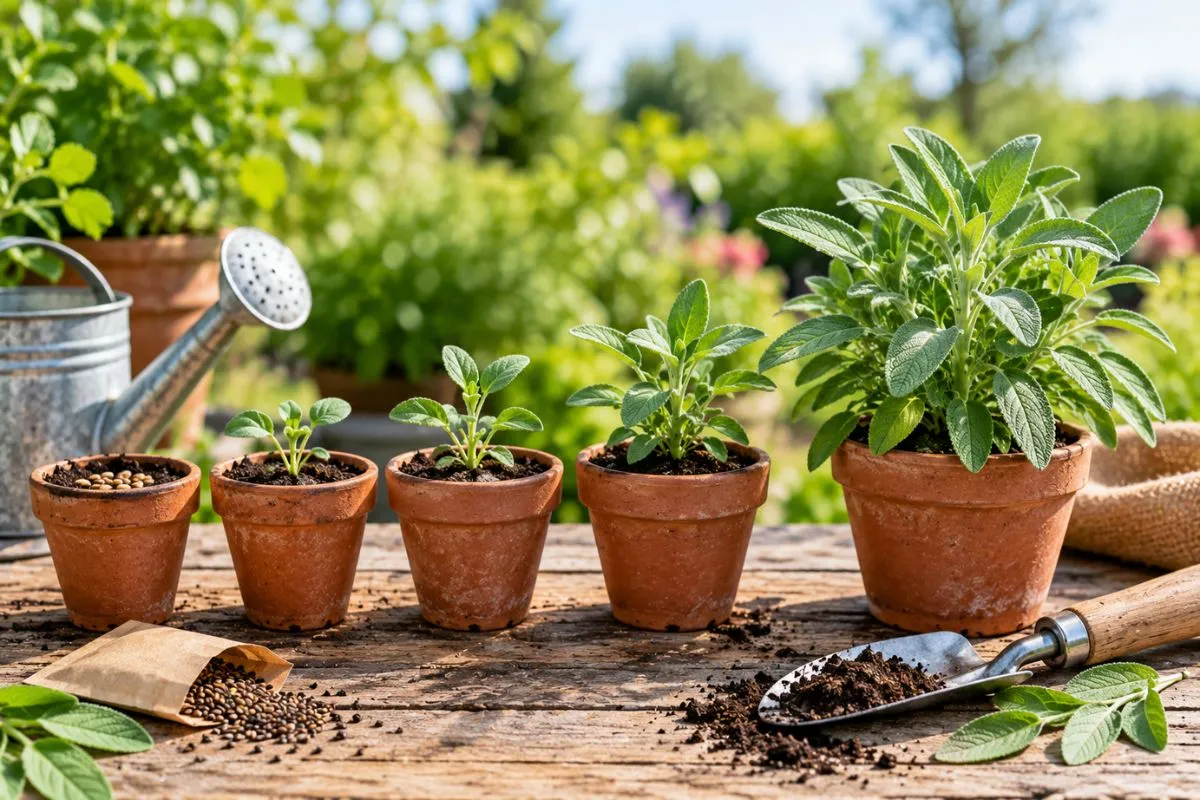
Whether you’re planning to grow sage in a garden bed, container, or indoors, the process is quite manageable. In this guide, you’ll learn how to grow sage from seeds, when to sow them, how deep to plant sage seeds, and how to care for young seedlings so they can develop into healthy sage plants.
What You Need Before Planting Sage Seeds
Before you start planting sage seeds, take a few minutes to prepare everything they need. You don’t need expensive gardening equipment. A suitable container, fresh seeds, a light growing medium, and the right growing conditions are enough to get started.
Choose Quality Sage Seeds
Start with fresh, good-quality sage seeds from a reliable source. Look for seeds labeled as common sage or Salvia officinalis if you want the culinary herb commonly grown in home gardens.
Older seeds may have lower germination rates, so check the seed packet for its date and storage information. If you’re buying seeds specifically for growing sage from seed, choose a variety that suits your climate and the way you plan to use the plant.
Choose the Right Container
If you’re starting sage indoors, use a small seed tray, cell tray, or individual pot with drainage holes. Good drainage is important because young seeds and seedlings can struggle when excess water stays around their roots.
You can also use small containers for sage seeds in pots. Just make sure the container is clean and has holes underneath so water can escape easily.
Prepare a Suitable Seed-Starting Mix
Sage seeds need a loose, well-draining growing medium. A quality sage seed starting mix gives tiny roots enough room to develop while allowing excess moisture to drain away.
Avoid using heavy, compact garden soil for indoor seed starting. It can hold too much moisture and may make it harder for young seedlings to develop properly. A light seed-starting mix is usually a better choice when you’re learning how to plant sage seeds indoors.
Provide the Right Growing Conditions
Before sowing, choose a location where you can control the basic sage growing conditions. Your seeds need suitable moisture, warmth, and light after they sprout.
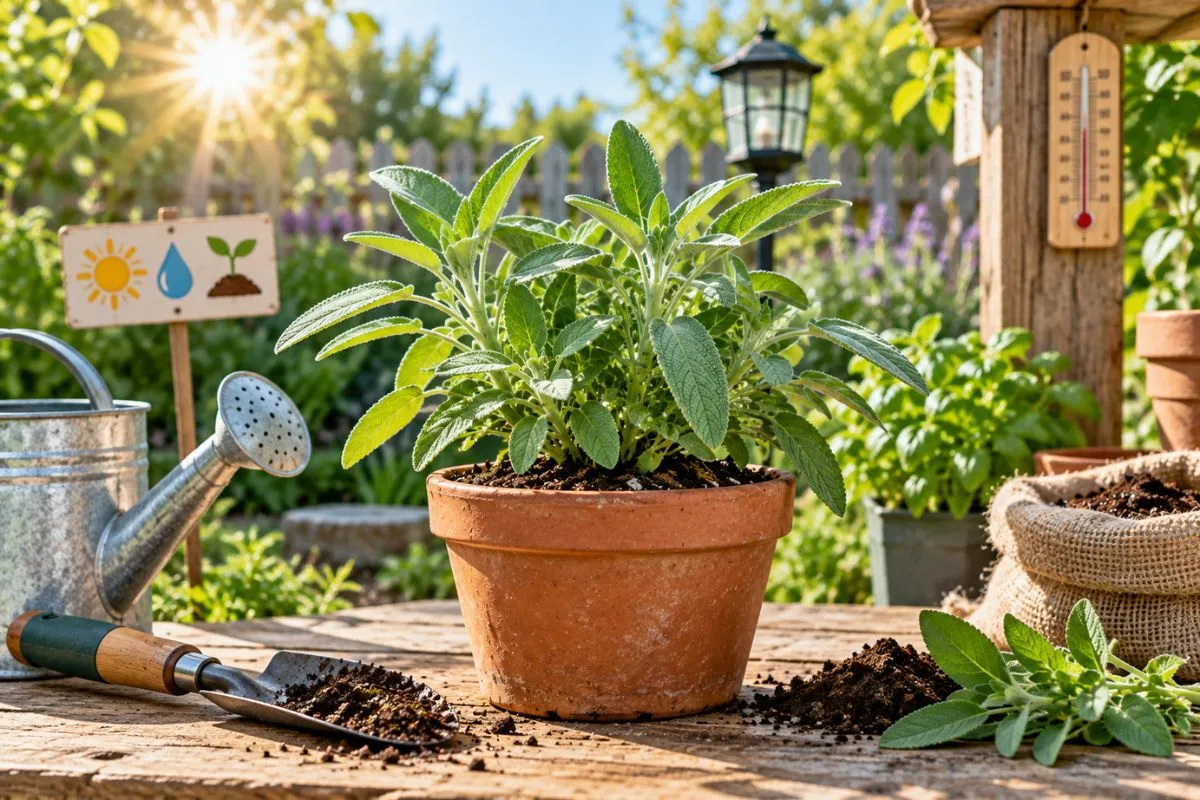
Place indoor containers somewhere bright, such as near a sunny window, or use a suitable grow light if natural light is limited. Keep the growing medium evenly moist rather than soaking wet.
If you’re preparing to grow sage outdoors, choose a location with good sunlight and well-drained soil. Taking care of these basics before sowing can make sage seed starting much smoother and give your seedlings a better chance to grow into strong, healthy plants.
When to Plant Sage Seeds
Many gardeners assume there is one exact date for how to plant sage seeds, but timing actually depends on your climate and growing setup. Sage seeds can be started indoors earlier or sown outdoors when conditions are suitable.
The important thing is to avoid exposing young seedlings to harsh cold or unsuitable growing conditions.
Best Time to Plant Sage Seeds
The best time to plant sage seeds depends on whether you’re starting them indoors or directly in the garden. For indoor growing, you can start seeds several weeks before you expect suitable outdoor conditions. This gives the seedlings time to develop before they face changing weather.
For outdoor sowing, wait until the risk of frost has passed and the soil has warmed enough for seed germination. Sage generally prefers warm, sunny growing conditions, so don’t rush outdoor planting when the soil is still cold.
If you’re unsure about timing, use your local frost dates and typical spring temperatures as a guide. Your local climate matters more than a fixed calendar date.
Starting Sage Seeds Indoors
Starting sage seeds indoors gives you more control over moisture, temperature, and light. It’s particularly helpful if your outdoor growing season is short or the weather is unpredictable.
For how to plant sage seeds indoors, sow them in a small container filled with a light seed-starting mix. Keep the container somewhere warm and bright, and maintain gentle moisture while you wait for germination.
Indoor sage seed starting also makes it easier to protect young seedlings from sudden temperature changes. Once the plants become strong enough, you can gradually prepare them for outdoor conditions before transplanting.
Planting Sage Seeds Outdoors
If your climate provides suitable growing conditions, you can sow sage seeds outdoors directly in the garden. Choose a sunny location with well-draining soil and wait until cold weather has passed.
When learning how to plant sage seeds outdoors, avoid choosing a spot where water collects after rain. Sage does better when its roots aren’t sitting in constantly wet soil.
Direct sowing sage seeds can be convenient because you don’t need to move seedlings later. However, outdoor seeds are exposed to changing weather, so consistent moisture and suitable temperatures are important during germination.
Should You Start Sage Seeds Indoors or Outdoors?
Both methods can work. Starting indoors gives you greater control and can give plants a head start, while direct outdoor sowing is simpler when your local conditions are already suitable.
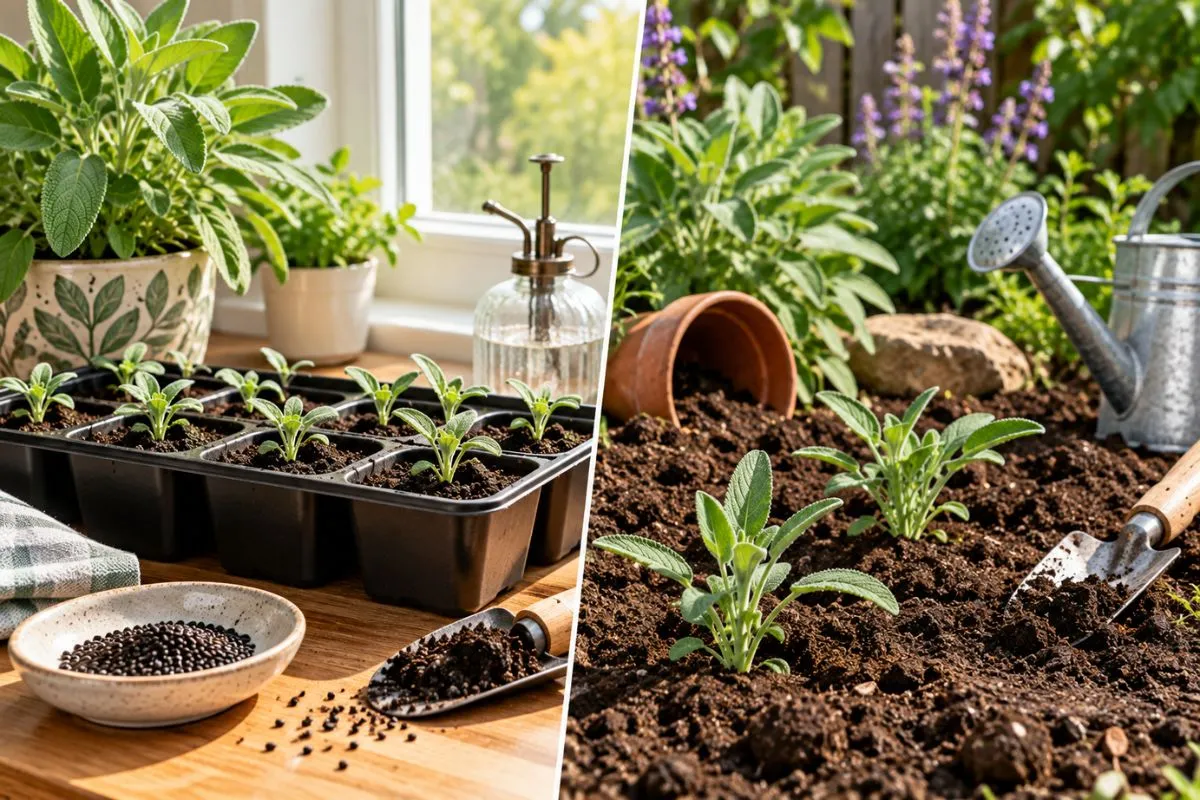
If you’re a beginner, starting a small batch of sage seeds indoors can make it easier to watch germination and early growth. If your weather is warm and your garden conditions are suitable, outdoor sowing can also be a straightforward option.
The best method is the one that matches your local climate, available space, and growing conditions.
How to Plant Sage Seeds Step by Step
Many people think how to plant sage seeds means simply pushing the seeds deep into soil and keeping them soaked. That approach can actually make germination harder. Sage seeds need a light touch, suitable moisture, and enough warmth to get started.
Follow these simple steps, and you can give your seeds a much better beginning.
Prepare the Container
Start with a clean seed tray, small pot, or container with drainage holes. Fill it with your prepared seed-starting mix and gently level the surface.
Don’t pack the soil down too firmly. Sage seeds are small, so a loose surface makes it easier for young roots and shoots to develop. Before sowing, lightly moisten the mix so it is damp but not dripping wet.
Sow the Sage Seeds
Place the sage seeds gently on the surface of the growing mix. Try not to drop too many seeds into one small area, as crowded seedlings can compete for light and space later.
If you’re using a tray, you can place seeds into individual cells. For a larger container, leave enough room between seeds to make thinning easier if several seedlings emerge.
This simple approach works well for planting sage seeds indoors and gives each seedling a better chance to develop.
Cover the Seeds Lightly
One of the most important parts of learning how deep to plant sage seeds is knowing not to bury them too deeply.
Sage seeds are small and should be covered only lightly with a thin layer of growing medium. Press the surface gently rather than pushing the seeds deep into the soil.
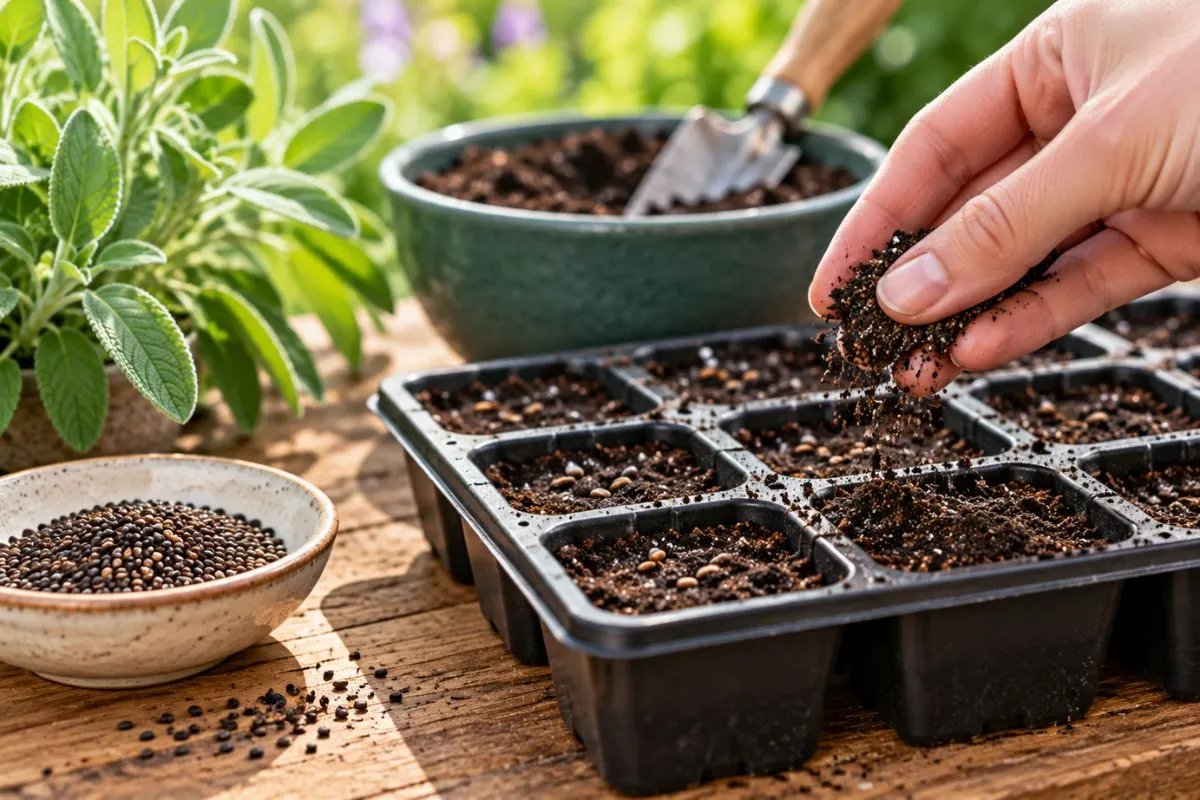
Planting seeds too deeply can make it harder for new shoots to reach the surface. If you’re unsure, remember that a light covering is generally better than burying the seeds several centimeters down.
Water Carefully
After sowing, water the container gently. A strong stream of water can move the tiny seeds around or wash them deeper into the soil.
Use a fine spray, gentle watering can, or bottom-watering method. The goal is to keep the growing medium evenly moist without making it soggy.
When wondering how often should you water sage seeds, don’t follow a strict daily schedule. Check the growing medium instead. If the surface is beginning to dry, add a small amount of water. If it still feels adequately moist, give it more time.
Give the Seeds Enough Light
Once the seedlings emerge, they need plenty of bright light to grow well. Place indoor containers near a bright window or use a suitable grow light when natural sunlight isn’t enough.
Good light helps prevent young sage seedlings from becoming thin and weak. If seedlings stretch toward a window, they may need stronger or more consistent light.
Avoid placing newly sprouted seedlings in harsh conditions that could quickly dry out their small containers. Aim for bright, steady light and monitor the soil moisture regularly.
Maintain Suitable Temperature
Temperature plays an important role in sage seed germination. Keep the seed tray or pot in a comfortably warm location rather than exposing it to sudden cold conditions.
You don’t need to create an extreme amount of heat. Consistent, suitable warmth is more useful than large temperature swings.
If you’re starting sage indoors, avoid placing the container directly beside a cold draft, heating vent, or other location with rapid temperature changes.
Wait for Germination
After you’ve finished sowing, resist the temptation to keep disturbing the seeds to see whether they’re growing. Sage seeds need time to germinate, and the exact timing can vary with seed quality and growing conditions.
Sage germination time depends on factors such as temperature, moisture, seed freshness, and the growing medium. Keep conditions steady and watch for tiny green shoots to appear.
Once seedlings emerge, continue providing suitable light and careful watering. At this point, your focus shifts from sage seed starting to healthy sage seedling care.
A Simple Sage Seed Planting Routine
For a quick reminder, the process is straightforward: prepare a loose growing mix, place the seeds gently on the surface, cover them lightly, water carefully, provide suitable warmth, and give emerging seedlings plenty of light.
If you’re following how to plant sage seeds indoors, these same basic steps work well in a seed tray or small pot. The key is consistency. Don’t overwater, don’t bury the seeds too deeply, and don’t expect instant results.
With a little patience and the right conditions, those tiny seeds can develop into healthy sage plants that you can eventually grow in your herb garden or container.
Frequently Asked Questions About Planting Sage Seeds
How do you plant sage seeds?
To plant sage seeds, use a light, well-draining seed-starting mix and place the seeds gently on the surface. Cover them lightly, keep the growing medium evenly moist, and provide suitable warmth and bright light after they sprout.
How deep should sage seeds be planted?
Sage seeds should not be buried deeply. Place them near the surface and cover them with only a light layer of growing medium. Deep planting can make it harder for young shoots to reach the surface.
Can you plant sage seeds directly outside?
Yes, you can plant sage seeds outdoors when local conditions are suitable. Wait until cold or frost conditions have passed and the soil is warm enough for germination. Choose a sunny location with good drainage.
Can you grow sage from seed indoors?
Yes. Growing sage from seed indoors is a useful option when you want more control over temperature, moisture, and light. Start the seeds in a small tray or pot, then gradually prepare established seedlings for outdoor conditions if you plan to transplant them.
How long do sage seeds take to germinate?
Sage germination time can vary depending on seed freshness, temperature, moisture, and growing conditions. Give the seeds consistent care rather than expecting every batch to sprout on exactly the same day.
How often should you water sage seeds?
Water when the growing medium begins to dry rather than following a rigid daily schedule. Keep it lightly moist during germination, but avoid keeping the soil saturated. Too much moisture can create poor conditions for young seeds and seedlings.
Why are my sage seeds not germinating?
Several factors can slow or prevent germination. Seeds may be old, planted too deeply, exposed to unsuitable temperatures, or kept either too dry or too wet. Check the sage growing conditions and make sure the seeds have been planted correctly.
Can sage grow in pots?
Yes. Sage can grow well in containers when the pot has good drainage and the plant receives enough sunlight. Growing sage in containers is especially convenient if you have limited garden space.
When can I transplant sage seedlings?
Wait until the seedlings are strong enough to handle movement and outdoor conditions are suitable. If you started them indoors, gradually expose them to outdoor conditions before transplanting. This process helps reduce transplant shock.
Does sage need full sun?
Sage generally grows best with plenty of sunlight. Choose a bright location where the plant can receive strong light for healthy growth. If growing sage indoors, place it near a bright window or use an appropriate grow light when necessary.
Conclusion:
Learning how to plant sage seeds doesn’t have to be complicated. Start with good-quality seeds, use a light growing medium, plant them shallowly, and provide consistent moisture, warmth, and light. These simple basics can make growing sage from seed much easier for beginners.
Whether you’re starting sage indoors, planting it directly outdoors, or growing it in a container, pay attention to your local growing conditions. Give the seedlings time to establish before moving them, and avoid common problems such as overwatering or planting seeds too deeply.
So, if you’ve been wondering how to grow sage from seed at home, now is a great time to get started. Grab your seeds, prepare a suitable container, and give them the right conditions.
With a little patience, those tiny seeds can grow into healthy sage plants ready for your herb garden and future harvests.

Plant Nest Blog’s author is passionate about plants, gardening, and sustainable living. Through research and practical experience, they share helpful plant care tips, gardening guides, and easy solutions to help readers grow healthier plants and create greener spaces.