
Many gardeners believe that chemical pesticides are the only way to get rid of tomato pests. That’s a common myth. In reality, a natural pesticide for tomato plants can be just as effective when used correctly.
Natural solutions help control harmful insects while keeping your tomatoes, soil, and beneficial garden insects safer.
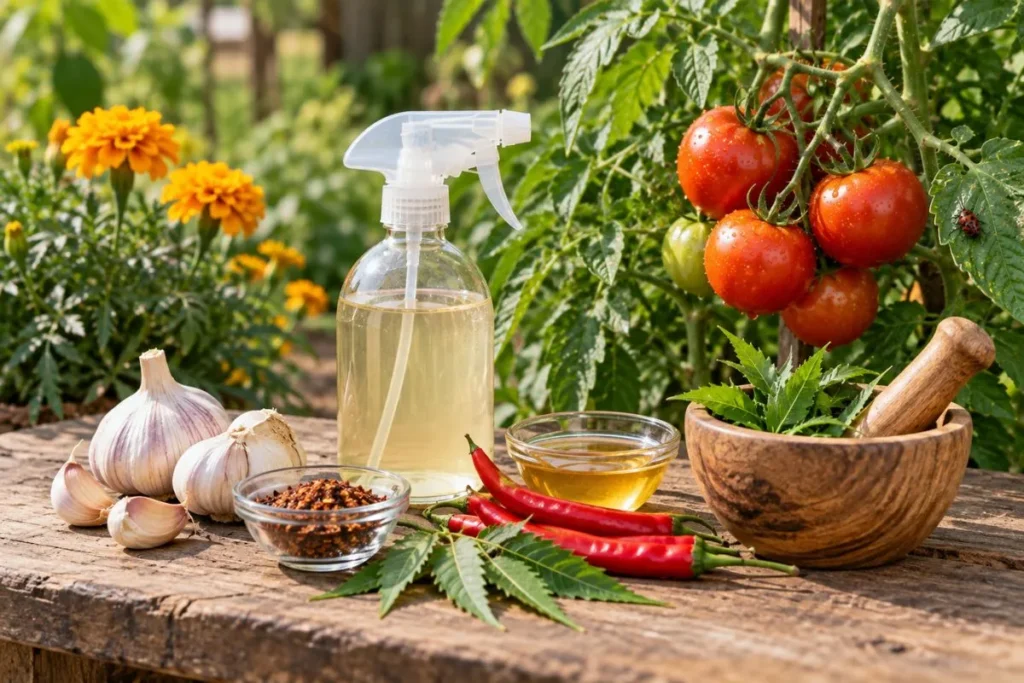
If you’re looking for the best natural pesticide for tomato plants, you’ve come to the right place. In this guide, you’ll discover safe and effective ways to protect your tomatoes, learn how natural pest control for tomato plants works, and find simple homemade solutions that keep your plants healthy without relying on harsh chemicals.
Why Tomato Plants Attract So Many Pests
Tomato plants are one of the most popular vegetables to grow, but they’re also a favorite target for many garden pests. Their soft leaves, juicy stems, and nutrient-rich fruits attract insects looking for an easy food source.
Without proper tomato plant pest control, these pests can quickly damage your plants and reduce your harvest.
Tomato Plants Provide the Perfect Food Source
Tomato plants produce tender leaves and new growth that many insects love to eat. As the plants begin flowering and producing fruit, they become even more attractive to pests. This is why regular inspection is an important part of organic tomato care and maintaining good tomato plant health.
Warm and Humid Conditions Encourage Pests
Most common tomato pests thrive in warm weather. High humidity and poor air circulation create the perfect environment for insects to multiply. Gardens with overcrowded plants are especially vulnerable because pests can spread from one plant to another very quickly.
Keeping plants properly spaced and well-pruned improves airflow and reduces the chances of pest problems before they become serious.
Common Conditions That Attract Tomato Pests
Several growing conditions make tomato plants more likely to attract insects. Overwatering, excessive nitrogen fertilizer, and weeds around the garden provide ideal hiding places and food sources for pests. Dead leaves and plant debris can also shelter insects, allowing them to reproduce unnoticed.
Maintaining a clean garden is one of the easiest forms of garden pest management and helps reduce the need for any natural bug spray for tomato plants later in the season.
Early Pest Control Makes a Big Difference
The earlier you notice pest activity, the easier it is to manage. Small infestations can often be controlled with a homemade pesticide for tomato plants or another organic pesticide for tomato plants before they spread across the entire garden.
Checking your plants every few days allows you to catch problems early and avoid severe damage that may require repeated treatments.
Signs Your Tomato Plants Need Treatment
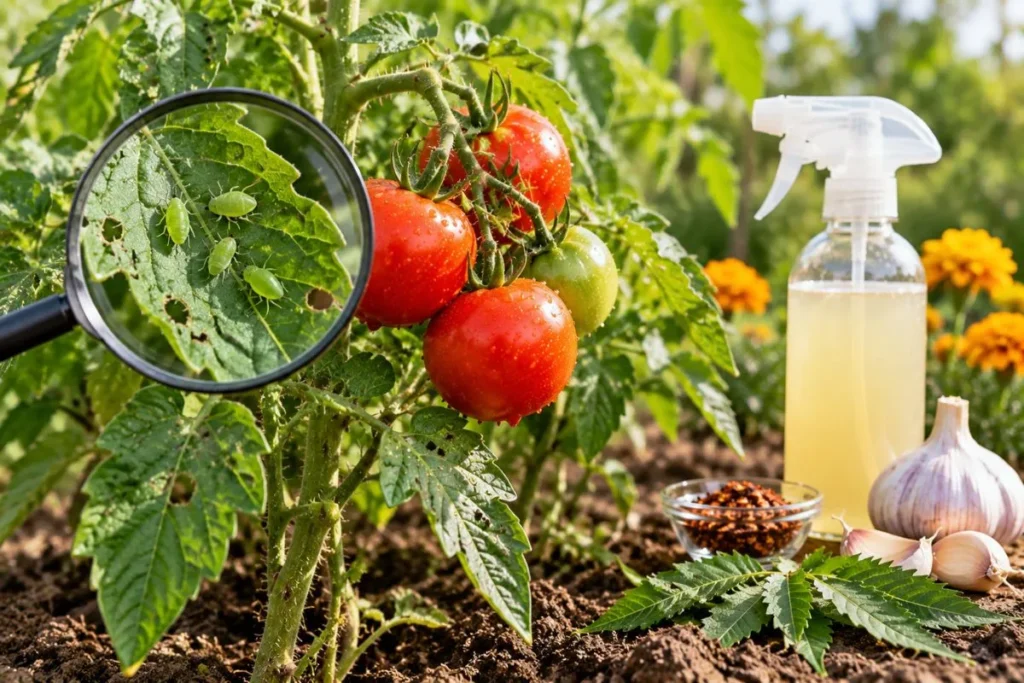
Healthy tomato plants have vibrant green leaves and strong stems. If you begin noticing curled or yellowing leaves, tiny holes, sticky residue, chewed foliage, or insects hiding underneath the leaves, it’s time to act. These are early warning signs that pests are feeding on your plants.
Using a natural pesticide for tomato plants as soon as these symptoms appear can stop the infestation before it affects your flowers and fruit production. Regular monitoring, combined with safe and chemical-free tomato pesticide solutions, helps keep your tomato plants healthy throughout the growing season.
Common Tomato Pests You Should Know
Many gardeners think every hole in a tomato leaf is caused by the same insect. That’s not true. Different pests attack tomato plants in different ways, and each one requires the right treatment.
Before choosing a natural pesticide for tomato plants, it’s important to identify the pest you’re dealing with. This helps you use the most effective solution while avoiding unnecessary sprays.
Aphids on Tomato Plants
Aphids are among the most common tomato plant insects. These tiny, soft-bodied bugs are usually green, black, yellow, or brown and gather on new shoots and the undersides of leaves.
They feed by sucking sap from the plant, which weakens growth and causes leaves to curl or become distorted.
You may also notice a sticky substance called honeydew on the leaves. This can attract ants and encourage mold growth. If left untreated, aphids multiply quickly and spread throughout the plant.
Using a natural pesticide for tomato plants against aphids, such as neem oil or insecticidal soap, is an effective and safe way to control them.
Tomato Hornworms
Tomato hornworms are one of the most destructive pests in a vegetable garden. These large green caterpillars blend in with the leaves, making them difficult to spot. Despite their camouflage, they can eat large amounts of foliage and even damage green tomatoes within a short time.
Signs of a hornworm infestation include missing leaves, chewed stems, and dark droppings on the leaves or soil below the plant. If you’re searching for a natural pesticide for tomato plants against hornworms, hand-picking the caterpillars and using natural biological controls are often the most effective methods.
Whiteflies on Tomatoes
Whiteflies are tiny white insects that usually hide beneath tomato leaves. When the plant is disturbed, they fly up in small clouds, making them easy to recognize. Like aphids, they feed on plant sap, causing leaves to turn yellow, wilt, and eventually drop.
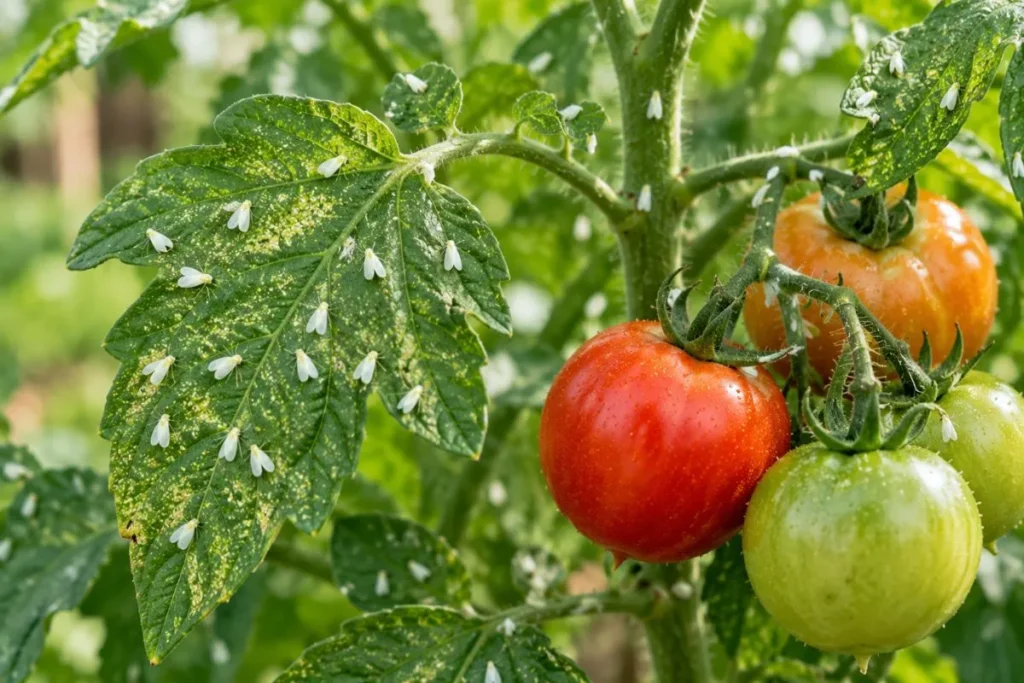
Whiteflies also produce honeydew, which can lead to black sooty mold on the leaves. Regular inspections and an organic pesticide for tomato plants, such as neem oil, can help reduce whitefly populations before they become a serious problem.
Spider Mites on Tomatoes
Spider mites are extremely small and often go unnoticed until they have caused visible damage. They feed by piercing leaf tissue and sucking out the plant’s juices. As a result, leaves develop tiny yellow or white spots that eventually turn brown and dry out.
A clear sign of spider mites is the fine webbing they leave behind on leaves and stems. These pests thrive during hot, dry weather and can spread quickly if ignored. Early treatment with a natural bug spray for tomato plants or insecticidal soap can help keep their numbers under control.
Flea Beetles on Tomato Plants
Flea beetles are tiny, dark-colored insects that jump when disturbed. They chew dozens of small holes in tomato leaves, giving them a “shot-hole” appearance. Young tomato plants are especially vulnerable because heavy feeding can slow their growth and weaken the entire plant.
Keeping the garden free of weeds and using natural pest control for tomato plants can help reduce flea beetle activity. Companion planting and organic sprays are also effective options for preventing damage.
Caterpillars and Other Leaf-Eating Pests
Besides hornworms, several smaller caterpillars and chewing insects also attack tomato plants. These pests feed on leaves, flowers, and even developing fruit. Ragged holes, partially eaten leaves, and damaged tomatoes are common signs of their presence.
Inspecting plants regularly allows you to spot these pests before they spread. Removing them by hand and applying a homemade pesticide for tomato plants when necessary can help protect your crop without using harsh chemicals.
How to Identify Tomato Pests Early
The sooner you identify tomato plant diseases and pests, the easier they are to manage. Look for curled leaves, yellowing foliage, sticky residue, tiny holes, webbing, chewed fruit, or visible insects on stems and leaves.
Checking both the tops and undersides of leaves every few days helps catch infestations before they become severe.
Choosing the best natural pesticide for tomato plants starts with knowing exactly which pest is causing the damage. Once you’ve identified the problem, you can apply the right organic treatment and keep your tomato plants healthy throughout the growing season.
What Is the Best Natural Pesticide for Tomato Plants?
Many people believe there is one magical spray that kills every tomato pest instantly. The truth is, there isn’t a single natural pesticide for tomato plants that works for every insect or situation.
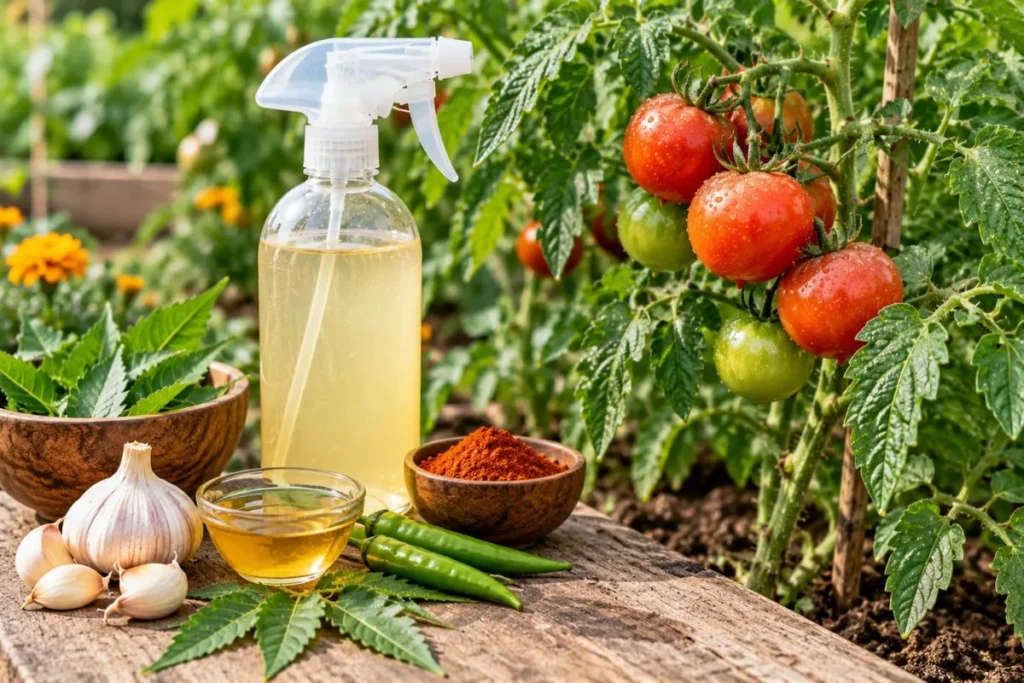
The best option depends on the type of pest you’re dealing with, how serious the infestation is, and how often you care for your plants. Choosing the right natural solution is much more effective than using the same spray for every problem.
What Is the Best Natural Pesticide for Tomato Plants?
If you’re wondering what is the best organic pesticide for tomato plants, the answer is neem oil. It is one of the most trusted and widely used organic solutions because it controls a wide range of common pests, including aphids, whiteflies, spider mites, and other soft-bodied insects.
Neem oil works by disrupting the feeding and life cycle of insects, helping reduce pest populations without leaving harmful chemical residues on your tomato plants. When used according to the instructions, it is considered one of the best natural pesticides for tomato plants for home gardens.
However, neem oil isn’t always the only answer. Insecticidal soap, garlic spray, chili pepper spray, and other homemade natural pesticides for tomato plants can also be highly effective, especially when matched to the right pest.
Why Natural Pesticides Work So Well
Natural pesticides don’t have to be harsh to be effective. Many ingredients found in homemade or organic sprays either repel pests, interrupt their feeding, or damage their outer protective layer, making it difficult for them to survive.
Unlike many chemical products, organic pesticides for tomato plants are generally safer for home gardens when used correctly. They break down more quickly in the environment and reduce the risk of harmful residues on vegetables.
This makes them a popular choice for gardeners who want healthier plants while protecting beneficial insects like bees and ladybugs whenever possible.
Benefits of Using a Natural Pesticide for Tomato Plants
Choosing a chemical-free tomato pesticide offers several advantages beyond pest control.
One of the biggest benefits is improved safety. Since tomatoes are grown for food, many gardeners prefer natural products that leave fewer synthetic residues on fruits.
Natural solutions are also more environmentally friendly. They help protect soil health, support beneficial insects, and reduce the amount of harsh chemicals entering your garden ecosystem.
Another advantage is affordability. Many homemade pesticides for tomato plants can be made using simple ingredients that are already available in most kitchens, making them a budget-friendly option for home gardeners.
When Should You Apply Natural Pesticides?
Timing plays a major role in how well a natural pesticide works. It’s best to treat tomato plants as soon as you notice the first signs of pest activity. Waiting until insects have spread across the entire plant often makes control much more difficult.
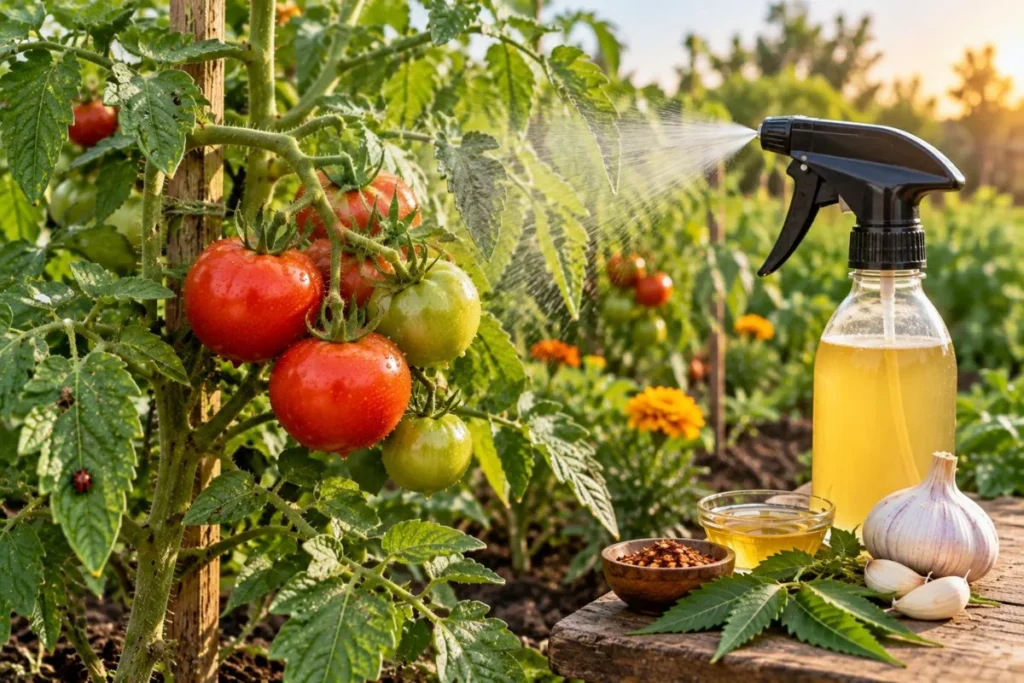
For the best results, spray early in the morning or late in the evening. These cooler parts of the day reduce the risk of leaf burn and allow the solution to stay on the leaves longer. Avoid spraying during the hottest hours of the afternoon or before heavy rain, as this can reduce the effectiveness of the treatment.
Regular inspections also make a difference. Catching problems early means you’ll usually need less spray and fewer repeat applications.
How Often Should You Use Natural Pesticides?
Unlike many synthetic chemicals, natural sprays usually need to be applied more than once because they break down naturally over time.
Most organic pest sprays should be reapplied every 7 to 10 days, or sooner after heavy rainfall. During active pest infestations, more frequent treatments may be necessary until the insects are under control.
Always follow the directions for the specific product or homemade recipe you’re using. Applying more than recommended won’t improve results and may stress the plant or damage its leaves.
Choosing the Right Natural Pesticide
Not every pest responds to the same treatment. Before spraying, identify the insect causing the damage and choose a solution designed for that specific problem.
For example, neem oil and insecticidal soap work well against aphids and whiteflies, while larger pests like tomato hornworms are often better controlled by hand removal or biological methods.
Matching the right treatment to the right pest gives you faster results and avoids unnecessary applications.
Frequently Asked Questions
What is the best natural pesticide for tomato plants?
The best natural pesticide for tomato plants depends on the type of pest you’re trying to control. However, neem oil is one of the most effective all-purpose organic solutions because it works against aphids, whiteflies, spider mites, and several other common garden pests.
Insecticidal soap, garlic spray, and chili pepper spray are also excellent options for targeted pest control.
How do you make homemade natural pesticide for tomato plants?
A simple homemade natural pesticide for tomato plants can be made by mixing water with a few drops of mild liquid soap or by using natural ingredients like garlic, chili peppers, or neem oil.
Always test the spray on a few leaves first and apply it during the early morning or evening to avoid leaf damage.
Is neem oil safe for tomato plants?
Yes. Neem oil is considered one of the safest organic pesticides for tomato plants when used according to the instructions. It helps control many common insects without leaving harmful chemical residues on edible crops.
Avoid spraying during the hottest part of the day or directly on open flowers to protect pollinators.
Can I use vinegar on tomato plants?
Vinegar should be used with caution. While diluted vinegar may help with certain weeds, spraying it directly on tomato leaves can damage the plant because of its acidity. For regular pest control, safer options like neem oil or insecticidal soap are usually a better choice.
What kills aphids naturally?
Several natural methods work well against aphids. Neem oil, insecticidal soap, garlic spray, and a strong stream of water can all reduce aphid populations. Encouraging beneficial insects such as ladybugs is another effective form of natural pest control for tomato plants.
How often should I spray tomato plants with natural pesticides?
Most natural sprays should be applied every 7 to 10 days or after heavy rainfall. If pest activity is high, more frequent applications may be needed until the infestation is under control. Always follow the instructions for the specific product or homemade recipe you are using.
What is the safest pesticide for edible plants?
Organic products like neem oil, insecticidal soap, and properly prepared homemade sprays are among the safest choices for edible gardens. These chemical-free tomato pesticides are widely used because they help manage pests while reducing exposure to harsh synthetic chemicals.
How do I keep bugs off tomato plants naturally?
The best approach combines prevention and treatment. Inspect plants regularly, remove damaged leaves, keep weeds under control, encourage beneficial insects, and apply a natural bug spray for tomato plants when pests first appear. Healthy plants are naturally more resistant to insect attacks.
Can baking soda protect tomato plants?
Yes, baking soda is mainly used to help manage certain fungal diseases rather than insect pests. When mixed correctly, it can reduce problems like powdery mildew.
However, it should not be considered a complete replacement for a natural pesticide for tomato plants if insects are causing the damage.
What attracts pests to tomato plants?
Soft new growth, warm temperatures, high humidity, overcrowded plants, and poor garden maintenance all attract pests. Regular watering, proper spacing, and good organic tomato care help reduce pest problems before they become serious.
Conclusion:
Choosing a natural pesticide for tomato plants is one of the best ways to protect your garden while keeping your vegetables safe for your family and the environment.
Natural solutions not only control common pests but also support healthier soil, beneficial insects, and sustainable gardening practices.
The key to success is identifying the pest early and selecting the right treatment. Whether you use neem oil, insecticidal soap, garlic spray, chili pepper spray, or another homemade pesticide for tomato plants, applying it correctly and at the right time will produce the best results.
Regular inspections and consistent care can prevent small pest problems from becoming major infestations.
Remember that healthy plants are your first line of defense. Proper watering, good airflow, clean garden beds, and routine maintenance all work together with natural pest control for tomato plants to keep insects under control naturally.
By using safe, organic pesticides for tomato plants and following good gardening practices, you can enjoy stronger plants, healthier tomatoes, and a productive harvest without relying on harsh chemical pesticides.
With a little patience and the right approach, your tomato garden can thrive all season long.

Plant Nest Blog’s author is passionate about plants, gardening, and sustainable living. Through research and practical experience, they share helpful plant care tips, gardening guides, and easy solutions to help readers grow healthier plants and create greener spaces.