
A common misconception is that the secret to how to preserve aloe vera plant is to water it often and leave it in direct sunlight all day. That sounds logical, but it’s actually one of the biggest mistakes people make. Aloe vera is a succulent, so it stores water in its thick leaves and doesn’t need constant watering like many other houseplants.
Giving it too much attention can lead to root rot, weak growth, and unhealthy leaves. The truth is that preserving an aloe vera plant is all about providing the right balance of water, sunlight, soil, and care. Once you understand its natural growing habits, keeping it healthy becomes much easier.
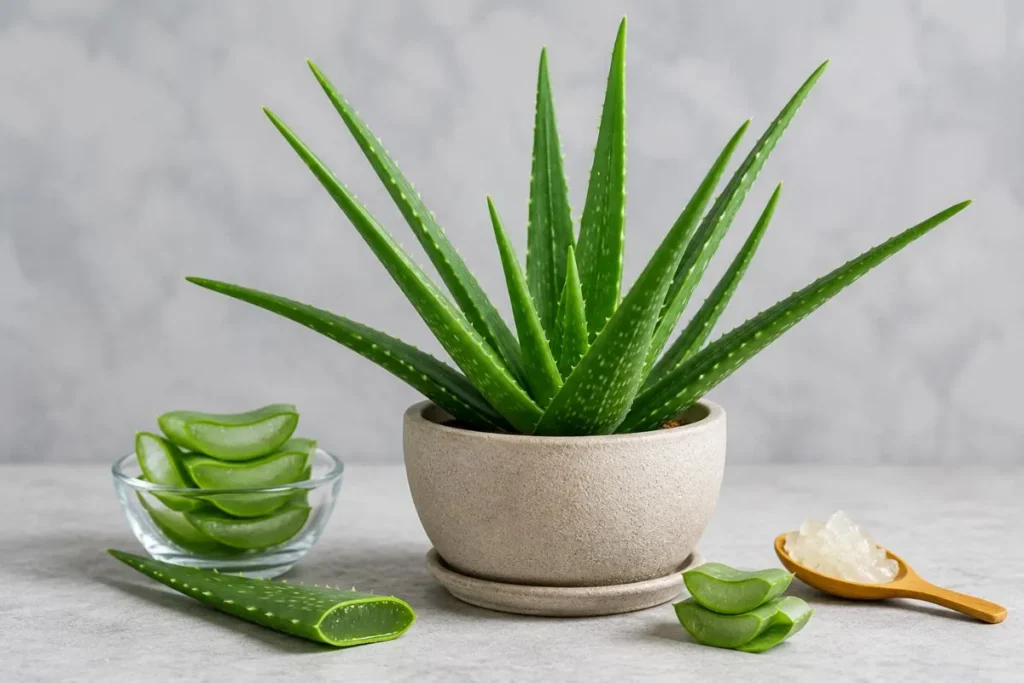
In this aloe vera plant care guide, you’ll learn how to preserve aloe vera plant, how to keep an aloe vera plant healthy, and the best way to care for an aloe vera plant so it stays green, strong, and thriving for many years, whether you grow it indoors or outdoors.
Why Aloe Vera Needs Proper Care to Last for Years
What Makes Aloe Vera Different?
Before learning how to preserve aloe vera plant, it’s important to understand what makes this plant unique. Aloe vera is a succulent, which means it stores water inside its thick, fleshy leaves instead of relying on frequent watering.
This natural adaptation allows it to survive in hot, dry climates where rainfall is limited. Unlike many common houseplants, aloe vera prefers dry conditions and can easily suffer if it receives too much water. Understanding this simple fact is the foundation of every successful aloe vera plant care guide.
Why Proper Care Is Essential
Many people assume aloe vera can survive without any attention because it’s known as a low-maintenance plant. While it’s true that aloe vera doesn’t demand constant care, it still needs the right growing conditions to stay healthy.
Proper watering, enough sunlight, well-draining soil, and the right pot all work together to support healthy growth. Following the best way to care for an aloe vera plant helps it develop stronger roots, produce thick green leaves, and resist common pests and diseases.
With consistent care, an aloe vera plant can remain healthy and attractive for many years.
How Aloe Vera Stores Water
One reason aloe vera survives so well is its remarkable ability to store water inside its leaves. These thick leaves act as natural water reservoirs, allowing the plant to use stored moisture whenever water isn’t available.
Because of this feature, aloe vera doesn’t need frequent watering. In fact, overwatering is one of the biggest reasons these plants fail. If you’re wondering how to keep an aloe vera plant healthy, always remember that allowing the soil to dry out between watering sessions is much safer than keeping it constantly moist.
Benefits of Preserving Your Aloe Vera Plant
Learning how to preserve aloe vera plant offers several long-term benefits. A healthy plant continues producing thick, vibrant leaves that are rich in fresh gel. As it matures, it also develops baby plants, known as offsets or pups, which can be separated and grown into new plants.
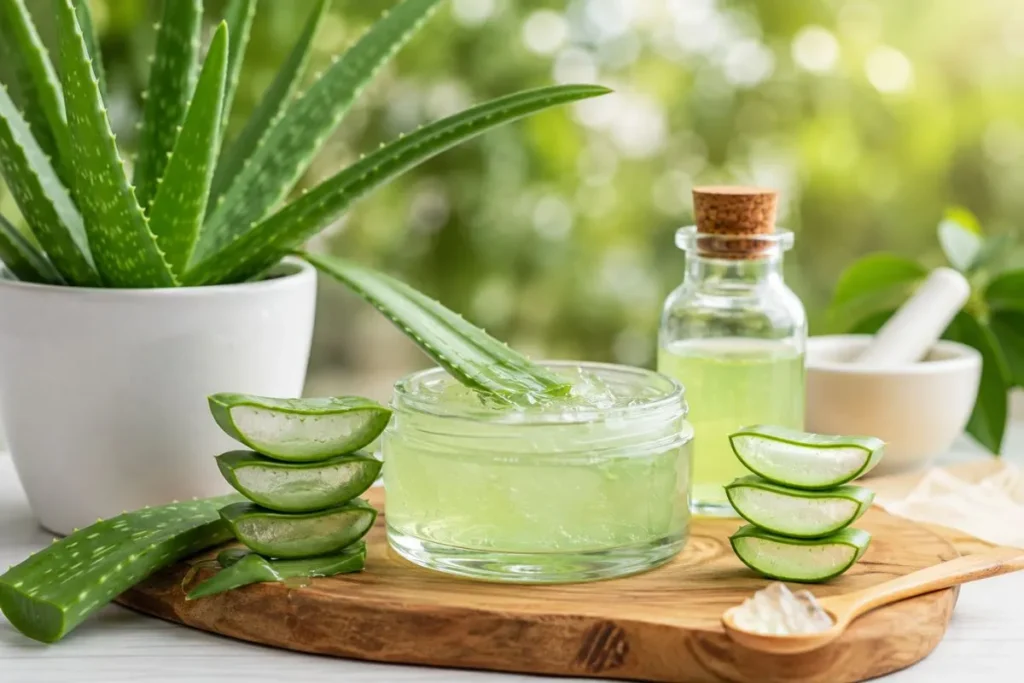
Proper care also improves the plant’s resistance to root rot, fungal diseases, and pest attacks. Instead of constantly replacing unhealthy plants, you can enjoy a thriving aloe vera that continues growing year after year.
This is one of the reasons many gardeners consider aloe vera one of the most rewarding succulents to grow at home.
Average Lifespan of an Aloe Vera Plant
When grown under the right conditions, aloe vera is a long-living plant. On average, a healthy aloe vera plant can live between 10 and 20 years, and some even survive much longer with proper maintenance.
Providing suitable soil, controlled watering, sufficient sunlight, and occasional repotting can significantly increase its lifespan.
If your goal is how to preserve aloe vera plant for years, maintaining these simple care habits will help your plant stay healthy for decades.
Signs of a Healthy Aloe Vera Plant
A healthy aloe vera plant is easy to recognize once you know what to look for. Its leaves should be thick, firm, and upright with a bright green or slightly gray-green color.
The roots should remain strong, and the plant should continue producing new leaves during its growing season. Healthy plants also have dry soil between watering sessions and show no signs of yellowing, mushy stems, or black spots.
Paying attention to these indicators allows you to identify problems early and maintain an aloe vera plant before small issues become serious.
Choose the Right Pot and Soil Before Anything Else
It’s easy to believe that watering is the most important part of learning how to preserve aloe vera plant, but that’s not entirely true. Even the perfect watering schedule won’t help if your aloe vera is growing in the wrong pot or poor-quality soil.
In fact, many healthy plants begin to decline simply because their roots stay wet for too long. Choosing the best pot for aloe vera and using well-draining soil creates the right environment for healthy root growth and is one of the smartest steps you can take to preserve your plant for years.
Why the Right Pot Matters
The pot you choose plays a much bigger role than most people realize. Aloe vera roots need plenty of airflow, and they dislike sitting in wet soil. A suitable pot allows excess water to drain quickly, preventing moisture from collecting around the roots.
When selecting a pot, always choose one that is only slightly larger than the root ball. An oversized container holds more soil, which stays damp for longer periods and increases the risk of root rot. If you’re wondering how to preserve aloe vera plant in a pot, selecting the correct pot size is just as important as watering it properly.
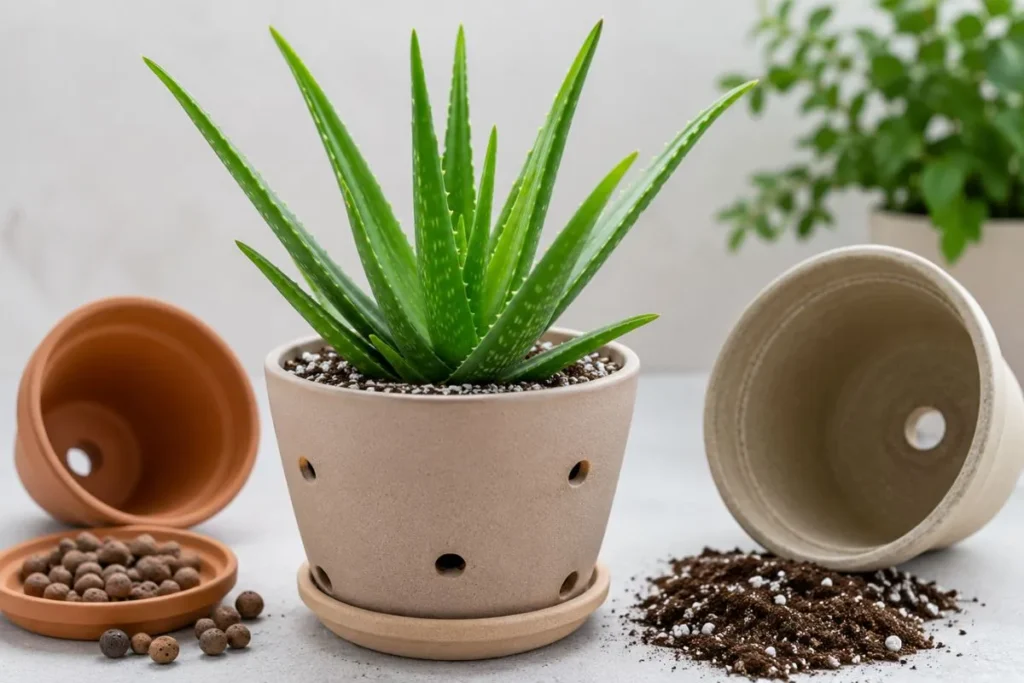
Another essential feature is drainage holes. A pot without drainage holes traps excess water at the bottom, leaving the roots constantly wet. Even if you water carefully, the trapped moisture can slowly damage the root system. That’s why drainage is one of the first things experienced gardeners look for when buying a new pot.
Clay vs. Plastic Pots: Which Is Better?
One of the most common questions in any aloe vera plant care guide is whether clay or plastic pots are better. Both can work, but they offer different benefits.
Clay or terracotta pots are generally the better option for aloe vera. Their porous material allows moisture to evaporate through the sides, helping the soil dry faster.
This makes them ideal for beginners who may accidentally overwater their plants. Clay pots are also heavier, making them less likely to tip over as mature aloe vera plants become larger.
Plastic pots, on the other hand, retain moisture for a longer time. They’re lightweight, affordable, and easy to move around. However, because they slow down evaporation, you’ll need to be more careful with your watering routine.
If you choose a plastic pot, make sure it has several drainage holes and avoid watering unless the soil is completely dry.
Overall, terracotta pots are often considered the best pots for aloe vera because they naturally reduce the chances of overwatering.
Why Drainage Is Non-Negotiable
Good drainage is the foundation of healthy aloe vera roots. No matter how expensive your pot or soil is, poor drainage can quickly undo all your efforts.
After watering, excess water should flow freely out of the drainage holes instead of collecting at the bottom of the container. If water remains trapped, the roots stay wet for too long, reducing oxygen levels and encouraging fungal growth.
Over time, this can lead to root rot, one of the most common reasons aloe vera plants die.
To improve aloe vera drainage requirements, never place decorative stones or gravel at the bottom of the pot. Contrary to popular belief, this doesn’t improve drainage. Instead, it creates a layer where water can collect, keeping the roots wetter for longer.
A better solution is to use a well-draining potting mix and a container with proper drainage holes.
Choosing the Best Soil for Aloe Vera
The soil you use is just as important as the pot itself. Aloe vera naturally grows in sandy, rocky environments where water drains away quickly. Heavy garden soil or regular potting mix often holds too much moisture, making it unsuitable for long-term growth.
The best soil for aloe vera is one that drains quickly while still providing enough support for the roots. A high-quality cactus soil for aloe vera or a commercial succulent mix is usually the easiest and most reliable choice.
These mixes are specially designed to prevent excess moisture from building up around the roots.
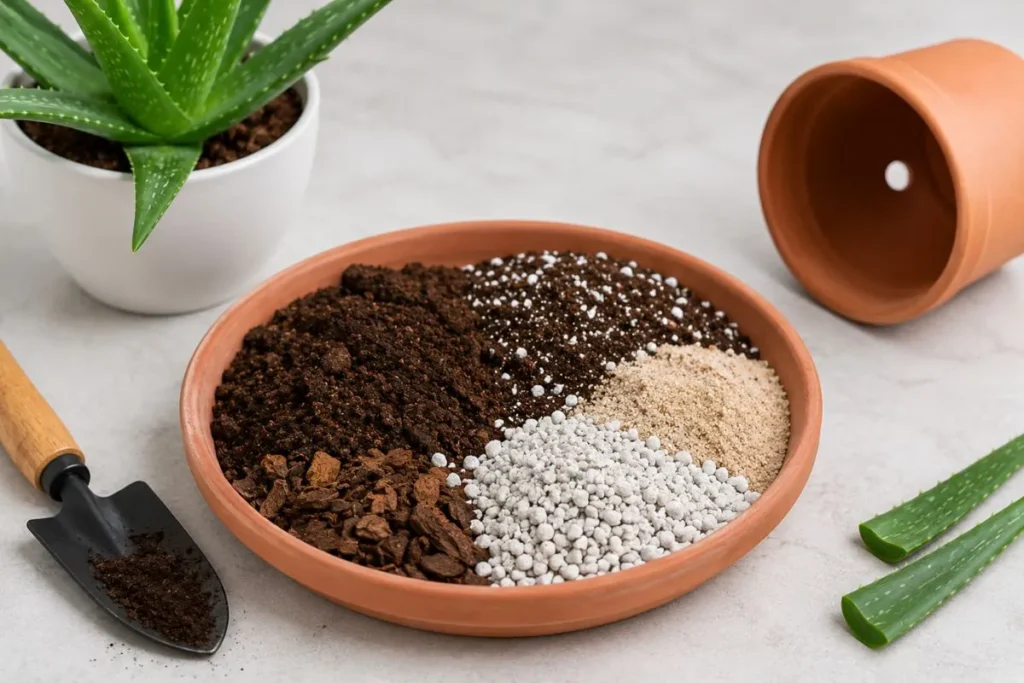
If you prefer making your own potting mix, you can easily prepare one at home by mixing two parts regular potting soil, one part coarse sand, and one part perlite or pumice.
This simple combination creates a loose, well-draining growing medium that allows excess water to escape quickly while providing enough airflow for healthy root development.
Using this type of soil is one of the best ways to care for an aloe vera plant and helps preserve its health for many years.
Signs Your Pot or Soil Needs Changing
Even if your aloe vera looked healthy when you first planted it, the pot or soil may eventually need replacing. Over time, soil becomes compacted, reducing drainage and limiting airflow around the roots.
Some common signs that it’s time to repot include slow growth, water sitting on the soil surface for too long, roots growing out of the drainage holes, or the plant becoming top-heavy and unstable.
You may also notice the soil staying wet for several days after watering, which usually indicates poor drainage.
Replacing old soil with fresh, well-draining succulent mix and moving the plant into an appropriately sized pot can quickly restore healthy growth and help keep your aloe vera plant healthy.
Water Your Aloe Vera the Right Way
Some people believe that watering an aloe vera plant more often will keep it healthier and help it grow faster. In reality, the opposite is true. One of the biggest mistakes people make when learning how to preserve aloe vera plant is giving it too much water.
Aloe vera is naturally adapted to dry conditions, so frequent watering can do more damage than forgetting to water it for a few days. If you want to keep an aloe vera plant healthy, learning the correct watering routine is one of the most important skills you can develop.
How Often Should You Water Aloe Vera?
There isn’t a single watering schedule that works for every aloe vera plant. The amount of water your plant needs depends on factors such as the season, temperature, humidity, pot size, and the type of soil you’re using.
Instead of watering on a fixed schedule, check the soil first. Insert your finger about two inches into the soil. If it feels completely dry, it’s time to water. If there’s still moisture, wait a few more days before checking again. This simple method is far more reliable than watering every week and is considered one of the best aloe vera watering tips for beginners.
If you’re wondering how to keep an aloe vera plant alive and healthy, remember that aloe vera prefers deep but infrequent watering rather than small amounts of water every few days.
Summer Watering Schedule
During the warmer months, aloe vera grows more actively and uses water faster. Depending on your local climate, you may need to water your plant every 10 to 14 days. However, don’t rely only on the calendar. High temperatures, bright sunlight, and airflow can cause the soil to dry more quickly, while cooler summer weather may require less frequent watering.
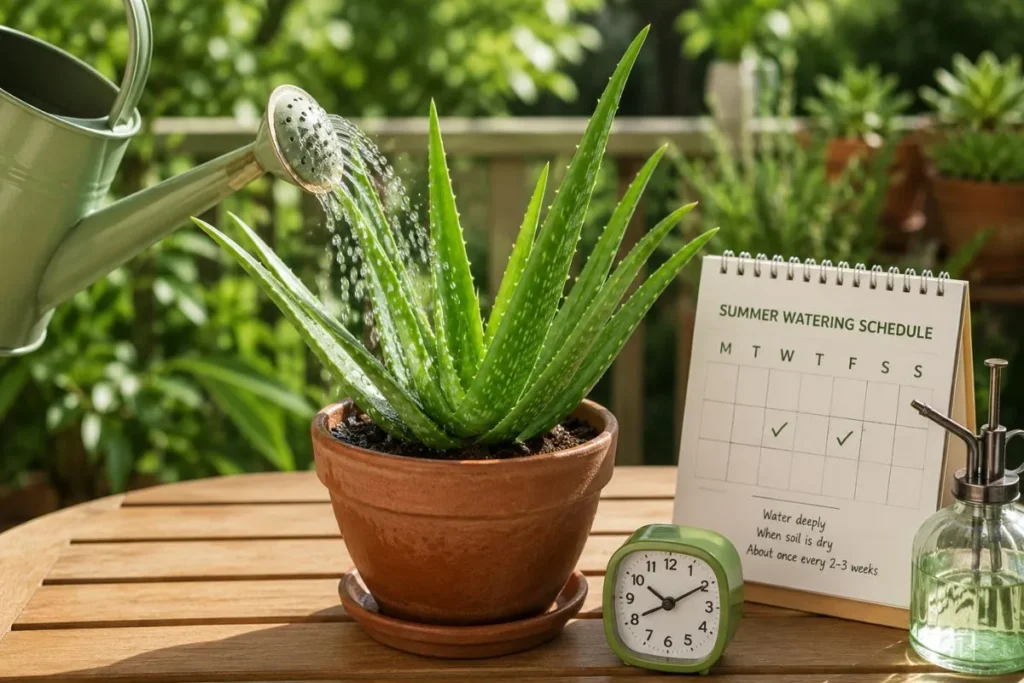
Always water thoroughly until excess water drains out of the drainage holes. Then allow the soil to dry completely before watering again. This method encourages deeper root growth and supports healthy development.
Winter Watering Schedule
Winter is a resting period for aloe vera, so its water needs decrease significantly. Since growth slows down, the plant uses much less moisture than it does during spring and summer.
In most homes, watering once every three to four weeks is enough during winter. If your home is particularly cool, you may need to water even less often. Checking the soil before watering remains the safest approach and helps prevent unnecessary moisture around the roots.
Following this seasonal routine is an important part of how to preserve aloe vera plant during winter and ensures the plant stays healthy until the growing season returns.
Use the Finger Test Before Every Watering
One of the easiest ways to avoid watering mistakes is by using the finger test. Instead of guessing, simply insert your finger into the soil about two inches deep. If the soil feels dry all the way down, your aloe vera is ready for water. If it still feels damp, wait a few more days and check again.
This quick habit takes only a few seconds but can prevent many common watering problems. It also helps you adjust your watering routine based on changes in weather, indoor temperatures, and seasonal conditions.
Signs of an Overwatered Aloe Vera
Overwatering is one of the leading causes of unhealthy aloe vera plants. Because the roots remain in wet soil for too long, they begin to lose oxygen and eventually decay.
Some common signs of an overwatered aloe vera include soft or mushy leaves, yellowing foliage, brown spots, drooping growth, and a foul smell coming from the soil. In severe cases, the roots may develop rot, making it difficult for the plant to recover.
If you notice these symptoms, stop watering immediately and allow the soil to dry completely. If root rot has already developed, repotting the plant into fresh, well-draining soil may be necessary.
Signs of an Underwatered Aloe Vera
Although aloe vera is drought-tolerant, it still needs water to survive. Leaving the plant dry for extremely long periods can also affect its health.
An underwatered aloe vera often develops thin, curled, or wrinkled leaves. The leaf tips may become dry or brown, and overall growth slows noticeably.
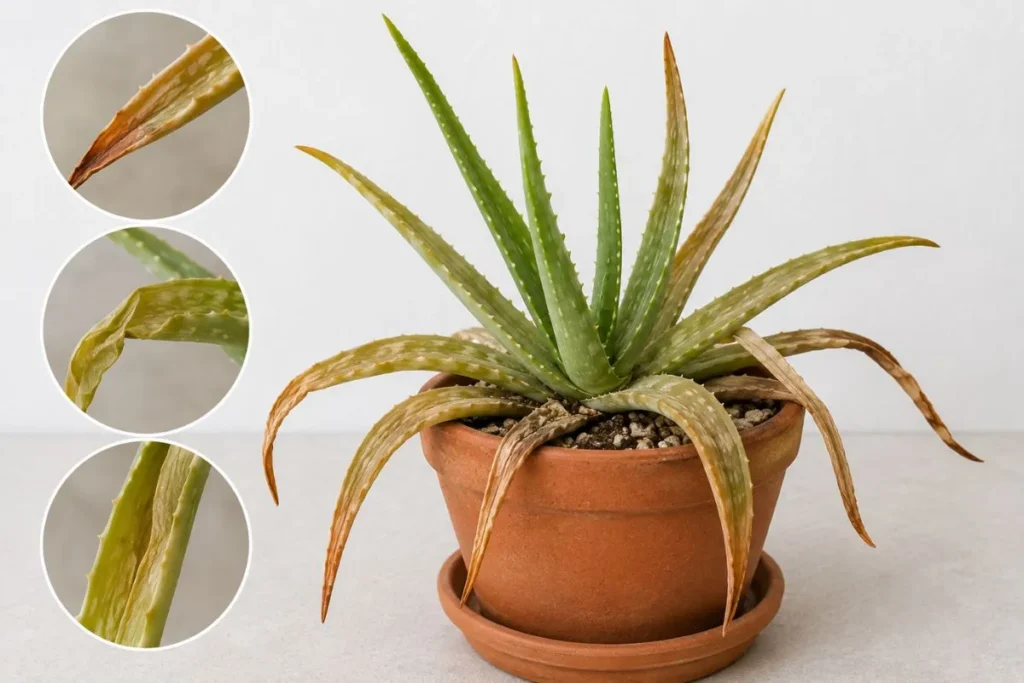
Fortunately, underwatering is usually easier to fix than overwatering. A deep watering followed by a proper watering schedule often helps the plant recover within a short time.
Maintaining the right balance between too much and too little water is the key to successful aloe vera plant maintenance.
How to Prevent Root Rot
Root rot is one of the most serious problems affecting aloe vera plants, but it’s also one of the easiest to prevent. The best way to avoid it is by combining proper watering habits with well-draining soil and a pot that has drainage holes.
Never water your aloe vera just because it’s a certain day of the week. Always let the soil guide your decision. After watering, empty any excess water collected in the saucer beneath the pot so the roots don’t sit in standing water.
These simple practices greatly reduce the risk of aloe vera root rot prevention and help preserve your plant for many years.
Give Your Aloe Vera the Right Amount of Sunlight
Many people believe that aloe vera should stay in direct sunlight all day because it’s a desert plant. While aloe vera certainly loves bright light, exposing it to intense afternoon sun for long hours can actually damage its leaves.
If you’re learning how to preserve aloe vera plant, understanding its sunlight needs is just as important as watering it correctly. The right balance of light helps your plant stay green, grow faster, and remain healthy throughout the year.
Aloe Vera Needs Bright, Indirect Sunlight
Aloe vera grows best in bright, indirect sunlight for about 6 to 8 hours each day. This provides enough light for healthy growth without exposing the leaves to excessive heat. Placing your plant near a south-facing or west-facing window with filtered sunlight is usually the best option indoors.
If your aloe vera isn’t receiving enough light, its leaves may become thin, pale, and stretched as the plant reaches toward the nearest light source. On the other hand, too much harsh sunlight can cause the leaves to turn brown, reddish, or develop sunburn spots.
Providing the right amount of light is one of the best ways to care for an aloe vera plant and plays a major role in keeping an aloe vera plant healthy.
Morning Sun vs. Afternoon Sun
Not all sunlight affects aloe vera in the same way. Morning sunlight is gentle and highly beneficial because it encourages healthy growth without overheating the plant. A few hours of morning sun can help strengthen the leaves and improve the plant’s overall health.
However, afternoon sunlight is much more intense, especially during summer. Continuous exposure to strong afternoon rays can burn the leaves, causing them to turn brown, dry, or reddish.
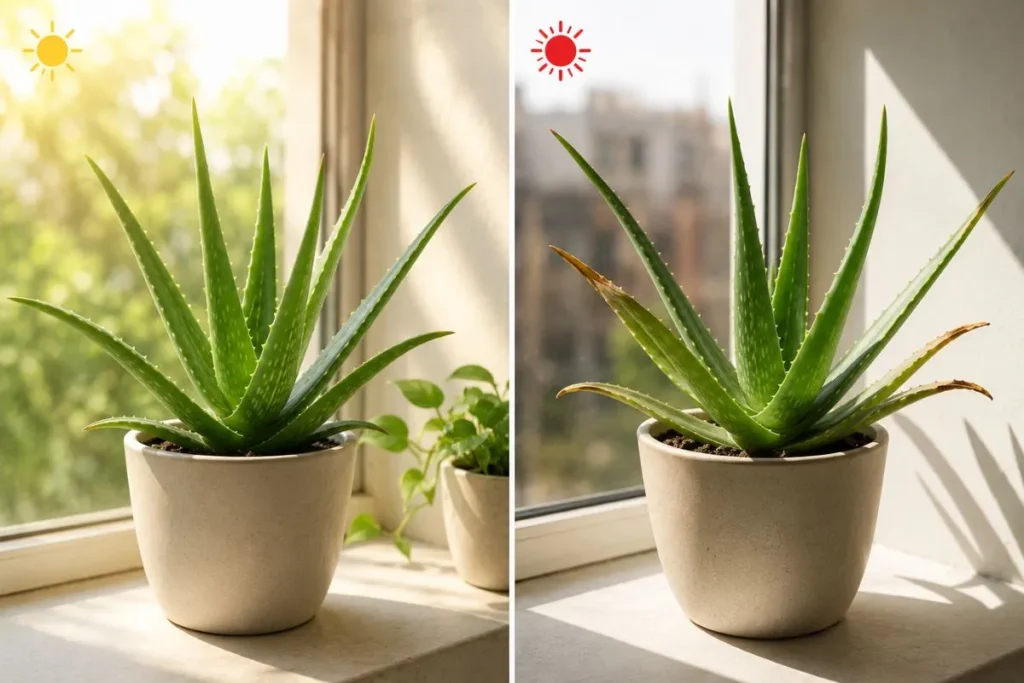
If your aloe vera is kept outdoors, it’s best to place it where it receives morning sunlight and light shade during the hottest part of the day.
This simple adjustment can make a big difference if you’re wondering how to preserve aloe vera plant for years.
Indoor Light Requirements
Growing aloe vera indoors is easy as long as it receives enough natural light. One of the most effective ways to preserve aloe vera plant indoors is to place it near a bright window where it can receive several hours of indirect sunlight every day.
If natural light is limited, especially during winter or in apartments with small windows, you can use a full-spectrum LED grow light. Keeping the grow light on for 10 to 12 hours daily can provide the light your aloe vera needs to continue growing.
It’s also a good idea to rotate the pot every week. This helps all sides of the plant receive equal sunlight and prevents it from leaning toward one direction.
Outdoor Sunlight Needs
If you’re growing aloe vera outside, choose a location that receives bright light but offers some protection from harsh afternoon sun. Areas with partial shade during peak afternoon hours are usually ideal, especially in hot climates.
When moving an indoor aloe vera outdoors, don’t place it in full sunlight immediately. Instead, introduce it gradually over one to two weeks. This process, known as hardening off, allows the leaves to adjust slowly and reduces the risk of sunburn.
Proper outdoor placement is an important part of any aloe vera care guide because sudden changes in sunlight can stress the plant.
Signs Your Aloe Vera Isn’t Getting the Right Amount of Sunlight
Your aloe vera will usually show clear signs when its lighting conditions aren’t ideal. If it’s receiving too little sunlight, the leaves may become long, thin, floppy, and light green. The plant may also grow more slowly than usual.
If it’s getting too much direct sunlight, the leaves may develop brown or reddish patches, dry tips, or scorched areas. In severe cases, prolonged exposure can permanently damage the foliage.
Observing these signs early allows you to adjust the plant’s location before serious damage occurs. Small changes in light exposure often make a noticeable difference within a few weeks.
Fertilize Aloe Vera Without Overdoing It
Many people believe that adding more fertilizer will make an aloe vera plant grow faster and healthier. In reality, too much fertilizer can do more harm than good.
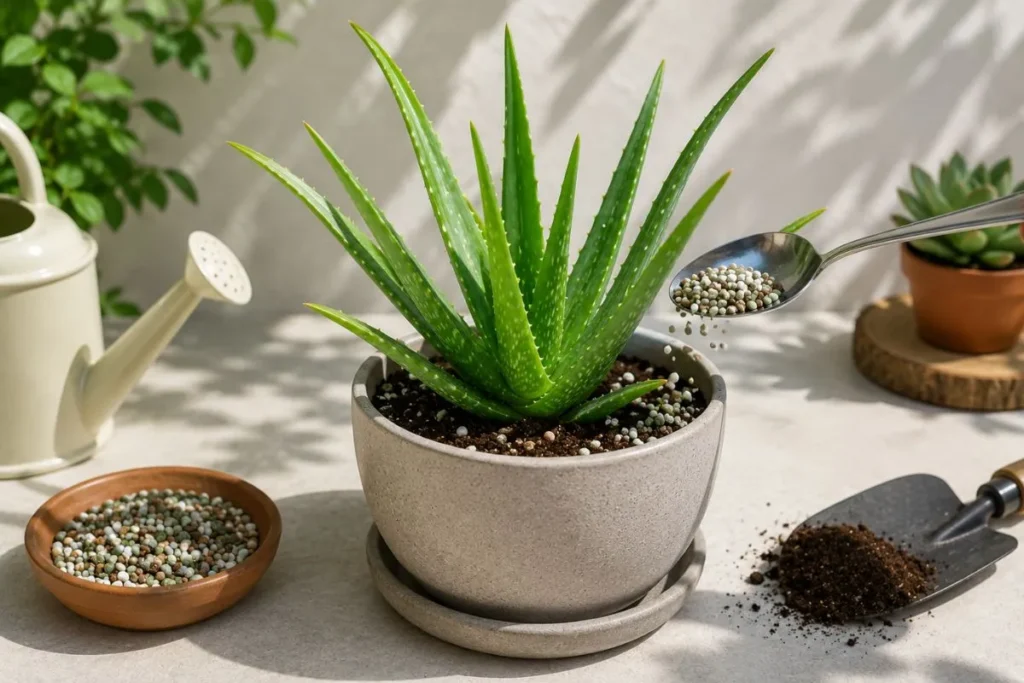
Aloe vera is naturally adapted to grow in nutrient-poor soil, so it doesn’t require frequent feeding. If you’re learning how to preserve aloe vera plant, using fertilizer correctly is important, but using too much can damage the roots, burn the leaves, and slow down healthy growth.
Does Aloe Vera Really Need Fertilizer?
The good news is that aloe vera can grow well even without regular fertilizing. However, if you want to encourage healthier leaves and steady growth, feeding the plant occasionally can be beneficial.
During the active growing season in spring and summer, aloe vera can benefit from a small amount of nutrients. Fertilizer supports aloe vera plant growth, helps maintain healthy green leaves, and strengthens the overall plant.
Still, it should only be used as a supplement to proper watering, sunlight, and well-draining soil not as a replacement for good plant care.
Best Fertilizer for Aloe Vera
Choosing the right fertilizer is just as important as deciding when to use it. A balanced, water-soluble fertilizer or one specially made for cacti and succulents works best for aloe vera. These fertilizers provide the nutrients the plant needs without overwhelming its delicate root system.
Before applying any fertilizer, always dilute it to half the recommended strength. Aloe vera is a light feeder, so a weaker solution is much safer than a concentrated one. This simple practice is considered one of the best ways to care for an aloe vera plant and helps prevent fertilizer burn.
Organic options such as compost tea or diluted seaweed extract can also be used occasionally. These natural fertilizers release nutrients gradually and are a good choice for gardeners who prefer eco-friendly methods.
How Often Should You Fertilize Aloe Vera?
Aloe vera doesn’t need frequent feeding. Fertilizing once or twice during the growing season is usually enough to keep the plant healthy.
The ideal time to fertilize is during spring and early summer, when aloe vera is actively producing new leaves. Avoid fertilizing in autumn and winter because the plant enters a dormant stage and doesn’t use nutrients efficiently.
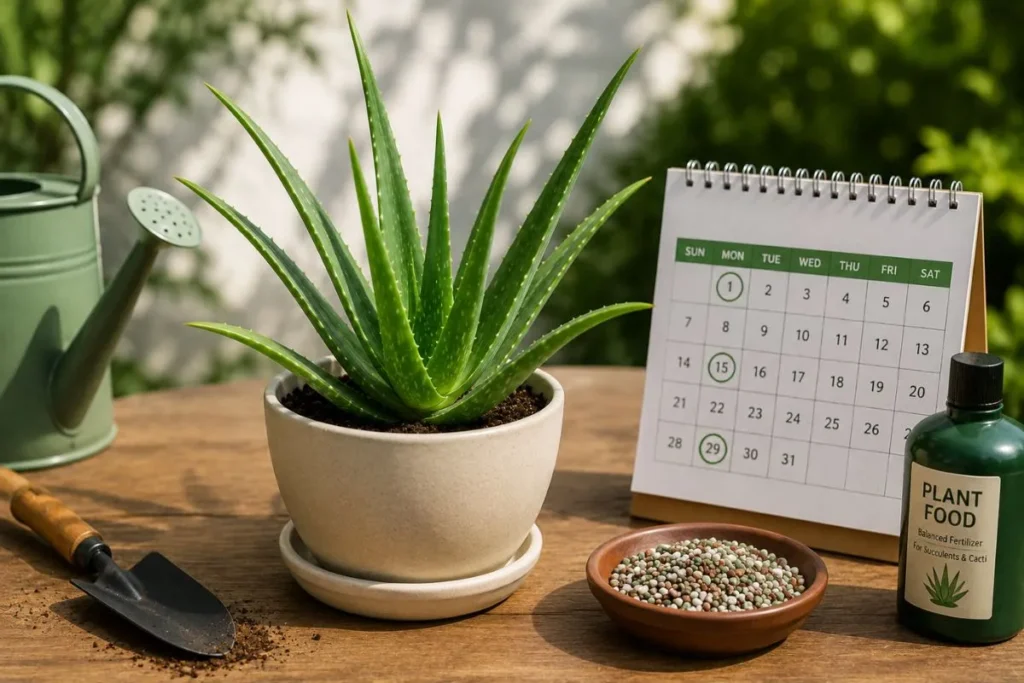
Applying fertilizer during this resting period may stress the roots instead of helping the plant.
Following this simple schedule is an easy way to keep an aloe vera plant healthy without encouraging excessive or weak growth.
Common Fertilizing Mistakes to Avoid
One of the biggest mistakes beginners make is fertilizing too often. Excess nutrients build up in the soil over time and can damage the roots, causing leaf discoloration and poor plant health.
Another common mistake is applying fertilizer to completely dry soil. Always water the plant lightly before feeding it. Moist soil helps distribute nutrients more evenly and reduces the risk of root damage.
Using strong chemical fertilizers without dilution is another problem. Since aloe vera naturally grows in low-nutrient environments, concentrated fertilizers can burn the roots and leave brown or dry patches on the leaves.
Finally, never assume that more fertilizer means faster growth. Aloe vera grows at its own pace, and overfeeding often leads to weaker plants instead of healthier ones.
Signs Your Aloe Vera Is Getting Too Much Fertilizer
An overfertilized aloe vera plant often shows visible signs of stress. You may notice brown leaf tips, yellowing leaves, white crusty deposits on the soil surface, or slow growth despite regular care. In some cases, the roots may become damaged, making it harder for the plant to absorb water properly.
If you suspect you’ve used too much fertilizer, stop feeding the plant for several months and flush the soil with clean water to remove excess salts. If the problem is severe, replacing the old soil with fresh, well-draining succulent mix can help the plant recover.
Frequently Asked Questions (FAQ)
How do you preserve an aloe vera plant for years?
The best way to preserve aloe vera plant for years is to provide the right balance of care. Plant it in well-draining succulent soil, use a pot with drainage holes, water only when the soil is completely dry, and place it in bright, indirect sunlight.
Repot the plant when it outgrows its container and protect it from extreme cold. Following these simple steps will help your aloe vera stay healthy and continue growing for many years.
How often should I water an aloe vera plant?
There isn’t a fixed watering schedule because it depends on the weather, humidity, and growing conditions. Instead of watering on specific days, always check the soil first. Water your aloe vera only when the top few inches of soil are completely dry.
During summer, this is usually every 10 to 14 days, while in winter, watering every three to four weeks is often enough. This is one of the most effective aloe vera watering tips for maintaining a healthy plant.
Can aloe vera survive indoors?
Yes, aloe vera grows very well indoors if it receives enough light. To preserve aloe vera plant indoors, place it near a bright window where it can receive six to eight hours of indirect sunlight each day.
If natural light is limited, using a full-spectrum grow light is a great alternative. Avoid placing the plant in dark corners, as insufficient light can lead to weak and stretched growth.
What is the best way to care for an aloe vera plant?
The best way to care for an aloe vera plant is to provide well-draining soil, moderate watering, bright indirect sunlight, and good air circulation. Avoid overwatering, use a pot with drainage holes, and fertilize only once or twice during the growing season. Consistent care is much more effective than frequent attention.
Why are my aloe vera leaves turning brown?
Brown leaves are usually caused by too much direct sunlight, overwatering, underwatering, or poor drainage. First, check the soil moisture and inspect the plant’s location.
If the soil is wet, allow it to dry before watering again. If the plant is exposed to harsh afternoon sun, move it to a spot with bright, indirect light. Identifying the exact cause early will help restore your plant’s health.
How do I stop my aloe vera plant from dying?
If you’re searching for how to stop an aloe vera plant from dying, start by checking the basics. Make sure the soil drains well, reduce watering if the soil stays wet, provide enough sunlight, and inspect the roots for signs of rot. Remove any damaged leaves and repot the plant if necessary. Correcting these common issues quickly gives your aloe vera the best chance to recover.
Should I cut damaged aloe vera leaves?
Yes. Removing damaged, yellow, brown, or dried leaves helps the plant focus its energy on healthy new growth. Use a clean, sharp knife or pruning shears and cut the damaged leaf close to the base
. Avoid removing healthy leaves unless absolutely necessary, as they store water and nutrients that support the plant.
Does aloe vera need direct sunlight?
Aloe vera enjoys bright light but doesn’t require harsh direct sunlight all day. It grows best with six to eight hours of bright, indirect sunlight or gentle morning sun. Too much intense afternoon sunlight can scorch the leaves, while too little light can cause weak, pale growth.
Finding the right balance is essential for keeping an aloe vera plant healthy.
How do I preserve aloe vera plant in a pot?
To preserve aloe vera plant in a pot, choose a terracotta or clay pot with drainage holes and fill it with a well-draining cactus or succulent soil mix. Water only when the soil is dry, place the pot in a bright location, and repot the plant every two to three years or whenever it becomes root-bound. These simple practices encourage healthy roots and long-term growth.
How do I keep aloe vera healthy during winter?
Winter care is essential because aloe vera grows more slowly during colder months. Reduce watering, keep the plant away from frost and cold drafts, and place it in a bright location with plenty of indirect sunlight.
Avoid fertilizing during winter since the plant is in its dormant stage. Following these simple steps is the best way to preserve aloe vera plant during winter and prepare it for healthy growth in spring.
Conclusion
Learning how to preserve aloe vera plant isn’t difficult once you understand its basic needs. Instead of giving it constant attention, focus on providing the right growing conditions.
A well-draining pot, quality succulent soil, proper watering, enough sunlight, and occasional fertilizing are all it takes to keep your aloe vera healthy and thriving. Small, consistent care habits will always produce better results than overwatering or overfeeding the plant.
If your goal is to keep an aloe vera plant healthy for many years, remember that prevention is always easier than fixing problems later. Regularly check the soil before watering, make sure your plant receives plenty of bright light, and watch for early signs of stress such as yellow leaves, soft stems, or slow growth.
These simple steps will help you maintain an aloe vera plant with confidence and avoid the most common care mistakes.
The best way to care for an aloe vera plant is to work with its natural growing habits instead of against them. Since aloe vera is a drought-tolerant succulent, it performs best when given enough space to dry out between watering sessions and plenty of indirect sunlight.
By following the practical tips shared in this aloe vera plant care guide, you’ll not only preserve your plant but also encourage stronger roots, healthier leaves, and steady growth year after year.
Whether you’re a beginner or an experienced gardener, mastering how to preserve aloe vera plant is a rewarding skill that pays off in the long run. With patience and the right care routine, your aloe vera can remain green, beautiful, and productive for decades.
Start applying these simple techniques today, and you’ll enjoy a healthy aloe vera plant that continues to thrive for years to come.

Plant Nest Blog’s author is passionate about plants, gardening, and sustainable living. Through research and practical experience, they share helpful plant care tips, gardening guides, and easy solutions to help readers grow healthier plants and create greener spaces.