
Brown leaves do not always mean your corn plant is dying. That is one of the most common assumptions plant owners make. In many cases, a few brown tips or edges are simply a sign that something in the plant’s care needs adjusting.
Watering, humidity, sunlight, soil drainage, temperature, fertilizer, and even water quality can all play a role. The good news is that once you find the real cause, you can usually prevent more damage and help your plant produce healthier new growth.
So, why is my corn plant leaves turning brown? The answer depends on what the brown leaves look like and what is happening around the plant. Brown, crispy tips may point to a different problem than soft brown leaves, yellowing foliage, or spreading brown spots.
That is why looking at the symptoms is more useful than simply assuming the plant needs more water.
Corn plants, commonly known as Dracaena fragrans, are popular indoor plants because they are attractive and relatively easy to care for. But “easy to care for” does not mean they can handle every condition
. A plant sitting in dry air beside a heater, receiving harsh direct sunlight, or growing in constantly wet soil can quickly develop leaf problems.
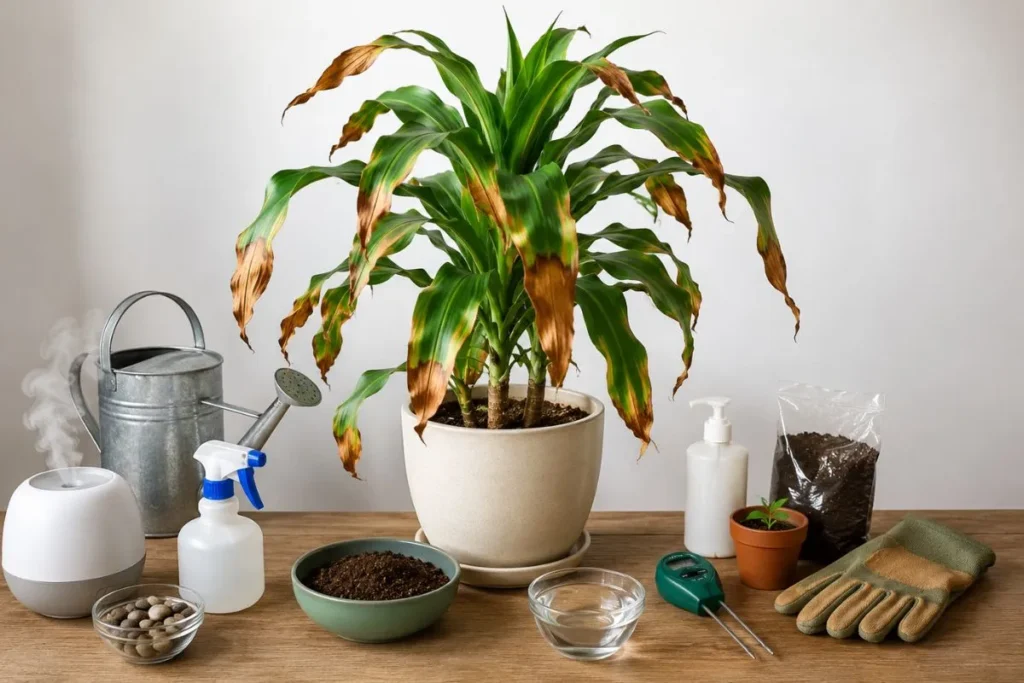
One of the most common searches from frustrated plant owners is why are the leaves on my corn plant turning brown. Usually, the answer comes down to a few basic care issues.
The plant may not be getting the right amount of water, the air may be too dry, the light may be too intense, or the roots may be struggling because the soil does not drain well.
You may also notice corn plant leaves turning yellow and brown at the same time. This can be especially confusing because several different problems can create similar symptoms.
For example, overwatering can stress the roots and lead to yellowing foliage, while prolonged dryness can leave the leaves brown, crispy, and curled.
The first step is not to panic or immediately repot the plant. Instead, take a close look at the leaves, check the soil, and think about any recent changes in its environment.
Did you move the plant to a sunnier window? Have you been watering more often? Is it sitting near an air conditioner or heater? Did you recently fertilize it?
Common Reasons Your Corn Plant Leaves Are Turning Brown
If you are wondering why is my corn plant leaves turning brown and dry, do not focus on just one possible cause. Corn plants can develop brown foliage for several reasons, and sometimes more than one problem is happening at the same time.
Here are the 11 most common causes to check.
Underwatering Is Drying Out the Leaves
One of the simplest explanations for corn plant leaves turning brown is not getting enough water.
When the soil stays too dry for too long, the roots cannot supply enough moisture to the leaves. The plant responds by conserving water, and the leaf tips and edges may begin to dry out. You may notice dry corn plant leaves, crispy brown edges, or leaves that start curling inward.
Underwatering is especially likely if the soil feels extremely dry several inches below the surface. The leaves may also feel thinner or less flexible than normal.
However, there is an important point here: do not assume that every plant with brown leaves needs more water. Adding water without checking the soil can create a different problem.
Instead, feel the soil first. If it is genuinely dry, water the plant thoroughly and allow excess water to drain away. Then let the soil dry to an appropriate level before watering again.
Overwatering Can Damage the Roots
It may seem strange, but overwatering corn plants can also lead to brown leaves.
When the soil remains wet for long periods, the roots have less access to oxygen. Prolonged wet conditions can weaken the root system and increase the risk of corn plant root rot. Once the roots become stressed, they may struggle to deliver water and nutrients to the foliage.
The result can be confusing. You may see leaves that are yellowing, browning, drooping, or generally looking unhealthy even though the soil is wet.
This is why corn plant leaves turning yellow and brown should not automatically be treated with more water.
Check the soil before watering again. If it remains soggy several days after watering, look at the drainage as well. The container should have drainage holes, and excess water should be able to escape freely.
A good watering routine is not about keeping the soil constantly wet. It is about giving the roots enough moisture while allowing the growing medium to breathe between waterings.
Low Humidity Causes Brown Leaf Tips
If your corn plant has brown leaf tips while the rest of the leaf still looks fairly healthy, dry air may be part of the problem.
Corn plants can struggle when indoor air becomes very dry. This often happens during periods when heating or air conditioning is running frequently. The air around the plant can become much drier than it appears.
Low humidity can lead to corn plant leaf tips turning brown, especially when the plant is already dealing with inconsistent watering.
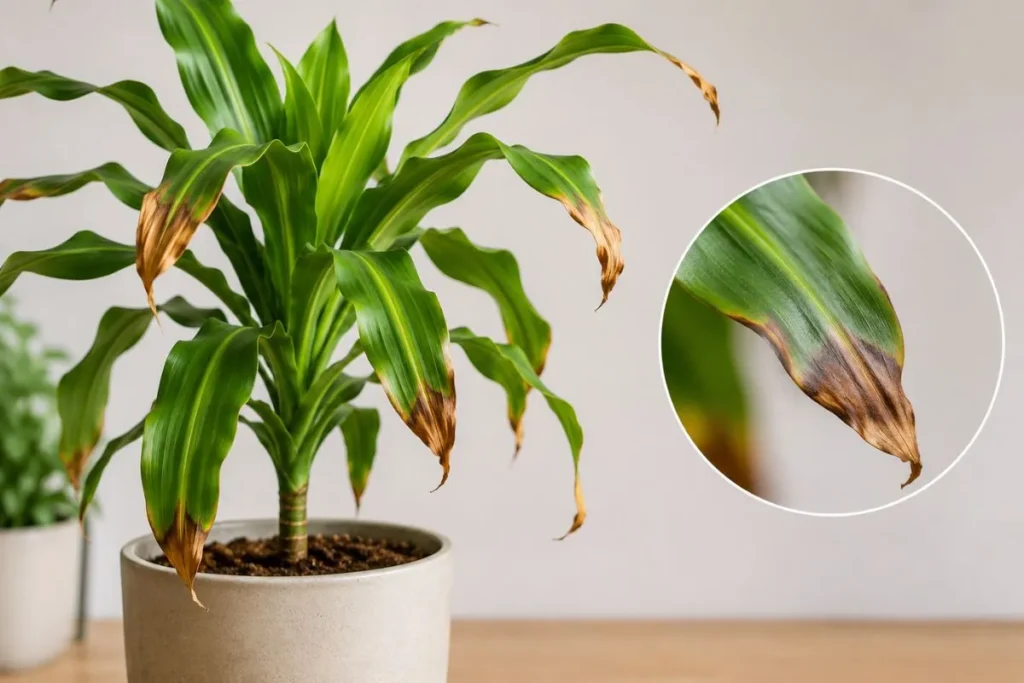
Look at where your plant sits. Is it directly beside a heater, heating vent, or strong air-conditioning airflow? If so, the constant movement of dry air may be contributing to the problem.
You can improve the environment by moving the plant away from direct hot or cold airflow and maintaining a more comfortable level of humidity around it.
If the leaves are mainly brown at the tips rather than covered in large brown patches, humidity is worth checking before making major changes to the plant.
Too Much Direct Sunlight Can Burn the Leaves
Corn plants generally do well in bright indoor conditions, but that does not mean they want intense direct sunlight all day.
Strong sunlight through a window can scorch foliage, especially if the plant was previously growing in lower light. Sun-damaged leaves may develop dry brown patches or areas of discoloration.
If you recently moved your plant closer to a bright window and then noticed brown spots on corn plant leaves, consider the change in light exposure.
This is where understanding corn plant sunlight requirements helps. A bright location with filtered or indirect light is often a better choice than harsh direct afternoon sun.
If you suspect too much sunlight is causing corn plant brown leaves, move the plant slightly farther from the window rather than placing it in a dark corner. The goal is to reduce harsh exposure while still providing enough light for healthy growth.
Poor Drainage Is Keeping the Roots Too Wet
Even if you have a good watering routine, poor drainage can still create problems.
A corn plant growing in compacted soil may remain wet around the roots for too long. A decorative container without drainage holes can create the same issue because excess water has nowhere to go.
This is why corn plant soil drainage matters so much.
If the pot has drainage holes, check whether water actually flows out when you water. If the soil feels heavy, compacted, or constantly wet, the plant may need a better-draining growing medium.
The best soil for corn plant care should hold some moisture while still allowing excess water to move away from the roots. You want a balance rather than soil that stays saturated.
Poor drainage is particularly important to investigate when brown leaves appear alongside yellowing, drooping, or consistently wet soil.
Temperature Stress Can Turn Leaves Brown
Corn plants prefer reasonably stable indoor conditions. Sudden temperature changes can stress the foliage.
A plant sitting beside a cold window during winter, directly under an air conditioner, or next to a strong heat source may develop leaf damage over time.
This is known as corn plant temperature stress.
Cold drafts can be particularly troublesome. If your plant’s leaves suddenly become discolored after a significant temperature change, consider its location before changing your watering routine.
Try to keep the plant away from extreme heat, cold drafts, and direct airflow. A stable environment gives the plant a much better chance of maintaining healthy foliage.
Too Much Fertilizer Can Burn the Leaf Tips
Fertilizer can help plants grow, but more is not always better.
Using too much fertilizer can cause salts to accumulate in the soil. This buildup can damage roots and contribute to corn plant leaf burn, often appearing as brown or crispy leaf tips and edges.
This is one reason overfertilized corn plant symptoms can look similar to underwatering or low humidity.
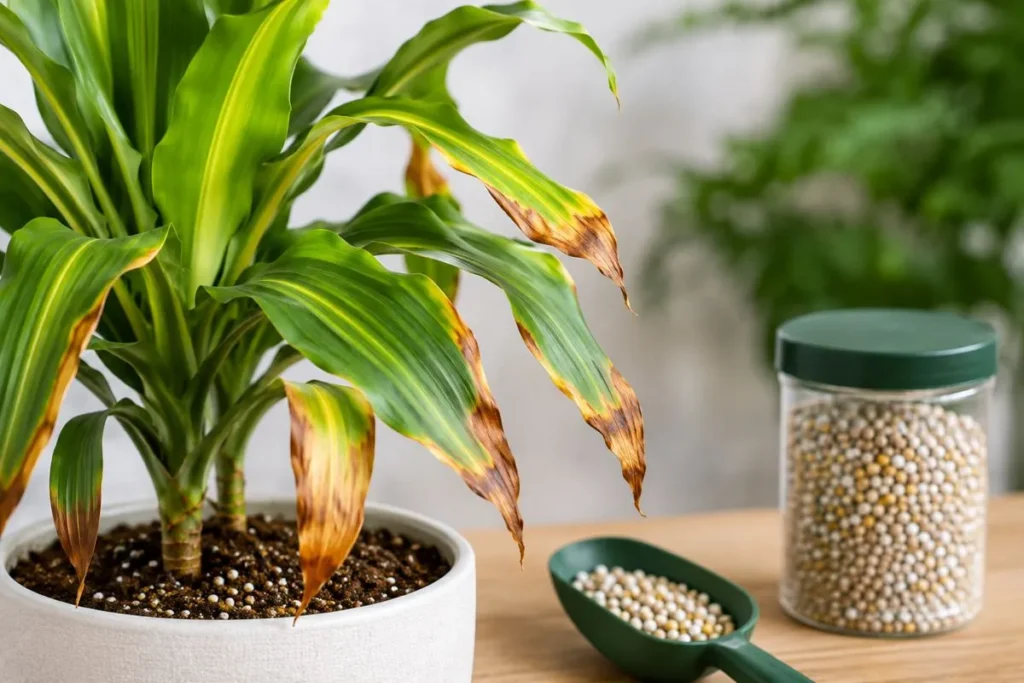
Think about your recent feeding routine. Did you fertilize more often than the product instructions recommend? Did you increase the strength because the plant seemed to be growing slowly?
If so, fertilizer may be contributing to the problem.
Avoid adding more fertilizer to a stressed plant until you understand what is happening. In some situations, flushing excess fertilizer salts from the soil with appropriate watering can help, provided the container drains well.
Nutrient Deficiencies Can Cause Discolored Leaves
Not every leaf problem comes from too much fertilizer. A plant that does not receive enough available nutrients can also develop corn plant leaf discoloration.
Nutrient problems can affect the color and appearance of foliage, although they are often overdiagnosed. A brown leaf does not automatically mean your corn plant needs fertilizer.
Before adding nutrients, check the basics first. Look at the watering routine, soil condition, drainage, lighting, and overall plant environment.
If those factors are already under control and the plant continues to show unusual discoloration, a nutrient issue becomes more worth considering.
The key is to diagnose first and fertilize second.
Tap Water May Be Causing Brown Tips
Sometimes the water itself deserves attention.
Depending on where you live, tap water may contain minerals or other compounds that some houseplants do not tolerate well over time. Corn plants can sometimes show sensitivity around the leaf tips, especially when other care factors are already stressful.
This is why tap water corn plant problems can be worth considering when your plant consistently develops brown tips despite otherwise good care.
Fluoride sensitivity is another possible factor in certain plants, although it should not be assumed to be the cause of every case of brown leaf tips Dracaena.
If watering, light, humidity, and drainage all seem appropriate but the tips continue turning brown, consider whether changing the water source makes a difference.
Pests Can Damage Corn Plant Leaves
Tiny pests can also cause unhealthy-looking foliage.
Corn plant pests may feed on the plant’s tissues and interfere with normal growth. Spider mites are one pest worth checking for, particularly on indoor plants growing in warm, dry conditions.
Look closely at both sides of the leaves. Fine webbing, tiny moving dots, speckled foliage, or unusual discoloration can indicate a pest problem.
Spider mites on corn plant leaves may initially look like general leaf damage, so a close inspection is important.
If you find pests, deal with them early. A small infestation is usually easier to manage than a problem that has been allowed to spread across the entire plant.
Diseases and Fungal Problems Can Cause Brown Spots
Finally, consider disease when the damage does not look like simple dry tips or edges.
Corn plant fungal problems may produce distinct brown spots or lesions on the leaves. Instead of seeing only crispy tips, you may notice unusual patches that spread or become more pronounced over time.
Poor airflow, excessive moisture, and wet foliage can create conditions that favor some plant diseases.
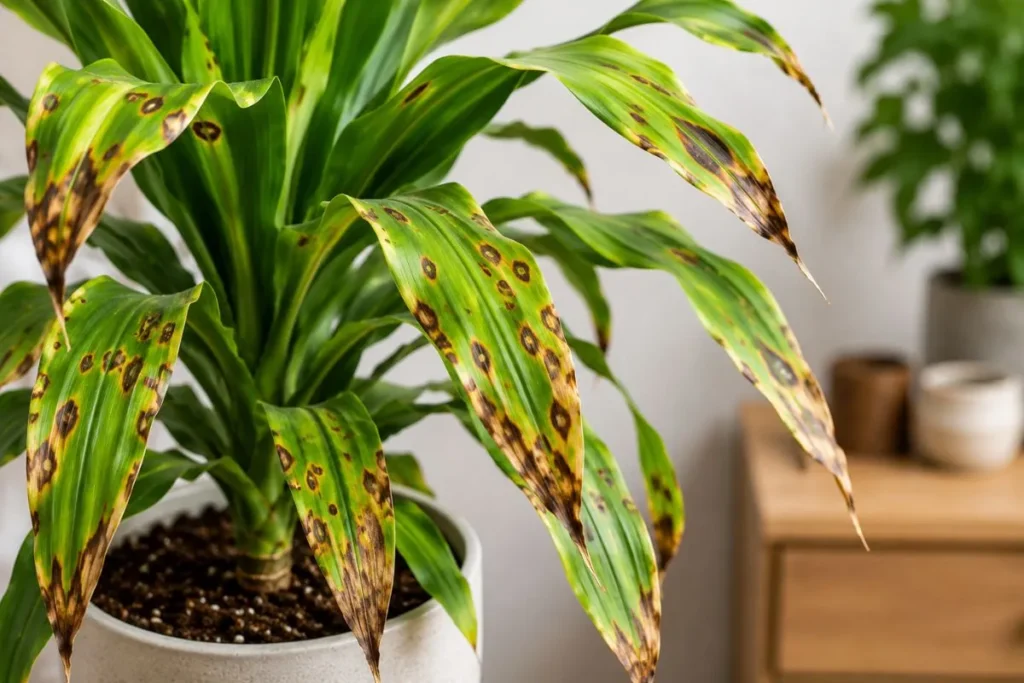
If you notice brown spots on corn plant leaves that continue spreading, inspect the plant carefully. Remove badly affected foliage when appropriate, keep the leaves reasonably dry, and improve airflow around the plant.
Do not immediately assume that every brown spot is fungal, though. Sun damage, physical injury, watering problems, and other stresses can create similar symptoms.
The goal is to look at the complete picture rather than treating one symptom in isolation.
The Bottom Line
When asking why do corn plant leaves turn brown, start with the basics. Check the soil moisture, drainage, light, humidity, temperature, and recent fertilizer use. Then inspect the leaves closely for pests or unusual spots.
The pattern of the damage can tell you a lot. Brown tips often point toward environmental stress, water quality, humidity, or fertilizer buildup. Yellow and brown leaves can suggest watering or root problems. Distinct brown spots may require a closer look for sun damage, pests, or disease.
Most importantly, do not try five different fixes at once. Make the change that best matches the symptoms and then watch how the plant responds. That gives you a much better chance of finding the real cause and getting your corn plant back on track.
Why Are My Corn Plant Leaves Turning Brown at the Tips?
A common belief is that brown tips automatically mean your corn plant needs more water. That is not always true. Brown tips are a symptom, not a diagnosis.
Your corn plant may be getting enough water but still develop brown tips because of dry indoor air, mineral buildup, fertilizer salts, or other environmental stress. The trick is to look at the pattern instead of treating the plant based on one symptom.
If you are searching why is my corn plant leaves turning brown at the tips, start by looking at where the damage begins and how quickly it is spreading. Brown tips that stay limited to the ends of otherwise healthy leaves usually mean something different from large brown patches that spread across the leaf.
Brown Tips With Otherwise Healthy Green Leaves
If only the very ends of your corn plant leaves are brown while most of the leaf remains green, the problem may be relatively minor.
This pattern is common with corn plant brown leaf tips. The damaged tissue may feel dry and crispy, while the rest of the leaf still looks firm and healthy.
Dry indoor air is one possibility. If your home has very low humidity, the leaf tips can lose moisture faster than the rest of the leaf. This is especially common when the plant sits near a heater, air conditioner, or another source of constant airflow.
Water quality can also play a role. Some corn plants react poorly to mineral buildup over time, particularly when the same water is used repeatedly. Fertilizer salts can create a similar problem.
So, if you notice corn plant leaf tips turning brown, do not immediately increase watering. Check the soil first. If it is already moist, adding more water may make things worse rather than better.
Brown Tips and Crispy Leaf Edges
The next clue is texture. When the tips and edges of your corn plant leaves feel dry, thin, and crispy, the plant may be losing moisture faster than it can replace it.
This can happen when the soil becomes too dry, indoor air is very dry, or the plant receives more intense light than it can comfortably handle. If you are wondering why are the tips of my corn plant leaves turning brown, look at the entire environment instead of focusing only on the leaf.
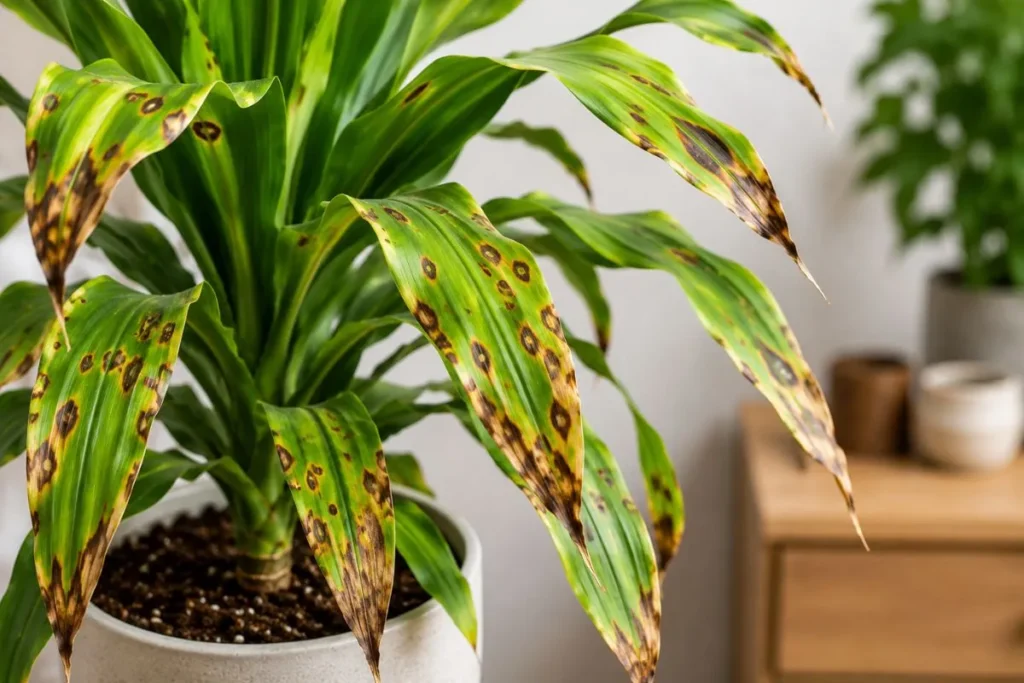
Check whether the soil feels unusually dry, whether the plant is sitting in a very dry room, or whether you recently moved it closer to a sunny window.
Hot or cold airflow from a heater or air conditioner can also stress the leaves, while recently increasing fertilizer may contribute to brown, crispy tips. Looking at these factors together can help you narrow down the real cause without making unnecessary changes to your plant’s care routine.
Brown Tips After a Change in Plant Care
If the brown tips appeared shortly after changing your plant’s location, watering routine, fertilizer, or water source, think about what changed.
For example, moving a corn plant from a dim corner to a bright window may suddenly expose it to much stronger light. Likewise, moving it beside a heating vent can expose the foliage to much drier air.
A change in watering habits can also create stress. If you previously watered only when the soil became moderately dry but suddenly started watering much more frequently, the root environment may change significantly.
This is why keeping the plant’s care routine fairly consistent can make troubleshooting easier.
Can Brown Tips Spread Across the Whole Leaf?
Yes, brown damage can become more extensive when the underlying stress continues.
A small brown tip may stay limited for a long time. But if the plant continues to experience the condition causing the damage, more of the leaf can become discolored or dry.
However, the speed and appearance of the damage matter.
A slowly expanding dry edge may suggest environmental stress. Distinct spots, rapidly spreading lesions, or unusual patterns deserve a closer inspection because they may point toward a different problem.
Do not judge the entire plant by one damaged leaf. Look at several leaves and compare old growth with newer growth.
What Should You Do About Brown Corn Plant Tips?
First, accept that the brown tissue itself will not normally become green again. Your goal is to prevent new brown tips from developing.
Start by checking the soil. If it is extremely dry, correct the watering routine. If it stays wet for long periods, investigate drainage instead.
Next, look at the plant’s location. Keep it in a comfortable spot with suitable indoor light and protect it from harsh direct sunlight and strong drafts.
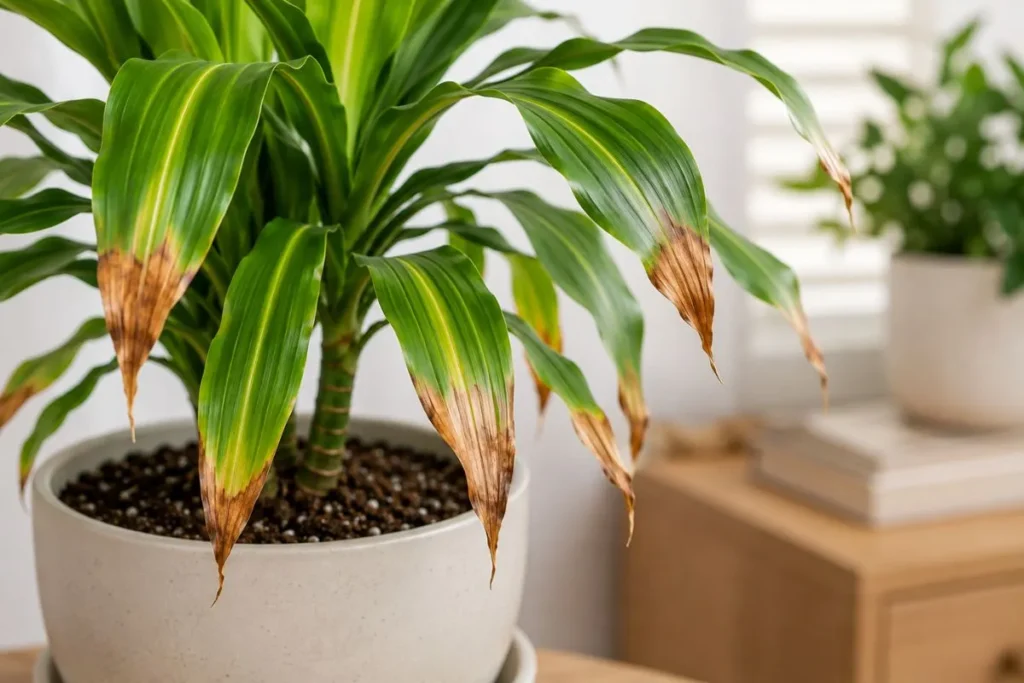
If the air is very dry, improve the humidity around the plant. Also review recent fertilizer use and consider whether your water source could be contributing to persistent tip burn.
You can trim unattractive brown tips for cosmetic reasons, but pruning alone will not solve the problem. The real solution is correcting whatever is stressing the plant.
When Brown Tips Are Not a Major Concern
A few brown tips do not necessarily mean your corn plant is seriously unhealthy.
Older leaves naturally become less attractive over time, and minor tip damage can happen even when the plant is generally doing well.
The bigger question is whether new leaves are developing healthy green growth.
If older leaves have a few brown tips but new foliage looks strong, the plant may simply need a small adjustment rather than major intervention.
On the other hand, if more and more leaves are developing brown tips, the damage is moving toward the center of the leaves, or the plant is also showing yellowing and drooping, investigate the growing conditions more carefully.
Why Are My Corn Plant Leaves Turning Brown and Yellow?
Seeing both brown and yellow leaves can be more worrying than seeing a few brown tips. But once again, brown and yellow leaves do not automatically mean your corn plant is dying. The combination simply tells you that the plant is under some type of stress and that you need to look beyond the color itself.
If you are asking why are my corn plant leaves turning brown and yellow, pay attention to which color appears first, where it appears, and whether the leaves are soft, dry, crispy, or drooping.
Yellow Leaves With Brown Areas
When yellowing appears alongside brown damage, the plant may be dealing with a problem affecting its roots or overall growing conditions.
For example, consistently wet soil can put stress on the root system. When roots are struggling, the foliage may lose its healthy color and eventually develop brown areas.
This is different from a leaf that is mostly green with only a small brown tip.
If several leaves are becoming yellow before developing brown areas, check the soil and drainage carefully. Do not simply assume the plant is thirsty because the leaves look unhealthy.
Brown and Yellow Leaves From Watering Stress
Watering is one of the first things to investigate when you see corn plant leaves turning yellow and brown.
Both too little and too much water can create unhealthy-looking foliage. The important thing is to examine the soil rather than relying on the leaves alone.
If the soil is extremely dry and the leaves are dry or crispy, the plant may not be receiving enough moisture.
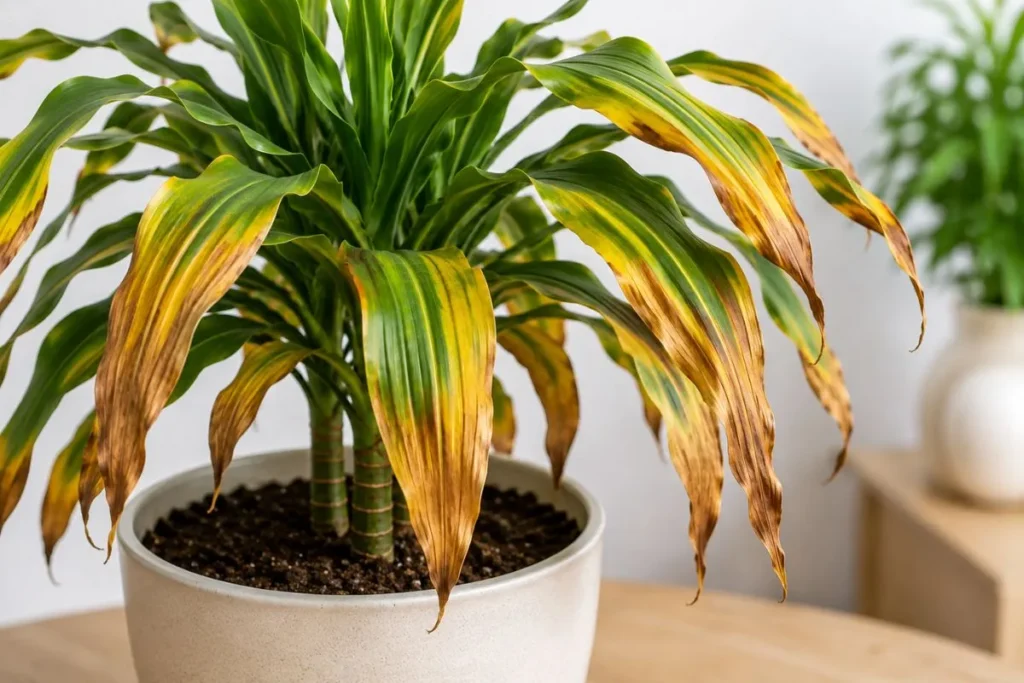
If the soil remains wet for an extended period and the foliage is yellowing, the roots may be under stress from excessive moisture.
This is why a simple “water more” or “water less” rule does not work for every corn plant.
Your plant’s pot size, soil, temperature, humidity, light, and growing environment all affect how quickly the soil dries.
Yellowing and Brown Leaves From Root Stress
Healthy roots support healthy leaves. When the roots cannot function properly, the foliage is often one of the first places where you see a problem.
Root stress can develop when the soil stays saturated, drainage is poor, or the plant has been exposed to inconsistent watering for a long time.
If you suspect a root problem, inspect the soil first. If it is consistently soggy, the issue may be deeper than the leaves.
A healthy root environment should provide both moisture and air. Roots need water, but they also need access to oxygen.
This is why corn plant root rot should be considered when yellowing and browning occur together with persistently wet soil, especially if the plant looks increasingly weak.
Yellow and Brown Leaves From Nutrient Problems
Nutrients also affect leaf color, but this is an area where plant owners often jump to conclusions.
A yellow or brown leaf does not automatically mean your corn plant needs fertilizer.
If you fertilize every time you notice discoloration, you may actually create more stress. Excess fertilizer can lead to salt buildup and contribute to brown tips and leaf damage.
A nutrient deficiency is more worth considering when the basic growing conditions are already appropriate and the plant continues to show unusual discoloration.
Look at the overall plant rather than diagnosing a nutrient issue from one leaf.
If newer growth looks healthy while one or two old leaves are changing color, the situation may be very different from a plant where widespread discoloration affects many leaves at once.
Natural Aging Can Cause Yellow and Brown Leaves
Not every discolored leaf indicates a care mistake.
As corn plants mature, older leaves can naturally lose their color and eventually decline. This is especially noticeable when only a small number of the oldest leaves are affected while the newer foliage remains healthy.
Natural aging usually looks different from an active plant-care problem.
If the change is limited to older leaves and the plant continues producing healthy new growth, there may be little reason to worry.
But if yellow and brown discoloration is appearing rapidly across multiple leaves, do not dismiss it as normal aging. That pattern deserves closer attention.
How to Tell a Watering Problem From Normal Aging
One of the easiest ways to narrow down the problem is to look at which leaves are affected.
If only the oldest leaves are gradually yellowing and browning, natural aging may be involved.
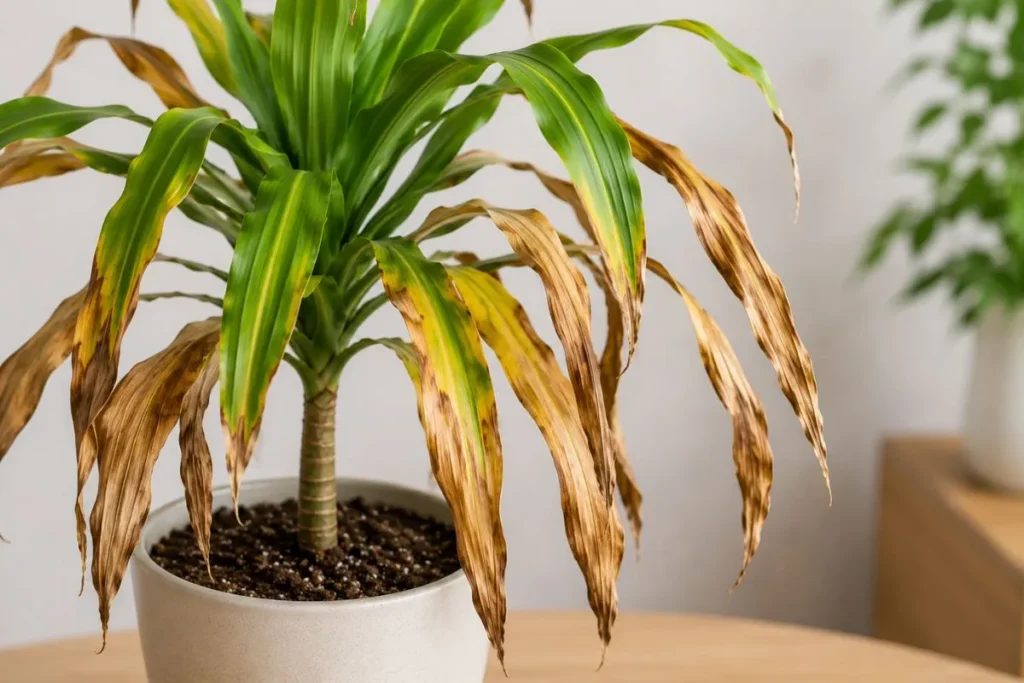
If several leaves are changing color at the same time, especially newer leaves, environmental stress becomes more likely.
Also check the soil. If it is extremely dry or remains wet for days, that information can help explain what you are seeing.
The plant’s location matters too. A recent move, a new watering routine, or a major change in temperature can provide an important clue.
What Healthy Corn Plant Leaves Should Look Like
Healthy corn plant leaves should generally have a strong green appearance appropriate to the plant’s variety. They should feel reasonably firm and should not be covered with widespread crispy brown areas, unexplained spots, or severe discoloration.
New growth is especially useful when judging plant health.
If new leaves emerge green and continue developing normally, that is a positive sign. It means the plant is still capable of producing healthy foliage even if some older leaves have cosmetic damage.
Do not expect damaged leaves to repair themselves completely. Instead, focus on creating conditions that support healthy future growth.
4.8 A Simple Check Before You Change Anything
Why Is My Indoor Corn Plant Getting Brown Leaves?
A common mistake is to think that because a corn plant lives indoors, it is automatically protected from leaf problems. It is not. Indoor conditions can actually create several problems that lead to brown foliage.
Dry air, poor light, temperature changes, nearby vents, cramped pots, and inconsistent care can all affect your plant. So if you keep asking, “Why is my indoor corn plant getting brown leaves?”, look at the space around the plant, not just the leaves.
Your indoor environment has a bigger effect on corn plant care than you might expect. A corn plant may look perfectly healthy when you first bring it home, then develop brown tips or edges after a few weeks because the conditions in your home are different from those in the nursery or store.
The good news is that indoor corn plant problems are often manageable once you identify what has changed.
Dry Indoor Air Can Stress Your Corn Plant
Indoor air can become surprisingly dry, especially when heating or air conditioning is running regularly.
You may not notice the low humidity yourself, but your plant can. Dry air increases moisture loss from the leaves, which can contribute to brown leaf tips, crispy edges, and generally dry-looking foliage.
This is especially worth checking if the plant sits close to a heating vent, radiator, fan, or air-conditioning unit.
If the room feels comfortable but the leaves continue developing dry tips, do not automatically assume watering is the problem. Check the humidity and the plant’s position as well.
A more comfortable indoor environment can help reduce dry air plant leaves and support healthier foliage.
Air Conditioners and Heaters Can Cause Trouble
Where you place your corn plant matters almost as much as how you water it.
An air conditioner may expose the plant to repeated blasts of cool, dry air. A heater can create warm, dry airflow that pulls moisture from the foliage.
This type of constant exposure can contribute to corn plant leaf discoloration, especially around the tips and edges.
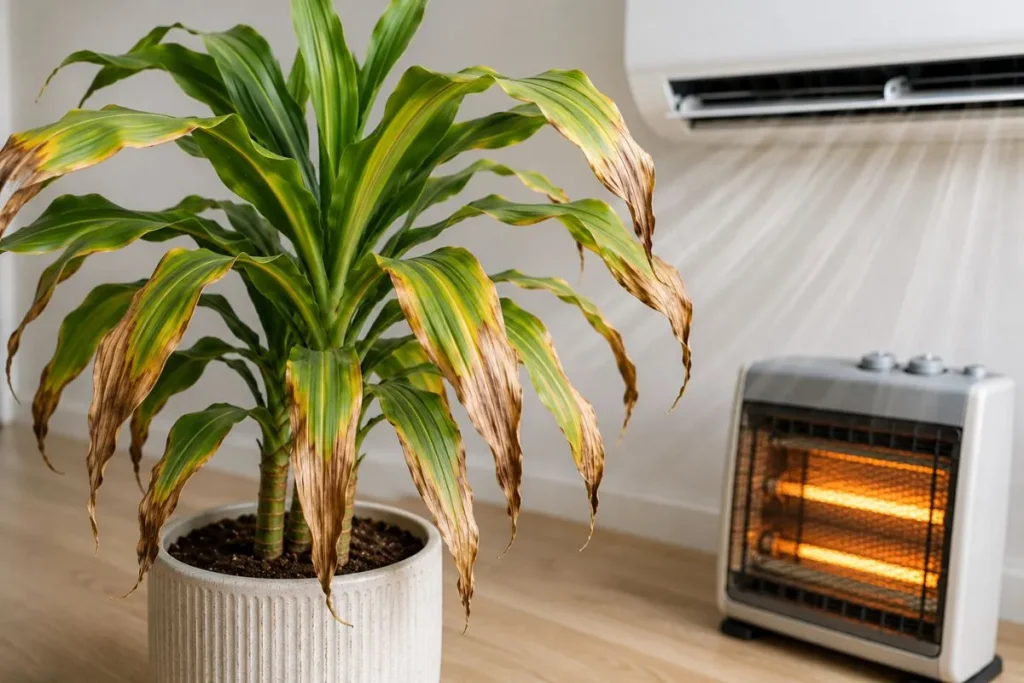
Try not to place your corn plant directly underneath a vent or right beside a heating source. You do not necessarily need to move it to another room. Even moving it a reasonable distance away from the airflow can make a difference.
The goal is to give the plant a more stable environment rather than exposing it to constant temperature and humidity swings.
Poor Indoor Lighting Can Affect Leaf Health
Indoor plants often receive much less light than they would outdoors.
A room may look bright to your eyes but still provide relatively low light for a plant. If your corn plant sits far away from a window, its growth may become weaker over time.
This does not mean you should place it directly in harsh sunlight. Instead, look for a location with good natural brightness without intense, scorching rays.
Understanding corn plant sunlight requirements is important here. The plant generally benefits from bright, indirect light rather than being kept in either extreme darkness or intense direct sun.
If you recently moved your plant from a bright location to a darker part of the house and its growth starts changing, lighting may be worth reconsidering.
A Sudden Change in Location Can Stress the Plant
Corn plants can adjust to new environments, but sudden changes can still cause stress.
For example, moving a plant from a bright room into a dark hallway changes its light exposure. Moving it from a humid room into a very dry room changes its moisture environment. Placing it beside a window during a cold season can expose it to temperature fluctuations.
These changes can contribute to indoor corn plant care problems.
If your plant was healthy before you moved it and started developing brown foliage afterward, think about what changed rather than immediately adding fertilizer or water.
Sometimes the simplest solution is to return the plant to a more suitable location.
Small Pots Can Create Indoor Growing Problems
A corn plant can eventually outgrow its container.
When the root system becomes crowded, the soil may dry out unusually quickly. You may also notice roots circling around the inside of the pot or emerging from drainage holes.
A small container does not automatically cause brown leaves, but it can make watering and moisture management more difficult.
If your plant needs water much more frequently than it used to, check whether the roots have filled most of the container.
At the same time, do not repot simply because you see one brown leaf. Repotting is best considered when there are clear signs that the current container or soil is causing a problem.
Indoor Watering Habits Can Be Misleading
Indoor plants often dry out at different speeds depending on the season and location.
A corn plant sitting near a sunny window may use moisture faster than one sitting in a cooler, darker room. A plant in a dry winter environment may behave differently from one growing in humid summer conditions.
That is why a fixed watering schedule can cause trouble.
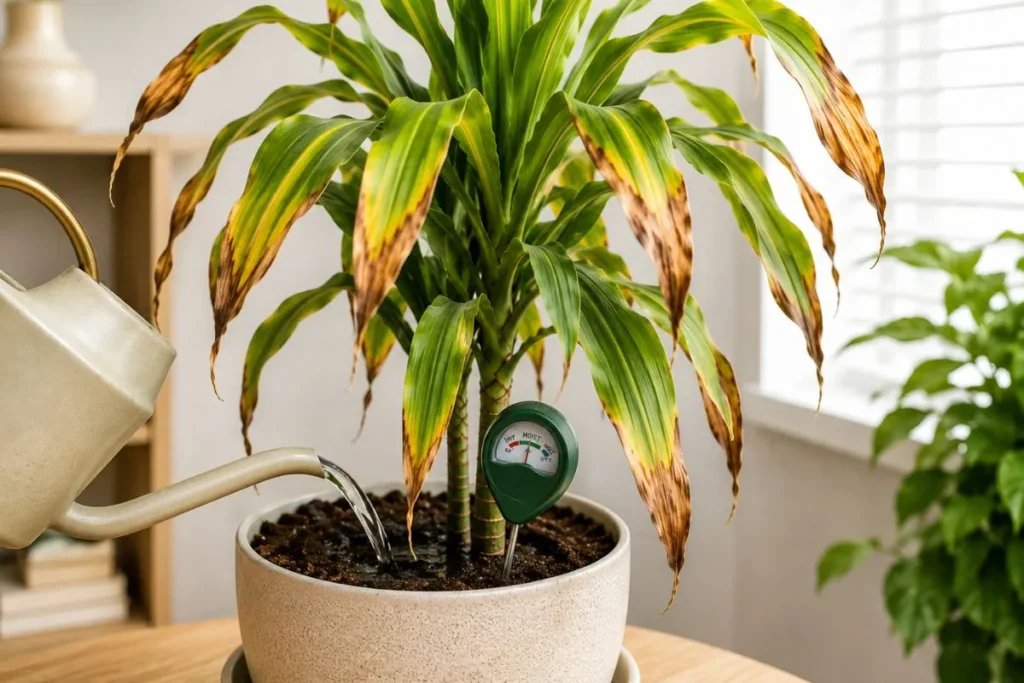
Instead of thinking, “I always water every Sunday,” check the soil and the plant’s current conditions.
If you notice corn plant leaves turning brown and dry, check whether the soil has become excessively dry. If the soil remains wet for a long time, look at drainage before adding more water.
This simple habit can prevent many indoor watering mistakes.
Dust on Indoor Leaves Can Reduce Their Ability to Function Well
Indoor plants also collect dust.
A layer of dust may cover the leaf surface and make the foliage look dull. Heavy dust can also interfere with the leaf surface’s normal function.
Gently cleaning the leaves from time to time can help keep them looking fresh. Use clean water and a soft cloth rather than harsh cleaning products.
This will not magically reverse existing brown leaves, but it is a useful part of good corn plant care.
5.8 Indoor Corn Plants Can Still Get Pests
Being indoors does not make a plant immune to insects.
Pests can arrive on a new plant, move from another houseplant, or take advantage of warm indoor conditions. Spider mites are particularly worth checking when the air is warm and dry.
Inspect the undersides of leaves and look for tiny specks, unusual stippling, fine webbing, or other signs of activity.
If you notice unusual damage that does not match your watering or lighting conditions, include pests in your troubleshooting process.
Keep the Plant Away From Extreme Indoor Conditions
Your corn plant does not need a perfect indoor environment, but it does need reasonably stable conditions. If you are wondering why is my indoor corn plant getting brown leaves, its location may be part of the problem.
Avoid placing the plant directly beside a heater, under an air-conditioning vent, against a very cold window, or in a dark room with almost no natural light.
Strong temperature changes and constant hot or cold airflow can also stress the foliage and contribute to corn plant brown leaves. Instead, choose a comfortable spot with suitable bright, indirect light and less extreme airflow. Even small changes to the plant’s indoor environment can reduce stress and help encourage healthier new foliage over time.
How to Improve Indoor Corn Plant Care
If your indoor corn plant keeps developing brown leaves, take a quick look at the whole setup.
Start with the location. Make sure the plant receives adequate bright, indirect light without harsh direct exposure.
Next, check the soil before watering. Do not keep it constantly saturated, but do not allow it to remain severely dry for long periods either.
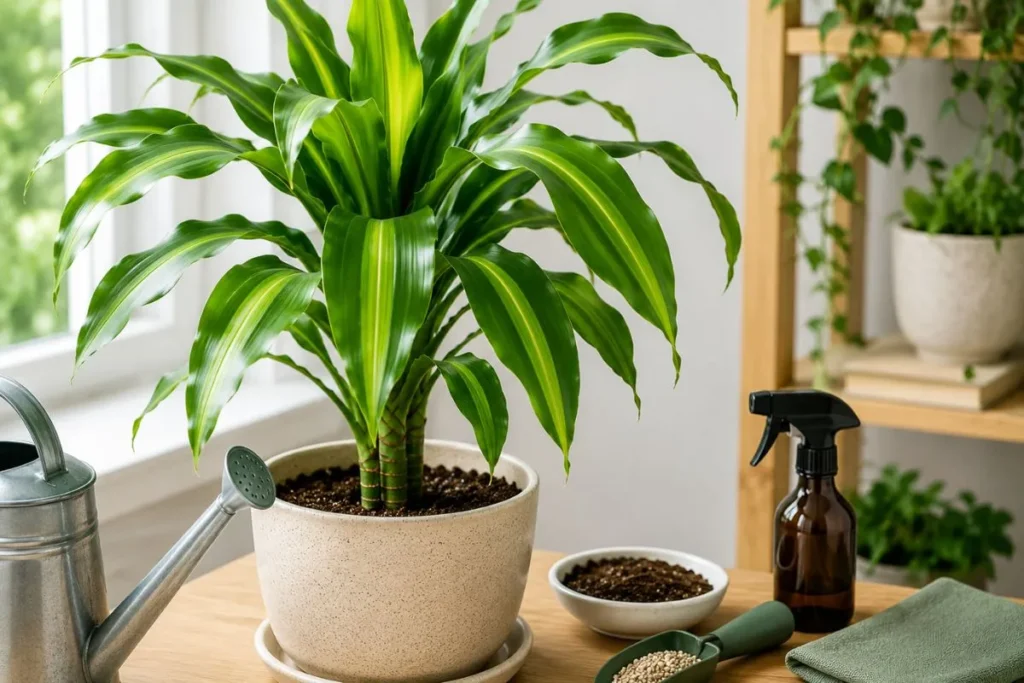
Then look at humidity and airflow. If the plant is exposed to very dry air from heating or air conditioning, moving it away from the direct airflow may help.
Finally, inspect the leaves regularly. Look for pests, unusual spots, or changes in new growth.
These basic habits are often more useful than buying a long list of products.
How to Tell if Your Indoor Corn Plant Is Recovering
One of the biggest mistakes plant owners make is expecting damaged leaves to become perfect again.
Existing brown tissue usually stays brown. That does not mean the plant is failing.
Instead, watch what happens next.
If new leaves emerge with healthier color, the plant is maintaining firm foliage, and the spread of brown damage slows down, those are encouraging signs.
Healthy new growth is much more useful than trying to judge recovery by an old damaged leaf.
So, if you have been wondering why is my indoor corn plant getting brown leaves, focus on the conditions that affect the plant every day. Give it suitable light, manage watering carefully, avoid extreme airflow, maintain a reasonable environment, and inspect the foliage regularly.
Once the indoor conditions are corrected, your corn plant has a much better chance of producing fresh, healthy growth instead of continuing the cycle of brown leaves.
Frequently Asked Questions About Corn Plant Leaves Turning Brown
Why is my corn plant leaves turning brown?
Brown leaves on a corn plant can happen for several reasons. Common causes include watering problems, dry indoor air, unsuitable lighting, temperature stress, poor drainage, fertilizer buildup, water quality, pests, and disease.
The best way to find the cause is to look at the entire plant and its growing conditions. Check the soil moisture, leaf pattern, plant location, and recent changes in care. A few brown tips are usually less concerning than widespread browning or rapidly worsening foliage.
Why are my corn plant leaves turning brown and dry?
If your corn plant leaves are brown and dry, moisture stress is one possibility. The soil may be staying too dry, or the surrounding air may be very dry.
Check the soil before watering. If it is dry, adjust your watering routine. If the soil has adequate moisture but the leaf tips remain crispy, look at humidity and the plant’s location.
Why are the tips of my corn plant leaves turning brown?
Corn plant brown leaf tips are often linked to environmental stress. Dry air, inconsistent moisture, fertilizer buildup, or water quality can all contribute.
If only the tips are affected and the rest of the foliage looks healthy, the problem may be relatively minor. Focus on improving the plant’s overall growing conditions rather than cutting off leaves immediately.
Why do corn plant leaves turn brown after watering?
Brown leaves after watering do not necessarily mean the water itself caused the damage.
If the soil was extremely dry, the plant may already have been stressed before you watered it. On the other hand, frequent watering can leave the roots in overly wet soil, which may lead to additional problems.
Always check how quickly the soil dries after watering instead of judging the plant by the watering event alone.
Can brown corn plant leaves turn green again?
Usually, the brown portion of a leaf will not turn green again. Once leaf tissue has died, it generally stays damaged.
The good news is that you do not need every old leaf to recover for the plant to become healthy again. Focus on preventing additional damage and encouraging fresh, healthy growth.
New green leaves are a much better sign of recovery than the appearance of an older damaged leaf.
How do I stop corn plant leaves from turning brown?
Start by identifying the cause instead of making several changes at once.
Check the soil moisture, drainage, lighting, humidity, temperature, fertilizer routine, and water source. Also inspect the plant for pests or unusual spots.
Once you identify the likely problem, make the appropriate adjustment and give the plant time to respond. Consistent corn plant care is usually more effective than repeatedly changing its environment.
How do I revive a corn plant with brown leaves?
To revive a struggling corn plant, first determine what is causing the stress.
Check the roots and soil condition, review your watering routine, provide suitable light, protect the plant from extreme temperatures, and address very dry indoor air if necessary. Also check for pests and avoid unnecessary fertilizer while the plant is stressed.
Remove severely damaged foliage if needed, but remember that pruning only improves the plant’s appearance. It does not correct the underlying problem.
Should I cut off brown leaves from my corn plant?
You can remove leaves that are completely brown, dead, or badly damaged. If only a small section of a leaf is brown, you can trim the damaged portion for appearance.
Use clean, sharp scissors or pruning shears and avoid removing large amounts of healthy green tissue.
Most importantly, do not rely on pruning alone. If the plant continues developing brown leaves, find and correct the cause.
How often should I water a corn plant?
There is no single watering schedule that works for every corn plant.
Indoor temperature, humidity, light, pot size, soil type, and season all affect how quickly the soil dries. Instead of watering strictly according to the calendar, check the soil before watering.
The goal is to provide adequate moisture without keeping the roots constantly saturated.
Can low humidity cause brown corn plant leaves?
Yes. Very dry indoor air can contribute to brown leaf tips and crispy edges.
This is particularly common when a corn plant is near heating systems, air-conditioning vents, or other sources of dry airflow.
If the soil moisture seems appropriate but the tips continue drying out, check the humidity and location of the plant.
Can tap water cause brown tips on corn plants?
It can be a contributing factor in some situations. Depending on the water source, dissolved minerals and other compounds may accumulate over time and contribute to leaf-tip damage.
However, do not assume tap water is the cause simply because your plant has brown tips. Check watering, humidity, light, fertilizer, and drainage first.
If those factors are already suitable and the problem continues, water quality becomes more worth investigating.
Why are my corn plant leaves turning yellow and brown?
Yellow and brown leaves can result from several types of stress, including watering problems, root stress, nutrient issues, environmental changes, or natural aging.
Look at which leaves are affected and inspect the soil. If only older leaves are gradually changing color while new growth remains healthy, natural aging may be involved.
If several leaves are changing color quickly, especially newer leaves, investigate the plant’s growing conditions more closely.
Conclusion:
So, why is my corn plant leaves turning brown? The answer is rarely as simple as needing more water. Brown leaves are usually a symptom of an underlying care or environmental problem.
Watering issues, low humidity, unsuitable light, poor drainage, temperature stress, fertilizer buildup, water quality, pests, and other factors can all contribute to brown foliage.
The most important thing is to identify the cause rather than only treating the brown leaves. Check the soil before watering, make sure the pot drains properly, provide suitable indirect light, and keep your plant away from extreme temperatures and strong airflow.
If the leaves continue developing brown tips or spots, also check humidity, fertilizer use, water quality, and possible pests.
Remember that damaged brown tissue will not normally turn green again. Removing badly damaged leaves can improve the plant’s appearance, but it will not solve the problem by itself. Instead, focus on creating better conditions for new healthy growth.
If you want to know how to fix brown leaves on a corn plant, start with one simple step: find the condition that is stressing your plant and correct it. With consistent care and a little patience, your corn plant can recover and continue producing lush, healthy foliage.

Plant Nest Blog’s author is passionate about plants, gardening, and sustainable living. Through research and practical experience, they share helpful plant care tips, gardening guides, and easy solutions to help readers grow healthier plants and create greener spaces.