
Many people believe that why are my house plants leaves turning yellow has only one answer and that yellow leaves always mean an indoor plant is dying. Fortunately, that isn’t true. In most cases, yellow leaves are simply an early warning sign that something in your plant’s care routine needs attention. If you identify the cause early, you can usually fix the problem and help your houseplant return to healthy growth.
If you’ve been asking why are my houseplant leaves turning yellow, you’re not alone. Yellow leaves are one of the most common problems faced by indoor plant owners, whether they’re growing pothos, peace lilies, monsteras, snake plants, rubber plants, philodendrons, or other popular houseplants.
Sometimes only one or two leaves change colour, while in other cases the yellowing spreads quickly throughout the plant. Because several different problems can cause the same symptom, it’s important not to assume there’s only one explanation.
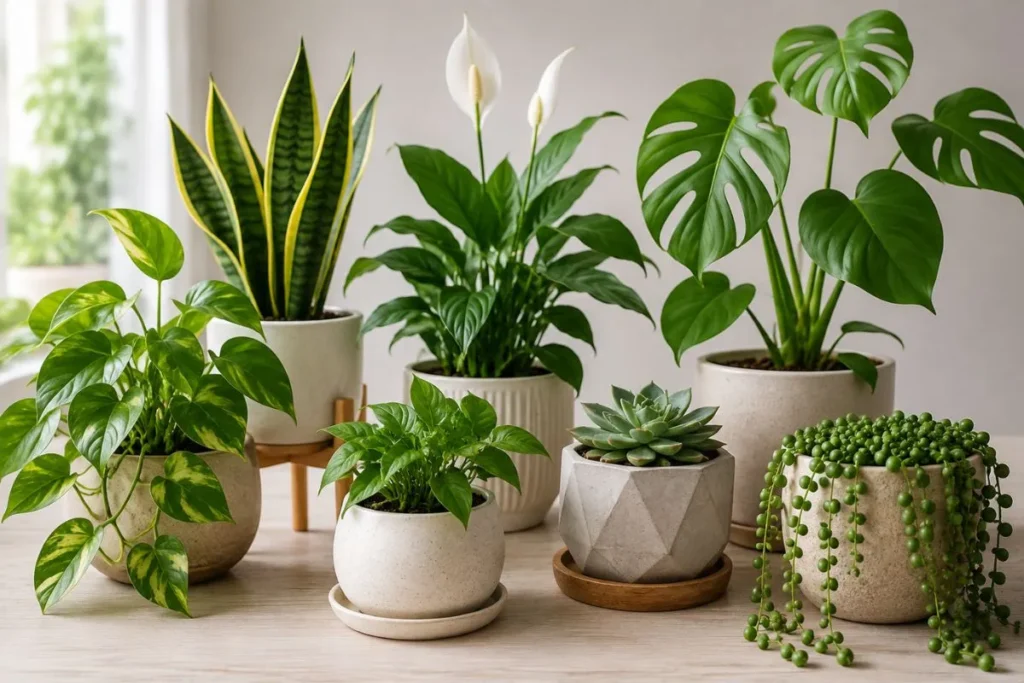
One of the biggest mistakes people make is treating the yellow leaves instead of identifying the real problem. Watering more often, adding extra fertiliser, or moving the plant to a brighter window may seem like the right solution, but these changes can actually make things worse if the underlying cause is different.
Healthy indoor plants depend on the right balance of water, nutrients, light, soil, humidity, and temperature. When one of these conditions becomes unbalanced, the leaves are usually the first part of the plant to show visible signs of stress.
In this guide, you’ll discover why are my house plants leaves turning yellow, what the different symptoms mean, and how to identify the exact cause before taking action.
We’ll cover everything from watering mistakes and nutrient deficiencies to root problems, poor drainage, lighting, humidity, pests, diseases, and natural ageing. You’ll also learn practical solutions and prevention tips to help your houseplants stay healthy, vibrant, and full of lush green foliage throughout the year.
Understanding Healthy Houseplant Leaves
Before you can diagnose why are my house plants leaves turning yellow, it’s important to know what healthy indoor plant leaves should look like. Once you understand the signs of healthy growth, it becomes much easier to recognise when something has changed. Healthy leaves are one of the clearest indicators that your houseplant is receiving the right amount of water, nutrients, light, humidity, and overall care.
What Healthy Houseplant Leaves Should Look Like
Healthy houseplants produce leaves with a rich, even colour. Depending on the variety, the foliage may be deep green, light green, or naturally variegated, but it should look vibrant and consistent without widespread yellow patches, brown edges, or unusual spots.
The leaves should also feel firm and flexible. They shouldn’t be limp, dry, brittle, or excessively soft. Healthy foliage normally sits upright or extends naturally from the stems without drooping or curling unnecessarily. New leaves should emerge regularly, open fully, and develop into their natural size and shape without distortion.
Steady growth is another sign that your indoor plant is thriving. Strong stems, healthy roots, and fresh new leaves all indicate that the plant is growing under suitable conditions. When your houseplant consistently produces healthy new growth, it’s usually receiving the correct balance of watering, lighting, feeding, and environmental care.
Getting into the habit of checking your houseplants every few days can help you spot problems early. Small changes in leaf colour, texture, or growth are often much easier to correct before they develop into serious issues.
When Yellow Leaves Are Completely Normal
Although yellow leaves on house plants often suggest that something needs attention, they aren’t always a sign of poor health. In certain situations, yellowing is a completely natural part of the plant’s life cycle.
One of the most common examples is the gradual yellowing of older lower leaves. As many houseplants grow, they naturally redirect nutrients from older leaves to support fresh growth.
Over time, the oldest leaves slowly fade from green to yellow before eventually drying out and dropping off. If only one or two older leaves are affected while the rest of the plant remains healthy, this is usually nothing to worry about.
Some people also notice house plant leaves turning yellow after repotting. Mild yellowing after repotting is fairly common because the plant experiences temporary stress while its roots adjust to the new container and fresh potting mix.
During this period, growth may slow slightly while the root system becomes established. With consistent watering and proper care, healthy new growth usually appears within a few weeks.
Seasonal changes can also affect indoor plants. Many houseplants naturally slow their growth during autumn and winter when daylight hours become shorter. During this resting period, a few older leaves may yellow and fall off as the plant conserves energy.
This type of yellowing is generally normal as long as the new growth remains healthy when the growing season returns.
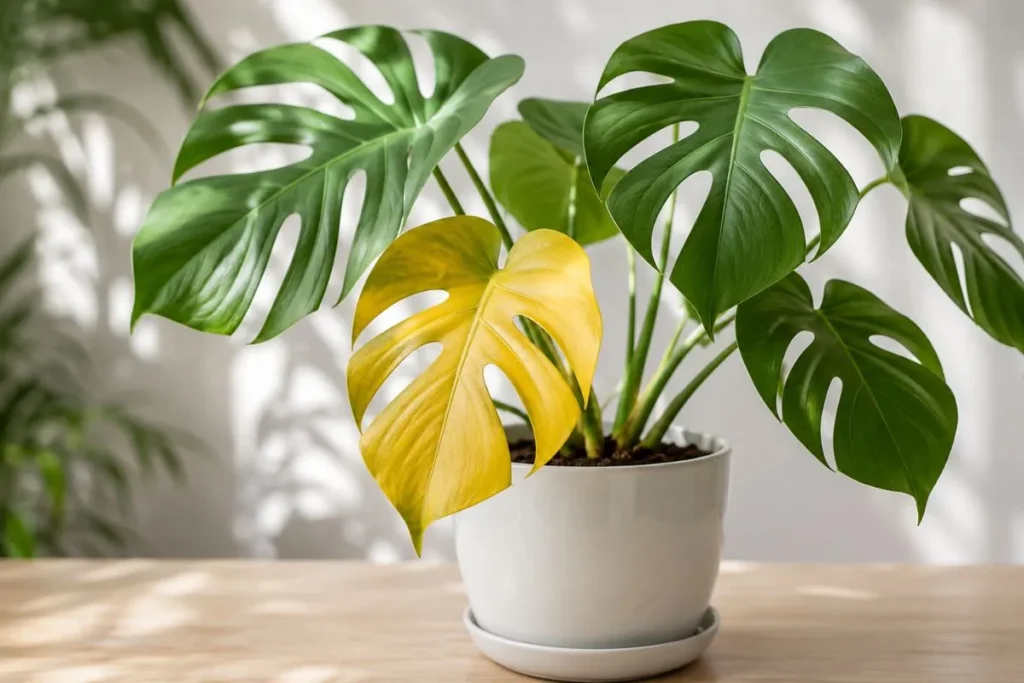
The key is to look at the entire plant instead of focusing on a single yellow leaf. If the yellowing is limited to older foliage while new leaves remain green and healthy, the plant is usually following its normal growth cycle.
However, if yellow leaves spread rapidly, affect young leaves, or appear alongside drooping, curling, brown edges, soft stems, or stunted growth, there’s likely an underlying issue that needs further investigation.
Learning the difference between natural ageing and unhealthy yellowing is one of the most valuable skills any indoor gardener can develop. Once you recognise what’s normal, it becomes much easier to understand why are my house plants leaves turning yellow and choose the right solution before the plant’s health begins to decline.
Why Are My House Plants Leaves Turning Yellow? (Complete Overview)
Many people assume there’s only one answer to why are my house plants leaves turning yellow, but that’s one of the biggest myths about indoor plant care. Yellow leaves don’t automatically point to a single problem
. Instead, they’re your houseplant’s way of telling you that something isn’t quite right. The real challenge is identifying what’s causing the stress before trying to fix it.
If you’ve been asking why are my houseplant leaves turning yellow, avoid making quick changes without inspecting your plant first. Adding more fertiliser, watering more often, or moving the plant to a sunnier spot might seem like the obvious solution, but if the real problem is poor drainage, root damage, or incorrect lighting, those changes could make the situation worse.
Taking a systematic approach will help you find the real cause and restore healthy growth more quickly.
Yellow leaves are often one of the earliest warning signs that an indoor plant gives you. Paying attention to where the yellowing starts, how quickly it spreads, and whether other symptoms appear can help you diagnose the problem before it affects the entire plant.
Below are the most common reasons why are my house plants leaves turning yellow.
Nutrient Deficiencies
One of the leading causes of house plants leaves turning yellow is a nutrient imbalance. Houseplants rely on a balanced supply of nutrients to produce chlorophyll, develop healthy foliage, and support steady growth.
When essential nutrients such as nitrogen, magnesium, iron, or calcium become unavailable, the leaves often begin losing their healthy green colour. However, nutrient deficiencies aren’t the only issue. Overfeeding or nutrient lockout caused by an incorrect soil pH can also prevent roots from absorbing nutrients properly.
The pattern of yellowing often provides useful clues. Some deficiencies begin on older leaves, while others affect the newest growth first. Recognising these patterns makes diagnosis much easier.
Watering Mistakes
Improper watering is another common reason indoor plant leaves turning yellow becomes a problem. Houseplants need the right balance of moisture and oxygen around their roots. Too much water can suffocate the roots, while too little prevents the plant from transporting water and nutrients efficiently.
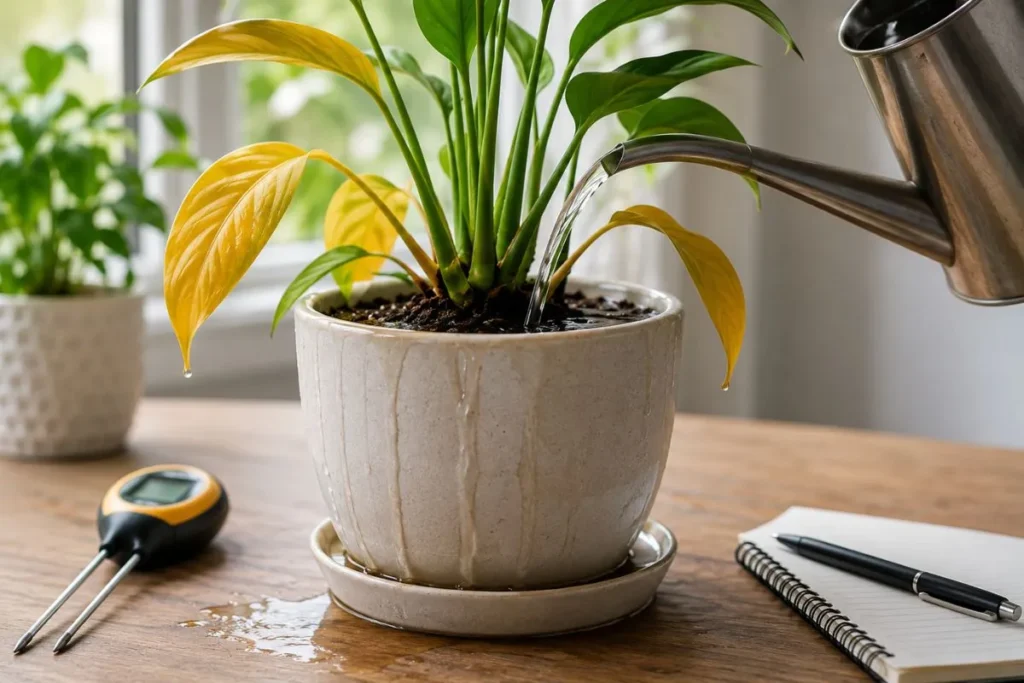
Overwatered plants often develop soft, drooping yellow leaves because the roots cannot function properly in constantly wet soil. Underwatered plants usually produce dry, limp leaves that gradually lose their green colour as dehydration worsens.
Learning to water according to soil moisture instead of following a fixed schedule is one of the best ways to prevent yellow leaves on indoor plants.
Soil and pH Problems
Healthy potting mix provides much more than physical support. It stores moisture, supplies nutrients, allows air to reach the roots, and creates a healthy environment for plant growth.
If the soil becomes compacted, drains poorly, or the pH moves outside the ideal range, nutrient absorption becomes less efficient. Even when nutrients are present, the roots may be unable to use them properly. This condition, known as nutrient lockout, often causes yellow leaves on house plants despite regular feeding.
Using a high-quality, well-draining potting mix and repotting when necessary helps maintain healthy root conditions.
Root Problems
Healthy roots are the foundation of every thriving houseplant. When the roots become damaged, the leaves usually show the first visible signs of stress.
Root rot, overcrowded roots, transplant shock, or damaged roots after repotting can all reduce the plant’s ability to absorb water and nutrients. As a result, leaves begin turning yellow, growth slows, and the plant gradually loses vigour.
If yellowing is accompanied by slow growth, wilting, or constantly wet soil, inspecting the root system may reveal the underlying problem.
Light and Temperature Stress
Light is essential for healthy indoor plants, but both excessive and insufficient light can cause stress.
Plants receiving too much direct sunlight may develop faded or yellow patches where the leaves become scorched. On the other hand, plants growing in very low light often produce pale foliage because they cannot photosynthesise efficiently.
Temperature also plays an important role. Hot rooms, cold draughts, air conditioners, and radiators can all place houseplants under stress. Sudden temperature changes often affect sensitive indoor plants and contribute to leaf yellowing.
Matching your houseplant to the correct lighting conditions and maintaining stable indoor temperatures helps support healthy growth throughout the year.
Humidity Issues
Humidity is another factor that is often overlooked. Many popular houseplants originate from tropical environments where humidity remains consistently high.
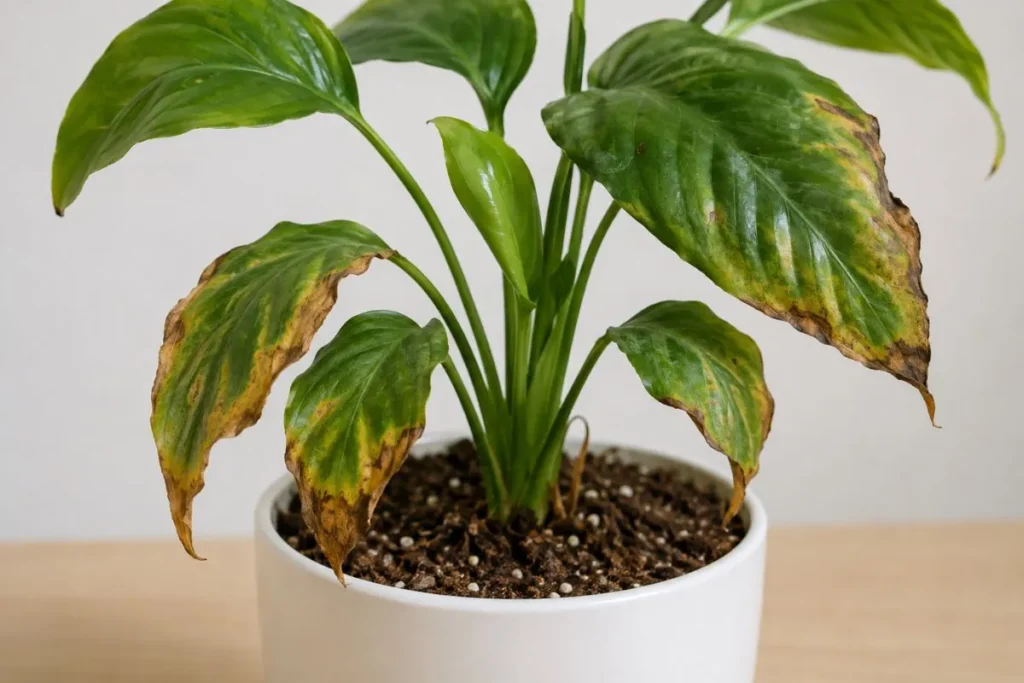
When indoor air becomes too dry, particularly during winter when central heating is running, leaves may begin yellowing around the edges before developing brown tips. Excessively humid conditions can also create problems by encouraging fungal diseases and reducing airflow around the foliage.
Maintaining suitable humidity levels helps many indoor plants produce healthier, greener leaves.
Pest Infestations
Tiny insects are another possible answer to why are my houseplant leaves turning yellow. Common indoor pests such as spider mites, aphids, fungus gnats, mealybugs, and scale insects feed on plant sap or damage the roots, gradually weakening the plant.
These pests often leave behind yellow spots, pale patches, curled leaves, or distorted new growth. Some pests also spread diseases that create additional stress for the plant.
Inspecting both the upper and lower surfaces of the leaves every week makes it much easier to detect pests before they become a serious infestation.
Plant Diseases
Although less common than watering or nutrient problems, diseases can also explain why are my house plants leaves turning yellow.
Fungal diseases, bacterial infections, and leaf spot diseases interfere with the plant’s ability to transport water and nutrients effectively. Yellow leaves are often accompanied by brown spots, soft stems, mould, unpleasant odours, or unusual growth patterns.
Maintaining good airflow, avoiding excessive moisture, and removing infected leaves promptly all help reduce the risk of disease spreading.
Natural Ageing
Not every yellow leaf indicates poor plant health. As houseplants mature, older leaves naturally reach the end of their life cycle and begin turning yellow before dropping off.
This gradual process usually affects only the oldest leaves while new growth remains healthy and green. In these situations, yellowing is simply part of the plant’s normal development and doesn’t require treatment.
The key is to look at the overall condition of the plant rather than focusing on a single leaf. Healthy new growth alongside a few ageing lower leaves is generally a sign that your plant is still thriving.
Understanding why are my house plants leaves turning yellow requires looking at the entire growing environment instead of assuming a single cause. Nutrient deficiencies, watering habits, soil conditions, root health, lighting, humidity, pests, diseases, and natural ageing can all produce similar symptoms.
In the following sections, we’ll explore each cause in detail, helping you identify the exact problem and choose the most effective solution to restore healthy, vibrant indoor plants.
Nutrient Problems That Cause Yellow Leaves
Many people believe that whenever they ask why are my house plants leaves turning yellow, the solution is simply to add more fertiliser. That’s one of the most common mistakes in houseplant care.
While nutrient deficiencies are a major cause of yellow leaves, overfeeding, nutrient lockout, and an incorrect soil pH can produce similar symptoms. Before adding fertiliser, it’s important to identify exactly which nutrient problem your indoor plant is experiencing.
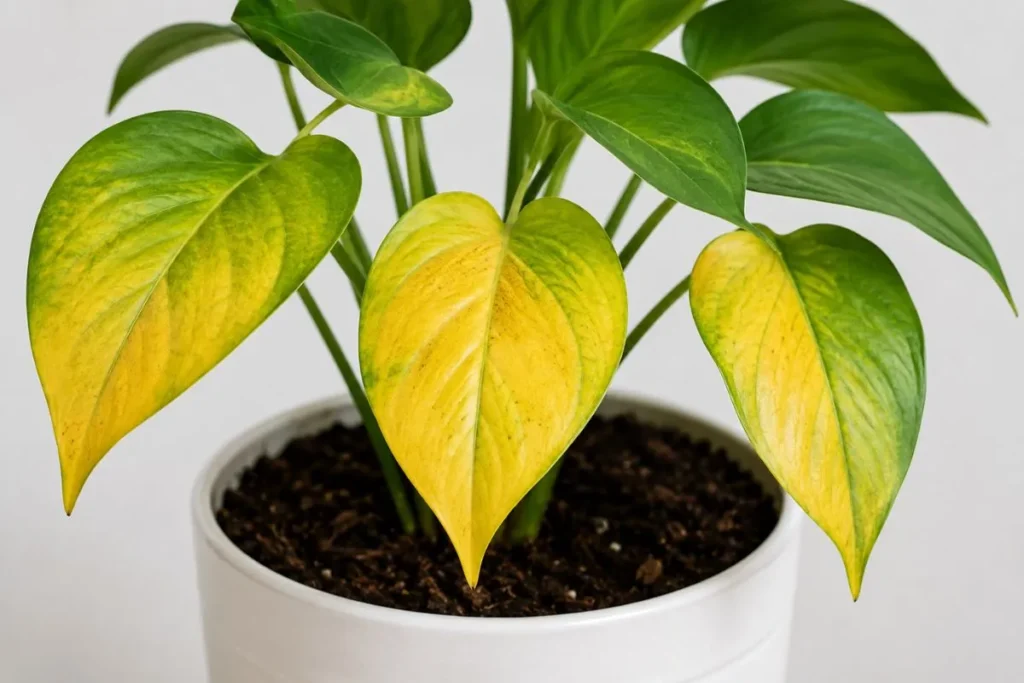
Houseplants need a balanced supply of nutrients to produce chlorophyll, develop healthy foliage, grow strong roots, and support continuous growth. Every nutrient has a specific role, and when one becomes unavailable, the leaves often provide the first visible warning signs. Understanding these symptoms will help you diagnose the problem correctly and avoid unnecessary treatments.
Nitrogen Deficiency
Nitrogen deficiency is one of the most common reasons gardeners search for why are the lower leaves on my house plants turning yellow. Nitrogen is essential for producing chlorophyll, which gives leaves their rich green colour and allows plants to convert light into energy.
Because nitrogen is a mobile nutrient, the plant moves it from older leaves to support new growth when supplies become limited. As a result, the oldest leaves near the bottom of the plant gradually change from dark green to pale green before turning completely yellow.
Unlike several other nutrient deficiencies, nitrogen deficiency usually begins on the lower leaves while new growth remains healthy during the early stages. If the deficiency continues, yellowing slowly spreads upwards, and overall plant growth may become weaker.
To correct nitrogen deficiency, use a balanced houseplant fertiliser according to the manufacturer’s recommendations. Avoid overfeeding, as excessive fertiliser can damage the roots and create additional problems. It’s also worth checking the soil pH because nitrogen may already be present but unavailable if the pH is unsuitable.
Magnesium Deficiency
Magnesium is another essential nutrient because it forms part of the chlorophyll molecule. Without enough magnesium, the plant struggles to maintain healthy green leaves.
One of the easiest ways to recognise magnesium deficiency is by looking at the leaf veins. The veins usually remain green while the tissue between them gradually turns yellow. This condition, known as interveinal chlorosis, typically appears first on older leaves because magnesium is also a mobile nutrient.
Poor soil pH, nutrient imbalances, or repeated watering that washes nutrients from the potting mix can all contribute to magnesium deficiency.
Correcting the pH and applying a suitable magnesium supplement often restores healthy new growth. Although severely damaged leaves may not become green again, future leaves should develop normally once the deficiency has been corrected.
Iron Deficiency
Iron deficiency creates a different yellowing pattern from nitrogen and magnesium deficiencies. Instead of affecting older leaves first, it normally appears on the youngest leaves near the top of the plant.
New leaves often become pale yellow while the veins remain green, creating a distinctive appearance. Older foliage generally stays healthy because iron cannot easily move from mature leaves to developing growth.
Many plant owners immediately add more iron, but the real issue is often an incorrect soil pH rather than a lack of iron itself. When the growing medium becomes too alkaline, the roots struggle to absorb iron even if enough is present.
Testing the soil pH and correcting it gradually is usually the best solution. Once nutrient availability improves, healthy green leaves should begin appearing on new growth.
Calcium Deficiency
Calcium supports strong cell walls, healthy root development, and vigorous new growth. Unlike nitrogen and magnesium, calcium is not mobile within the plant, so deficiency symptoms usually appear on the youngest leaves first.
New leaves may emerge twisted, curled, or misshapen before developing irregular yellow patches or brown edges. Growth often slows because calcium is essential for producing healthy new cells.
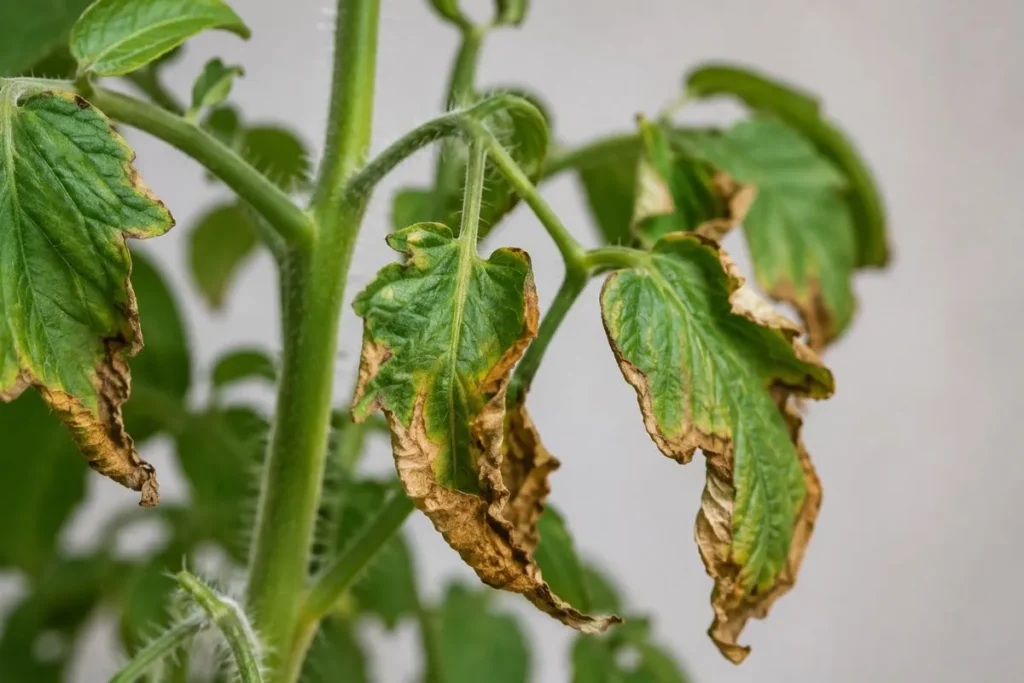
Calcium deficiencies are sometimes caused by inconsistent watering rather than an actual lack of calcium in the soil. Dry roots cannot transport calcium efficiently, even when sufficient amounts are available in the potting mix.
Maintaining consistent soil moisture, using a balanced fertiliser, and avoiding extreme fluctuations in watering all help prevent calcium deficiency in indoor plants.
Nutrient Lockout
Nutrient lockout is one of the most misunderstood reasons why are my house plants leaves turning yellow. Many people assume their plant needs more fertiliser when the nutrients are actually already present in the soil.
Nutrient lockout occurs when an incorrect soil pH or a build-up of fertiliser salts prevents the roots from absorbing nutrients properly. As a result, the plant develops symptoms that closely resemble nutrient deficiencies, including yellow leaves, slow growth, and poor overall vigour.
Several deficiencies may appear at the same time because multiple nutrients become unavailable simultaneously. This often makes the problem difficult to diagnose without checking the growing conditions.
If nutrient lockout is suspected, avoid adding more fertiliser immediately. Instead, test the soil pH and review your feeding routine. Flushing the potting mix with clean water may help remove excess fertiliser salts before restarting a balanced feeding programme.
Over-Fertilising (Nutrient Burn)
While deficiencies receive most of the attention, overfeeding can be just as damaging. Applying too much fertiliser or feeding too frequently often leads to nutrient burn.
One of the earliest signs is yellowing at the leaf tips. The tips gradually become yellow before turning brown and dry. As the damage spreads, the rest of the leaf may also begin losing its healthy green colour, and overall growth becomes slower.
Houseplants growing in containers are particularly vulnerable because excess fertiliser salts remain trapped in the potting mix unless they are regularly flushed out with water.
If nutrient burn develops, stop fertilising for a short period and water thoroughly to help remove excess salts from the growing medium. Once the plant begins recovering, resume feeding at a reduced strength according to the fertiliser instructions.
Understanding the difference between nutrient deficiencies, nutrient lockout, and nutrient burn is essential when diagnosing why are my house plants leaves turning yellow. Although these problems often produce similar symptoms, each one requires a different solution. Careful observation, balanced feeding, regular soil pH monitoring, and proper watering habits will help your indoor plants maintain healthy green foliage and continue growing strongly throughout the year.
Watering Problems
Many people believe that watering more often is the quickest way to solve why are my house plants leaves turning yellow. In reality, both too much water and too little water can cause the same symptom.
Houseplants need the right balance of moisture and oxygen around their roots. When that balance is disturbed, the roots struggle to function properly, and the leaves often begin turning yellow.
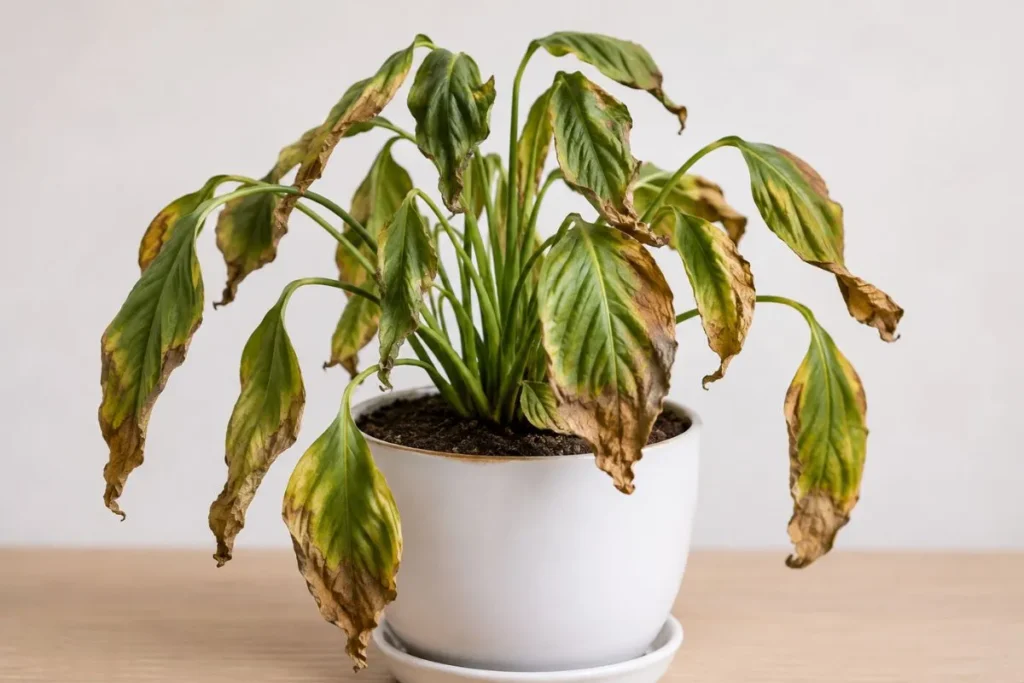
Watering is one of the most important parts of indoor plant care, but it’s also one of the easiest things to get wrong. Every houseplant has different watering needs depending on its species, pot size, potting mix, indoor temperature, humidity, and the time of year. Instead of following a fixed schedule, it’s much better to water according to the condition of the soil and the plant itself.
Overwatering
One of the most common reasons house plant leaves turning yellow from overwatering is that the roots are no longer receiving enough oxygen. Healthy roots need air as well as water. When the potting mix stays constantly wet, air pockets disappear, making it difficult for the roots to breathe and absorb nutrients.
As root function declines, the plant begins showing visible signs of stress. Older leaves usually become pale before gradually turning yellow. The leaves may also droop even though the soil feels wet, which often confuses plant owners into watering even more.
If overwatering continues, root rot may develop. Once the roots begin rotting, they lose their ability to absorb water and nutrients, causing widespread yellowing and slow growth.
Overwatering commonly occurs when plants are watered on a strict timetable instead of checking the soil first. It also happens when pots don’t have proper drainage holes or when heavy potting mixes remain wet for too long.
Underwatering
Although overwatering is more common, underwatering can also explain why are my house plants leaves turning yellow. When a houseplant doesn’t receive enough water, it cannot move moisture and nutrients efficiently from the roots to the leaves.
As dehydration becomes more severe, older leaves usually begin losing their healthy green colour before turning yellow. The potting mix often feels dry, and the leaves may become limp, crispy, or brittle around the edges.
Some houseplants temporarily wilt when they’re thirsty but recover quickly after watering. Others continue declining if they remain dry for long periods, eventually dropping their yellow leaves.
The best way to recover an underwatered houseplant is to water slowly and thoroughly until the entire root ball becomes evenly moist. Avoid adding only a small amount of water because this often wets the surface while leaving the lower roots dry.
How Often Should You Water Houseplants?
There isn’t a universal watering schedule because every indoor plant grows under different conditions. Factors such as the plant species, pot size, potting mix, temperature, humidity, and season all influence how quickly the soil dries out.
Newly Purchased Houseplants
Newly purchased houseplants often need time to adjust to their new environment. During the first few weeks, check the potting mix regularly because changes in light, temperature, and humidity can affect how quickly the soil dries. Keep the soil lightly moist if required, but avoid overwatering while the plant settles into its new home.
Established Houseplants
Established indoor plants usually prefer a consistent watering routine based on soil moisture rather than specific calendar dates. Allow the top layer of the potting mix to dry slightly before watering again unless you’re growing species that prefer consistently moist soil.
Deep watering encourages healthy root growth and allows moisture to reach the entire root system.
Large Indoor Plants
Large houseplants generally have larger root systems and more soil surrounding them, so they often retain moisture longer than smaller plants. Although they require more water during each watering session, they usually don’t need watering as frequently.
Always check the moisture level before adding more water rather than assuming larger plants need watering more often.
Small Potted Houseplants
Small pots dry out much faster because they contain less potting mix. Plants growing in small containers often need more frequent watering, particularly during warm weather or in centrally heated homes where indoor air is dry.
Regular soil checks help prevent both overwatering and underwatering.
Best Watering Practices
The easiest way to know when your houseplant needs water is to insert your finger about 2 to 5 centimetres (1 to 2 inches) into the potting mix. If the soil feels dry at that depth, it’s usually time to water. If it still feels moist, wait another day before checking again.
Water slowly until excess water drains from the bottom of the pot, ensuring the entire root ball receives moisture. Empty any water that collects in saucers or decorative pots because standing water increases the risk of root rot.
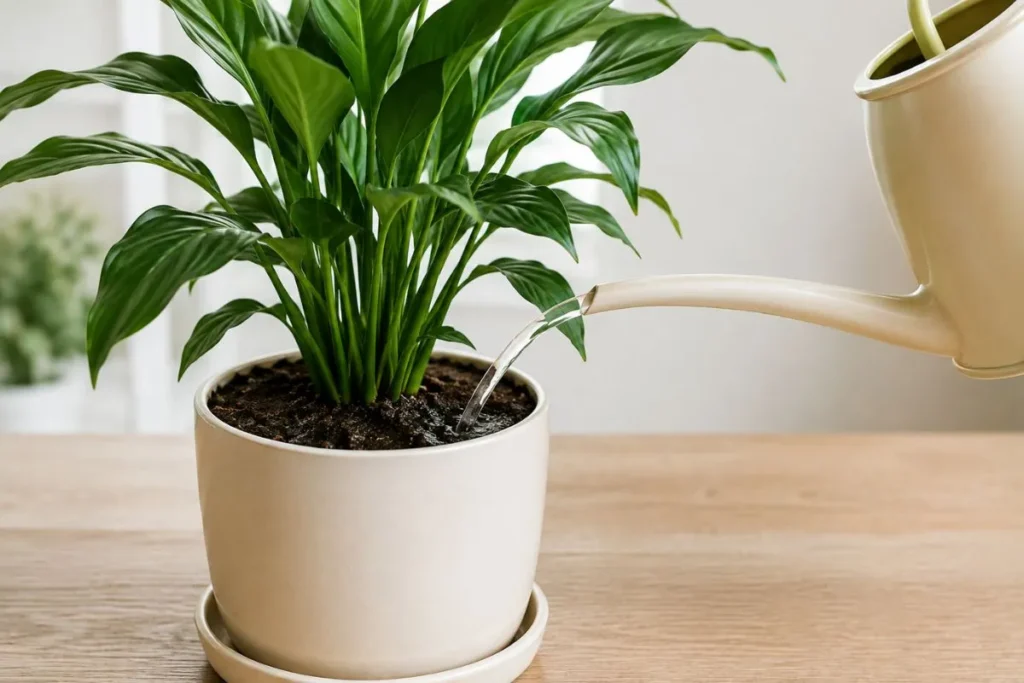
Avoid watering on the same day every week without checking the soil first. Indoor conditions change throughout the year, and your houseplants will naturally use more water during active growth than during winter dormancy.
Developing good watering habits is one of the most effective ways to prevent yellow leaves on house plants. If your watering routine is correct and you’re still asking why are my indoor plant leaves turning yellow, the problem is more likely related to nutrients, soil conditions, root health, lighting, humidity, pests, or disease. A consistent watering routine creates the strong foundation every healthy houseplant needs to produce vibrant green foliage all year round.
Frequently Asked Questions (FAQs)
Many people think that once they understand why are my house plants leaves turning yellow, they’ll never face the problem again. In reality, every houseplant grows under different conditions.
Factors such as watering, lighting, humidity, soil, nutrients, and temperature all influence plant health. That’s why yellow leaves can still appear, even on well-cared-for indoor plants. The following frequently asked questions answer some of the most common concerns and will help you diagnose yellow leaves more accurately.
Why Are the Lower Leaves on My House Plants Turning Yellow?
The most common reason lower leaves turn yellow is natural ageing. As many houseplants grow, they redirect nutrients from older leaves to support fresh growth. Nitrogen deficiency can also cause older leaves to yellow first because nitrogen is a mobile nutrient that the plant moves to younger leaves when supplies become limited.
However, lower leaves may also turn yellow because of overwatering, poor drainage, root problems, or insufficient light. If only one or two older leaves are affected while the rest of the plant remains healthy, this is usually a normal part of the plant’s life cycle.
Can Yellow Houseplant Leaves Turn Green Again?
In most cases, completely yellow leaves will not become green again because the chlorophyll has already broken down. Once a leaf has lost its healthy green colour, it cannot fully recover.
The good news is that after you correct the underlying problem, new leaves should grow healthy and green. Your priority should be preventing additional leaves from turning yellow rather than trying to restore damaged ones.
Should I Remove Yellow Leaves from Houseplants?
Yes, but only when necessary. Leaves that are completely yellow, brown, dry, or damaged can be removed because they no longer contribute to the plant’s growth. Removing dead foliage also improves airflow and reduces the risk of pests and diseases.
If a leaf is only partially yellow and still has healthy green tissue, it’s usually better to leave it until you’ve identified the underlying problem. Always use clean, sterilised scissors or pruning shears when removing leaves.
Why Are My Indoor Plant Leaves Turning Yellow?
If you’re wondering why are my indoor plant leaves turning yellow, the cause is often linked to environmental conditions. Common reasons include overwatering, underwatering, poor drainage, incorrect lighting, nutrient deficiencies, low humidity, temperature stress, root problems, or pest infestations.
Indoor plants thrive when their growing conditions remain consistent. Checking soil moisture, light levels, humidity, and overall plant health regularly makes it much easier to identify the real cause before the problem becomes serious.
Why Are My Houseplant Leaves Turning Yellow and Brown?
If why are my houseplant leaves turning yellow and brown is your concern, the plant is often experiencing prolonged stress. Yellow leaves with brown edges or tips are commonly caused by underwatering, low humidity, fertiliser burn, excessive direct sunlight, or salt build-up in the potting mix.
Brown patches can also appear when fungal diseases or root problems begin affecting the plant. Carefully inspecting the leaves, soil, and roots will usually help narrow down the cause.
Why Are My House Plants Leaves Turning Yellow and Falling Off?
When why are my house plants leaves turning yellow and falling off becomes a problem, it’s usually a sign that the plant has been under stress for some time. Overwatering is one of the most common causes because damaged roots cannot support healthy foliage.
Sudden changes in temperature, poor lighting, underwatering, pests, nutrient deficiencies, and transplant shock may also cause leaves to yellow before dropping. If several leaves fall at once, inspect the growing conditions carefully rather than assuming it’s part of the normal ageing process.
What Causes House Plant Leaves to Turn Yellow?
There isn’t one simple answer because several different problems can produce yellow leaves. Common causes include nutrient deficiencies, nutrient lockout, overwatering, underwatering, poor drainage, incorrect soil pH, root rot, root-bound plants, low humidity, excessive sunlight, insufficient light, temperature stress, pests, fungal diseases, bacterial infections, and natural ageing.
The best way to diagnose the problem is to examine the entire plant. Look at where the yellowing started, how quickly it spread, and whether other symptoms such as brown tips, curling, drooping, soft stems, or leaf spots are also present.
Understanding these common questions makes it much easier to identify problems before they become serious. Regular inspections, balanced watering, proper feeding, healthy soil, and consistent indoor conditions are the best ways to keep your houseplants thriving and prevent yellow leaves from becoming a recurring issue.
Conclusion
Many people panic when they notice yellow leaves and immediately assume their indoor plants are dying. In reality, why are my house plants leaves turning yellow is usually a question with a practical solution rather than a sign that your plant cannot be saved.
Yellow leaves are your houseplant’s way of telling you that something in its growing environment needs attention. By identifying the cause early, you can often correct the problem before it affects the plant’s long-term health.
Throughout this guide, we’ve explored the most common reasons why are my houseplant leaves turning yellow, including nutrient deficiencies, overwatering, underwatering, poor soil conditions, incorrect soil pH, root problems, inadequate lighting, humidity issues, pest infestations, plant diseases, and natural ageing.
Although many of these problems produce similar symptoms, each one requires a different solution. That’s why careful observation is always more effective than making quick changes without understanding the real cause.
The best way to prevent house plants leaves turning yellow is to provide consistent care. Water your plants only when the potting mix needs it, use a well-draining soil mix, feed them with a balanced houseplant fertiliser during the growing season, and repot them when they become root-bound.
Make sure each plant receives the correct amount of light, maintain suitable indoor humidity, and inspect the foliage regularly for early signs of pests or disease.
It’s also important to remember that not every yellow leaf indicates a serious problem. Older leaves naturally yellow and drop as many houseplants mature, and mild yellowing after repotting or during seasonal growth changes can also be completely normal. If the rest of the plant remains healthy and continues producing fresh green growth, occasional yellow leaves are often nothing to worry about.
Whenever you notice yellow leaves on house plants, take a systematic approach instead of guessing. Check the soil moisture, inspect the roots if necessary, review your fertilising routine, assess the lighting and humidity, and examine the leaves carefully for pests or disease. Understanding the pattern of yellowing will help you identify the underlying problem and choose the most effective solution.
With regular monitoring, proper watering, balanced nutrition, and a stable indoor environment, most yellow leaf problems can be prevented or corrected successfully. Understanding why are my house plants leaves turning yellow will help you grow healthier indoor plants, maintain vibrant green foliage, and enjoy beautiful houseplants that thrive throughout the year.

Plant Nest Blog’s author is passionate about plants, gardening, and sustainable living. Through research and practical experience, they share helpful plant care tips, gardening guides, and easy solutions to help readers grow healthier plants and create greener spaces.