
Many people think that why are the leaves on my pot plant turning yellow has only one answer and that yellow leaves automatically mean their pot plant is dying. Fortunately, that’s not true. In most cases, yellow leaves are simply an early warning sign that something in the plant’s growing environment needs attention. If you identify the cause quickly, you can usually correct the problem and help your plant return to healthy growth.
If you’ve been asking why are my pot plant leaves turning yellow, you’re certainly not alone. Yellow leaves are one of the most common problems faced by both new and experienced cannabis growers.
They can appear at any stage of growth, from young seedlings to mature flowering plants, and the cause isn’t always obvious. Sometimes it’s linked to watering habits, while other times it may be caused by nutrient deficiencies, soil pH, root problems, lighting, pests, diseases, or even the plant’s natural ageing process.
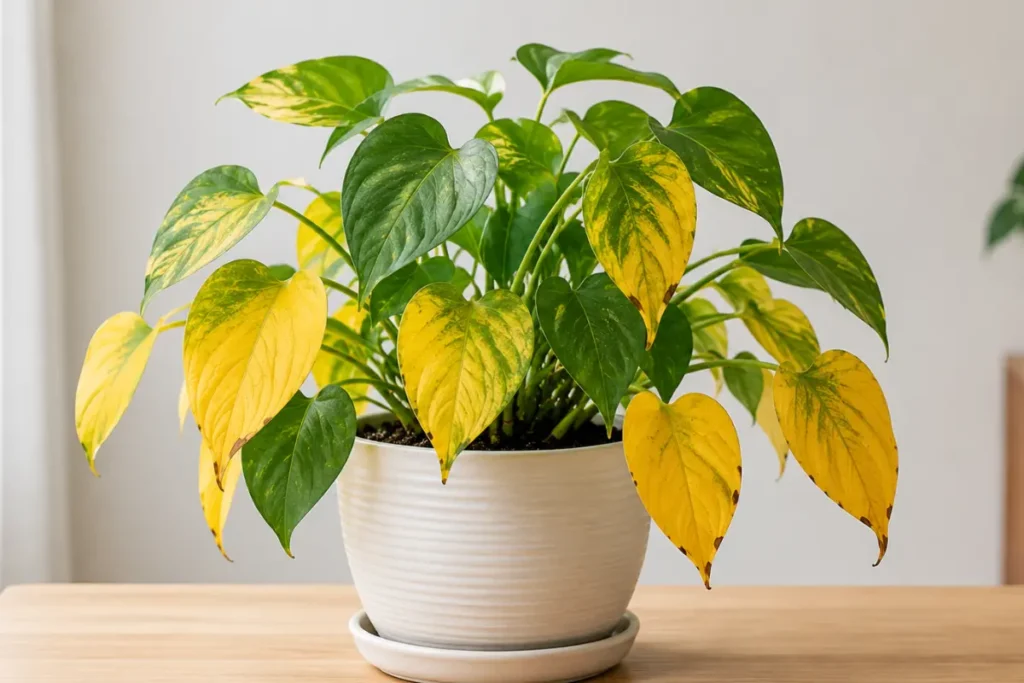
The most important thing to remember is that yellow leaves are a symptom rather than the actual problem. Your cannabis plant changes leaf colour to let you know that something isn’t working as it should. By paying attention to these early signs, you can often solve the issue before it affects plant health, flower production, or overall yield.
In this guide, you’ll learn why are the leaves on my pot plant turning yellow, how to recognise the most common causes, and what each symptom may be telling you.
We’ll explain how nutrients, watering, soil conditions, roots, lighting, temperature, pests, and diseases all influence leaf colour. You’ll also discover practical solutions and preventative tips to help keep your cannabis plant healthy, vigorous, and full of rich green foliage throughout every stage of growth.
Understanding Healthy Pot Plant Leaves
Before you can understand why are the leaves on my pot plant turning yellow, you first need to know what healthy cannabis leaves look like. Recognising normal growth makes it much easier to spot early warning signs before they develop into more serious problems.
Healthy leaves are one of the clearest indicators that your plant is receiving the right balance of water, nutrients, light, and environmental care.
What Healthy Cannabis Pot Plant Leaves Should Look Like
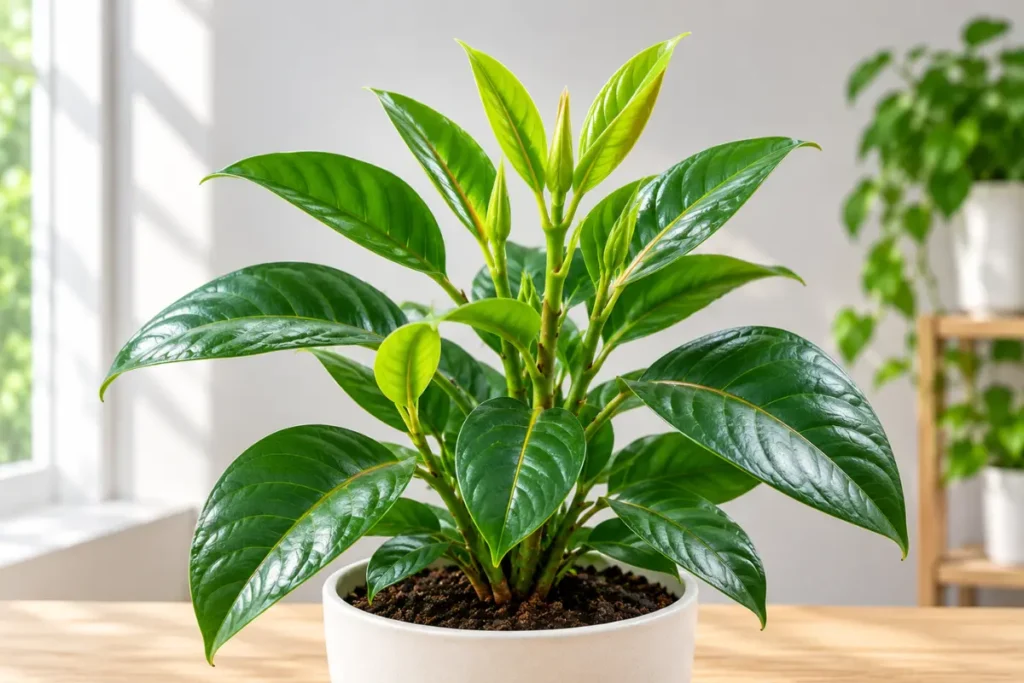
Healthy cannabis pot plants produce leaves with a deep, vibrant green colour. While the exact shade varies slightly between different cannabis varieties, the leaves should appear evenly coloured without noticeable yellow patches, brown edges, or unusual spotting.
The texture of healthy leaves is equally important. They should feel firm, smooth, and slightly flexible. Leaves shouldn’t droop, curl, wrinkle, or become brittle under normal growing conditions. Strong leaves usually point slightly upwards or extend outward naturally, showing that the plant is actively growing.
Healthy growth is also easy to recognise. New leaves should emerge regularly from the growing tips, unfold evenly, and gradually reach their full size without becoming distorted. Thick stems, balanced branching, and consistent new growth are all signs that the plant is receiving proper nutrition and care.
Regular inspections help you notice small changes before they become major issues. Spending just a few minutes checking your plant every few days allows you to spot changes in colour, texture, or growth early, making it much easier to prevent common cannabis growing problems.
When Yellow Leaves Are Completely Normal
Although yellow leaves often indicate that something needs attention, they aren’t always a sign of poor plant health. There are several situations where yellowing is completely natural and doesn’t require any treatment.
One of the most common examples is the gradual yellowing of older fan leaves near the bottom of the plant. As cannabis grows, it naturally transfers nutrients from its oldest leaves to support fresh growth at the top.
This causes the lower leaves to slowly fade from green to yellow before they eventually dry out and fall away. If only a few older leaves are affected while the rest of the plant remains healthy, this process is perfectly normal.
Many growers also notice yellow leaves during the flowering stage and wonder why are my pot plant leaves turning yellow during flowering. In most cases, some yellowing is expected as the plant redirects its energy towards developing flowers instead of producing new foliage.
As harvest approaches, older fan leaves naturally lose their colour because stored nutrients are being used to support flower development.
Natural ageing is another completely normal reason for yellow leaves. Like most living plants, cannabis doesn’t keep every leaf forever. Older leaves gradually reach the end of their life cycle after supporting months of healthy growth.
The key is to look at the entire plant instead of focusing on one or two yellow leaves. If the yellowing is limited to older foliage and new growth remains vibrant green, there’s usually no reason to worry.
However, if yellow leaves spread rapidly, appear on young leaves, or are accompanied by drooping, curling, brown spots, or slow growth, it’s time to investigate further.
Learning the difference between normal leaf ageing and unhealthy yellowing is one of the most valuable skills any grower can develop. Once you understand what’s normal, it becomes much easier to diagnose why are the leaves on my pot plant turning yellow and choose the right solution before the problem affects the overall health of your cannabis plant.
Why Are the Leaves on My Pot Plant Turning Yellow? (Complete Overview)
Many growers believe there is one simple answer to why are the leaves on my pot plant turning yellow, but that’s one of the biggest myths about growing cannabis. Yellow leaves don’t point to one specific problem.
Instead, they tell you that your plant is under stress. The real solution comes from identifying the source of that stress rather than treating every yellow leaf the same way.
If you’ve been wondering why are my pot plant leaves turning yellow, avoid making quick changes without checking the plant carefully. For example, adding more fertiliser might seem like the obvious fix, but if the real issue is overwatering or an incorrect soil pH, extra nutrients could make the problem worse.
Taking a few minutes to inspect your plant properly can save you from creating even bigger growing problems.
The good news is that yellow leaves are often one of the earliest warning signs your cannabis plant gives you. By acting early, you can usually correct the issue before it affects growth, flower production, or overall plant health. The key is to examine the entire plant instead of focusing on a single yellow leaf.
Below are the most common reasons why are the leaves on my pot plant turning yellow.
Nutrient Problems
Nutrient imbalances are one of the leading causes of pot plant leaves turning yellow. Cannabis plants require a steady supply of essential nutrients to produce chlorophyll, grow healthy leaves, and develop strong stems and flowers.
When important nutrients such as nitrogen, magnesium, iron, or calcium become unavailable, the leaves often begin changing colour. However, deficiencies aren’t the only issue.
Too much fertiliser can also damage the plant by causing nutrient burn or nutrient lockout, making it difficult for the roots to absorb the nutrients already present in the growing medium.
Because different nutrient problems produce different yellowing patterns, recognising where the yellowing starts can provide valuable clues about the underlying cause.
Watering Mistakes
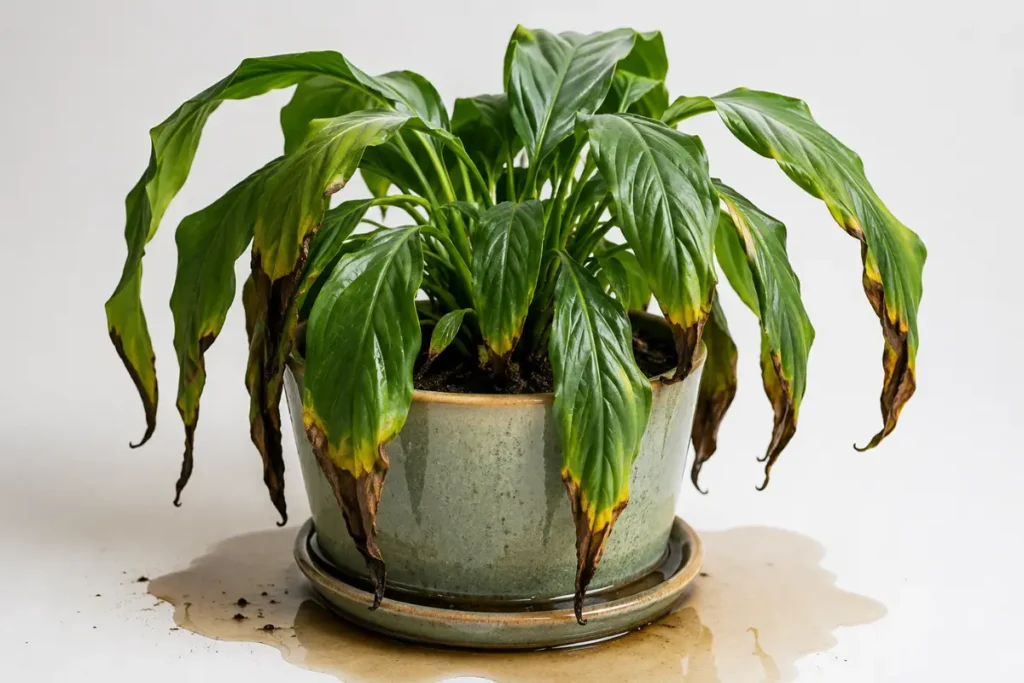
Improper watering is another major reason why is my pot plant turning yellow. Cannabis roots need both water and oxygen to remain healthy. Giving the plant too much water can reduce oxygen around the roots, while giving too little prevents the plant from transporting water and nutrients efficiently.
Overwatered plants often develop heavy, drooping yellow leaves because the roots struggle to function in constantly wet soil. Underwatered plants usually show dry, limp leaves that gradually lose their green colour as dehydration becomes more severe.
Rather than watering on a fixed schedule, successful growers adjust watering according to the moisture level of the growing medium and the plant’s needs.
Soil and pH Issues
Healthy soil does much more than support the plant physically. It stores nutrients, allows roots to breathe, and creates the conditions needed for healthy growth.
Even when enough nutrients are present, an incorrect soil pH can prevent the roots from absorbing them properly. This condition, known as nutrient lockout, often causes yellow leaves on a pot plant despite regular feeding.
Compacted or poorly draining soil can also place stress on the root system by limiting oxygen and increasing the risk of waterlogging. Choosing a well-aerated growing medium with the correct pH is essential for maintaining healthy cannabis leaves.
Root Problems
Healthy roots are the foundation of every healthy cannabis plant. If the roots become damaged, the rest of the plant quickly begins to suffer.
Root rot, transplant shock, poor drainage, and root-bound containers can all reduce the plant’s ability to absorb water and nutrients. Because these processes happen below the soil surface, the first visible symptom is often yellow leaves.
If yellowing is accompanied by slow growth, drooping foliage, or constantly wet soil, inspecting the root system may help identify the real cause before the damage becomes more severe.
Light Stress
Lighting plays a critical role in maintaining healthy green leaves. Cannabis plants rely on light to produce energy through photosynthesis, but both excessive and insufficient light can create stress.
Too much light may bleach the upper leaves, causing them to become pale or yellow. On the other hand, plants receiving too little light often develop weak, stretched growth with fading leaf colour because they cannot produce enough energy.
Maintaining the correct distance between grow lights and the plant helps reduce light-related stress and supports balanced growth throughout every stage.
Temperature Stress
Cannabis performs best within a stable temperature range. Extreme heat or cold can interfere with normal plant functions and contribute to yellowing leaves.
High temperatures increase water loss through the leaves, placing additional pressure on the root system. Cold conditions slow nutrient uptake, making the plant less efficient at using the nutrients available in the soil.
Large temperature fluctuations between day and night can also stress cannabis plants, particularly in indoor growing environments where stable conditions are easier to maintain.
Pest Infestations
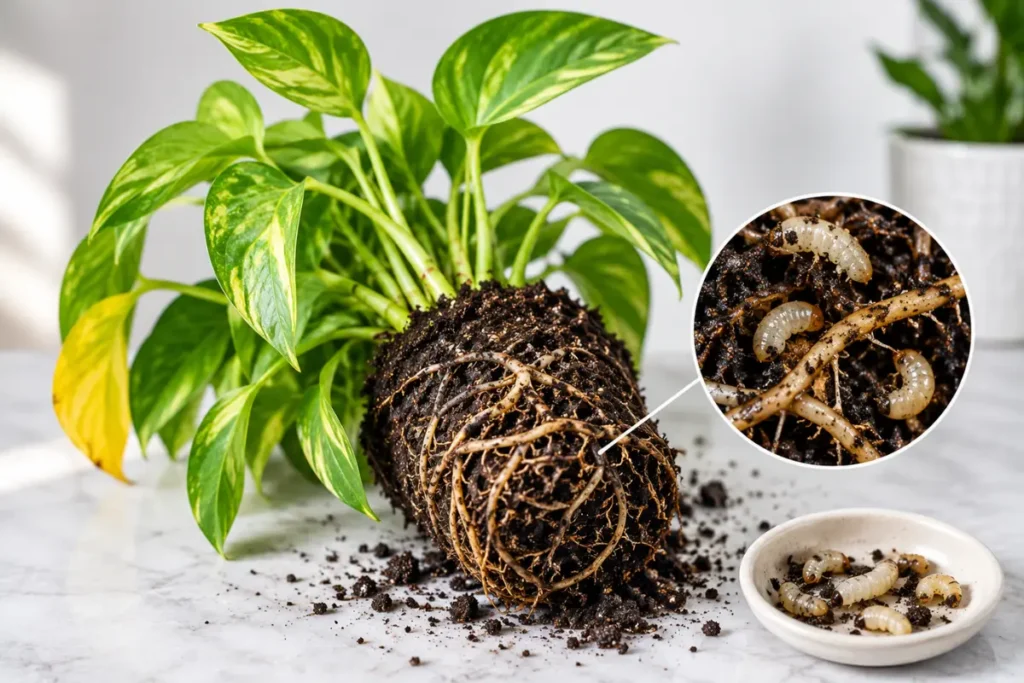
Tiny insects are another possible explanation for why are my pot plant leaves turning yellow. Pests such as spider mites, aphids, thrips, and fungus gnats feed on plant tissue or damage the roots, reducing the plant’s overall health.
These insects often remove sap from the leaves, leaving behind yellow spots, faded patches, curling, or distorted growth. Root-feeding pests can also interfere with water and nutrient uptake, causing widespread yellowing throughout the plant.
Regular inspections of both the upper and lower leaf surfaces make it much easier to detect pests before they become a serious infestation.
Plant Diseases
Although less common than nutrient or watering problems, diseases should never be ignored. Fungal infections, bacterial diseases, and root pathogens can all affect the plant’s ability to absorb water and nutrients properly.
Disease-related yellowing is often accompanied by additional symptoms such as leaf spots, mould, wilting, soft stems, unpleasant smells around the roots, or unusual growth patterns. Identifying these warning signs early greatly improves the chances of successful treatment.
Keeping your growing area clean, maintaining good airflow, and avoiding excessive moisture all help reduce the risk of disease.
Natural Ageing
Not every yellow leaf means your plant is unhealthy. As cannabis matures, especially during the flowering stage, older fan leaves naturally begin turning yellow as stored nutrients are redirected towards flower development.
This gradual yellowing usually starts on older leaves near the bottom of the plant while new growth remains healthy and green. In these situations, yellow leaves are simply part of the normal life cycle rather than a sign of poor care.
The key is to monitor the overall condition of the plant. If only a few older leaves are affected and new growth continues to develop normally, there is usually no cause for concern.
Understanding why are the leaves on my pot plant turning yellow requires looking at every aspect of your growing environment rather than assuming a single cause.
Nutrient imbalances, watering habits, soil quality, root health, lighting, temperature, pests, diseases, and natural ageing can all produce similar symptoms. In the following sections, we’ll explore each cause in greater detail so you can accurately diagnose the problem and restore healthy green growth with confidence.
Nutrient Problems That Cause Yellow Leaves
Many growers believe that whenever they ask why are the leaves on my pot plant turning yellow, the answer must be that the plant needs more fertiliser. That’s a common misconception. Yellow leaves can certainly be caused by nutrient deficiencies, but they can also result from overfeeding, nutrient lockout, or an incorrect soil pH that prevents the roots from absorbing nutrients properly. Before adding more fertiliser, it’s important to understand exactly which nutrient problem your cannabis plant is experiencing.
Cannabis plants rely on a balanced supply of nutrients to produce chlorophyll, build strong stems, develop healthy roots, and support vigorous growth. Each nutrient performs a different job, and when one becomes unavailable, the leaves often provide the earliest clues. Learning to recognise these signs will help you identify the real problem and avoid unnecessary treatments.
Nitrogen Deficiency
Nitrogen deficiency is one of the most common reasons growers search for why are the lower leaves on my pot plant turning yellow. Nitrogen is essential for chlorophyll production and healthy leaf development. Because it is a mobile nutrient, the plant moves nitrogen from older leaves to support fresh growth when supplies become limited.
This process causes the oldest fan leaves at the bottom of the plant to gradually change from dark green to pale green before becoming completely yellow. As the deficiency progresses, the affected leaves may dry out and eventually fall off.
Unlike several other nutrient deficiencies, nitrogen deficiency normally begins on the lower leaves while the newer growth remains green during the early stages. If left untreated, yellowing slowly moves upwards through the plant.
The best way to correct a nitrogen deficiency is to review your feeding schedule and ensure you’re using a balanced cannabis fertiliser suitable for the current growth stage. Vegetative plants generally require more nitrogen than flowering plants. It’s also important to check the soil pH because an unsuitable pH can reduce nitrogen uptake even when enough is available in the growing medium.
Magnesium Deficiency
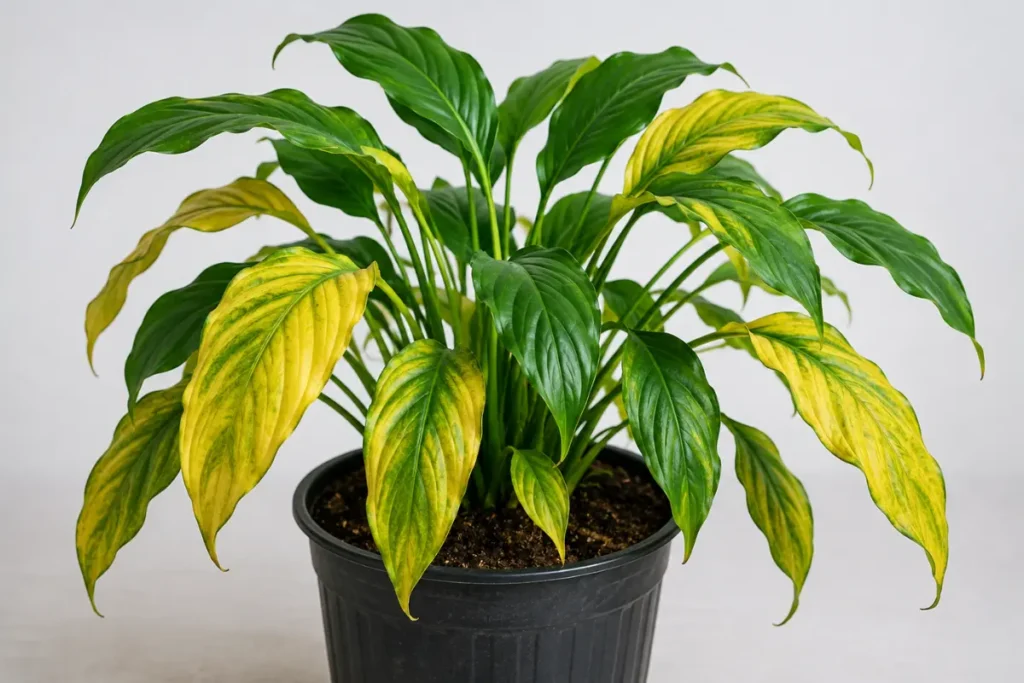
Magnesium is another nutrient closely linked to healthy green leaves because it forms a central part of the chlorophyll molecule. Without enough magnesium, photosynthesis becomes less efficient, and the leaves begin to lose their vibrant colour.
One of the easiest ways to recognise magnesium deficiency is by looking at the leaf veins. The veins often stay green while the tissue between them gradually turns yellow. This condition, known as interveinal chlorosis, usually appears first on older leaves because magnesium is also a mobile nutrient.
Several factors can contribute to magnesium deficiency, including poor soil pH, nutrient imbalances, soft water, or excessive levels of calcium and potassium that interfere with magnesium uptake.
Correcting the pH should always be the first step. If magnesium is genuinely lacking, using a suitable magnesium supplement designed for cannabis can help encourage healthy new growth. Leaves that have already become badly damaged may not recover, but fresh foliage should develop with improved colour.
Iron Deficiency
Iron deficiency produces symptoms that differ from nitrogen and magnesium deficiencies. Instead of affecting the oldest leaves first, iron deficiency usually appears on the newest growth near the top of the plant.
Young leaves become pale yellow while the veins often remain green, creating a distinctive contrast. Older leaves generally stay healthy because iron cannot easily move from mature tissue to developing leaves.
Many growers mistakenly apply additional iron straight away. However, the real issue is often an incorrect soil pH rather than a lack of iron itself. Even when enough iron is present, the roots may be unable to absorb it if the pH falls outside the ideal range.
Checking and adjusting the soil or growing medium pH is usually the first step towards solving this problem. Once nutrient availability improves, healthy green leaves should begin appearing on new growth.
Calcium Deficiency
Calcium plays an essential role in building strong plant cells and supporting healthy root and leaf development. Unlike nitrogen and magnesium, calcium is not mobile within the plant, so deficiency symptoms usually appear on the newest growth first.
Young leaves may become twisted, curled, or irregular in shape before developing yellow patches or brown spots. Growth often slows because calcium is required for producing healthy new tissue.
Calcium deficiencies are more common in coco coir growing systems or when using purified water without adequate supplementation. Maintaining the correct soil pH and following a balanced feeding programme greatly reduces the risk of calcium deficiency developing.
Nutrient Lockout
Nutrient lockout is one of the most overlooked reasons why are the leaves on my pot plant turning yellow. Many growers assume the plant needs more fertiliser, but the nutrients may already be present in the soil.
Nutrient lockout occurs when the roots cannot absorb available nutrients because the soil pH is outside the ideal range or because mineral salts have accumulated from excessive feeding. As a result, the plant develops symptoms that closely resemble nutrient deficiencies.
Yellow leaves, slow growth, poor vigour, and multiple deficiency symptoms appearing at the same time often indicate nutrient lockout rather than a lack of fertiliser.
If nutrient lockout is suspected, avoid adding more nutrients immediately. Instead, test the soil pH and review your feeding routine. Flushing the growing medium with pH-balanced water may help remove excess salts before restarting a balanced nutrient programme.
4.6 Nutrient Burn
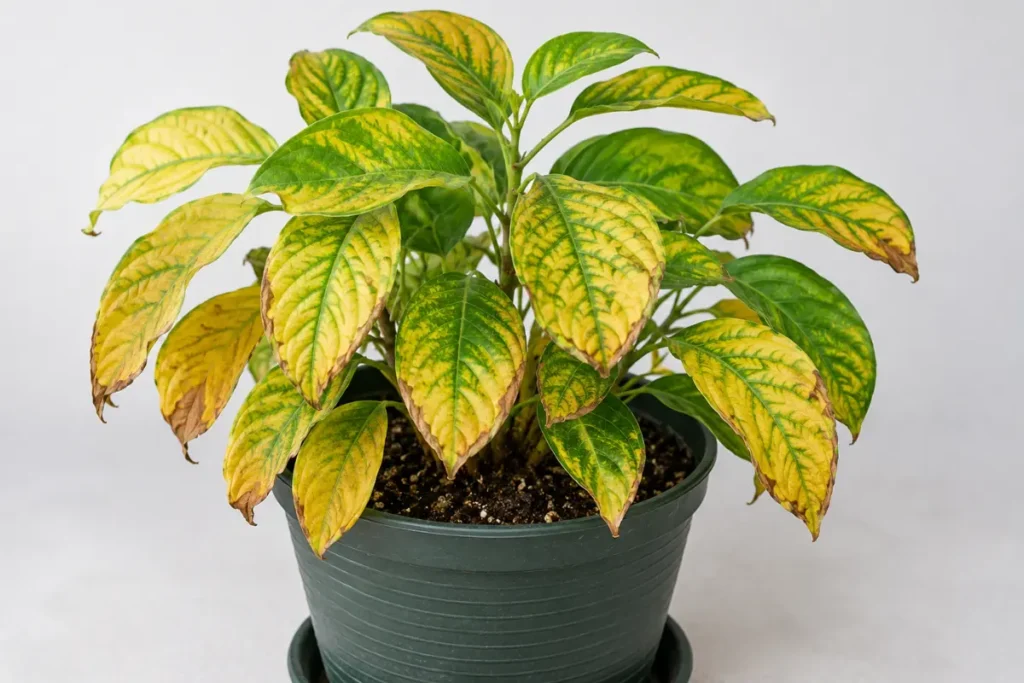
While deficiencies receive most of the attention, overfeeding can be just as damaging. In fact, pot plant leaves turning yellow after feeding are often caused by nutrient burn rather than nutrient shortages.
Nutrient burn usually starts at the tips of the leaves. The tips first become yellow before turning brown and dry. If overfeeding continues, yellowing gradually spreads across the rest of the leaf, and overall growth begins to slow.
Young cannabis plants are especially vulnerable because they require much lower nutrient concentrations than mature plants. Applying fertiliser too frequently or mixing nutrients more strongly than recommended are common causes of nutrient burn.
If you notice these symptoms, stop feeding temporarily and flush the growing medium with clean, pH-balanced water to remove excess fertiliser salts. Once the plant begins to recover, restart feeding at a lower concentration and increase gradually only if healthy growth continues.
Understanding the difference between nutrient deficiencies, nutrient lockout, and nutrient burn is essential when diagnosing why are the leaves on my pot plant turning yellow.
Although these problems often produce similar symptoms, each one requires a different solution. Careful observation, balanced feeding, and regular pH monitoring will help your cannabis plant maintain healthy green leaves and continue growing strongly throughout 5. Watering Problems
Many growers believe that watering more often is the quickest solution to why are the leaves on my pot plant turning yellow. Unfortunately, that’s not always true.
Cannabis plants need the right balance of water and oxygen around their roots. Giving too much water can be just as harmful as giving too little. In fact, watering mistakes are among the most common reasons pot plant leaves turning yellow becomes a concern for both beginner and experienced growers.
A healthy watering routine isn’t about following a strict timetable. Every cannabis plant uses water at a different rate depending on its size, growing stage, pot size, temperature, humidity, and growing medium. Learning when your plant actually needs water is one of the best ways to prevent yellow leaves and encourage steady, healthy growth.
Overwatering
One of the most common reasons pot plant leaves turning yellow from overwatering is that the roots are no longer getting enough oxygen. Cannabis roots don’t just absorb water—they also need air to function properly. When the growing medium remains constantly wet, oxygen levels fall, and the roots become stressed.
As root activity slows down, nutrient absorption becomes less efficient. Even if the soil contains enough nutrients, the plant struggles to use them properly. This often causes symptoms that look very similar to nutrient deficiencies, making overwatering easy to misdiagnose.
The earliest signs usually include heavy, drooping leaves that hang down despite the soil feeling wet. Older leaves may gradually lose their rich green colour before turning pale and eventually yellow. Overall growth often slows because the roots are unable to support normal development.
If the soil stays waterlogged for long periods, root rot may begin to develop. Once this happens, the roots start breaking down, making it even harder for the plant to absorb water and nutrients.
Underwatering
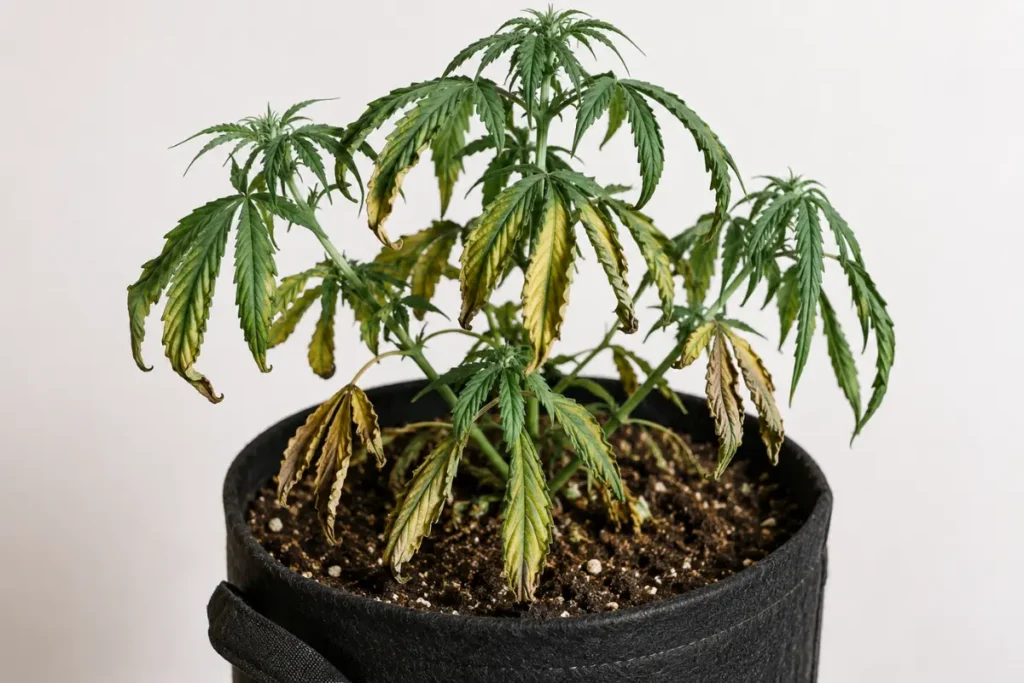
Although less common than overwatering, underwatering can also explain why are the leaves on my pot plant turning yellow. When cannabis plants don’t receive enough moisture, they cannot transport nutrients efficiently from the roots to the leaves.
As dehydration develops, the plant begins conserving resources, causing older leaves to lose colour before becoming yellow. If the problem continues, the leaves may become dry, crispy, and brittle around the edges.
Unlike overwatered plants, underwatered cannabis often feels noticeably lighter when you lift the pot. The soil may appear dry and begin pulling away from the sides of the container. Leaves usually droop because they’ve lost internal water pressure rather than because the roots are sitting in excess moisture.
How Often Should You Water a Pot Plant?
One of the questions growers ask most frequently is how often a cannabis pot plant should be watered. The truth is that there isn’t a universal schedule because every growing environment is different.
Indoor cannabis plants generally dry out more slowly than outdoor plants because temperatures and humidity remain relatively stable. Outdoor plants often require more frequent watering during hot, sunny, or windy weather. Likewise, large mature plants consume much more water than young seedlings because they have larger root systems and more leaves.
Rather than watering every two or three days automatically, make it a habit to check the growing medium before every watering. Insert your finger about 2 to 5 centimetres into the soil. If it still feels moist, wait another day. If it feels dry at that depth, it’s usually time to water.
Many experienced growers also use the weight of the pot as a guide. A freshly watered pot feels noticeably heavier than one that has dried out. With experience, lifting the container becomes one of the quickest and most reliable ways to judge when watering is needed.When you do water, apply enough moisture to soak the entire root zone until a small amount drains from the bottom of the pot. This encourages deeper root growth and prevents shallow roots from developing near the surface. After watering, allow the soil to partially dry before watering again.
Maintaining this wet-and-dry cycle creates an ideal balance of water and oxygen around the roots. It also helps prevent many common problems associated with yellow leaves on a pot plant.
Developing good watering habits makes diagnosing other issues much easier. If your watering routine is correct and you’re still asking why are my pot plant leaves turning yellow, the cause is more likely to involve nutrients, soil pH, lighting, pests, diseases, or another environmental factor. By mastering proper watering techniques, you’ll create a healthier growing environment and significantly reduce the risk of yellow leaves throughout your cannabis plant’s life.
Soil and pH Problems
Many growers believe that if they’re using a high-quality potting mix, they never need to worry about soil conditions. That’s a common misconception. Even the best growing medium can’t prevent why are the leaves on my pot plant turning yellow if the soil pH is incorrect or drainage is poor. Healthy roots depend on a balanced growing environment, and when the soil isn’t performing properly, yellow leaves are often one of the first warning signs.
Soil does much more than keep a cannabis plant upright. It stores water, supplies nutrients, provides oxygen to the roots, and supports beneficial microorganisms. If any of these functions are disrupted, the plant may struggle to absorb the nutrients it needs, even when those nutrients are already present.
Incorrect Soil pH
One of the most overlooked reasons why are the leaves on my pot plant turning yellow is an incorrect soil pH. The pH level determines how easily the roots can absorb essential nutrients from the growing medium.
For soil-grown cannabis, the ideal pH usually falls between 6.0 and 7.0. Within this range, nutrients remain available, allowing the plant to absorb nitrogen, phosphorus, potassium, magnesium, calcium, iron, and other essential minerals efficiently.
When the pH moves too far above or below this range, nutrient availability begins to decrease. This often leads to nutrient lockout, where the nutrients are present in the soil but cannot be absorbed by the roots. As a result, the plant develops symptoms that closely resemble nutrient deficiencies, including yellow leaves, slow growth, and poor overall vigour.
One of the easiest ways to avoid this problem is to test the soil pH regularly using a reliable pH meter or soil testing kit. Checking both your irrigation water and the runoff from the pot provides a clearer picture of what’s happening around the roots.
Poor Soil Drainage
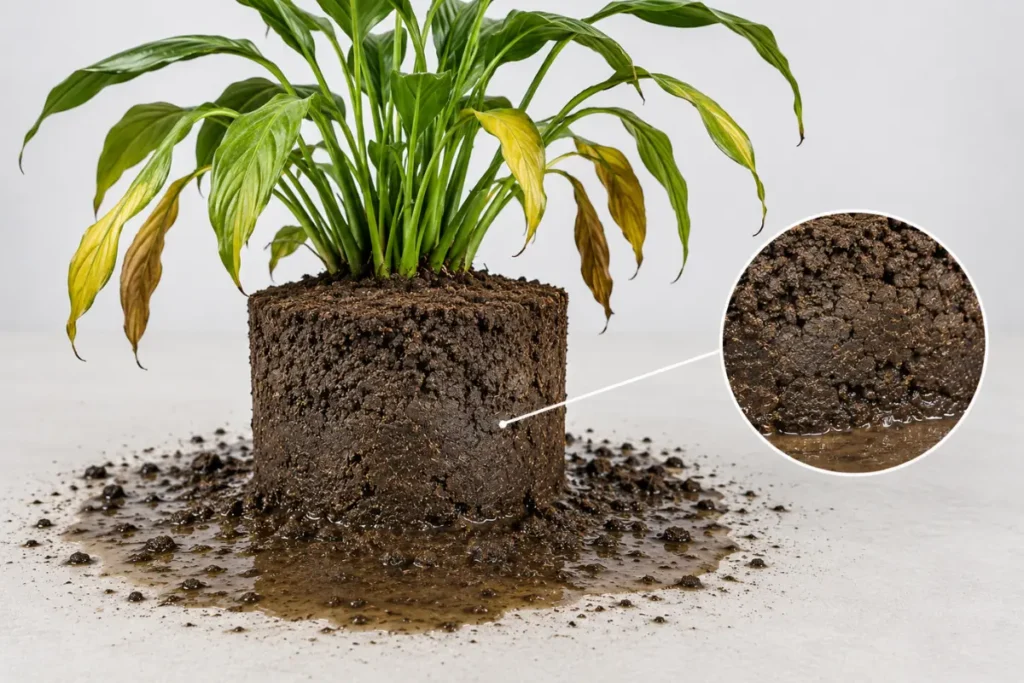
Poor drainage is another major reason pot plant leaves turning yellow becomes a recurring problem. Cannabis roots need a balance of moisture and oxygen to remain healthy. When water stays trapped in the growing medium for too long, oxygen levels decrease, making it difficult for the roots to function properly.
Heavy or compacted soil often drains slowly, leaving the roots sitting in wet conditions for extended periods. This not only reduces nutrient uptake but also increases the likelihood of root diseases such as root rot.
Several warning signs may indicate poor drainage. Water may remain on the soil surface after watering instead of soaking in quickly. The pot may stay unusually heavy for several days, and the growing medium may feel constantly wet. At the same time, the leaves often become pale, droop, and gradually turn yellow.
Choosing the Best Soil for Cannabis Pot Plants
Selecting the right growing medium is one of the simplest ways to prevent yellow leaves on a pot plant before they become a problem. Cannabis grows best in soil that provides a balance of moisture retention, drainage, and airflow around the roots.
A good-quality cannabis growing medium should be light and well-aerated rather than dense or compacted. It should hold enough moisture to keep the roots hydrated while allowing excess water to drain away easily. This balance helps maintain healthy oxygen levels around the roots and supports steady nutrient absorption.
Organic matter also plays an important role. Compost, worm castings, and other organic materials improve soil structure while encouraging beneficial microorganisms that help break down nutrients into forms the plant can absorb more easily.
Frequently Asked Questions (FAQs)
Many growers think that once they know why are the leaves on my pot plant turning yellow, they’ll never experience the problem again. In reality, every cannabis plant grows under different conditions. Factors such as watering, nutrients, soil quality, lighting, temperature, and humidity all affect plant health. That’s why even experienced growers occasionally deal with yellow leaves. The following answers cover some of the most frequently asked questions to help you diagnose and manage the problem with confidence.
Why are my pot plant leaves turning yellow from the bottom?
The most common reason lower leaves turn yellow is natural nutrient movement within the plant. During active growth, cannabis transfers nutrients from older leaves to support new growth. Nitrogen deficiency is a common example because nitrogen is a mobile nutrient, causing the oldest fan leaves to turn yellow first.
However, lower leaves may also yellow because of overwatering, poor drainage, root stress, or natural ageing. If only a few older leaves are affected while the rest of the plant remains healthy, there is usually no cause for concern. If yellowing spreads rapidly or reaches new growth, inspect your watering routine, nutrient programme, and soil pH.
Can yellow pot plant leaves turn green again?
In most cases, completely yellow leaves will not return to their original green colour because the chlorophyll has already broken down. Once a leaf has been severely damaged, the plant cannot fully restore it.
The good news is that correcting the underlying problem allows new leaves to develop normally. Instead of trying to save badly damaged leaves, focus on stopping the yellowing from spreading and encouraging healthy new growth.
Should I remove yellow leaves from my pot plant?
It depends on the condition of the leaves. If a leaf has become completely yellow, brown, dry, or damaged, removing it can improve airflow and reduce the risk of disease. Always use clean, sterilised scissors or pruning shears to avoid introducing infections.
If the leaf is only partially yellow and still contains healthy green tissue, it’s often best to leave it in place while you identify the cause. The plant may continue using the remaining healthy portion until the leaf naturally reaches the end of its life cycle.
Why are the leaves on my pot plant turning yellow indoors?
If you’re wondering why are the leaves on my pot plant turning yellow indoors, the cause is often linked to the growing environment. Indoor cannabis plants commonly develop yellow leaves because of overwatering, poor air circulation, incorrect soil pH, nutrient imbalances, unsuitable temperatures, or grow lights positioned too close or too far from the canopy.
Indoor growers should regularly monitor light intensity, humidity, temperature, and soil moisture. Maintaining stable growing conditions greatly reduces the likelihood of yellow leaves developing.
What causes pot plant leaves to turn yellow?
There isn’t a single answer because several different factors can produce the same symptom. Common causes include nitrogen deficiency, magnesium deficiency, iron deficiency, calcium deficiency, nutrient lockout, nutrient burn, overwatering, underwatering, poor soil drainage, incorrect pH, root problems, excessive heat, insufficient light, pests, fungal diseases, and natural ageing.
The best way to identify the cause is to examine the entire plant carefully. Look at where the yellowing started, whether it affects old or new leaves, how quickly it spreads, and whether other symptoms such as curling, spots, drooping, or slow growth are also present.
Will yellow leaves reduce cannabis yield?
Yes, they can if the underlying problem is left untreated. Healthy green leaves carry out photosynthesis, producing the energy needed for vigorous growth and flower development. If a large number of leaves become yellow too early, the plant may produce smaller flowers and lower yields.
However, a few yellow leaves, especially older fan leaves during the late flowering stage, are usually part of the plant’s natural life cycle and won’t significantly affect the final harvest. The key is identifying why are my pot plant leaves turning yellow early and correcting the issue before it impacts the overall health of the plant.
By understanding these common questions and their answers, you’ll be better prepared to diagnose yellow leaves accurately and respond with the right solution. Careful observation, regular maintenance, and early action are the most effective ways to keep your cannabis pot plant healthy, productive, and full of vibrant green foliage.
Conclusion
Many growers assume that why are the leaves on my pot plant turning yellow is a sign that their cannabis plant can’t be saved. In reality, yellow leaves are usually an early warning signal rather than a disaster. Your plant is simply telling you that something in its growing environment needs attention. By identifying the cause early and taking the right action, you can often stop the problem from spreading and help your plant recover before its growth or yield is affected.
Throughout this guide, we’ve explored the most common reasons why are my pot plant leaves turning yellow, including nutrient deficiencies, nutrient lockout, overwatering, underwatering, poor soil conditions, incorrect soil pH, root problems, light stress, temperature fluctuations, pest infestations, plant diseases, and natural ageing. Although many of these issues cause similar symptoms, each one requires a different approach. That’s why careful observation is always more effective than guessing or applying treatments too quickly.
The best way to prevent yellow leaves on a pot plant is to build a consistent care routine. Water your cannabis plant only when the growing medium needs it, maintain the correct soil pH, provide balanced nutrition, and use a well-draining soil mix that allows the roots to breathe. Regularly inspect the leaves for pests, monitor temperature and humidity, and make sure your plant receives the right amount of light throughout each stage of growth.
It’s also important to remember that not every yellow leaf signals a serious problem. Older fan leaves naturally turn yellow as the plant matures, particularly during the flowering stage when nutrients are redirected towards flower production. As long as new growth remains healthy, green, and vigorous, occasional yellow leaves are often a normal part of the plant’s life cycle.
Whenever you notice pot plant leaves turning yellow, resist the urge to react immediately with more fertiliser or extra watering. Instead, examine the entire plant, check the soil moisture, review your feeding routine, inspect the roots if necessary, and look for any signs of pests or disease. Taking a systematic approach will help you identify the real cause and avoid making the problem worse.
With regular monitoring, proper growing practices, and prompt action when symptoms appear, most yellow leaf problems can be prevented or corrected successfully. Understanding why are the leaves on my pot plant turning yellow will not only help you grow healthier cannabis plants but also improve plant strength, encourage vigorous growth, and maximise the quality and yield of your harvest.

Plant Nest Blog’s author is passionate about plants, gardening, and sustainable living. Through research and practical experience, they share helpful plant care tips, gardening guides, and easy solutions to help readers grow healthier plants and create greener spaces.