
Many people believe that fungus gnats only appear because a home is dirty or poorly maintained. Fortunately, that’s a myth. If you’re searching for how to rid indoor plants of gnats, the real cause is usually overly moist potting soil and ideal breeding conditions rather than poor household hygiene. Fungus gnats are one of the most common indoor plant pests, and even experienced plant owners deal with them from time to time.
Seeing tiny black flies hovering around your favourite houseplants can be frustrating. Although adult fungus gnats are mostly a nuisance, their larvae live in the potting soil where they feed on fungi, decaying organic matter, and sometimes delicate plant roots.
Left untreated, a growing infestation can weaken young plants, slow healthy growth, and make your indoor garden much harder to manage.

One of the biggest mistakes people make is trying to eliminate only the flying adult gnats. While sticky traps may reduce the number of adults, they won’t solve the problem because hundreds of larvae may still be developing beneath the soil surface.
To completely eliminate an infestation, you need to break the fungus gnat life cycle by treating both the adults and the larvae at the same time.
In this guide, you’ll learn how to rid indoor plants of gnats using proven methods that actually work. We’ll explain why fungus gnats appear, how to identify every stage of their life cycle, the best natural and commercial treatments, and practical ways to prevent them from returning.
By the end of this guide, you’ll know exactly how to protect your houseplants and keep them healthy, vigorous, and free from fungus gnats.
What Are Fungus Gnats?
Before learning how to rid indoor plants of gnats, it’s important to understand exactly what fungus gnats are and why they appear around houseplants. Many people mistake them for fruit flies because they’re both small flying insects, but fungus gnats behave very differently.
They spend most of their lives around damp potting soil where they lay eggs and complete their life cycle.
Understanding how fungus gnats live and reproduce makes it much easier to choose the most effective treatment. Once you know what attracts them and which stage causes the most damage, controlling an infestation becomes much simpler.
What Do Fungus Gnats Look Like?
Adult fungus gnats are tiny, dark-coloured flying insects that usually measure around 2 to 4 millimetres long. They have slender black or dark grey bodies, long legs, delicate wings, and small antennae that give them a mosquito-like appearance.
Unlike fruit flies, which are often attracted to ripening fruit and kitchen waste, fungus gnats stay close to houseplants. You’ll usually notice them flying slowly around the pot, resting on the soil surface, or hovering near the leaves. When disturbed, they often fly only a short distance before landing again.
Their small size makes them easy to overlook at first. However, if you regularly see several tiny flies around your indoor plants, there’s a good chance you’re dealing with a fungus gnat infestation rather than another type of household insect.
Are Fungus Gnats Harmful to Indoor Plants?
Adult fungus gnats don’t usually damage plants directly. They mainly create a nuisance by flying around your indoor plants and laying eggs in moist potting soil.
The real problem begins after the eggs hatch. Fungus gnat larvae are small, translucent worms with shiny black heads that live beneath the soil surface. They feed on fungi, organic matter, and tender roots. Healthy, mature houseplants can usually tolerate small numbers of larvae without significant damage, but seedlings, cuttings, and young plants are much more vulnerable.
Heavy infestations may reduce root growth, slow water and nutrient absorption, weaken plant health, and increase the risk of root diseases entering through damaged root tissue. As a result, affected plants may grow more slowly and appear less vigorous.
For this reason, eliminating fungus gnat larvae is just as important as removing the flying adults. Successfully controlling both stages is the key to long-term fungus gnat control for houseplants.
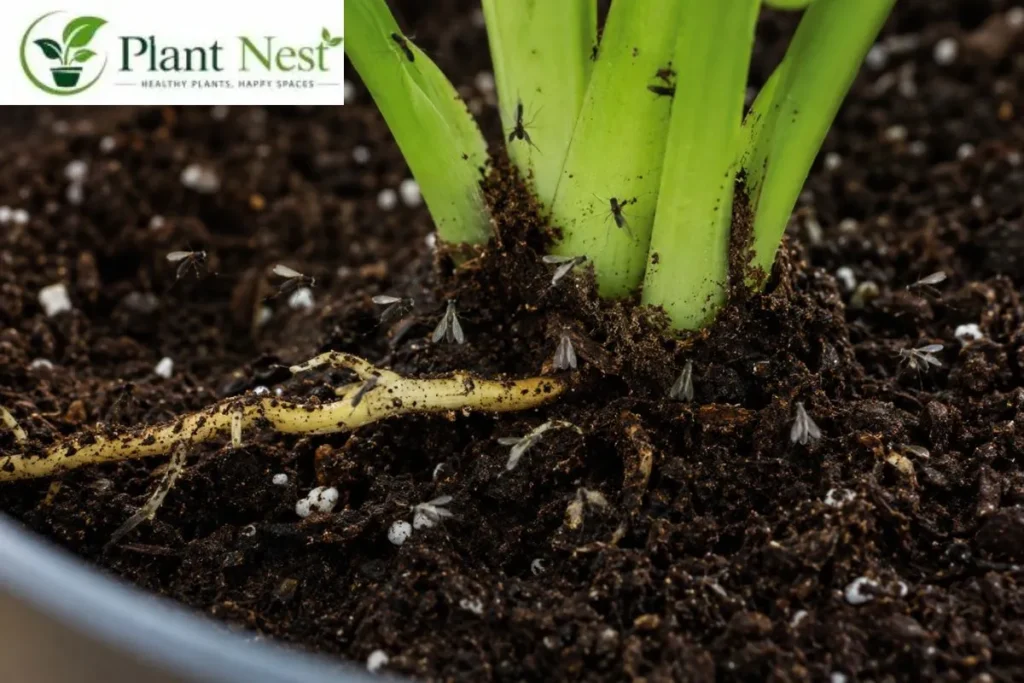
Why Do Indoor Plants Get Fungus Gnats?
One of the most common questions people ask is, why do my indoor plants have gnats? The answer usually comes down to moisture.
Fungus gnats prefer damp, organic-rich potting soil because it provides the perfect environment for laying eggs. When the top layer of soil stays wet for long periods, adult females can reproduce quickly, allowing populations to increase within a short time.
Overwatering is one of the biggest reasons fungus gnats become established. Constantly moist soil creates ideal breeding conditions while reducing oxygen around the roots. Poor drainage, decorative pots without drainage holes, and heavy potting mixes that remain wet for too long all contribute to the problem.
High humidity indoors may also encourage fungus gnat activity because the soil dries more slowly. In addition, decaying leaves, fallen flowers, and other organic debris left on the soil surface provide additional food sources for developing larvae.
Newly purchased houseplants can sometimes introduce fungus gnats into your home if eggs or larvae are already present in the potting mix. Reusing contaminated potting soil can also spread infestations from one plant to another.
Understanding what attracts fungus gnats is the first step towards preventing future infestations. By controlling soil moisture, improving drainage, and maintaining good houseplant hygiene, you’ll create an environment that’s far less attractive to these persistent indoor plant pests.
Fungus Gnat Life Cycle
One of the most persistent myths is that killing the tiny flying insects is all they need to do when learning how to rid indoor plants of gnats. Unfortunately, that’s only part of the solution. Adult fungus gnats are just one stage of the infestation.
If you only remove the flying adults, the eggs and larvae hidden in the potting soil will continue developing, and new gnats will appear within days. That’s why understanding the fungus gnat life cycle is one of the most important steps in achieving long-term control.
Fungus gnats develop through four stages: eggs, larvae, pupae, and adults. Under warm indoor conditions, the complete life cycle usually takes three to four weeks, allowing populations to grow quickly if no action is taken. Knowing what happens during each stage helps you choose the right treatment at the right time.
Eggs
The fungus gnat life cycle begins when adult females lay tiny eggs in the top layer of moist potting soil. A single female can lay dozens or even hundreds of eggs during her lifetime, which explains why an infestation can spread surprisingly fast. If you’re learning How to Rid Indoor Plants of Gnats Fast, understanding where these eggs are laid is the first step towards stopping the problem at its source.
Freshly laid eggs are extremely small and almost impossible to see without magnification. They remain hidden just below the soil surface, where moisture provides ideal conditions for development. Identifying these breeding conditions early makes getting rid of gnats in indoor plants much more effective.
Allowing the top layer of soil to dry slightly between waterings is one of the simplest ways to reduce egg survival. Dry conditions make the soil far less attractive for egg-laying and interrupt the breeding cycle before it becomes a serious infestation. This simple watering adjustment is one of the most effective ways to rid indoor plants of gnats fast and prevent new generations from developing.
Larvae
The larval stage is the most destructive part of the fungus gnat life cycle and the main reason how to rid indoor plants of gnats requires more than simply catching adult flies.
After hatching, fungus gnat larvae are small, translucent worms with shiny black heads. They live beneath the surface of the potting mix, where they feed on fungi, algae, decaying organic matter, and fine plant roots.
Healthy mature houseplants can often tolerate small numbers of larvae without obvious damage. However, seedlings, young plants, fresh cuttings, and recently repotted plants are much more vulnerable because their delicate roots are easily damaged.
Large larval populations may reduce root growth, slow water and nutrient uptake, weaken overall plant health, and increase the risk of root diseases. This is why many experts consider larvae the real target when trying how to get rid of fungus gnats in indoor plants permanently.
Treatments such as Bacillus thuringiensis israelensis (BTI), beneficial nematodes, and hydrogen peroxide soil drenches are commonly used because they target larvae living inside the potting soil.
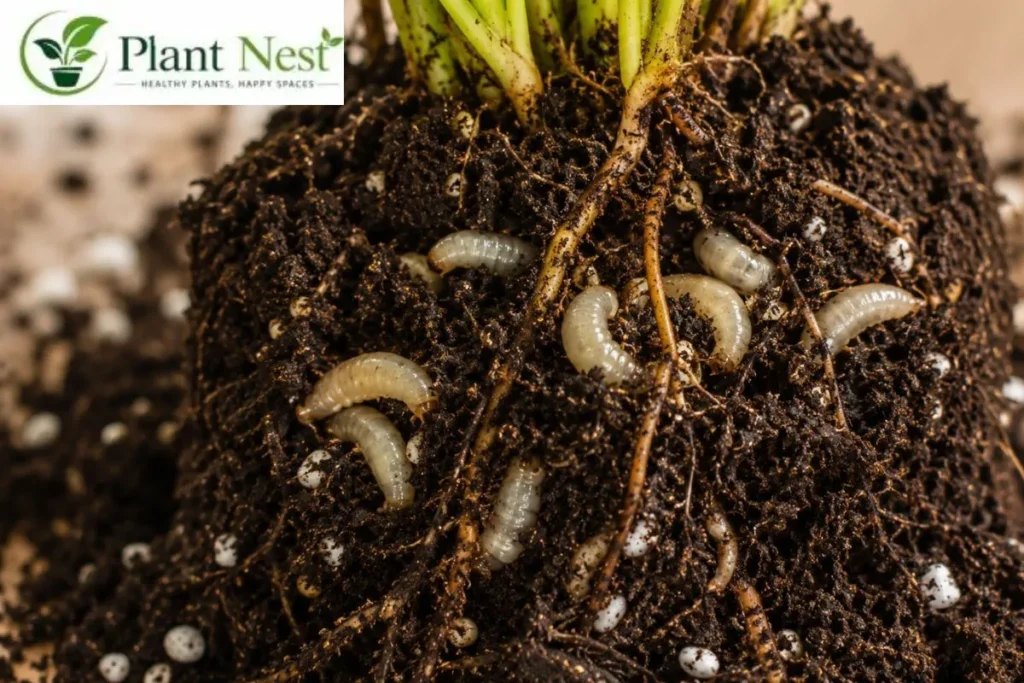
Pupae
Once the larvae complete their growth, they enter the pupal stage within the potting mix. During this stage, they stop feeding and begin transforming into adult fungus gnats. Understanding this hidden phase is important if you’re learning How to Rid Indoor Plants of Gnats Fast, because eliminating only the adult insects won’t stop the infestation completely.
The pupal stage is relatively short and usually lasts only a few days under normal indoor temperatures. Since the pupae remain hidden beneath the soil surface, most plant owners never notice them. This is why getting rid of fungus gnats in houseplants often takes longer than expected.
Although pupae cause very little direct damage to indoor plants, they are the final stage before new adult fungus gnats emerge and begin laying eggs again. This explains why infestations often return even after most of the flying insects have disappeared. To get rid of gnats in indoor plants successfully, you need to interrupt the entire life cycle rather than targeting only the adults.
Maintaining your treatment for several weeks ensures that newly emerging adults are eliminated before they have a chance to reproduce. Combining sticky traps with soil treatments is one of the most effective ways to rid indoor plants of gnats fast and prevent future infestations.
Adult Fungus Gnats
Adult fungus gnats are the stage most people notice first because they fly around indoor plants, windows, and nearby surfaces. They resemble tiny black mosquitoes and are usually seen hovering just above the potting soil.
Unlike the larvae, adult fungus gnats rarely damage healthy plants directly. Their main purpose is reproduction. After emerging from the soil, adults quickly mate, and females begin searching for moist potting soil where they can lay the next generation of eggs.
Although adult gnats are mainly a nuisance, reducing their numbers remains an important part of successful indoor plant gnat treatment. Yellow sticky traps are highly effective for capturing flying adults and monitoring the size of an infestation.
However, sticky traps alone won’t eliminate the problem because larvae continue developing below the soil surface.
Understanding the complete fungus gnat life cycle explains why a combination of treatments works much better than relying on a single method. Targeting only adult gnats allows eggs, larvae, and pupae to continue the infestation. Likewise, treating only the soil without reducing adult populations gives surviving insects the opportunity to lay new eggs.
For the best results when learning how to rid indoor plants of gnats, focus on breaking the entire life cycle. By reducing soil moisture, targeting larvae with appropriate treatments, trapping adult gnats, and maintaining good houseplant care, you can eliminate current infestations and greatly reduce the chances of fungus gnats returning in the future.
Signs Your Indoor Plants Have Fungus Gnats
People often assume that seeing one or two tiny flies means there isn’t a real infestation. Unfortunately, that’s often not the case. By the time you notice adult fungus gnats flying around your houseplants, there may already be eggs, larvae, and pupae developing in the potting soil.
Recognising the early signs is essential if you want to learn how to rid indoor plants of gnats before the population grows larger.
Fungus gnats usually don’t appear overnight. Their numbers increase gradually, giving you several warning signs before the infestation becomes severe. Paying close attention to your plants allows you to take action early and greatly reduces the time needed to eliminate them.
Tiny Flying Insects Around Plants
The most obvious sign of a fungus gnat infestation is the appearance of tiny black flying insects around your indoor plants. Adult fungus gnats are weak fliers and usually stay close to the potting soil because that’s where they lay their eggs.
You may notice them hovering around the base of the plant, resting on the soil surface, or flying up when you water the plant or disturb the pot. They often gather near windows because they’re attracted to light, making them easy to mistake for fruit flies.
Although the adults don’t usually damage healthy plants directly, their presence almost always indicates that larvae are developing in the soil. If you regularly see these tiny flies, it’s time to begin indoor plant gnat treatment before the infestation spreads to other houseplants.
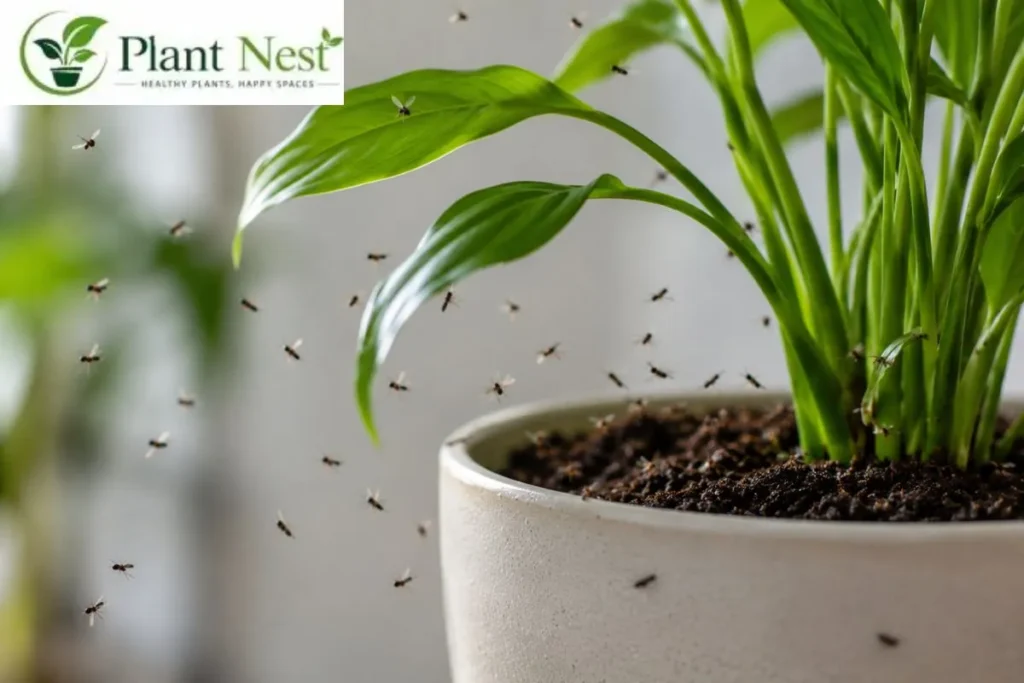
Gnats Crawling on the Soil
Not all fungus gnats spend their time flying. Adult insects often crawl slowly across the surface of damp potting soil while searching for suitable places to lay eggs. If you’re learning How to Rid Indoor Plants of Gnats Fast, recognising this behaviour is important because it helps you identify an infestation before it spreads.
If you examine the soil closely, especially after watering, you may notice several small dark insects moving around the surface. This behaviour is particularly common when the potting mix remains consistently moist, creating ideal breeding conditions. Spotting these insects early makes getting rid of gnats in indoor plants much easier.
Observing gnats crawling on the soil is often an early indication that the breeding cycle is already underway. Reducing soil moisture and starting treatment immediately can interrupt the infestation before large numbers of eggs are laid. Taking quick action is one of the most effective ways to rid indoor plants of gnats fast and prevent fungus gnats from becoming a much bigger problem.
Larvae in Potting Mix
The larvae are the hidden stage that causes the greatest concern. Unlike the adults, they live beneath the soil surface where they feed on fungi, organic matter, and delicate roots.
If you gently disturb the top layer of damp potting mix, you may occasionally see tiny translucent worms with shiny black heads moving through the soil. Because they’re extremely small, many gardeners never notice them until the infestation becomes well established.
Finding larvae confirms that the fungus gnat life cycle is active in your potting mix. At this stage, simply trapping adult gnats won’t solve the problem. Treatments that target larvae are necessary if you want how to get rid of fungus gnats in indoor plants permanently.
Slow Plant Growth
A fungus gnat infestation doesn’t always become obvious because of the insects themselves. Sometimes the first sign is a gradual decline in plant health. If you’re searching for How to Rid Indoor Plants of Gnats Fast, recognising these early symptoms can help you stop the infestation before it becomes more severe.
As larvae feed on delicate roots, the plant becomes less efficient at absorbing water and nutrients. Growth may slow noticeably, and new leaves may emerge smaller than normal. Plants that were previously healthy may suddenly appear less vigorous without any obvious changes to their care routine. Identifying these warning signs early makes getting rid of gnats in indoor plants much more effective.
Young houseplants, seedlings, and freshly rooted cuttings are particularly sensitive because their small root systems can be damaged much more easily than those of mature plants.
If slow growth occurs alongside tiny flying insects, fungus gnat larvae are likely contributing to the problem. Taking prompt action is one of the best ways to rid indoor plants of gnats fast and protect your houseplants from further root damage.
Root Damage in Young Plants
Root damage is the most serious consequence of a heavy fungus gnat infestation. While mature houseplants can often tolerate limited feeding, young plants have much smaller root systems and are far more vulnerable.
Larvae feed on tender roots and root hairs, reducing the plant’s ability to absorb water and nutrients. As root damage increases, seedlings may wilt, leaves may turn yellow, and overall growth can stop completely.
Damaged roots also create entry points for fungal diseases, increasing the risk of root rot and other soil-borne infections. This combination of insect feeding and disease pressure can quickly weaken young plants if left untreated.
Checking the root system of severely affected plants may reveal brown, damaged roots together with larvae in the surrounding potting mix. Early treatment greatly improves the chances of recovery.
Recognising these warning signs early is one of the most important steps in learning how to rid indoor plants of gnats successfully. Tiny flying insects, gnats on the soil surface, larvae in the potting mix, slowed plant growth, and damaged roots all indicate that fungus gnats are actively reproducing.
By identifying these symptoms before the infestation becomes severe, you’ll be able to choose the most effective treatment and protect your houseplants from further damage.
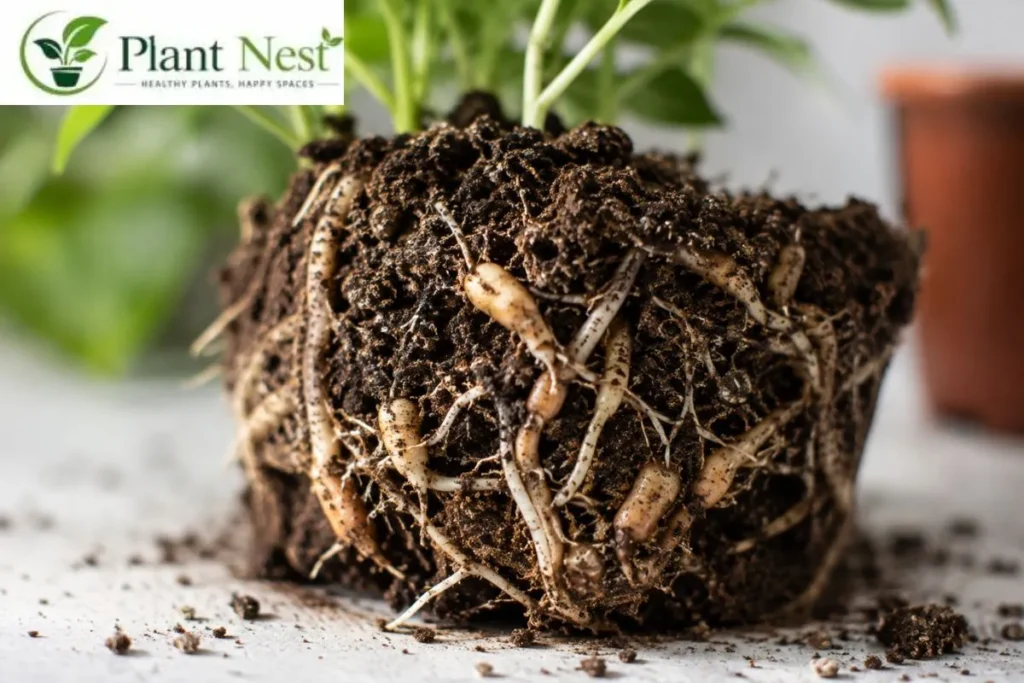
How to Rid Indoor Plants of Gnats (Step-by-Step Guide)
A widespread belief is there’s one miracle product that instantly solves how to rid indoor plants of gnats. In reality, successful fungus gnat control requires a combination of methods.
Killing only the flying adults or treating only the soil rarely eliminates the infestation completely. The most effective approach targets every stage of the fungus gnat life cycle while also removing the conditions that allowed the insects to multiply in the first place.
If you’re looking for how to get rid of gnats in indoor plants, follow these practical steps together instead of relying on a single treatment. Combining several methods will produce much faster and longer-lasting results.
Let the Soil Dry Slightly
One of the simplest and most effective ways to reduce fungus gnat populations is to allow the top layer of potting soil to dry slightly between waterings. If you’re looking for How to Rid Indoor Plants of Gnats Fast, adjusting your watering routine is one of the first and most important steps.
Adult fungus gnats prefer moist soil because it provides the ideal place to lay their eggs. When the surface remains dry for longer periods, it becomes much less attractive for egg-laying, and many eggs fail to survive. This simple change can make getting rid of gnats in indoor plants much easier.
Drying the upper layer of soil also creates less favourable conditions for young larvae. However, avoid allowing moisture-loving houseplants to become completely dry, as different species have different watering requirements. The goal is to reduce excess moisture without stressing the plant.
Checking the soil before watering instead of following a fixed schedule helps maintain healthy moisture levels while discouraging fungus gnats from breeding. This habit is one of the most reliable ways to rid indoor plants of gnats fast and prevent future infestations.
Remove Dead Plant Material
Decaying organic matter creates an ideal environment for fungus gnat larvae because it provides an additional food source. If you’re learning How to Rid Indoor Plants of Gnats Fast, keeping the soil surface clean is one of the easiest ways to reduce their breeding sites.
Regularly remove fallen leaves, dead flowers, old stems, and other plant debris from the soil surface. This simple maintenance task improves overall plant hygiene while reducing the amount of organic material available for developing larvae. It also makes getting rid of gnats in indoor plants much more effective when combined with other control methods.
Keeping the growing area clean also helps reduce other common indoor plant pests and fungal diseases. Good plant hygiene is one of the most reliable ways to rid indoor plants of gnats fast while supporting healthier, stronger houseplants.
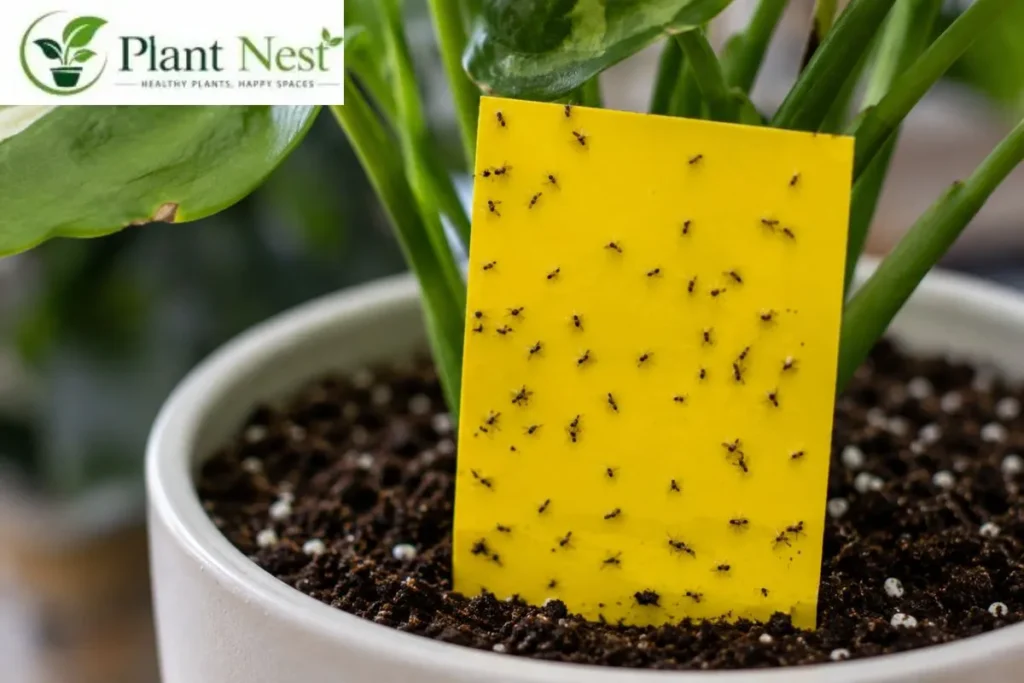
Use Yellow Sticky Traps
Yellow sticky traps are one of the easiest tools for controlling adult fungus gnats. If you’re looking for How to Rid Indoor Plants of Gnats Fast, these traps are an excellent way to reduce the number of flying insects. Their bright colour attracts adult gnats, which become trapped on the sticky surface before they can reproduce.
Place the traps close to the affected plants, just above the soil surface where adult gnats spend most of their time. As the traps capture more insects, you’ll notice a gradual reduction in the number of flying gnats around your houseplants. This makes getting rid of gnats in indoor plants much easier when combined with proper soil treatments.
Sticky traps also help monitor the size of an infestation. If fewer insects appear on the traps over time, it’s a good sign that your treatment programme is working.
Although highly effective against adult insects, sticky traps alone won’t eliminate fungus gnat larvae living beneath the soil. For the best results, combine them with larval treatments to rid indoor plants of gnats fast and prevent the infestation from returning.
Replace the Top Layer of Soil
Since fungus gnat eggs are usually laid in the upper few centimetres of potting mix, replacing the top layer of soil can remove a significant number of eggs and young larvae. If you’re searching for How to Rid Indoor Plants of Gnats Fast, this is one of the most effective ways to reduce the infestation at its source.
Carefully remove the top 2 to 5 centimetres (1 to 2 inches) of potting mix without disturbing the roots. Replace it with fresh, sterile potting mix that is free from insects and disease organisms. This simple method makes getting rid of gnats in indoor plants much easier because it removes many of the eggs before they can hatch.
Replacing the surface soil also reduces the existing population while creating a cleaner growing environment that is less attractive for future egg-laying.
If the infestation is severe throughout the entire pot, complete repotting may be a better option. Combining fresh potting mix with other control methods is one of the best ways to rid indoor plants of gnats fast and prevent them from returning.
Improve Drainage
Poor drainage is one of the biggest reasons fungus gnats become established in houseplants. If you’re wondering How to Rid Indoor Plants of Gnats Fast, improving drainage should be one of your first priorities. Potting soil that stays constantly wet creates ideal breeding conditions for every stage of the fungus gnat life cycle.
Choose a well-draining potting mix that allows excess water to flow away from the roots while still retaining enough moisture for healthy growth. Adding materials such as perlite or coarse bark improves drainage and increases airflow within the growing medium, making getting rid of gnats in indoor plants much more effective.
Always grow houseplants in containers with drainage holes, and empty saucers after watering so the roots are never left sitting in standing water. Healthy drainage discourages fungus gnats from laying eggs and helps create a healthier growing environment.
Improving drainage not only helps control fungus gnats but also reduces the risk of root rot and other moisture-related problems. Combined with proper watering and soil treatments, it’s one of the most reliable ways to rid indoor plants of gnats fast and keep future infestations under control.
Isolate Infested Plants
Fungus gnats can easily spread from one houseplant to another when adult insects move between nearby pots.
If you notice an infestation on one plant, move it away from the rest of your indoor collection whenever possible. Isolating affected plants limits the spread of adult gnats and reduces the chances of eggs being laid in healthy pots.
Continue monitoring nearby plants closely because small infestations often go unnoticed during the early stages.
Once you’ve successfully treated the affected plant and no new adult gnats appear, it can safely be returned to its original location.
Learning how to rid indoor plants of gnats isn’t about finding a single quick fix. Long-term success comes from combining several effective methods at the same time.
Allowing the soil to dry slightly, removing organic debris, using yellow sticky traps, replacing contaminated surface soil, improving drainage, and isolating affected plants all work together to interrupt the fungus gnat life cycle. These simple steps create a healthier growing environment and form the foundation for lasting fungus gnat control for houseplants.
Chemical and Commercial Treatments
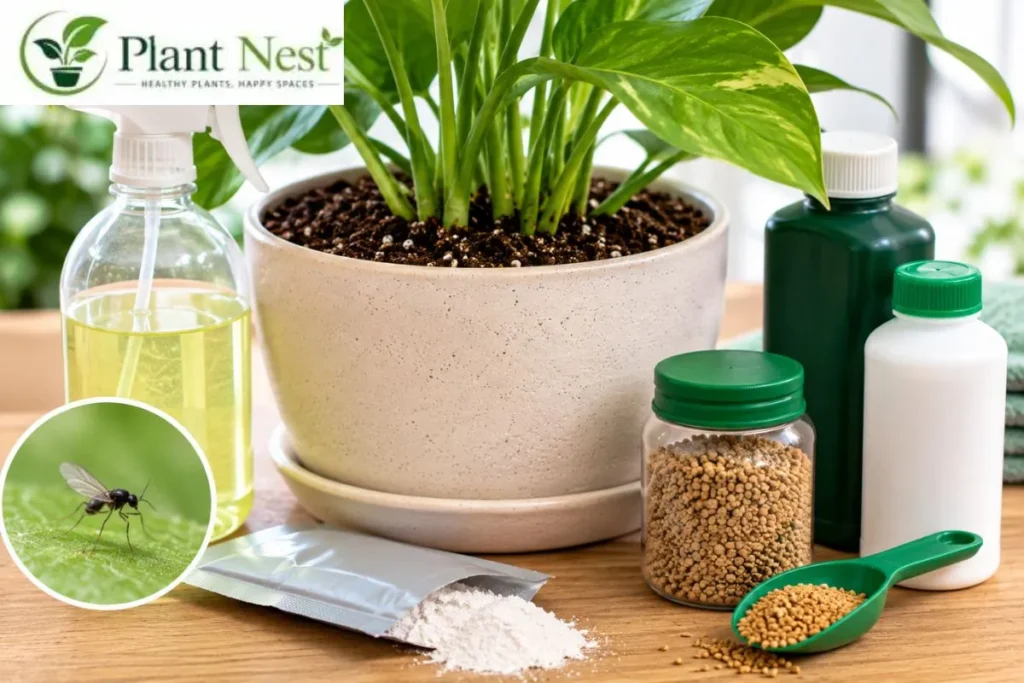
Many people believe that chemical products are always the fastest way to solve how to rid indoor plants of gnats. In reality, they should usually be used only when natural methods haven’t controlled the infestation or when fungus gnats have spread to several houseplants. Choosing the right product and using it correctly is far more important than using the strongest treatment available.
Insecticidal Soap
Insecticidal soap helps control adult fungus gnats that come into direct contact with the spray. It works by damaging the insects’ outer coating, causing them to dehydrate.
Spray only as directed on the product label and avoid overusing it. While insecticidal soap reduces adult populations, it does not eliminate larvae living in the potting soil, so combine it with other treatments for better results.
Systemic Insecticides
Systemic insecticides are absorbed by the plant and can provide longer-lasting control of certain houseplant pests. They may be useful for severe infestations that haven’t responded to other methods.
Because these products are stronger, always follow the manufacturer’s instructions carefully. They are generally best reserved for serious cases rather than minor fungus gnat problems.
Houseplant Pest Sprays
Ready-to-use houseplant pest sprays can quickly reduce the number of flying fungus gnats. If you’re looking for How to Rid Indoor Plants of Gnats Fast, these sprays can provide quick control of adult insects when used correctly.
They work best when applied directly to fungus gnats resting on or around the plant, making getting rid of gnats in indoor plants faster and more effective.
Although pest sprays reduce adult populations, they should be combined with treatments that target larvae in the potting soil. Using multiple control methods together is the most reliable way to rid indoor plants of gnats fast and prevent the infestation from returning.
Keep in mind that pest sprays mainly target adults. Since eggs and larvae remain in the soil, combine sprays with soil treatments such as BTI or beneficial nematodes for complete control.
When Chemical Treatments Are Necessary
Chemical treatments are usually recommended only when the infestation is widespread or natural methods have not produced satisfactory results after several weeks.
If you’re looking for How to Rid Indoor Plants of Gnats Fast, chemical products can be an effective option for severe infestations, but they should be used carefully and according to the manufacturer’s instructions.
For most houseplants, the best approach is to combine proper watering, improved drainage, yellow sticky traps, and treatments that target larvae. This integrated method makes getting rid of gnats in indoor plants more effective while reducing the need for stronger chemicals
. Using chemical products only when genuinely needed helps protect beneficial organisms, supports healthier houseplants, and remains one of the most reliable ways to rid indoor plants of gnats fast over the long term.
Frequently Asked Questions (FAQs)
Many plant owners have similar questions after learning how to rid indoor plants of gnats. The answers below cover the most common concerns and will help you eliminate fungus gnats more effectively while preventing future infestations.
How to Get Rid of Fungus Gnats in Indoor Plants Permanently?
The best approach to getting rid of gnats in indoor plants permanently is to treat both the adult insects and the larvae at the same time. Use yellow sticky traps to catch flying adults, allow the top layer of soil to dry slightly between waterings, and apply treatments such as BTI or beneficial nematodes to eliminate larvae hiding in the potting soil.
Combining these methods is far more effective than targeting only one stage of the fungus gnat life cycle. Maintaining proper watering habits is also essential because it helps rid indoor plants of gnats and prevents new infestations from developing.
What Is the Best Way to Get Rid of Gnats in Houseplants?
The most effective approach combines several methods instead of relying on one treatment. Improve soil drainage, reduce excess moisture, remove dead plant material, use sticky traps, and treat the potting soil for larvae. This combination interrupts the fungus gnat life cycle and provides longer-lasting results.
How Do I Get Rid of Tiny Flies in Indoor Plants?
If you notice tiny flies around your houseplants, they are often fungus gnats. Begin by checking the soil moisture because constantly damp potting mix encourages breeding. Use yellow sticky traps to reduce adult numbers and treat the soil if larvae are present. Regular monitoring will help stop the infestation from spreading.
Do Fungus Gnats Kill Houseplants?
Adult fungus gnats rarely harm healthy houseplants. However, their larvae can feed on delicate roots, especially in seedlings, cuttings, and young plants. Heavy infestations may weaken plants, slow growth, and increase the risk of root diseases. Treating the problem early helps prevent serious damage.
Can Hydrogen Peroxide Kill Fungus Gnats?
Yes. A properly diluted hydrogen peroxide solution can help reduce fungus gnat larvae living in the potting soil. As the solution breaks down, it releases oxygen that helps kill many larvae without harming most healthy plants when used correctly. Always follow the recommended dilution rate and avoid excessive applications.
Does Neem Oil Get Rid of Fungus Gnats?
Neem oil can help reduce adult fungus gnats and discourage egg-laying when applied correctly. If you’re looking for How to Rid Indoor Plants of Gnats Fast, neem oil is a useful part of an integrated treatment plan.
While it contributes to fungus gnat control, it usually works best when combined with other methods such as yellow sticky traps and larval treatments.
Using several control methods together is more effective for getting rid of gnats in indoor plants and provides better long-term results by targeting every stage of the fungus gnat life cycle.
How Long Do Fungus Gnats Live?
Adult fungus gnats usually live for about one week. However, the complete life cycle from egg to adult typically takes three to four weeks under normal indoor conditions. If you’re learning How to Rid Indoor Plants of Gnats Fast, it’s important to understand that new adults continue emerging from the soil throughout this period.
For this reason, treatments should be continued for several weeks to break the life cycle completely and prevent the infestation from returning. Staying consistent with your treatment plan is the most effective approach to getting rid of gnats in indoor plants and achieving long-term fungus gnat control
Conclusion
Many people think fungus gnats are impossible to eliminate once they invade houseplants. Fortunately, that’s not true. Learning how to rid indoor plants of gnats is simply a matter of using the right combination of treatments and preventing the conditions that allow them to breed.
Throughout this guide, we’ve covered the most effective ways to control fungus gnats, including allowing the soil to dry slightly, improving drainage, using yellow sticky traps, replacing contaminated soil, applying natural treatments such as neem oil, hydrogen peroxide, beneficial nematodes, and BTI, as well as using commercial products when necessary.
Treating both the adult gnats and the larvae is essential because focusing on only one stage of the life cycle rarely solves the problem.
The best long-term defence against fungus gnats is prevention. Avoid overwatering, use a well-draining potting mix, remove dead plant material, inspect new houseplants before bringing them indoors, and monitor your plants regularly for early signs of pests. These simple habits make your indoor garden much less attractive to fungus gnats.
If you’re still wondering how to get rid of gnats in indoor plants, remember that patience and consistency are important. Most infestations cannot be eliminated overnight because eggs, larvae, pupae, and adults develop at different times. Continuing your treatment for several weeks helps break the fungus gnat life cycle completely.
With proper watering, healthy soil, regular inspections, and the right treatment methods, you can successfully master how to rid indoor plants of gnats and enjoy healthy, thriving houseplants that remain strong, vibrant, and free from recurring fungus gnat infestations.

Plant Nest Blog’s author is passionate about plants, gardening, and sustainable living. Through research and practical experience, they share helpful plant care tips, gardening guides, and easy solutions to help readers grow healthier plants and create greener spaces.