
Cordyline plant care secrets can bring beautiful color and a tropical feel to almost any garden or indoor space. Their long, pointed leaves come in different shades of green, red, pink, purple, and burgundy. However, keeping those colorful leaves healthy takes the right balance of sunlight, water, and proper care.
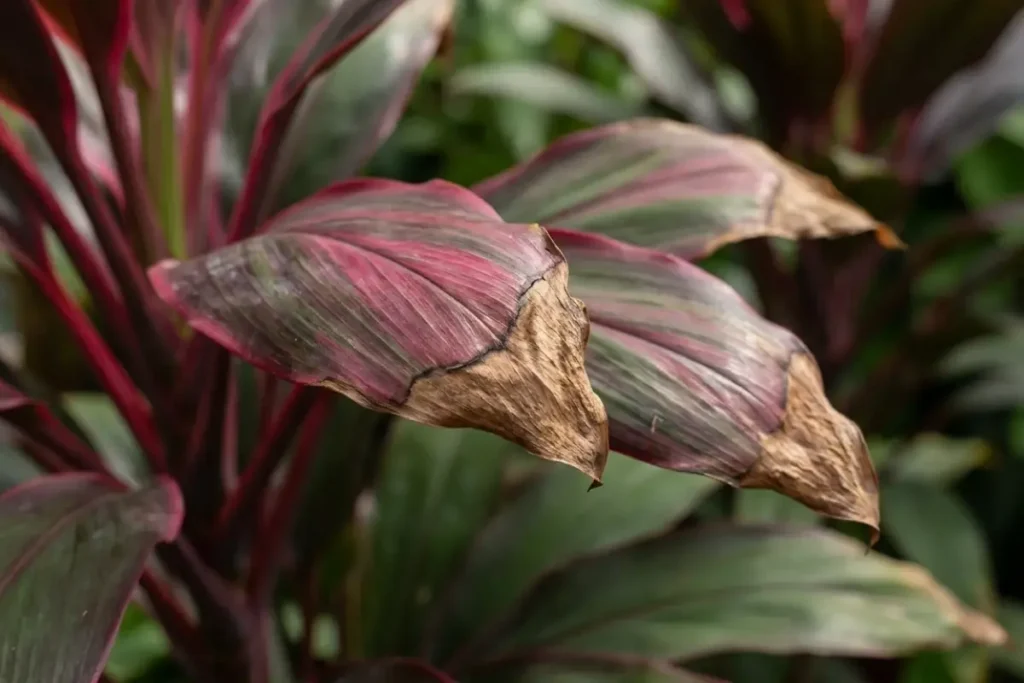
If your cordyline has brown leaf tips, drooping leaves, or slow growth, its growing conditions may need a little attention. The good news is that these plants are not difficult to maintain once you understand what they need.
Growing and caring for cordyline plants becomes much easier when you choose the right location, use well-draining soil, and follow a consistent watering routine.
This guide explains everything you need to know about cordyline plant care, including indoor and outdoor growing conditions, watering, pruning, fertilizing, common problems, and simple ways to keep your plant looking its best.
Understanding Cordyline Plant Care Secrets
Cordyline is a tropical and subtropical plant genus known for its attractive foliage and upright growth. Some varieties grow as compact shrubs, while others develop woody stems and become small tree-like plants.
Many gardeners grow cordylines for their colorful leaves rather than their flowers. Depending on the variety, the foliage can feature deep purple, bright red, pink, bronze, or green shades.
Cordylines work well in garden borders, patio containers, landscape beds, and indoor plant collections. Their appearance makes them especially attractive when you want to add height, color, and texture to a space.
Choosing the Right Location for Cordyline
The location you choose can make a big difference in how well your cordyline grows. These plants generally prefer warmth, good light, and some protection from harsh weather.
Growing Cordyline Indoors
If you want to grow cordyline indoors, place it near a bright window where it receives plenty of indirect sunlight. An east-facing window can work well, while a bright south- or west-facing window may need a little distance or filtered light to prevent leaf scorching.
Avoid placing your plant directly beside heating vents, air conditioners, or drafty doors. Sudden temperature changes can stress the foliage.
A bright living room, sunroom, or well-lit office can provide a suitable growing environment.
Growing Cordyline Outdoors
Outdoor cordylines usually grow well in a warm location with good light. Some varieties tolerate full sun, while others prefer partial shade, particularly in areas with intense afternoon heat.
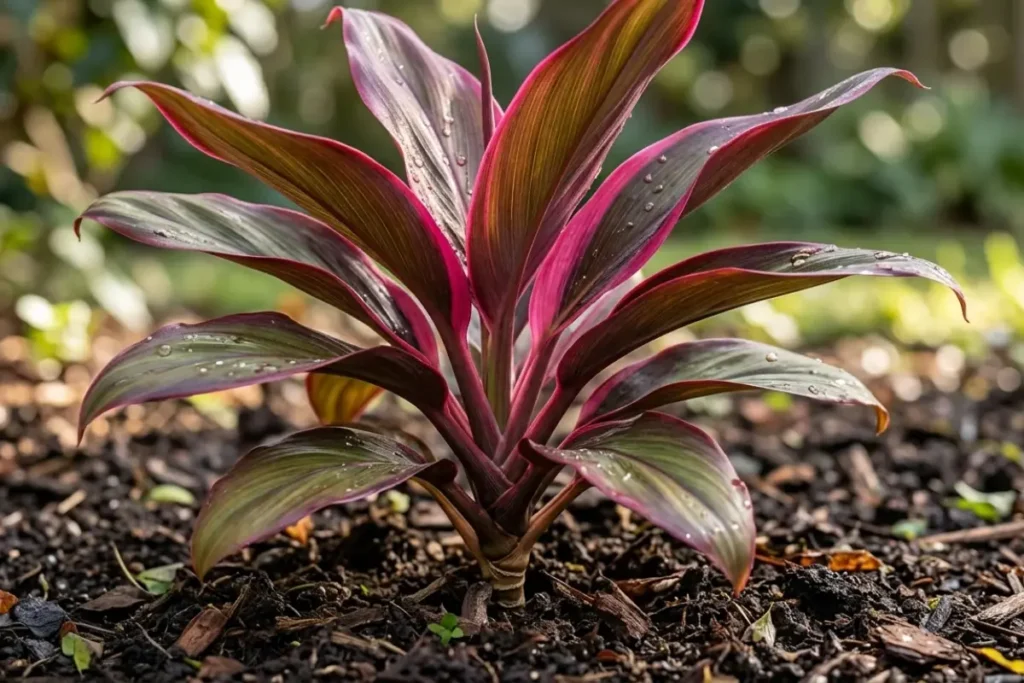
If you live in a hot part of the United States, morning sunlight with afternoon shade can help protect delicate leaves. In cooler regions, a sunny, sheltered location may be more suitable.
Choose a spot that protects the plant from strong winds, which can damage its long leaves.
Cordyline Sunlight Requirements
Sunlight plays an important role in maintaining the color and growth of cordyline leaves. Most varieties need bright light, but their exact requirements depend on the type of plant.
Colorful varieties often develop stronger leaf colors when they receive enough light. However, sudden exposure to intense direct sunlight can cause brown patches or scorched edges.
If your cordyline is growing indoors, gradually move it toward a brighter location if it looks pale or produces weak growth. Avoid moving it from a dim room straight into strong outdoor sunlight.
Watch how your plant responds. Healthy leaves and steady new growth are usually good signs that the lighting conditions are suitable.
How to Water a Cordyline Plant
Watering is one of the most important parts of cordyline plant care instructions. These plants appreciate consistent moisture during active growth, but they do not like sitting in waterlogged soil.
Water your cordyline when the top inch or two of soil feels dry. Push your finger into the soil to check moisture rather than following a strict watering schedule.
When watering, soak the soil thoroughly until excess water drains through the bottom of the pot. Empty the drainage tray afterward so the roots do not remain in standing water.
Indoor plants may need less frequent watering than outdoor plants because they usually receive less sunlight and experience slower evaporation.
During cooler months, reduce watering as growth naturally slows. However, do not allow the root ball to become completely dry for extended periods.
Best Soil for Growing Cordyline Plants
Cordylines need soil that holds some moisture but drains excess water easily. Heavy, compacted soil can create problems because it prevents air from reaching the roots.
For container plants, use a high-quality indoor or tropical plant potting mix with added perlite or another drainage-improving material. This creates a lighter growing medium and helps prevent water from collecting around the roots.
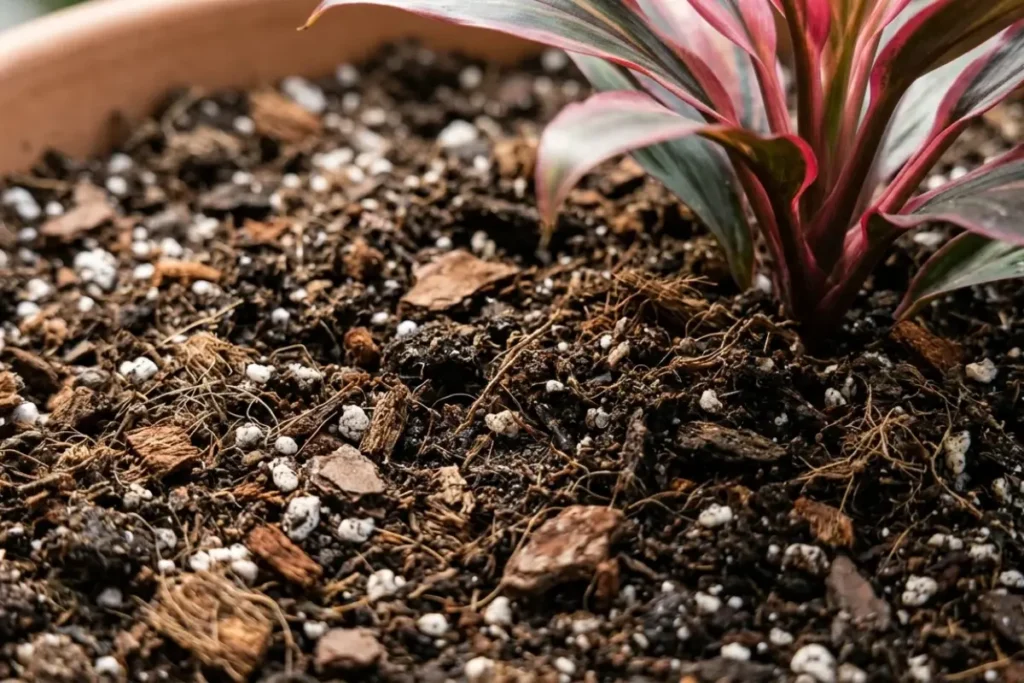
For outdoor planting, choose a garden area with good drainage. If your soil is heavy clay, improving the planting area with suitable organic matter and creating a raised planting bed may help.
Always use a pot with drainage holes. Even a good potting mix cannot protect your plant from overwatering if excess water has nowhere to go.
Temperature and Humidity Requirements
Most commonly grown cordylines prefer warm conditions. Many tropical varieties grow best when temperatures remain comfortably above freezing, although cold tolerance differs considerably between species.
Indoor cordylines generally do well at normal household temperatures. Keep them away from cold windows during winter and avoid exposing them to sudden temperature changes.
Humidity can also influence leaf appearance. Dry indoor air may contribute to brown leaf tips, especially when combined with inconsistent watering.
If your home has very dry air, a humidifier can help maintain a more comfortable environment. Grouping plants together may also slightly increase local humidity.
Before planting a cordyline outdoors, check the cold tolerance of its particular variety and your USDA hardiness zone. Some varieties tolerate mild frost, while tropical types need protection from cold weather.
Fertilizing Cordyline Plants for Healthy Growth
Cordylines do not need excessive fertilizer. Too much feeding can cause problems, including damaged roots and unwanted salt buildup in the soil.
During spring and summer, you can feed actively growing plants with a balanced liquid fertilizer diluted according to the product label. Apply it to moist soil rather than directly onto dry roots.
Indoor plants usually need less fertilizer than plants growing outdoors in warm, bright conditions.
Reduce or stop fertilizing during winter when growth slows. If your plant is already growing well and producing healthy leaves, avoid adding extra fertilizer just because a feeding schedule suggests it.
How to Prune and Maintain Cordyline Plants
Pruning helps keep your cordyline tidy and removes damaged or unattractive leaves. Fortunately, these plants do not require frequent heavy pruning.
Use clean, sharp pruning shears to remove completely brown, dry, or damaged leaves. Cut close to the main stem without damaging healthy tissue.
If your cordyline becomes too tall or develops an uneven shape, some varieties can tolerate stem cutting. New shoots may develop below the cut, depending on the plant’s health and growing conditions.
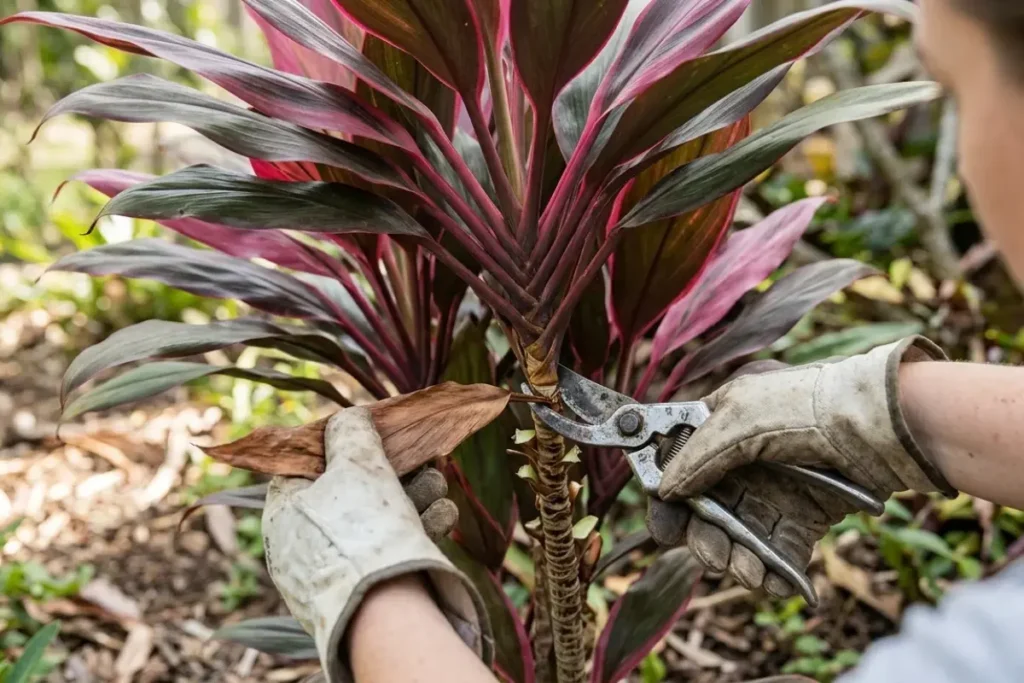
Avoid removing too many healthy leaves at once. The foliage helps the plant produce energy, so unnecessary pruning can slow its recovery.
Regularly wipe dusty indoor leaves with a soft, damp cloth. Clean leaves look better and allow light to reach the foliage more easily.
Growing Cordyline in Pots and Containers
Growing cordyline in a container is a practical option if you have limited garden space or live in an area with cold winters.
Choose a sturdy pot with drainage holes that is slightly larger than the plant’s root ball. A container that is too large may hold excess moisture for longer than necessary.
Use a well-draining potting mix and place the container somewhere with suitable light. Rotate indoor pots occasionally so all sides of the plant receive fairly even light.
As the plant grows, you may notice roots emerging from the drainage holes or water passing through the pot unusually quickly. These can be signs that the plant needs repotting.
Repot during the active growing season when possible. Move it into a slightly larger container and avoid disturbing the roots more than necessary.
How to Propagate Cordyline Plants
Propagating cordyline is a useful way to grow additional plants from an established one. Depending on the variety, you may be able to propagate it using stem cuttings or offsets.
Propagating Through Stem Cuttings
Choose a healthy stem and cut a suitable section using clean pruning shears. The cutting should have at least one or more visible nodes because new roots and shoots can develop from these areas.
Place the cutting in a suitable propagation medium or water, depending on the method you choose. Keep it in a warm location with bright, indirect light.
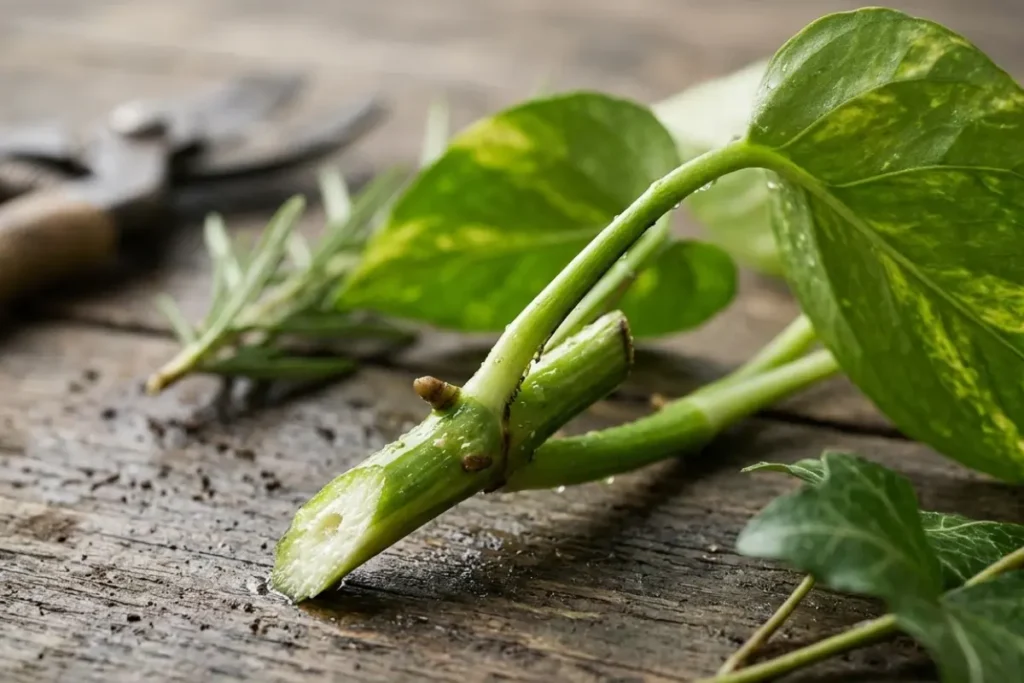
If you use a potting medium, keep it lightly moist rather than soaking wet. New growth can take time, so avoid pulling the cutting out repeatedly to check for roots.
Propagating Through Offsets
Some cordyline varieties produce small shoots or offsets near the base. If an offset has developed its own roots, you may be able to separate it from the parent plant.
Carefully remove the young plant and place it in a separate container with well-draining soil. Water lightly and give it time to adjust to its new growing conditions.
Common Cordyline Problems and How to Fix Them
Even when you provide good care, cordylines can occasionally develop problems. The leaves often provide useful clues about what is happening.
Brown Leaf Tips
Brown tips can develop because of inconsistent watering, low humidity, fertilizer salt buildup, or poor water quality.
Check the soil moisture first. If the soil stays too dry or becomes waterlogged, adjust your watering routine. You can also flush the potting mix occasionally with clean water to help remove accumulated fertilizer salts, allowing excess water to drain completely.
Yellow Leaves
A few older leaves turning yellow naturally is not always a problem. However, widespread yellowing may indicate overwatering, poor drainage, or root stress.
Check whether the soil remains wet for several days. If it does, allow the mix to dry appropriately and make sure the pot has working drainage holes.
Drooping Leaves
Drooping leaves may indicate underwatering, overwatering, temperature stress, or insufficient light.
Check the soil before adding more water. If it is dry, water thoroughly. If it is wet, give the roots time to dry and check for signs of root damage.
Brown or Scorched Patches
Strong direct sunlight, especially after a plant has been kept indoors, can cause leaf scorching.
Move the plant to a location with filtered light or partial shade, depending on its variety. Introduce stronger sunlight gradually rather than making sudden changes.
Slow Growth
Slow growth can happen during winter or when a cordyline receives insufficient light. It can also occur when the plant is root-bound or experiencing stress.
Check its lighting, temperature, watering routine, and root space before applying more fertilizer.
Common Pests That Affect Cordyline Plants
Cordylines can attract common houseplant and garden pests. Spider mites, mealybugs, scale insects, and aphids may sometimes appear on the leaves or stems.
Spider mites can cause tiny pale spots and fine webbing. Mealybugs look like small white cottony patches, while scale insects may appear as small bumps attached to stems or leaves.
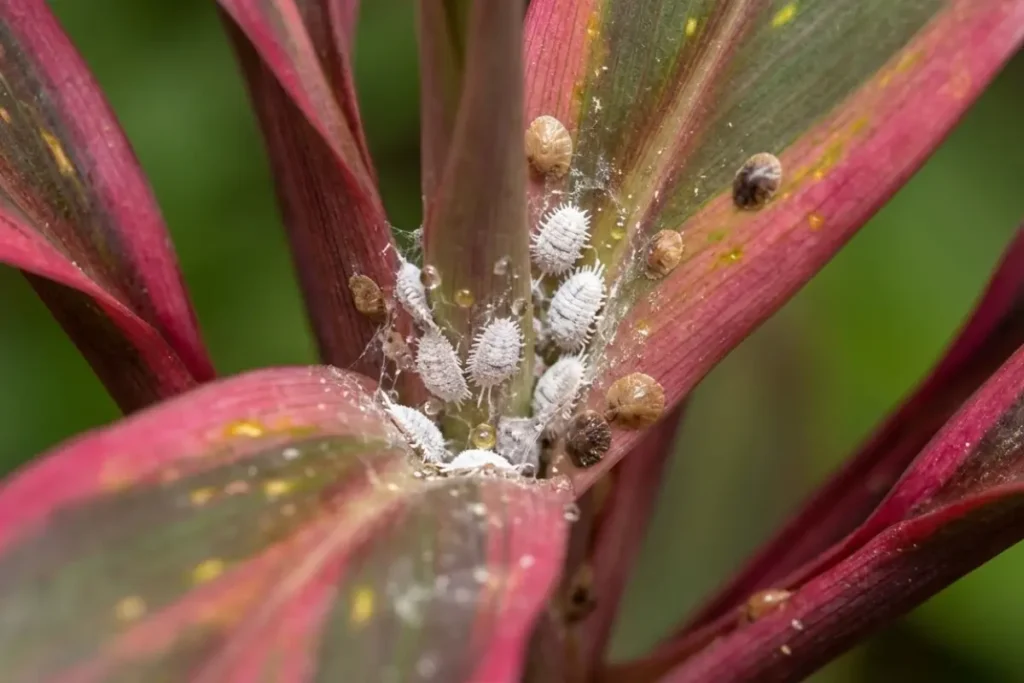
Inspect the undersides of leaves and areas around the stems regularly. If you notice pests, isolate an indoor plant from other houseplants when possible.
Remove visible insects with a damp cloth or an appropriate treatment. Insecticidal soap or horticultural oil may help control certain pests when used according to the product label. Test treatments on a small area first to check for leaf sensitivity.
Indoor vs. Outdoor Cordyline Care
Cordyline plants can grow in both indoor and outdoor environments, but their care needs change depending on where you keep them.
Indoor cordylines usually need bright indirect light, careful watering, and protection from dry air and temperature changes. Their soil may take longer to dry because indoor conditions often involve less direct sunlight.
Outdoor cordylines generally receive stronger light and more airflow. They may need more frequent watering during hot weather, especially when growing in containers.
The biggest difference is temperature protection. Outdoor plants may face frost, strong winds, and intense summer sunlight. Indoor plants avoid many of these conditions but can struggle with insufficient light.
Choose the growing environment that best matches your cordyline variety and local climate.
Winter Care for Cordyline Plants in the USA
Winter care depends on your location and the variety you grow. A cordyline that survives outdoors in a mild Southern California garden may struggle in a cold winter in New York or Minnesota.
If you live in a region with freezing temperatures, check whether your variety can tolerate local winter conditions. Tropical cordylines are often better grown in containers so you can move them indoors before cold weather arrives.
Reduce watering during winter because the plant usually grows more slowly. Keep indoor plants away from cold drafts and heating vents.
For outdoor plants that are suitable for your climate, a layer of mulch around the root zone can help moderate soil temperature. Avoid piling mulch directly against the stem.
If frost is forecast, protect vulnerable plants with suitable frost protection or move container-grown specimens into a sheltered area.
Frequently Asked Questions About Cordyline Plant Care
How often should I water my cordyline plant?
Water when the top inch or two of soil feels dry. The exact frequency depends on temperature, sunlight, humidity, pot size, and growing conditions.
Do cordyline plants need full sun or shade?
Most cordylines prefer bright light, but their sunlight needs vary by variety. Some tolerate full sun, while others grow better in partial shade, especially in hot climates.
Can cordyline grow indoors?
Yes. Many cordyline varieties can grow indoors when they receive plenty of bright, indirect light, suitable warmth, and well-draining soil.
Why are the leaves on my cordyline turning brown?
Brown leaves or tips may result from underwatering, low humidity, fertilizer buildup, cold exposure, or excessive direct sunlight. Check the growing conditions before deciding on a solution.
Is cordyline easy to care for?
Cordyline is generally manageable when its basic needs are met. Providing suitable light, avoiding waterlogged soil, and protecting it from unsuitable temperatures can help maintain healthy growth.
Can cordyline survive winter outdoors?
Some varieties tolerate cooler temperatures, but tropical cordylines are sensitive to frost. Check the hardiness of your particular variety before leaving it outdoors during winter.
Should I cut brown leaves off my cordyline?
Yes. You can remove completely brown or damaged leaves using clean pruning shears. If only the tips are brown, you can trim the damaged edges while leaving the healthy leaf tissue intact.
Do cordyline plants like humidity?
Many tropical cordylines appreciate moderate humidity. Very dry indoor air can contribute to brown leaf tips, so maintaining comfortable humidity may help.
How do I make my cordyline grow faster?
Give your plant suitable light, warm temperatures, well-draining soil, and consistent moisture. Feed it lightly during active growth and make sure the roots have enough room.
Can I grow cordyline in a small pot?
Yes, smaller cordyline varieties can grow in containers. Choose a pot with drainage holes and repot when the roots outgrow the available space.
Conclusion:
Healthy cordylines do not require complicated maintenance. The key is to understand the needs of your particular variety and provide the right growing conditions.
Give your plant suitable sunlight, water it when the soil begins to dry, and use a well-draining potting mix. Remove damaged leaves, watch for pests, and protect sensitive varieties from cold weather.
With a little attention and a consistent care routine, your cordyline can reward you with attractive foliage and beautiful color throughout the growing season.

Plant Nest Blog’s author is passionate about plants, gardening, and sustainable living. Through research and practical experience, they share helpful plant care tips, gardening guides, and easy solutions to help readers grow healthier plants and create greener spaces.