
A fig tree clipping can produce plenty of delicious fruit without demanding too much attention, but letting its branches grow wild can create problems. Overgrown branches may block sunlight, make harvesting difficult, and reduce airflow throughout the tree. That’s where proper fig tree trimming and pruning make a real difference.
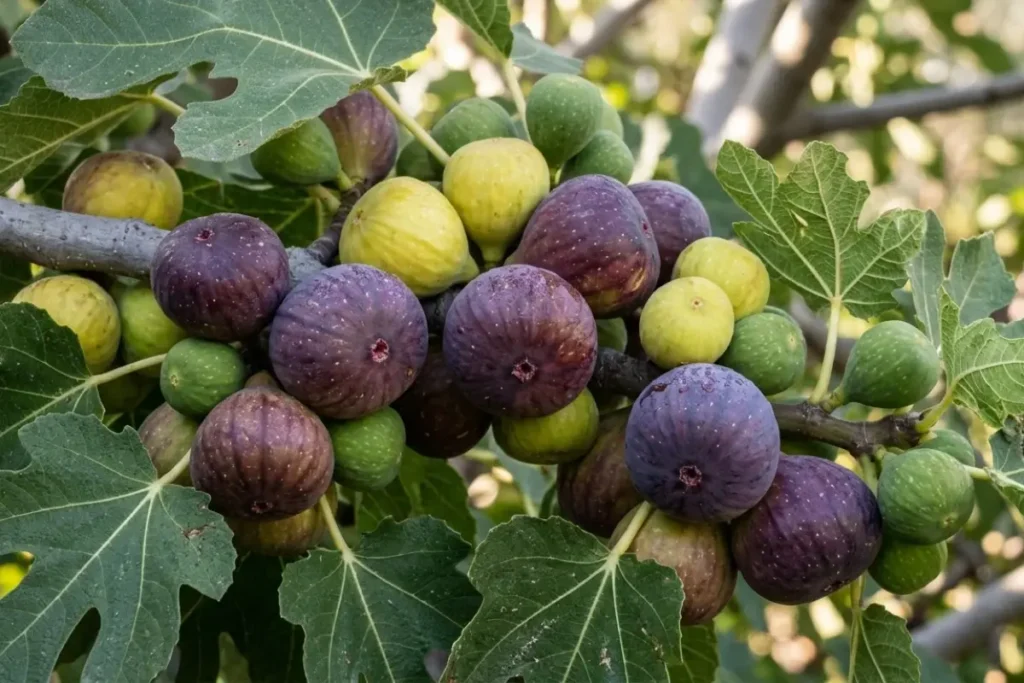
The good news is that you don’t need professional gardening experience to keep your fig tree in good shape. With the right timing, a few sharp tools, and some basic pruning techniques, you can manage its size, remove unhealthy growth, and encourage productive branches. This guide explains when to prune, which branches to cut, and the best way to trim a fig tree without damaging its growth.
Why Is Fig Tree Trimming and Pruning Important?
Pruning isn’t just about making your fig tree look neat. It helps you control its shape, remove damaged growth, and maintain a healthier structure.
When a fig tree becomes too crowded, branches compete for sunlight and space. Thick growth can also reduce airflow, creating conditions that encourage certain fungal problems.
Regular trimming helps remove dead, damaged, and diseased branches while improving sunlight exposure throughout the canopy. It also makes harvesting easier, controls excessive height, and gives healthy branches more room to develop.
However, avoid removing too much growth at once. Heavy pruning can encourage vigorous leafy shoots and may reduce the amount of fruit your tree produces.
When Is the Best Time to Prune a Fig Tree?
Timing matters because fig trees respond differently to pruning depending on the season and their growth stage.
For most deciduous fig varieties grown in the United States, late winter or early spring is a suitable time for major structural pruning. Wait until the coldest part of winter has passed but prune before new spring growth becomes vigorous.
Late Winter: The Best Time for Major Pruning
During dormancy, the tree has dropped its leaves, making its branch structure easier to see. You can identify damaged limbs, crossing branches, and unwanted growth without leaves hiding the problem areas.
Late winter pruning is particularly useful when you want to reshape an established tree or remove several problem branches.
Spring: Remove Winter Damage
Once new growth begins, check the tree for branches damaged by freezing temperatures.
Remove dead sections carefully, cutting back to healthy wood. If you’re unsure whether a branch survived winter, scratch a small area of bark. Green tissue underneath usually indicates living wood, while dry brown tissue may indicate dead growth.
Summer: Light Trimming Only
Summer is generally better for small maintenance cuts than major pruning.
Remove unwanted suckers, damaged shoots, and branches that create serious crowding. Avoid cutting away large amounts of healthy growth because those leaves help the tree produce energy.
Fall: Avoid Heavy Pruning
In colder parts of the United States, avoid heavy fall pruning. Fresh cuts can make the tree more vulnerable to winter damage, especially when cold weather arrives soon afterward.
Lightly remove broken or hazardous branches if necessary, but save major shaping for a more suitable time.
What Tools Do You Need for Fig Tree Pruning?
You don’t need an expensive collection of gardening equipment. A few reliable tools are enough for most backyard fig trees.
Bypass pruning shears are useful for cutting small shoots and branches that fit comfortably within the blades. For thicker branches, loppers provide extra reach and leverage. A pruning saw is helpful when removing larger limbs that are too thick for ordinary shears.
Protective gloves are also important because fig trees release a milky sap when cut. This sap can irritate some people’s skin, so avoid direct contact. Safety glasses are useful when working beneath branches or cutting overhead growth.
Before pruning, make sure your tools are sharp and clean. Disinfect blades between trees, particularly when removing diseased branches.
The Best Way to Trim a Fig Tree Step by Step
If you’re wondering about the best way to trim a fig tree, start with damaged growth and gradually work toward shaping the canopy.
You don’t need to remove every branch that looks out of place. The goal is to maintain a strong structure while preserving healthy fruiting wood.
Inspect the Entire Tree
Walk around your fig tree and examine its overall shape.
Look for dead branches, broken limbs, crowded areas, and shoots growing toward the center. Decide which branches need attention before making your first cut.
This simple inspection helps prevent unnecessary pruning.
Remove Dead and Damaged Branches
Start with branches that are clearly dead, diseased, or broken.
Cut them back to a healthy lateral branch or the branch collar, depending on their location. Avoid leaving long, dead stubs because they can become entry points for decay.
If a branch shows signs of disease, clean your pruning tools before moving to another section.
Cut Crossing and Rubbing Branches
Branches that grow into each other can rub against the bark, causing wounds.
Choose the stronger, better-positioned branch and remove the weaker or poorly placed one. This gives the remaining branches more room to develop.
Remove Suckers Around the Base
Fig trees often produce suckers from the base or roots.
These shoots can make the tree look bushy and compete with the main trunk for resources. Remove unwanted suckers close to their point of origin.
If you intentionally want a multi-stem fig tree, you can keep a few well-positioned shoots instead.
Thin Out the Center
A crowded canopy can prevent sunlight and air from reaching the inner branches.
Remove selected inward-growing shoots and poorly positioned branches to open the center. Don’t strip away all the interior growth, though. Healthy branches contribute to the tree’s fruit production.
Reduce Excessive Height
If your fig tree has grown too tall, shorten selected branches to a suitable outward-facing lateral branch.
This helps maintain a manageable shape without leaving awkward stubs.
Avoid cutting every branch to the same height. Natural-looking growth usually produces a better structure.
Step Back and Check the Shape
After making your cuts, walk around the tree again.
Check whether the canopy looks balanced and whether the remaining branches have enough room. If the tree already looks open and healthy, stop pruning.
More cutting doesn’t automatically mean better growth.
How to Prune a Young Fig Tree
Young fig trees need a slightly different approach from mature trees.
During the first few years, focus on building a strong framework rather than removing large amounts of growth.
If you prefer a single-trunk tree, select one strong central stem and remove competing shoots gradually.
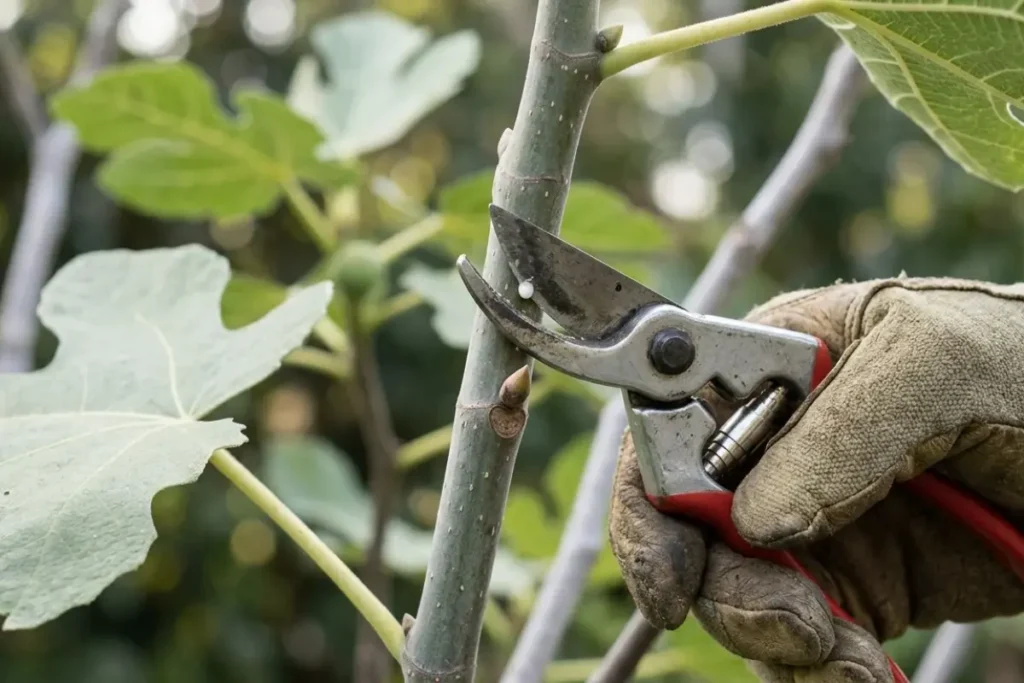
For a bush-shaped fig tree, choose a few healthy stems that grow in different directions. Remove weak, damaged, and poorly positioned shoots.
Keep in mind that young trees need their leaves to establish healthy roots and branches. Excessive pruning can slow their development.
How to Trim a Mature Fig Tree Without Damaging It
Mature fig trees can become surprisingly large, especially when they grow in warm climates.
The main goal is to maintain their structure while protecting productive branches.
Start by removing dead wood and branches that rub against each other. Next, look for overcrowded sections and shorten selected branches that extend beyond the desired shape.
Avoid removing too much of the canopy in one season. If the tree has been neglected for several years, spread major renovation pruning over two or more seasons.
This gives the tree time to respond without losing too much healthy growth at once.
How Much Can You Cut Back a Fig Tree?
The amount you can safely remove depends on the tree’s age, health, variety, and pruning history.
For routine maintenance, use a conservative approach. Remove only the branches that need attention rather than cutting back every healthy limb.
If a mature fig tree is severely overgrown, avoid removing a large portion of its canopy in one session. Gradual renovation is generally safer than drastic cutting.
Remember that excessive pruning can trigger vigorous vegetative growth and reduce the current or following crop.
Should You Prune Fig Trees in Spring or Winter?
Both seasons have their place, but they serve different purposes.
| Season | Recommended pruning activity |
| Late winter | Main structural pruning |
| Early spring | Remove confirmed winter damage |
| Summer | Light trimming and sucker removal |
| Fall | Avoid heavy pruning, especially in cold regions |
For gardeners in warmer areas such as Florida, Texas, and Southern California, local growing conditions may affect the ideal pruning window.
In colder areas, including parts of New York, Pennsylvania, and the Midwest, wait until the risk of severe winter weather has passed before making major cuts.
How to Encourage More Figs After Pruning
Pruning can improve a fig tree’s structure, but it doesn’t guarantee a larger harvest.
Fruit production also depends on the variety, climate, sunlight, water, soil conditions, and the age of the tree.
Give the Tree Enough Sunlight
Most common fig varieties grow best in a sunny location. Aim for around six to eight hours of direct sunlight when possible.
Good sunlight supports healthy leaf development and fruit ripening.
Avoid Excessive Nitrogen Fertilizer
Too much nitrogen can encourage leafy growth at the expense of fruit production.
Use fertilizer only when the tree needs it, and follow the product’s application directions.
Water Consistently
Figs need regular moisture during active growth, particularly when fruit is developing.
Deep watering is generally more useful than frequent, shallow watering. Allow the soil to drain properly because constantly wet roots can cause problems.
Protect Productive Branches
Some fig varieties produce fruit on new growth, while others can also produce an early crop on older wood.
Understanding your variety helps you avoid removing branches that carry developing fruit.
Common Fig Tree Pruning Mistakes to Avoid
Even a healthy fig tree can struggle when pruning becomes too aggressive.
Cutting Too Much at Once
Removing too many healthy branches reduces the tree’s leaf area and can affect fruit production.
Pruning at the Wrong Time
Heavy pruning before severe winter weather can expose fresh cuts and vulnerable growth to cold damage.
Leaving Long Branch Stubs
Long stubs rarely improve the tree’s structure. Make appropriate cuts near the branch collar without damaging it.
Ignoring the Tree Variety
Different fig varieties have different fruiting habits. Some produce their main crop on current-season growth, while others also produce a breba crop on older wood.
Using Dull Tools
Dull pruning blades can crush or tear branches instead of making clean cuts.
Removing Too Many Productive Branches
Healthy branches aren’t automatically unwanted branches. Before cutting, consider whether they may carry fruit.
How to Trim a Fig Tree in a Pot
Growing figs in containers is popular among gardeners who have limited outdoor space or want to move their trees during cold weather.
However, container-grown fig trees need careful pruning because their root systems and available growing space are restricted.
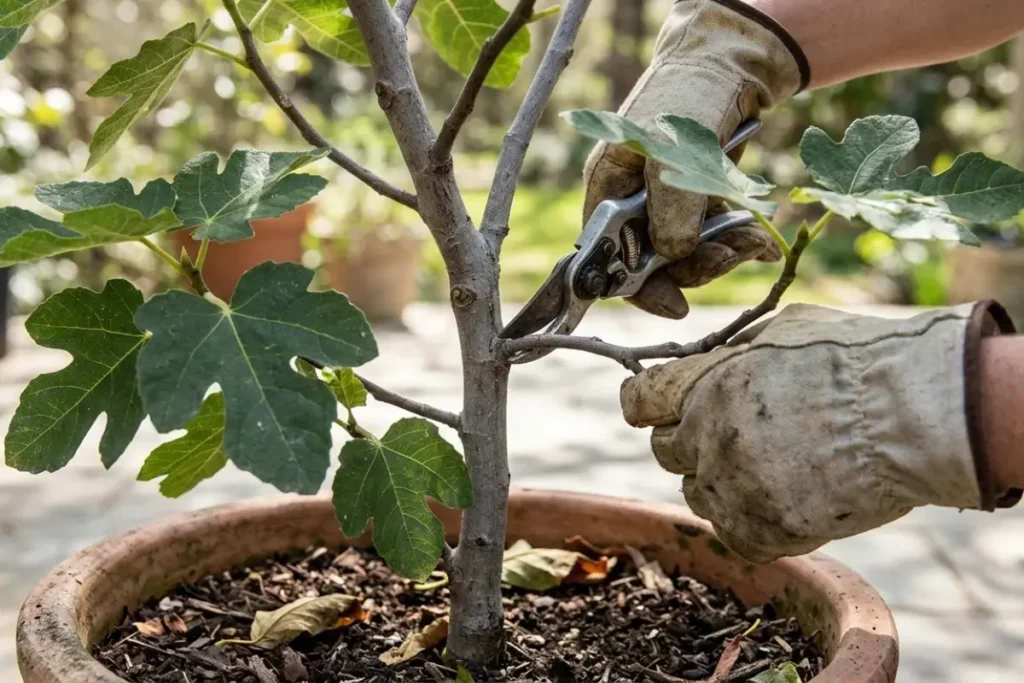
Keep the tree at a manageable height by shortening selected branches. Remove weak shoots, dead growth, and branches that cross through the center.
Avoid excessive pruning because container trees have less room to recover from stress.
Choose a container with drainage holes and provide enough sunlight for healthy development.
How to Prune Fig Trees in Cold Climates
Cold winters can damage fig branches, particularly in areas where temperatures regularly fall below freezing.
Gardeners in colder USDA hardiness zones should pay special attention to winter protection.
Wait until late winter or early spring to determine which branches have survived. Some branches may appear damaged but still contain living tissue.
Scratch the bark gently to check for green tissue underneath. Remove branches only after confirming that they are dead.
If you grow a cold-sensitive variety, consider winter protection such as wrapping or insulating the tree, depending on your local climate.
Does Fig Tree Pruning Affect Fruit Production?
Yes. Pruning can influence how much fruit your tree produces and when that fruit develops.
The effect depends heavily on the fig variety.
Some figs produce their main crop on new growth that develops during the current growing season. Others produce an early breba crop on branches that grew the previous year.
If you remove too many older branches, you may lose some of the early crop. If you cut back too much new growth, you may reduce the tree’s ability to produce its main crop.
That’s why understanding your fig variety before major pruning is so useful.
How to Care for a Fig Tree After Pruning
Once you’ve finished trimming, give the tree time to recover.
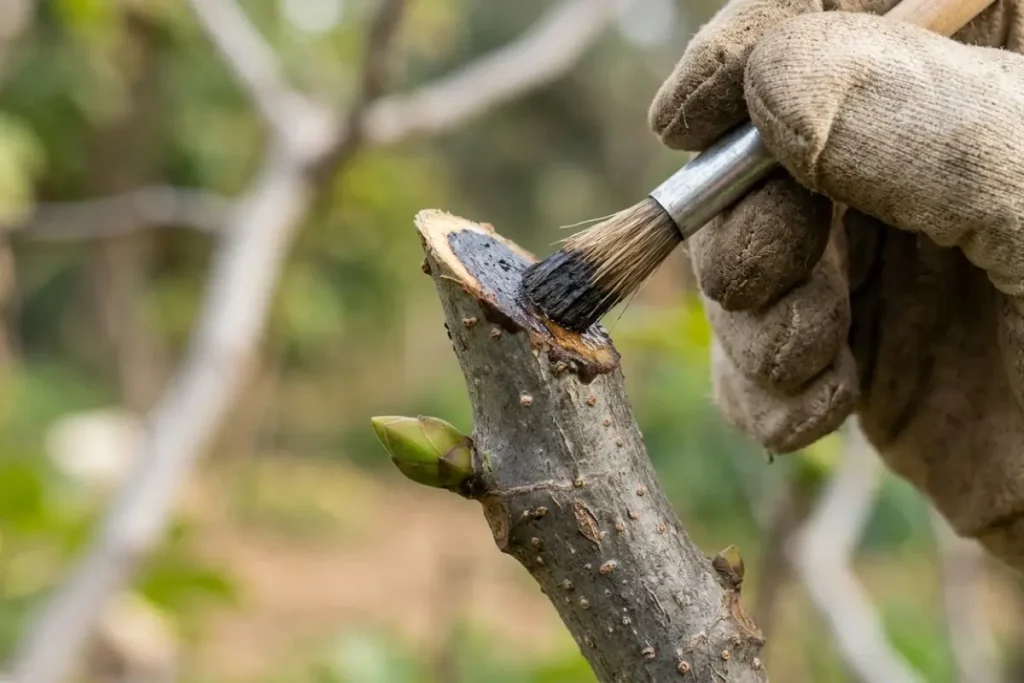
You don’t need to apply special treatments to every pruning cut. Proper cuts and good growing conditions are usually more important.
Keep the soil moderately moist without making it waterlogged. Watch for new growth and inspect the tree occasionally for signs of disease or damage.
Avoid applying heavy fertilizer immediately after pruning unless a soil test or clear deficiency indicates that the tree needs it.
If you removed diseased wood, dispose of it appropriately rather than leaving it around the tree.
Can You Grow a New Fig Tree From Cuttings?
Yes! Fig trees are commonly propagated from stem cuttings, making it possible to grow another tree from healthy material.
Choose healthy, disease-free stems and cut sections that contain several nodes. Use a clean, sharp tool and remove leaves from the portion that will go into the rooting medium.
Place the cuttings in a suitable, well-draining propagation mix. Keep the medium lightly moist and provide warmth and bright indirect light.
Roots may take several weeks to develop, depending on temperature, variety, and growing conditions.
Avoid using diseased or damaged branches for propagation. Also, check whether your fig variety is patented or otherwise protected before propagating it for sale.
Frequently Asked Questions About Fig Tree Trimming and Pruning
What Is the Best Month to Prune a Fig Tree?
For many deciduous fig trees in the United States, February or March is suitable, depending on the local climate. Prune during late winter or early spring before vigorous new growth begins.
Can I Cut the Top Off My Fig Tree?
You can reduce the height of a fig tree, but avoid simply cutting straight across the main trunk. Shorten selected branches to suitable lateral branches to maintain a balanced structure.
Should I Remove Lower Branches From a Fig Tree?
Remove lower branches if they touch the ground, interfere with mowing, or create unwanted crowding. Keep healthy lower branches if they contribute to the tree’s structure and fruit production.
Do Figs Grow on New or Old Wood?
It depends on the variety. Many common figs produce their main crop on current-season growth, while some also produce an early breba crop on the previous year’s wood.
Can I Prune a Fig Tree in Summer?
Yes. Summer is suitable for light trimming, removing suckers, and cutting damaged growth. Avoid heavy pruning during active fruit development.
Why Is My Fig Tree Growing Leaves but No Fruit?
Several factors can cause this problem, including excessive nitrogen, insufficient sunlight, young tree age, unsuitable growing conditions, and variety-related issues.
Can I Prune a Fig Tree Every Year?
Yes. Annual light pruning helps maintain the tree’s shape and removes unwanted growth. However, not every tree needs aggressive pruning every year.
8. Should I Seal Fig Tree Pruning Cuts?
Usually, no. Most routine pruning cuts don’t need wound paint or sealant. Make clean cuts and allow the tree to heal naturally.
How Do I Stop My Fig Tree From Growing Too Tall?
Shorten selected branches to outward-facing lateral branches during the appropriate pruning season. Regular, moderate height management is better than repeatedly cutting off the top.
Can I Prune a Fig Tree After It Produces Fruit?
You can remove broken or damaged branches after fruiting, but major pruning should follow the tree’s seasonal growth pattern and your local climate. Avoid removing productive wood unnecessarily.
Conclusion for fig tree clipping:
Proper fig tree trimming and pruning can make a noticeable difference in the health, shape, and productivity of your tree. The key is knowing which branches to remove and when to leave healthy growth alone.
Start with dead and damaged branches, remove overcrowded shoots, and maintain a balanced canopy. Avoid aggressive cutting, especially when your tree carries productive wood.
With sensible annual maintenance, suitable sunlight, and consistent watering, your fig tree can remain manageable while producing healthy growth and delicious fruit for years to come.

Plant Nest Blog’s author is passionate about plants, gardening, and sustainable living. Through research and practical experience, they share helpful plant care tips, gardening guides, and easy solutions to help readers grow healthier plants and create greener spaces.