
A pruning fruiting cherry trees can produce beautiful blossoms and plenty of delicious fruit, but only when its branches get the care they need. If your tree has become crowded, grown too tall, or produces fewer cherries than expected, proper pruning can make a real difference.
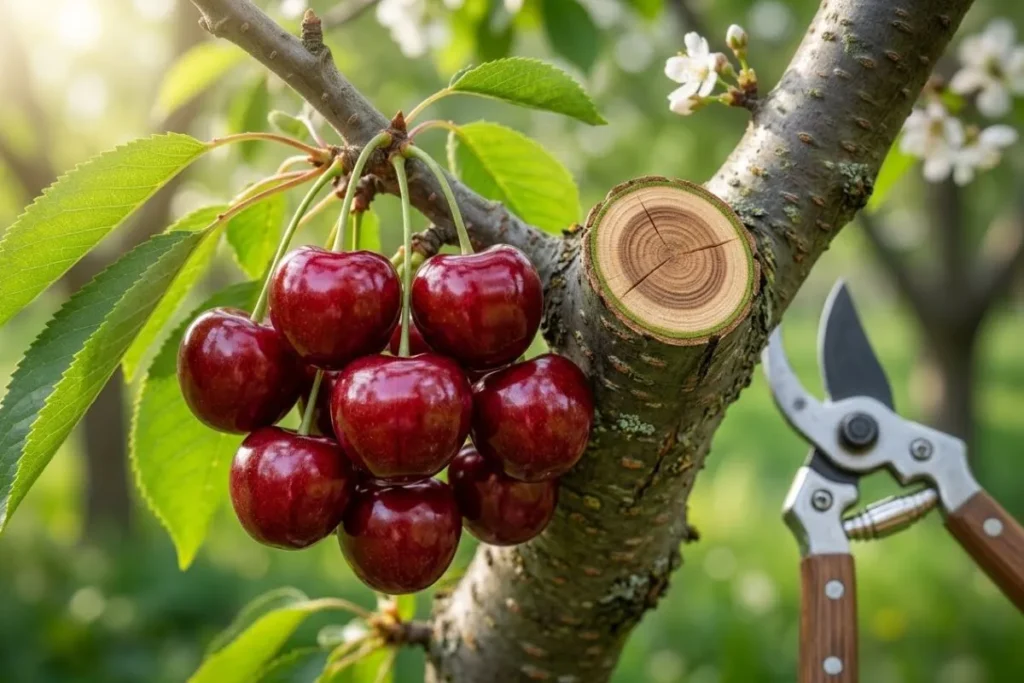
Learning how to prune a fruiting cherry tree is not just about cutting away unwanted branches. You need to understand which branches to keep, when to make cuts, and how much growth to remove without stressing the tree. The right approach also depends on whether you grow sweet or sour cherries.
This guide explains when to prune, which branches to remove, how to make clean cuts, and how to maintain a healthy tree that can continue producing fruit year after year.
Why Should You Prune a Fruiting Cherry Tree?
Pruning helps maintain a strong tree structure and prevents branches from becoming too crowded. When too many branches grow close together, sunlight and air cannot reach every part of the canopy.
A well-maintained cherry tree has enough space between its main branches for sunlight to reach developing fruit. Better airflow also helps foliage dry more quickly after rain, which can reduce conditions that encourage certain fungal diseases.
Regular pruning can also help you remove damaged wood, control tree height, and make harvesting easier.
When Is the Best Time to Prune Cherry Trees?
Timing matters because cherry trees can be vulnerable to certain diseases, especially when pruning cuts remain exposed during wet weather.
For most home gardeners in the United States, summer is a suitable time to prune established cherry trees. Choose a dry day when rain is not expected soon.
Summer Pruning for Established Trees
Prune established sweet and sour cherry trees during dry summer weather, generally after harvesting the fruit. This timing allows you to see the tree’s structure clearly and remove unwanted growth without interfering with the current crop.
Avoid pruning immediately before or during wet weather. Wet conditions can increase the risk of infection through fresh pruning wounds.
Pruning Young Cherry Trees
Young cherry trees need structural pruning to develop strong branches and a balanced shape. The best timing depends on the training system and local growing conditions.
Avoid heavy pruning while a young tree is actively establishing itself. Focus on developing a good framework rather than removing large amounts of growth.
Understand Your Cherry Tree Before Making Cuts
Not every cherry tree grows in the same way. Sweet cherries and sour cherries have different growth habits, so they may need different pruning approaches.
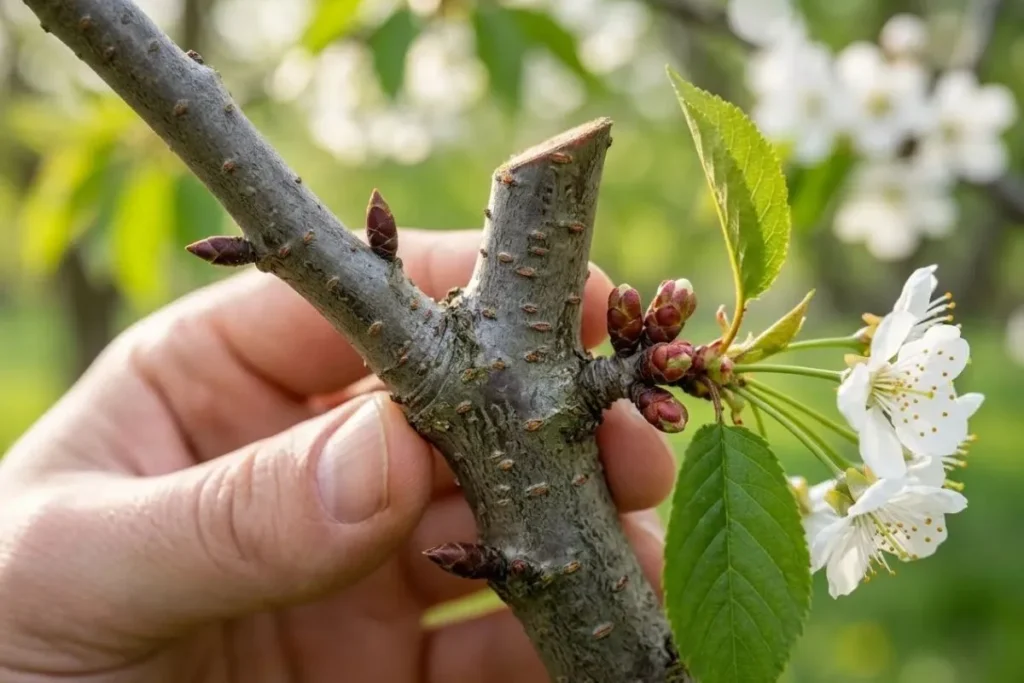
Sweet Cherry Trees
Sweet cherry trees often grow upright and can become quite tall. Many are trained into an open-center or modified central-leader shape.
Their branches need enough room to spread without crossing or rubbing against one another.
Sour Cherry Trees
Sour cherry trees generally have a more spreading growth habit. They often produce fruit on younger branches, so preserving productive growth is especially important.
Avoid removing too many healthy branches simply to make the tree look neat.
Gather the Right Tools Before Pruning
Using clean, sharp tools makes pruning easier and helps you create smooth cuts.
You may need bypass pruning shears for small branches, loppers for medium-sized growth, and a pruning saw for thicker limbs.
Clean your tools before starting and disinfect them between trees, especially if you suspect disease. Sharp blades are important because crushed or torn branches can take longer to heal.
Wear gloves and safety glasses when working. If a branch is too high or too thick to remove safely, contact a qualified tree professional.
Identify Dead, Damaged, and Diseased Branches
Start by inspecting the entire tree. Look for branches that are completely dead, broken, cracked, or showing signs of disease.
Dead branches do not contribute to fruit production and can become entry points for pests and disease.
Remove damaged branches carefully, cutting back to healthy wood or an appropriate branch junction. If you notice unusual discoloration, cankers, oozing, or extensive dieback, investigate the cause before continuing with heavy pruning.
Do not automatically assume every discolored branch is dead. Check the condition of the wood before removing it.
Remove Branches That Cross or Rub Together
Branches that grow into each other can create wounds as they rub in the wind. These damaged areas may become vulnerable to infections.
Look for branches that cross through the center of the canopy or grow directly against another limb.
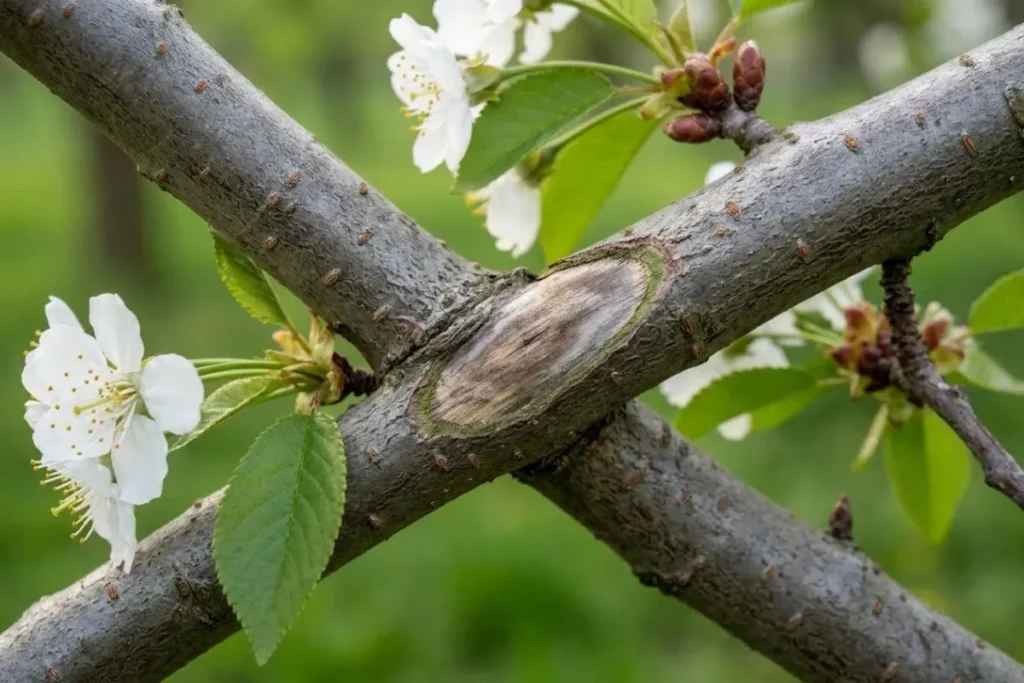
Keep the stronger, better-positioned branch and remove the weaker or poorly placed one. This creates more room for healthy growth and improves the overall structure.
Open the Canopy to Improve Sunlight and Airflow
A crowded canopy can make it difficult for sunlight to reach the inner branches. It may also trap moisture around leaves and fruit.
Remove selected inward-growing shoots and unnecessary branches to create space between the main limbs.
Do not strip the center of the tree completely. The goal is a balanced canopy with enough foliage to support fruit development.
How to Trim Fruit-Bearing Cherry Trees Step by Step
If you want to know how to trim fruit-bearing cherry trees without removing too much productive growth, work slowly and inspect the tree after every few cuts.
Examine the Entire Tree
Stand back and look at the tree from different angles. Identify its main branches, crowded areas, damaged growth, and branches that extend too far.
Having a clear picture of the tree’s structure helps prevent unnecessary cuts.
Remove Dead and Broken Wood
Begin with branches that are clearly dead, damaged, or diseased. Make clean cuts without leaving long stubs.
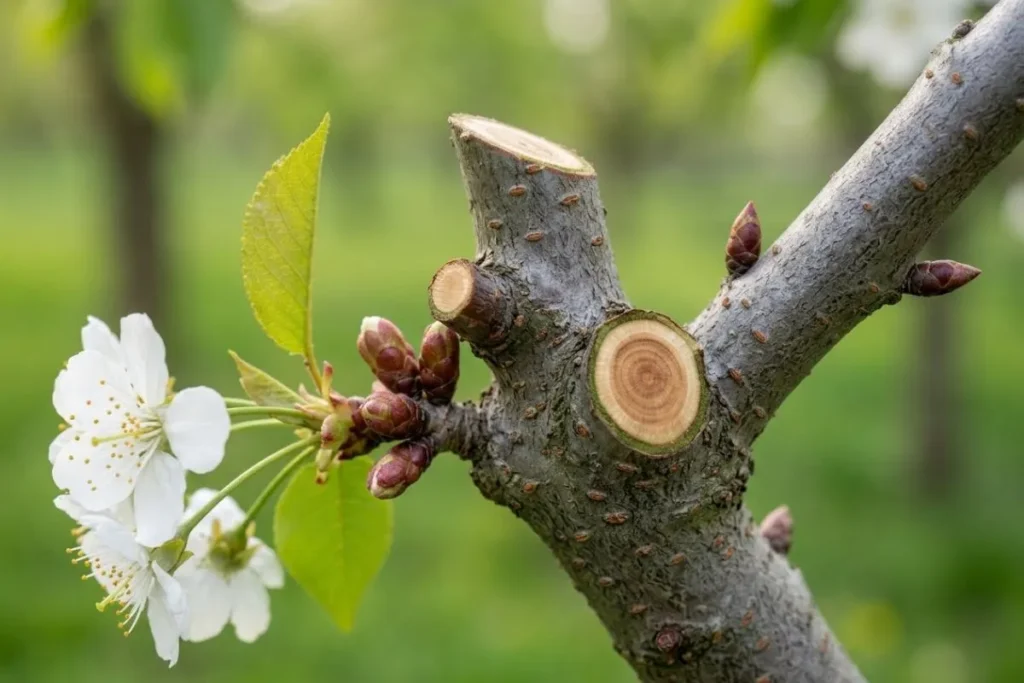
If a branch is attached to a larger limb, avoid cutting into the branch collar, which is the slightly swollen area where the branch connects to the trunk or parent limb.
Remove Unwanted Suckers and Water Sprouts
Suckers often grow from the base of the trunk or rootstock. Water sprouts are vigorous, upright shoots that develop from older branches.
Remove unwanted growth when appropriate, particularly shoots that compete with the tree’s main framework.
However, do not remove every new shoot automatically. Some young growth may be useful for replacing older fruiting branches.
Thin Crowded Branches
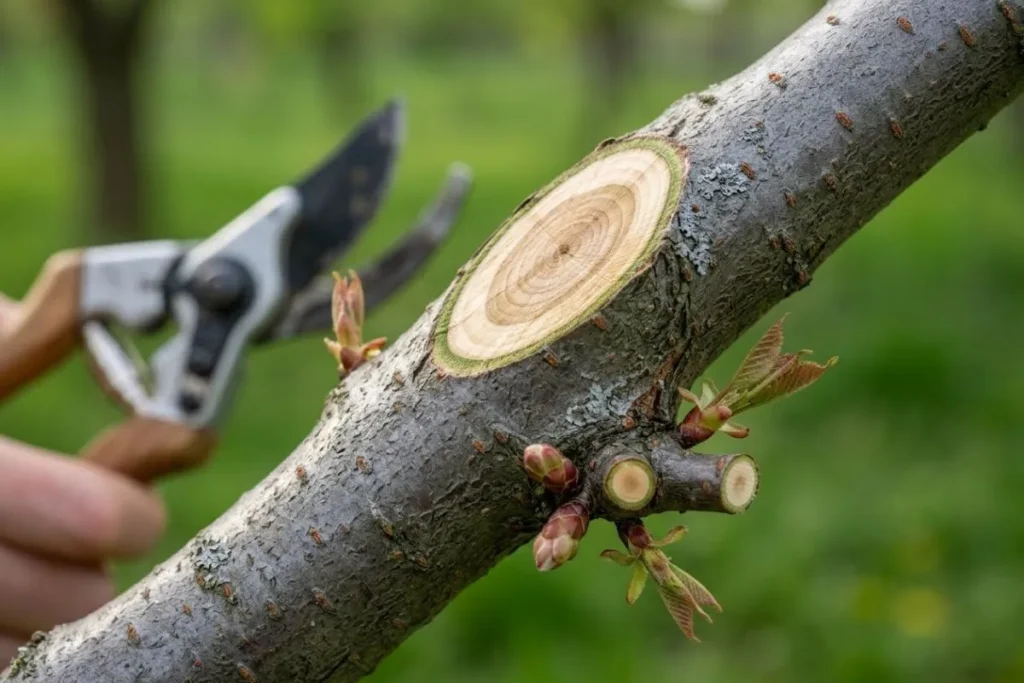
Look for branches growing toward the center or competing for the same space.
Remove selected branches at their point of origin rather than shortening every branch. Thinning cuts help preserve the natural shape of the tree.
Control Excessive Height
If the tree has become difficult to manage, identify an overly tall branch and shorten it to a suitable lateral branch.
Avoid cutting the top of the tree straight across. This practice, known as topping, can encourage excessive upright growth and weaken the tree’s structure.
Step Back and Check the Shape
After making several cuts, stop and look at the whole tree again.
The canopy should remain balanced, with healthy branches distributed around the tree. If it already has good spacing and structure, there is no need to keep cutting.
Understand the Difference Between Thinning Cuts and Heading Cuts
Two common pruning techniques are thinning cuts and heading cuts. Knowing when to use each one helps you avoid damaging your cherry tree’s natural shape.
Thinning Cuts
A thinning cut removes an entire branch or shoot where it joins another branch.
This technique reduces crowding while keeping the natural structure of the tree. It is often useful when removing inward-growing or crossing branches.
Heading Cuts
A heading cut shortens a branch by cutting back to a suitable bud or lateral shoot.
Use this technique when you need to encourage branching or control the length of selected growth. Avoid making excessive heading cuts because they can stimulate vigorous new shoots.
How Much Should You Prune From a Fruiting Cherry Tree?
Avoid removing too much healthy growth in one session. Mature cherry trees can become stressed by severe pruning, particularly when large branches are removed unnecessarily.
For routine maintenance, concentrate on dead, damaged, crossing, and poorly positioned branches.
If your tree has been neglected for several years, spread major corrective pruning over multiple growing seasons rather than trying to reshape it all at once.
The amount you remove should depend on the tree’s age, health, structure, and pruning history.
Protect Productive Fruiting Branches
One common mistake is removing branches that actually carry the next crop of cherries.
Sweet and sour cherry trees do not produce fruit in exactly the same way. Sweet cherries often bear fruit on older wood and short fruiting spurs, while many sour cherries produce a substantial portion of their crop on younger shoots.
Before cutting a healthy branch, look for fruiting spurs and buds. Preserve well-positioned productive wood whenever possible.
Removing too much fruiting growth can reduce the following season’s harvest.
Common Cherry Tree Pruning Mistakes to Avoid
Even experienced gardeners can make mistakes when pruning fruit trees. A few simple precautions can protect your tree.
Pruning During Wet Weather
Fresh pruning wounds can provide opportunities for disease organisms to enter. Choose dry conditions whenever possible.
Cutting Too Much at Once
Heavy pruning can encourage excessive vegetative growth and remove valuable fruiting wood. Make selective cuts instead.
Leaving Long Stubs
Long stubs do not heal properly and may die back. Cut just outside the branch collar without damaging it.
Topping the Tree
Removing the top of a cherry tree at an arbitrary height can produce weak, crowded regrowth. Use suitable lateral branches when reducing height.
Using Dirty or Dull Tools
Dirty blades can spread disease between trees, while dull tools may crush branches. Clean and sharpen your equipment regularly.
What Should You Do After Pruning a Cherry Tree?
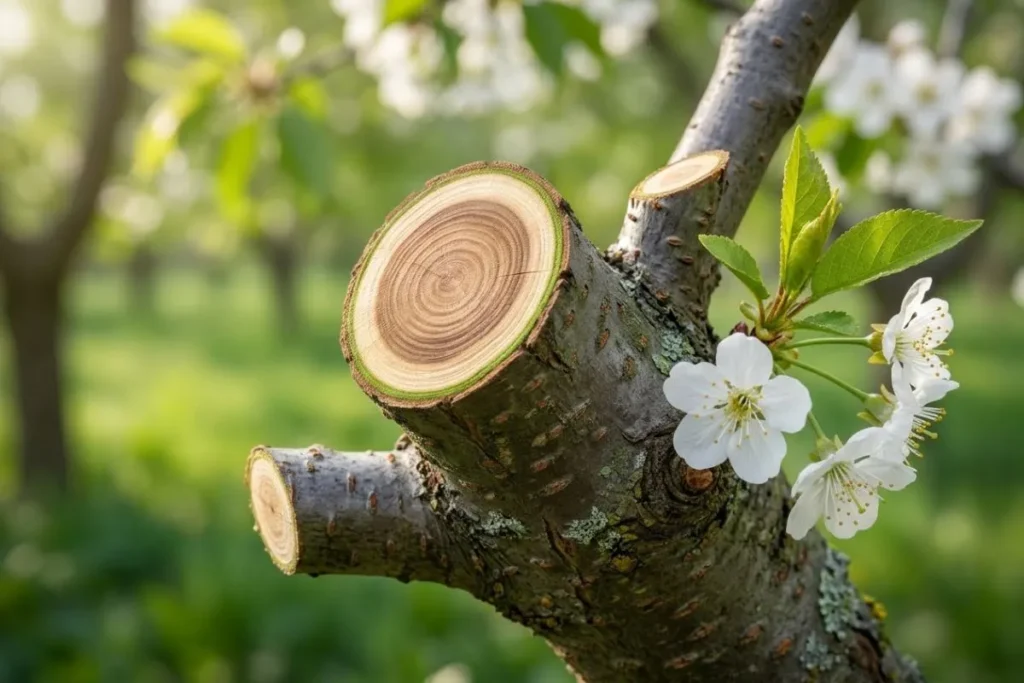
Once pruning is complete, collect and remove dead or diseased branches from around the tree.
Inspect the remaining branches for accidental damage and make sure no large stubs remain. Continue watering according to the tree’s needs, especially during hot, dry weather.
Avoid applying excessive fertilizer to encourage rapid growth after pruning. Strong new shoots are not always beneficial, particularly when the tree already has a crowded canopy.
Check the tree periodically throughout the growing season for signs of disease, unusual shoot growth, or damaged branches.
Special Pruning Tips for Young and Mature Cherry Trees
Young and mature cherry trees need different levels of attention.
Young trees benefit from careful training that establishes strong scaffold branches. These are the main branches that form the tree’s permanent framework.
Choose well-spaced branches with strong attachment angles. Remove competing leaders and poorly positioned shoots when necessary.
Mature trees usually need lighter maintenance. Concentrate on preserving their established framework, removing unhealthy wood, and maintaining enough space for sunlight and airflow.
Do not use the same aggressive pruning approach for every tree. Its age and existing structure should guide your decisions.
Frequently Asked Questions About Pruning Fruiting Cherry Trees
Can I prune a cherry tree after it produces fruit?
Yes. Summer pruning after harvest is a common approach for established cherry trees. Choose a dry period and avoid unnecessary heavy cuts.
Can I prune a cherry tree in the fall?
Fall pruning is generally best avoided, particularly in areas where wet weather encourages disease. Summer is usually a better choice for routine pruning.
Should I cut off water sprouts on cherry trees?
Remove unwanted water sprouts when they crowd the canopy or compete with useful branches. However, some vigorous shoots may be useful for replacing older growth.
How do I know which branches to remove?
Start with dead, broken, diseased, crossing, and inward-growing branches. Preserve healthy branches that support the tree’s framework and produce fruit.
Do cherry trees produce fruit on new or old wood?
It depends on the type. Sweet cherries commonly produce fruit on older wood and short fruiting spurs. Sour cherries often produce fruit on younger shoots as well as some older fruiting structures.
Can I prune a cherry tree that has not been pruned for years?
Yes, but avoid removing too much at once. Begin with dead, damaged, and clearly unwanted branches, then gradually improve the structure over several seasons.
Should I seal cherry tree pruning cuts?
Routine pruning cuts generally do not need wound paint or pruning sealant. Make clean cuts in suitable dry weather and allow the tree to respond naturally.
Conclusion:
A productive cherry tree does not need constant cutting. It needs thoughtful pruning that protects healthy fruiting branches while removing growth that weakens its structure.
The best approach is to inspect your tree carefully, choose a dry summer day, and remove unwanted branches gradually. Pay attention to whether you have a sweet or sour cherry variety because their fruiting habits are different.
With regular maintenance, clean tools, and careful cuts, you can keep your cherry tree healthy, manageable, and ready to produce delicious fruit for seasons to come.

Plant Nest Blog’s author is passionate about plants, gardening, and sustainable living. Through research and practical experience, they share helpful plant care tips, gardening guides, and easy solutions to help readers grow healthier plants and create greener spaces.