
Many people believe that a money tree should be watered on the same day every week. That sounds simple, but it isn’t true. If you follow a fixed schedule without checking the soil, you could easily overwater or underwater your plant.
The truth is that there isn’t a one-size-fits-all watering routine. A money tree’s water needs change depending on the season, the amount of light it gets, the humidity in your home, the size of the pot, and even the type of soil you’re using.
If you’ve been wondering how often should you water a money tree plant, you’re not alone. It’s one of the most common questions among houseplant owners, especially beginners.
The good news is that caring for a money tree doesn’t have to be difficult. Once you understand what your plant is telling you, watering becomes much easier.
A healthy money tree (Pachira aquatica) can brighten up any room with its braided trunk and glossy green leaves. Besides being a beautiful indoor plant, it’s also popular because many people believe it brings good luck and prosperity.
But even the luckiest plant won’t thrive if it receives too much or too little water.
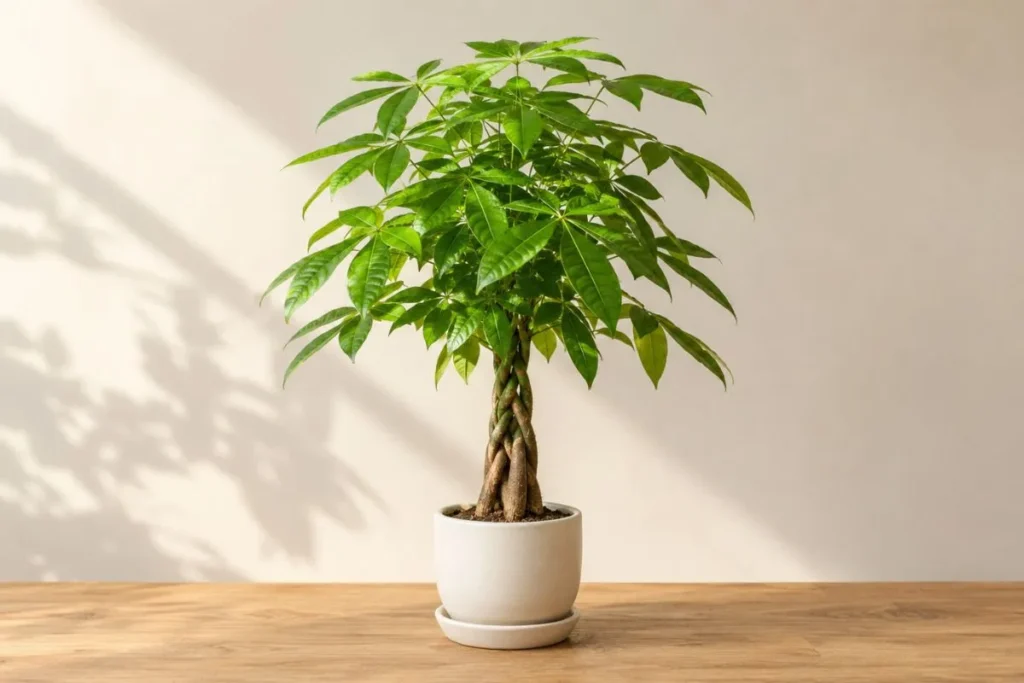
In this guide, you’ll learn everything you need to know about the money tree watering schedule, including how often to water a money tree, how much water it really needs, and how to recognize the signs that your plant is thirsty or drowning.
We’ll also cover the common watering mistakes that prevent healthy growth and share simple tips to help you build the best watering schedule for a money tree plant.
By the end of this article, you’ll know exactly how often should you water a money tree plant indoors and how to adjust your routine throughout the year to keep your plant healthy and growing strong.
How Often Should You Water a Money Tree Plant?
The short answer is simple: most money trees need watering every 1 to 2 weeks. However, that’s only a general guideline—not a strict rule.
Instead of watering your plant because it’s “watering day,” check the soil first. The best time to water is when the top 2 to 3 inches of soil feel dry. If the soil still feels damp, wait a few more days before checking again.
This is why experienced plant owners rarely follow a calendar. They pay attention to the soil instead of the date.
If you’re wondering how often do you water a money tree plant, the answer depends on the time of year and your home’s environment. During spring and summer, when the plant is actively growing, it usually needs water about every 7 to 10 days.
In fall and winter, growth slows down, so watering every 10 to 14 days, or sometimes even longer, is often enough. Rather than following a fixed schedule, it’s always better to let the condition of the soil guide your decision.
If you’re looking for the best watering schedule for a money tree plant, remember that flexibility is the key. A money tree placed near a bright window or in a warm room will dry out much faster than one kept in a cooler area with lower light. That’s why two healthy money trees can have completely different watering schedules.
Several factors influence money tree watering frequency. The amount of sunlight your plant receives, the indoor temperature, humidity levels, pot size, soil type, drainage, and even the season all affect how quickly the soil dries. Understanding these factors is much more useful than trying to stick to the same watering routine every week.
Another mistake many beginners make is watering their plant a little every few days. Although this may seem like a safe approach, it keeps the soil constantly wet and increases the risk of root rot.
A healthier method is to water thoroughly until excess water drains from the bottom of the pot. After that, allow the soil to partially dry before watering again. This encourages stronger root development and keeps your money tree healthier over the long term.
A simple rule can help you remember the correct approach whenever you’re unsure how often should you water a money tree plant. Instead of watching the calendar, watch the soil. When the top 2 to 3 inches of soil are dry, it’s time to water.
How Much Water Does a Money Tree Plant Need?
Many people believe a money tree needs a fixed amount of water every time, such as one cup or one bottle. However, that’s a common myth. There isn’t a universal amount that works for every plant.
The right amount depends on the size of the pot, the type of soil, the growing environment, and how quickly the soil dries. Instead of measuring water with a cup, it’s much better to focus on watering your plant the right way.
Water the Soil Thoroughly, Not Just the Surface
If you’re wondering how much water does a money tree plant need every week, the answer isn’t measured in cups or liters. A money tree needs enough water to completely moisten the soil whenever it becomes dry.
The goal is to ensure the roots receive enough moisture rather than following a fixed weekly amount.
The best way to water a money tree plant is to pour water slowly and evenly over the soil until it starts draining from the holes at the bottom of the pot.
This deep watering method allows moisture to reach the entire root system instead of only the top layer. Healthy roots grow deeper into the soil, making the plant stronger and more resistant to stress.
Avoid Light and Frequent Watering
Many beginners think giving a little water every few days is the safest option. Unfortunately, this often creates more problems than it solves. Light watering only moistens the surface, leaving the deeper roots dry. Over time, this can weaken the root system and slow the plant’s growth.
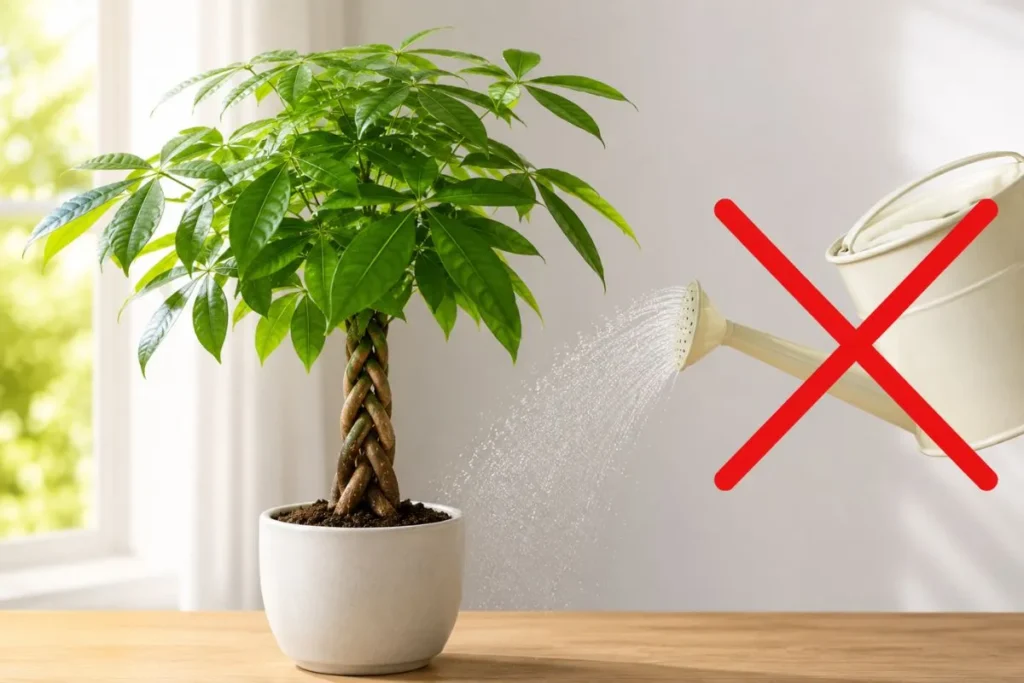
Learning how to properly water a money tree plant at home means watering deeply in one session and then allowing the soil to dry partially before watering again. This simple habit supports healthier roots and reduces the chances of watering mistakes.
Let Excess Water Drain Completely
After watering your money tree, it’s important to let all the extra water drain from the pot. Good drainage keeps the roots healthy and prevents water from collecting around them.
If your pot has a saucer underneath, empty it once the excess water has drained.
Allowing the pot to sit in standing water for hours keeps the roots constantly wet and increases the risk of root rot. Proper drainage is just as important as knowing how often should you water a money tree plant.
Don’t Water Again Until the Soil Needs It
A common mistake is watering again simply because the top layer of soil looks dry. While the surface dries quickly, the soil below may still contain enough moisture.
Before watering again, check the soil about 2 to 3 inches deep. If it still feels moist, wait another day or two before checking again. This small step helps maintain the correct money tree watering frequency and prevents accidental overwatering.
The Amount of Water Depends on Your Growing Conditions
There isn’t one perfect answer to how much should you water a money tree because every home is different.
A plant growing in a small pot usually needs water more often than one in a larger container. Likewise, a money tree planted in fast-draining soil dries out much sooner than one growing in heavier soil that holds moisture for longer.
Indoor temperature, humidity, and sunlight also affect how quickly the soil dries. These factors all influence how much water does a money tree plant need every week, so it’s always better to observe your plant instead of following a strict measurement.
The Best Watering Method to Follow
The easiest way to keep your money tree healthy is to follow a simple routine. Water the soil thoroughly until excess water drains from the bottom of the pot. Let the pot drain completely, empty the saucer if necessary, and wait until the top few inches of soil become dry before watering again.
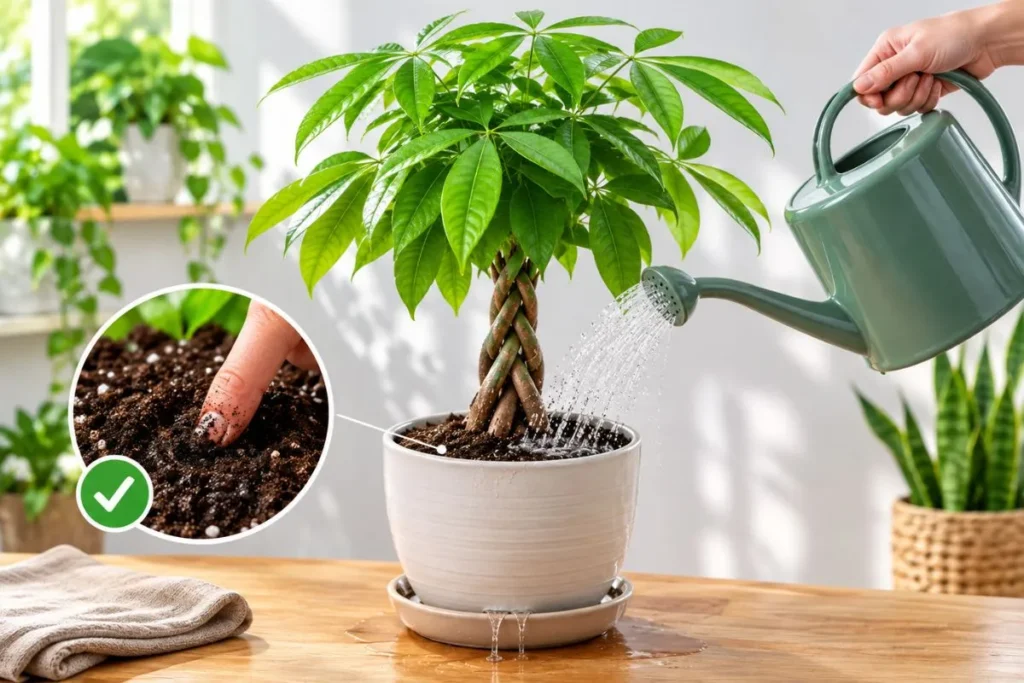
Following this method is the best way to water a money tree plant because it keeps the roots healthy, improves airflow in the soil, and encourages steady growth.
Factors That Change How Often You Should Water a Money Tree
Many people think every money tree follows the same watering schedule. In reality, that’s one of the biggest mistakes you can make. Even if two money trees look identical, they may not need water at the same time. Every home has different temperatures, humidity levels, lighting conditions, and potting setups.
That’s why there’s no single answer to how often should you water a money tree plant. Understanding the factors that affect soil moisture will help you create the right money tree watering schedule for your own plant.
Season
The time of year has a huge impact on money tree watering frequency. As the seasons change, so does your plant’s growth and water needs.
During spring and summer, a money tree grows more actively. New leaves develop, and the plant uses more water to support healthy growth. This means you may need to check the soil more often.
If you’re wondering how often should I water my money tree in summer, the answer is usually every 7 to 10 days, depending on how quickly the soil dries.
In contrast, fall and winter are slower growing seasons. The plant doesn’t use as much water, so the soil stays moist for longer. If you’re asking how often should I water my money tree in winter, you may only need to water every 10 to 14 days, or even less often in cooler homes.
Instead of following a seasonal calendar, always let the soil guide your watering routine.
Indoor Temperature
The temperature inside your home also affects how quickly the soil dries out.
If your money tree is placed in a warm room or near a heat source, the soil will lose moisture faster. As a result, you may need to water more frequently.
On the other hand, a plant kept in a cool room usually holds moisture for a longer time. This means the watering interval naturally becomes longer.
Whether you use air conditioning in summer or heating during winter, indoor temperatures can change throughout the year.
That’s why it’s important to check the soil regularly instead of assuming your plant needs water on the same day every week.
Sunlight
Light is another important factor that influences money tree sunlight requirements and watering needs.
A money tree grows best in bright, indirect sunlight. In these conditions, the plant grows steadily and uses water at a healthy rate.
If the plant receives more light than usual, especially near a sunny window, the soil will dry out faster. You may notice that you need to water slightly more often.
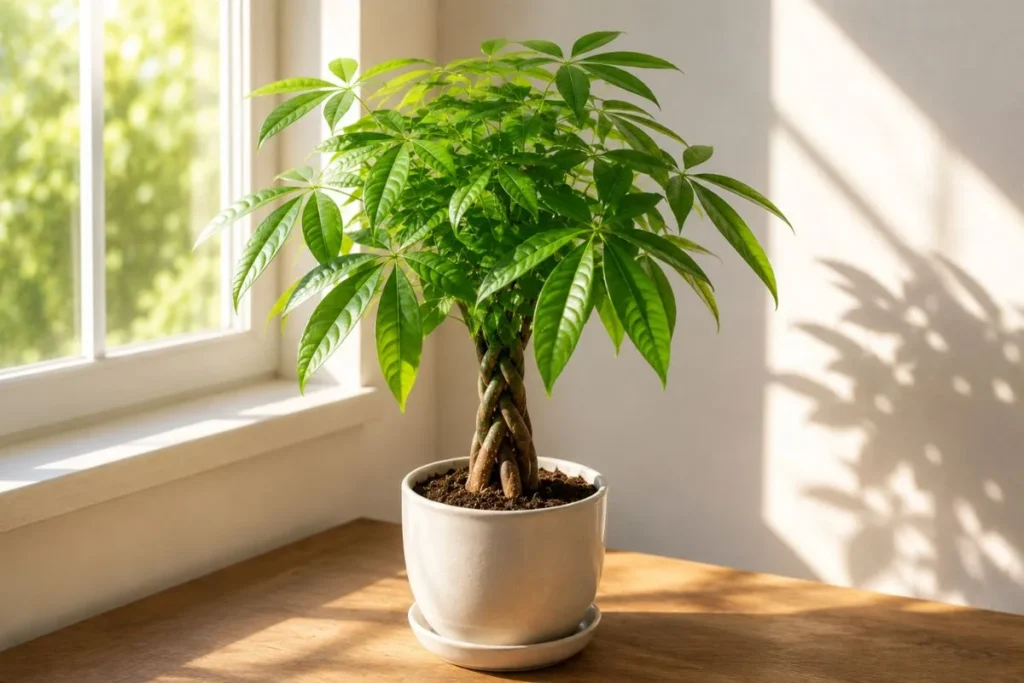
On the other hand, a money tree growing in low-light conditions uses less water because its growth slows down. Although it may not need water as frequently, you should still check the soil before watering instead of relying on a fixed schedule.
Finding the right balance of light not only supports healthy growth but also helps you maintain the ideal money tree watering frequency.
Humidity
Humidity plays a bigger role than many people realize.
Since money trees are tropical plants, they naturally prefer moderate to high humidity. In a humid environment, the soil loses moisture more slowly because the air isn’t pulling water away as quickly.
However, if your home has dry air, especially during winter when indoor heating is running, the soil can dry out much faster. In these conditions, you may find yourself checking the soil more often.
Meeting your money tree humidity needs doesn’t always mean watering more. Sometimes increasing humidity with a humidifier or placing the plant near other houseplants can help reduce moisture loss while keeping your watering routine balanced.
Pot Size
The size of the pot has a direct impact on how often your money tree needs water.
A smaller pot holds less soil, which means it dries out much faster. As a result, you’ll likely need to check the soil more frequently.
A larger pot contains more soil and stores moisture for a longer period. This usually means longer gaps between watering sessions.
When people ask how often to water a money tree, they often forget that pot size can completely change the answer. Always consider the size of the container before deciding when to water.
Soil Type
The type of soil you use makes a noticeable difference in how long moisture stays around the roots.
The best soil for a money tree is a well-draining mix that allows excess water to flow away while still holding enough moisture for healthy growth. This type of soil keeps the roots supplied with water without becoming soggy.
Heavy or compact soil, on the other hand, holds water for much longer. While this might sound beneficial, it can actually increase the risk of root rot if the plant is watered too often.
Choosing the right potting mix is one of the easiest ways to improve your money tree plant care and maintain a healthy watering routine.
Pot Drainage
Good drainage is just as important as the amount of water you give your plant.
A pot with drainage holes allows excess water to escape instead of collecting around the roots. This improves airflow in the soil and helps prevent diseases caused by overly wet conditions.
If your pot doesn’t have drainage holes, water has nowhere to go. Even if you follow the perfect money tree watering schedule, trapped water can still damage the roots over time.
Healthy money tree drainage allows you to water thoroughly without worrying about excess moisture remaining in the pot. When combined with well-draining soil, it creates the ideal environment for strong root development and steady plant growth.
How Do You Know When How Often Should You Water a Money Tree Plant?
Many people believe they should water a money tree as soon as the top layer of soil looks dry. While this may seem like a good idea, it often leads to overwatering. The surface of the soil dries much faster than the soil around the roots.
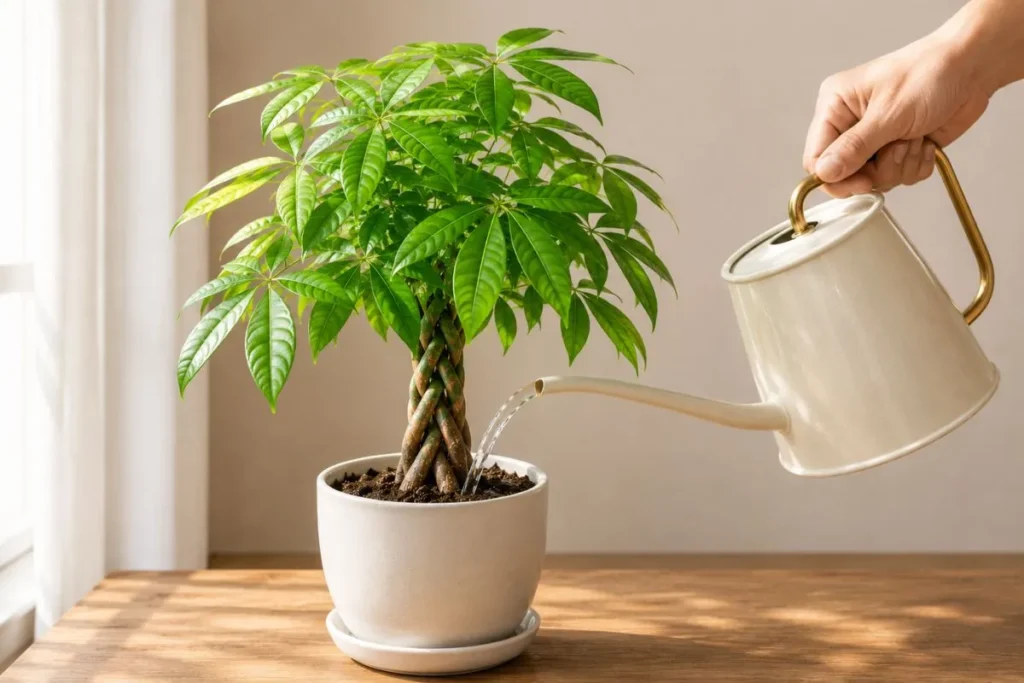
That’s why checking only the top layer isn’t enough. If you’re wondering how often should you water a money tree plant, the best answer comes from learning how to recognize when your plant truly needs water.
Instead of following a calendar, pay attention to the signs your money tree gives you. Here are the most reliable ways to tell when it’s time to water.
Use the Finger Test to Know How Often Should You Water a Money Tree Plant
The finger test is one of the easiest and most accurate ways to check your plant’s moisture level.
Simply insert your finger about 2 to 3 inches into the soil. If the soil feels dry at that depth, it’s time to water your money tree. If it still feels cool and moist, wait a few more days before checking again.
This simple habit is far more reliable than watering on a fixed schedule and helps you determine how often should you water a money tree plant indoors based on your home’s conditions.
Check the Soil with a Wooden Stick
If you don’t want to touch the soil, a wooden chopstick or skewer works just as well.
Push the stick a few inches into the pot, leave it there for a few seconds, and pull it out. If it comes out clean and dry, your money tree is ready for watering. If soil sticks to it or it feels damp, the roots still have enough moisture.
This method is especially helpful for larger pots where it’s difficult to judge the soil by looking at the surface.
Use a Moisture Meter for More Accurate Results
If you’re new to money tree plant care, a moisture meter can remove the guesswork.
A moisture meter measures the moisture level deeper in the soil, where the roots are growing. Simply insert the probe into the pot and check the reading. If the meter indicates the soil is dry, it’s time to water.
Using a moisture meter for plants is one of the easiest ways to avoid both overwatering and underwatering, especially if you’re still learning how often to water a money tree.
Lift the Pot to Check Its Weight
Another useful trick is to lift the pot before and after watering.
A freshly watered money tree feels noticeably heavier because the soil is full of moisture. As the soil dries, the pot becomes much lighter. After doing this a few times, you’ll quickly learn to recognize when your plant needs water just by its weight.
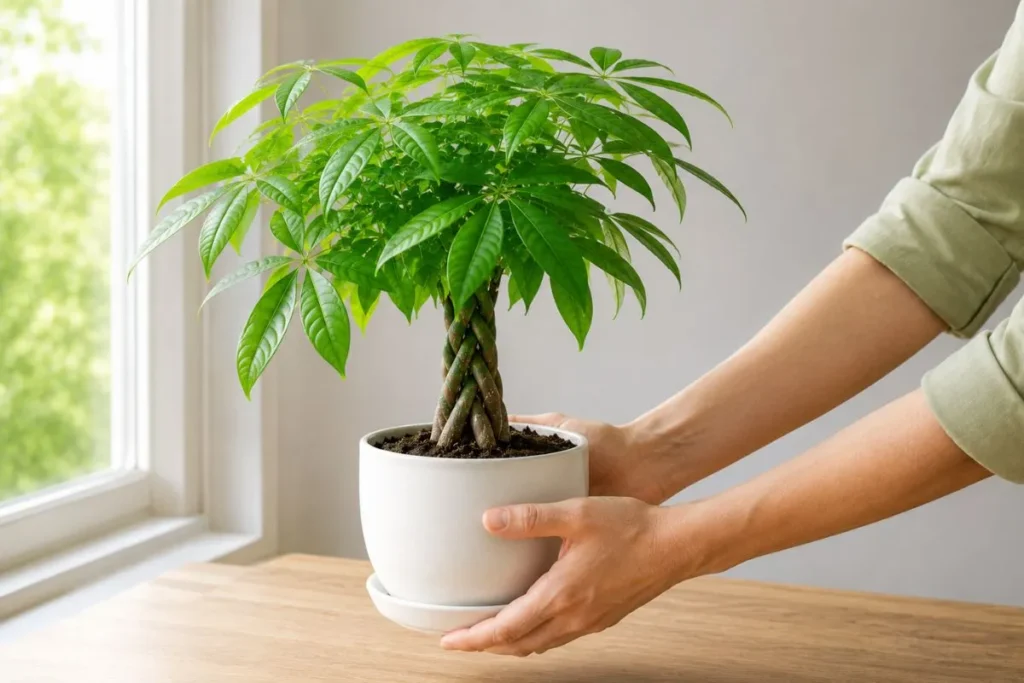
This method becomes easier with experience and works well for small to medium-sized indoor pots.
Watch for Changes in the Leaves
Your money tree often tells you it needs water through its leaves.
Healthy leaves are firm, glossy, and vibrant green. If the leaves begin to droop slightly or lose their firmness, the plant may be getting thirsty. However, drooping leaves can also be a sign of overwatering, so it’s important to check the soil before adding more water.
Looking at the leaves together with the soil moisture gives you a much more accurate picture of your plant’s needs.
Don’t Rely on a Fixed Watering Schedule
Many plant owners ask, “How often do you water a money tree plant?” expecting a simple answer like once a week. In reality, no fixed schedule works for every home.
A money tree growing in a warm, sunny room may need water sooner than one placed in a cooler area with lower light. Seasonal changes, humidity, pot size, and soil type all affect how quickly the soil dries.
That’s why experienced gardeners don’t water according to the calendar they water according to the condition of the soil.
Tips to Keep Your Money Tree Healthy Year-Round
Many people think that watering is the only thing that matters when caring for a money tree. While watering is important, it’s only one part of the equation.
Even if you know how often should you water a money tree plant, your plant can still struggle if it doesn’t receive enough light, humidity, nutrients, or proper care. A healthy money tree thrives when all of its growing conditions work together.
Here are some simple tips to help your money tree stay healthy and attractive throughout the year.
Give Your Money Tree Bright, Indirect Light
Light plays a major role in money tree plant care. A money tree grows best in bright, indirect sunlight where it receives plenty of light without being exposed to harsh afternoon sun.
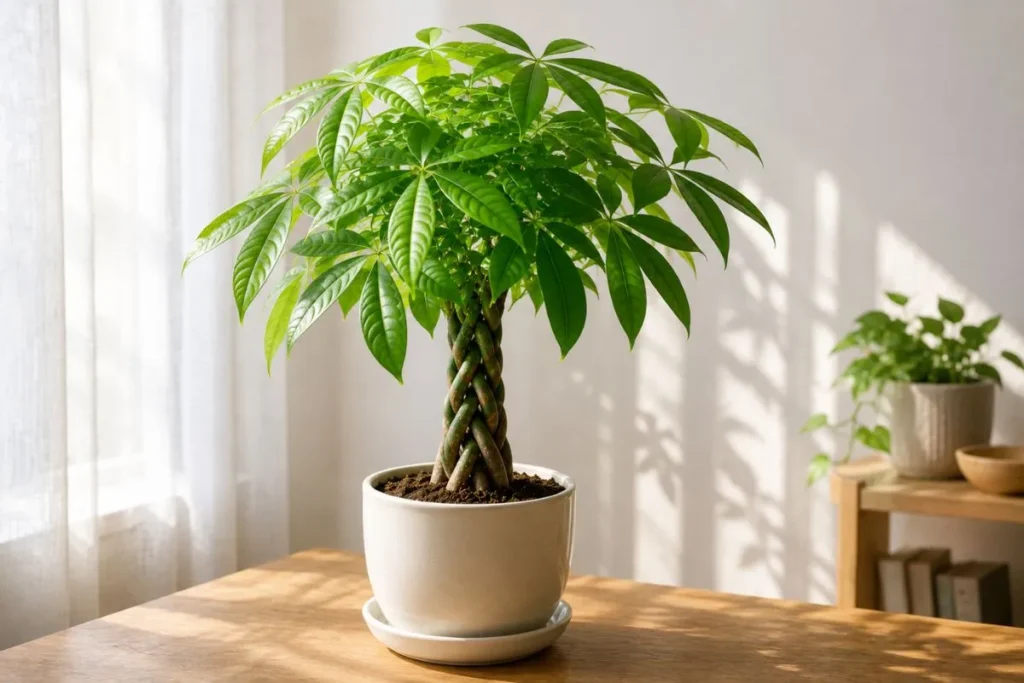
Too much direct sunlight can scorch the leaves, while too little light may slow growth and make the plant look weak. Placing your money tree near an east-facing or north-facing window is often ideal.
When your plant receives the right amount of light, it’s also easier to determine how often should you water a money tree plant because the soil dries at a steady, predictable rate.
Rotate the Plant Every Few Weeks
Money trees naturally grow toward the light source. If the plant always faces the same direction, one side may become fuller than the other.
Rotate the pot about a quarter turn every two to four weeks. This allows all sides of the plant to receive equal light and encourages balanced growth.
This simple habit keeps your money tree looking fuller and healthier.
Fertilize During the Growing Season
Like most indoor tropical plants, money trees benefit from regular feeding during their active growing season.
Apply a balanced liquid houseplant fertilizer once a month during spring and summer. This provides essential nutrients that support healthy leaves, stronger stems, and steady growth.
Avoid fertilizing during fall and winter because the plant naturally slows its growth and doesn’t need as many nutrients.
Adding fertilizer at the right time complements your money tree watering schedule and promotes healthier development.
Repot Your Money Tree When Necessary
Repotting is another important part of money tree care indoors.
As your money tree grows, its roots gradually fill the pot. When the roots become crowded, the soil dries more quickly and the plant may stop growing as actively.
Most money trees benefit from repotting every two to three years into a container that’s only slightly larger than the current one. Always choose a pot with drainage holes and use the best soil for a money tree, which should be loose and well-draining.
Repotting gives the roots more space and helps maintain a healthy watering routine.
Maintain Proper Humidity
Money trees are native to tropical environments, so they appreciate moderate to high humidity.
If the air inside your home is very dry, especially during winter, the leaf edges may begin to turn brown. Increasing humidity can help prevent this problem.
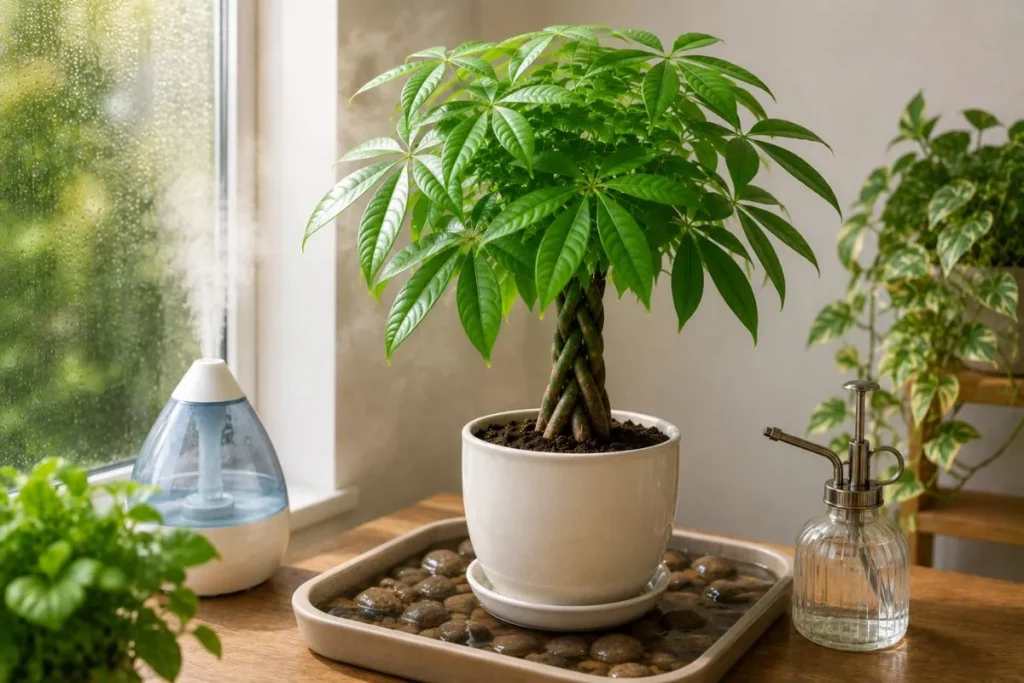
You can improve money tree humidity needs by using a humidifier, grouping houseplants together, or placing a tray filled with pebbles and water beneath the pot without letting the pot sit directly in the water.
Proper humidity works together with the correct answer to how often should you water a money tree plant to keep the foliage healthy.
Keep the Leaves Clean
Dust naturally collects on indoor plant leaves over time. A thick layer of dust blocks sunlight and reduces the plant’s ability to photosynthesize efficiently.
Every few weeks, gently wipe the leaves with a soft, damp cloth. Clean leaves absorb light better and help your money tree stay vibrant throughout the year.
This also gives you a chance to inspect the plant for any early signs of stress.
Check Regularly for Pests
Although money trees are fairly easy to care for, they can sometimes attract common houseplant pests such as spider mites, mealybugs, and scale insects.
Inspect both the tops and undersides of the leaves every week. If you notice tiny insects, sticky residue, or fine webbing, treat the problem early before it spreads.
Keeping the leaves clean and maintaining good airflow around the plant can help reduce pest problems naturally.
Follow a Consistent Care Routine
The secret to how to keep a money tree healthy isn’t complicated. Instead of making sudden changes, try to maintain a consistent care routine.
Water only when the soil needs it, provide bright indirect light, maintain good humidity, fertilize during the growing season, and inspect your plant regularly.
Small, consistent actions usually produce better results than occasional heavy maintenance.
Once you understand how often should you water a money tree plant and combine that knowledge with proper lighting, nutrition, and routine care, your money tree will reward you with lush green leaves and steady growth for many years.
Frequently Asked Questions (FAQ)
How Often Should You Water a Money Tree Plant Indoors?
If you’re wondering how often should you water a money tree plant indoors, the general recommendation is every 1 to 2 weeks. However, there’s no fixed schedule that works for every home.
The best approach is to check the soil regularly and water only when the top 2 to 3 inches feel dry. Factors like sunlight, humidity, indoor temperature, and pot size can all affect money tree watering frequency.
How Often Do You Water a Money Tree Plant?
The answer depends on your plant’s growing conditions rather than the calendar. During spring and summer, a money tree may need water every 7 to 10 days because it grows more actively.
During fall and winter, watering every 10 to 14 days, or even less often, is usually enough. Checking the soil before watering is always the most reliable method.
How Much Water Does a Money Tree Need Every Week?
There isn’t a fixed amount of water your money tree needs each week. Instead of measuring water in cups, water deeply until excess water drains from the bottom of the pot.
Then wait until the soil partially dries before watering again. This is the best way to water a money tree plant and helps keep the roots healthy.
Can You Overwater a Money Tree Plant?
Yes. Overwatering is one of the most common reasons money trees become unhealthy. Constantly wet soil prevents the roots from getting enough oxygen and can eventually lead to root rot.
Yellow leaves, soft stems, and an unpleasant smell coming from the soil are common signs that your money tree is receiving too much water.
What Happens If You Underwater a Money Tree?
An underwatered money tree usually develops dry soil, drooping leaves, brown leaf edges, and slower growth. If the soil stays dry for too long, the leaves may eventually fall off.
The good news is that most money trees recover quickly once they’re watered properly and returned to a consistent care routine.
Should I Mist My Money Tree?
Misting isn’t essential, but it can temporarily increase humidity around the leaves. If your home has very dry air, especially during winter, using a humidifier is generally more effective than misting.
Maintaining proper humidity supports healthy growth and complements a good money tree watering schedule.
Does a Money Tree Like Dry or Moist Soil?
A money tree prefers slightly moist but well-drained soil. It doesn’t like soil that stays constantly wet, nor does it enjoy being completely dry for long periods. The ideal time to water is when the top few inches of soil have dried while the lower soil still contains a little moisture.
How Do I Know If My Money Tree Needs Water?
The easiest way is to check the soil with your finger. Insert your finger about 2 to 3 inches into the soil. If it feels dry, it’s time to water. You can also use a moisture meter, a wooden stick, or simply lift the pot to judge its weight.
These methods help you decide how often should you water a money tree plant without relying on guesswork.
Should I Water My Money Tree After Repotting?
Yes. After repotting, water your money tree thoroughly so the fresh soil settles around the roots. Allow the excess water to drain completely, then return to your normal watering routine by checking the soil before watering again.
Avoid watering too frequently while the plant adjusts to its new pot.
Can I Use Tap Water for a Money Tree?
Yes, in most cases tap water is perfectly safe for a money tree. However, if your tap water contains high levels of chlorine or minerals, allowing it to sit overnight before watering can be beneficial.
Some gardeners also prefer using filtered or rainwater for long-term money tree plant care, but healthy plants can often thrive with ordinary tap water as long as they receive proper watering and drainage.
Conclusion
Many people spend their time searching for the perfect answer to how often should you water a money tree plant, hoping there’s one simple schedule that works for every home.
The truth is, the healthiest money trees aren’t cared for by following a calendar they’re cared for by paying attention to the plant itself.
As you’ve learned throughout this guide, most money trees need watering every 1 to 2 weeks, but that timing can change depending on the season, indoor temperature, sunlight, humidity, pot size, soil type, and drainage.
That’s why checking the soil before watering is always more reliable than sticking to a fixed routine.
The easiest way to build the best watering schedule for a money tree plant is to let the top 2 to 3 inches of soil dry before watering again. When it’s time, water thoroughly until excess water drains from the bottom of the pot, then allow the soil to partially dry before the next watering.
This simple habit helps prevent both overwatering and underwatering while encouraging strong, healthy roots.
Remember that proper watering is only one part of successful money tree plant care.
Providing bright indirect light, maintaining moderate humidity, using well-draining soil, fertilizing during the growing season, and checking your plant regularly all work together to keep it healthy throughout the year.
If you ever find yourself asking how often should you water a money tree plant indoors, don’t rely on the calendar alone. Observe your plant, check the soil, and adjust your watering routine based on its environment.
Every home is different, and your money tree will always give you clues about what it needs.
With a little consistency and the right care, your money tree can reward you with glossy green leaves, steady growth, and a beautiful appearance for many years to come.
Did this guide help you? Share your experience in the comments below or let us know your favorite money tree care tips. We’d love to hear how you keep your money tree healthy and thriving!

Plant Nest Blog’s author is passionate about plants, gardening, and sustainable living. Through research and practical experience, they share helpful plant care tips, gardening guides, and easy solutions to help readers grow healthier plants and create greener spaces.